
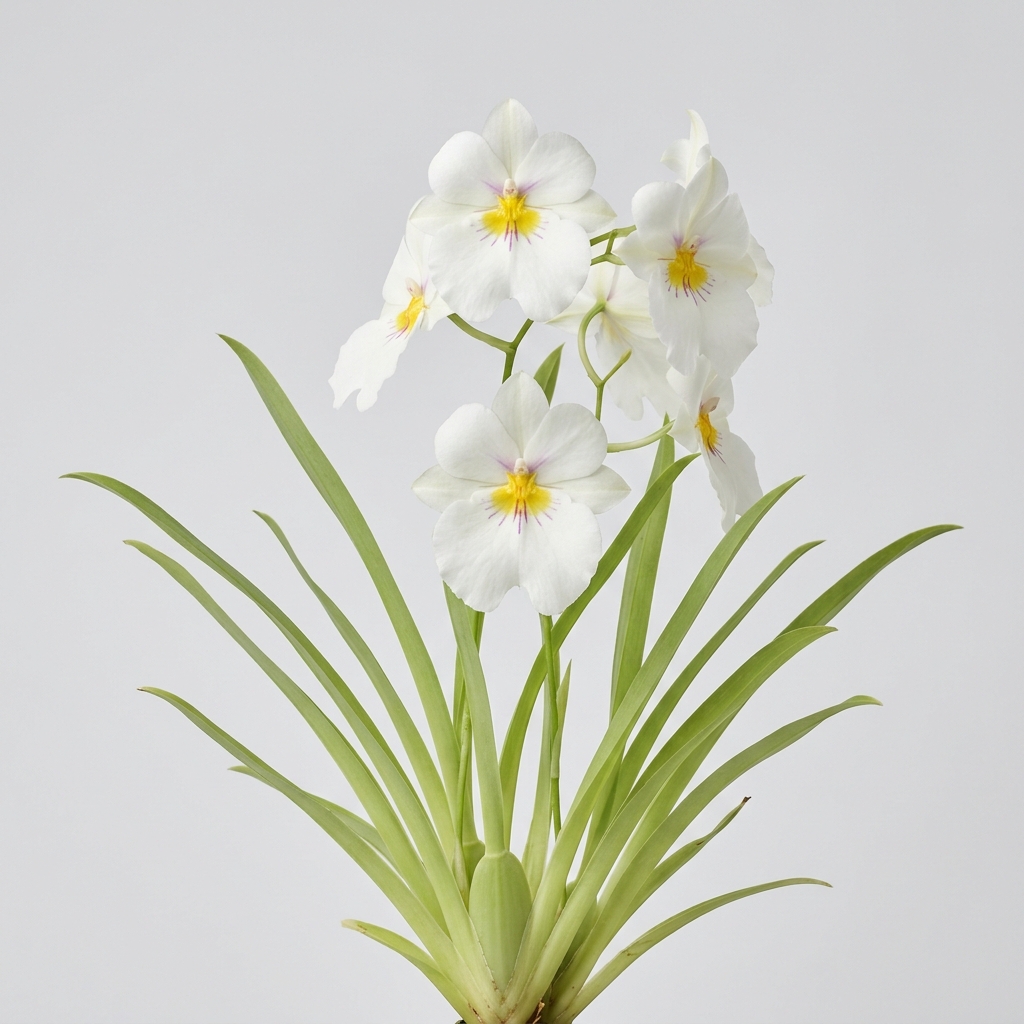
Miltoniopsis Santanaei is a captivating orchid prized by collectors for its elegant, pansy-like flowers and graceful growth habit. Belonging to the popular Miltoniopsis genus, often referred to as pansy orchids, this selection stands out with its pristine blooms and delicate color accents. Growers value it for its striking presentation, making it a highly sought-after addition to cool-to-intermediate orchid collections.
Like many of its relatives, this orchid features soft, light-green pseudobulbs and fan-shaped foliage that provides year-round visual interest even when not in bloom. While it requires a bit more attention to humidity and moisture than hardier orchid genera, the reward of its spectacular, flat-faced blossoms makes it a favorite for dedicated hobbyists looking to master the art of cool-growing orchids.
💡 Did You Know?
The flat-faced flowers of Miltoniopsis Santanaei closely resemble garden pansies, earning the the common name pansy orchids. Unlike true pansies, however, these tropical epiphytes grow on trees in the cool, misty cloud forests of the Andes, where they rely on constant air movement and high to absorb moisture through their exceptionally fine root systems.
🌿 Botanical Overview
Miltoniopsis Santanaei shows the classic vegetative characteristics of the Miltoniopsis genus. It produces tightly clustered, flattened pseudobulbs wrapped in light green, paper-like sheaths. From the apex of each pseudobulb, thin, strap-like leaves emerge, forming an elegant fan shape. The foliage is relatively thin and sensitive to environmental stress, serving as an excellent indicator of the plant’s overall health.
The root system of this orchid is exceptionally fine and delicate compared to coarser genera like Cattleya or Phalaenopsis. These thin roots require a highly oxygenated yet consistently moist environment to thrive. Because the root system is sensitive to salt buildup and dehydration, maintaining a balanced potting medium is critical for the plant’s long-term survival and vigor.
🌸 Flower Characteristics
The blossoms of Miltoniopsis Santanaei are the primary draw for orchid enthusiasts. The flowers are flat-faced, closely resembling garden pansies in shape and arrangement. They typically feature broad, overlapping petals and sepals of a clean, snowy white. The prominent lip, or labellum, is large and fan-shaped, serving as the visual anchor of the flower.
At the center of the bloom lies a detailed mask, usually consisting of a bright yellow flush accented by delicate radiating lines of soft purple or rose. The flowers are borne on arching inflorescences that emerge from the axils of the leaves at the base of the newest pseudobulbs. A single spike can carry multiple blooms, creating a dense, eye-catching display that lasts for several weeks.
Fragrance & Bloom Profile
The fragrance of Miltoniopsis Santanaei is often described as a delicate, sweet floral scent, reminiscent of roses or citrus. However, fragrance intensity can vary significantly based on environmental factors such as temperature, humidity, and light levels. Some growers report a pronounced scent during the morning hours, while others find the fragrance to be very subtle or virtually absent.
The blooms are relatively long-lasting under ideal conditions, often remaining fresh for four to six weeks. To maximize the lifespan of the flowers, it is best to keep the plant in a cool, stable environment once the buds begin to open. Sudden changes in temperature or drafts can cause the flowers to fade prematurely.
Parentage & Hybrid Lineage
The precise taxonomic status and hybrid lineage of Miltoniopsis Santanaei are subject to ongoing discussion among orchidologists. In some horticultural circles, it is treated as a distinct species or a specific color form closely allied with Miltoniopsis vexillaria. In other references, it may be classified as a selected cultivar or natural hybrid.
Because historical registration records for older Miltoniopsis selections can be incomplete or inconsistent, growers should approach parentage claims with caution. Regardless of its exact botanical classification, it carries the classic cool-growing traits and cultural requirements of its high-altitude Andean ancestors, which originate from the cloud forests of Colombia and Ecuador.
🌱 Growing Conditions
To cultivate Miltoniopsis Santanaei successfully, growers must replicate the cool, humid conditions of its native cloud forest habitats. It thrives in cool to intermediate temperatures, ideally ranging from 55°F to 65°F at night and not exceeding 75°F to 80°F during the day. High daytime temperatures, especially when combined with dry air, can quickly stress the plant and cause leaf tip burn.
💡 Care Tip
To maintain the high Miltoniopsis Santanaei craves without risking stagnant air, place the orchid on a tray filled with pebbles and water. Ensure the pot sits above the water line, and run a small, gentle fan nearby to keep the air circulating safely around the foliage.
Light levels should be kept moderate to low. This orchid prefers bright, filtered light, similar to the conditions suitable for Paphiopedilums. Direct sunlight will easily scorch the thin foliage. Additionally, constant, gentle air movement is essential to prevent fungal pathogens from establishing on the damp leaves and roots in high-humidity environments.
Watering, Feeding & Potting Media
Watering is perhaps the most critical aspect of caring for Miltoniopsis Santanaei. Unlike many other orchids, it does not possess large pseudobulbs for long-term water storage and must never be allowed to dry out completely. The potting medium should remain evenly moist, resembling a wrung-out sponge. Water thoroughly with pure water, such as rainwater or reverse osmosis water, to prevent mineral salts from accumulating.
A fine-grade potting mix is highly recommended to accommodate the orchid’s thin roots. A blend of fine fir bark, perlite, and chopped sphagnum moss works exceptionally well. Feed the plant with a highly diluted, balanced orchid fertilizer every two to three weeks during the active growing season, flushing the pot with pure water between feedings to prevent root burn.
Blooming Season & Care Notes
Miltoniopsis Santanaei typically initiates its blooming cycle in the spring, with flowers lasting into the early summer months. The development of the flower spikes begins as the new pseudobulbs reach maturity. During this active phase, maintaining stable humidity and avoiding water contact on the developing buds is crucial to prevent spotting or bud drop.
Once the blooming cycle concludes, the orchid enters a brief period of slower growth. This is the ideal time to evaluate the potting medium. Repotting should be performed annually or biennially, preferably in the autumn when cool temperatures return and new root growth begins. This timing allows the delicate roots to establish before the heat of the following summer.
⚠️ Common Issues
⚠️ Common Mistake
The most common mistake when growing this orchid is allowing the potting medium to dry out completely between waterings. Unlike Phalaenopsis, Miltoniopsis Santanaei has thin roots and minimal water storage capacity, meaning even a brief period of drought can cause severe root dieback and leaf damage.
- Accordion folding of leaves: This distinctive crinkling of new foliage is a classic sign of inconsistent watering or insufficient ambient humidity.
- Root rot: Caused by compacted, poorly draining media or overwatering, leading to rapid decline and limp, yellowing leaves.
- Leaf tip burn: Often indicates that the water quality is poor, mineral salts have built up in the medium, or the temperature is too high.
- Bud blast: The premature drying and dropping of flower buds, usually triggered by sudden drafts, low humidity, or rapid temperature fluctuations.
- Pests: Spider mites and mealybugs can occasionally target the thin foliage, especially if the air is too dry or air circulation is poor.
❓ Frequently Asked Questions
How often should I water Miltoniopsis Santanaei?
Watering frequency depends on your home’s environment, but the potting medium should remain consistently moist. Typically, this means watering every two to three days in warmer weather and slightly less often during the winter. Never let the medium dry out completely.
Why are the leaves on my orchid folding like an accordion?
Accordion-like folding of new leaves is a clear indicator of moisture stress. This is usually caused by low humidity levels or irregular watering. Increasing the ambient humidity to at least 60% and maintaining even moisture in the potting medium will help new leaves grow normally.
Can I grow Miltoniopsis Santanaei under artificial LED lights?
Yes, this orchid adapts well to LED grow lights. Position the plant under moderate-strength LEDs, ensuring the light is diffused. Monitor the foliage color; a healthy light-green color indicates correct light levels, while dark green suggests too little light and yellowing indicates too much.
What is the best potting medium for this orchid?
A fine-grade mix is best for its delicate, thin roots. A combination of fine fir bark, perlite, and high-quality sphagnum moss provides the ideal balance of moisture retention and aeration. Avoid coarse bark mixes, which dry out too quickly for this moisture-loving orchid.
⭐ Final Growing Notes
Cultivating Miltoniopsis Santanaei requires an attentive hand and a commitment to maintaining stable environmental conditions. While its demands for high humidity, cool temperatures, and consistent moisture make it more challenging than common household orchids, the breathtaking beauty of its pristine, pansy-like blooms is an unparalleled reward. By providing gentle air movement, pure water, and protection from extreme heat, you can enjoy the exquisite elegance of this remarkable orchid for many years.
⚕️ Health, Safety & Edibility
Understanding how a plant interacts with people, pets, and the surrounding environment is part of responsible cultivation. This section uses conservative, general guidance and does not replace professional medical or veterinary advice.
Human Safety: No published evidence currently identifies species-specific toxicity concerns for Miltoniopsis Santanaei during normal handling. As with most ornamental plants, it should not be intentionally consumed.
Pet Safety: Published information does not indicate that this orchid commonly poses a toxicity concern for cats or dogs. However, chewing leaves, flowers, roots, or potting media may still cause mild digestive upset.
Edibility: This orchid is cultivated for ornamental display rather than food. Ornamental plants may carry fertilizers, pesticides, or other horticultural treatments that make them unsuitable for consumption.
Skin Contact: Routine handling is not generally associated with skin irritation. Gardeners with sensitive skin may prefer wearing gloves when repotting, pruning, or handling potting media.
🌱 Propagation Tip
Unlike some orchids that produce keikis, Miltoniopsis Santanaei is best propagated by division. Only divide mature, healthy specimens during repotting, ensuring each new division has at least three to four healthy, active pseudobulbs with an established root system to support new growth.
⭐ Expert Advice
When repotting, always choose a pot that closely fits the root mass. Miltoniopsis Santanaei prefers to be slightly under-potted. A pot that is too large retains excessive moisture in the center of the medium, which can suffocate and rot the orchid's delicate, fine roots before they can establish.




Leave A Comment