
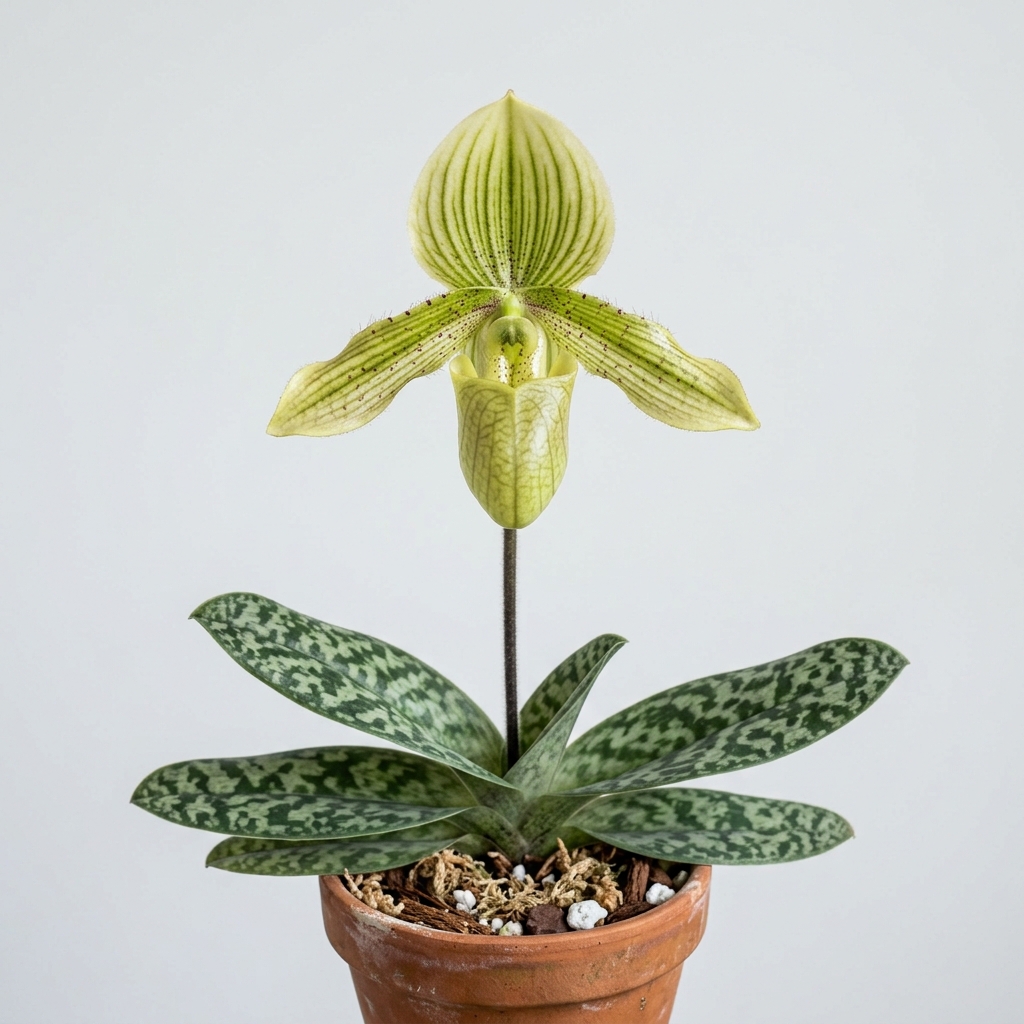
Paphiopedilum Jackii is a highly coveted slipper orchid prized by collectors for its striking tessellated foliage and distinctive, pale green blossoms. Belonging to the subgenus Parvisepalum, this orchid stands out with its elegant, pouch-shaped lip and stately growth habit. Growers value this taxon not only for its unique floral presentation but also for its attractive mottled leaves, which provide year-round visual interest even when the plant is not in bloom.
Cultivating this orchid requires an understanding of its native forest floor habitat, where it thrives in shaded, humid, and relatively cool environments. While it is sometimes considered a challenge for absolute beginners, intermediate growers find great reward in meeting its specific moisture and temperature requirements. When properly cared for, Paphiopedilum Jackii rewards the patient horticulturist with long-lasting flowers that showcase the intricate beauty characteristic of the slipper orchid family.
💡 Did You Know?
Unlike many orchids that grow high up in trees, Paphiopedilum Jackii is primarily a lithophyte, meaning it grows on rocks. In its native habitat, it clings to limestone cliffs, absorbing nutrients from decaying leaf litter trapped in rocky crevices.
🌿 Botanical Overview
Paphiopedilum Jackii is native to the limestone-rich regions of Southeast Asia, specifically found growing in shaded crevices and leaf litter along steep slopes. This terrestrial or lithophytic growth habit dictates much of its care in cultivation. The plant produces a compact fan of strap-like leaves featuring a beautiful dark and light green mottled pattern on the upper surface, with purple spotting often visible on the undersides.
The root system of this slipper orchid is distinct from epiphytic orchids; it produces thick, hairy roots that are adapted to creeping through loose organic debris and securing itself to rocky substrates. Because it lacks pseudobulbs, the plant has limited water storage capacity, making it reliant on consistent ambient humidity and a steady supply of moisture at the root zone.
🌸 Flower Characteristics
The inflorescence of Paphiopedilum Jackii typically emerges from the center of the leaf fan, producing a single, relatively large flower on a tall, upright, pubescent spike. The flower is dominated by a prominent, inflated pouch-like labellum that is pale green to yellowish-green. The dorsal sepal and petals are similarly colored, often adorned with delicate, darker green veining and subtle maroon or purple speckling near the column.
The overall presentation is architectural and elegant, with the flower held well above the foliage. The waxy texture of the segments contributes to the remarkable longevity of the bloom, which can remain pristine for several weeks under optimal environmental conditions.
Fragrance & Bloom Profile
One of the most appealing aspects of Paphiopedilum Jackii is its fragrance, which is often described as a soft, sweet scent reminiscent of fresh apples or berries. This fragrance is typically most pronounced during the morning hours when temperatures begin to rise and light levels increase. However, fragrance intensity can be cultivar-dependent and influenced by environmental factors such as humidity and airflow.
The bloom cycle is generally annual, with individual flowers lasting between four to eight weeks. Because the plant produces a single flower per spike, the blooming event is a focused and dramatic display that marks the culmination of the year’s growth cycle.
Parentage & Hybrid Lineage
The taxonomic status of Paphiopedilum Jackii has been a subject of discussion among botanists, often classified either as a distinct species or as a variety of Paphiopedilum malipoense. In hybrid registration and horticultural circles, it is treated with great respect for its ability to pass on its green coloration, pouch size, and fragrance to its progeny.
When used in breeding, it is frequently crossed with other members of the Parvisepalum subgenus or standard complex hybrids to introduce novel color tones and improved flower substance. Because exact lineage records can sometimes vary between registries, growers should consult official orchid society databases for specific hybrid registration details.
🌱 Growing Conditions
To successfully cultivate Paphiopedilum Jackii, growers must replicate its natural understory environment. It thrives in low to medium light conditions, similar to those preferred by Phalaenopsis orchids. Direct sunlight must be avoided, as it can easily scorch the attractive mottled foliage; bright, filtered light or high-quality LED grow lights are ideal.
💡 Care Tip
To mimic its natural limestone habitat, top-dress the potting medium with a tablespoon of crushed oyster shells or dolomite lime annually. This slowly releases calcium and helps maintain a stable, non-acidic pH.
Temperature: wise, this orchid prefers intermediate to cool conditions. Daytime temperatures should ideally range between 68°F and 78°F (20°C to 26°C), with a distinct drop of 10°F to 15°F (5°C to 8°C) at night to mimic mountain breezes and stimulate bud initiation. High relative humidity of 60% to 80% is essential, coupled with gentle, continuous air movement to prevent stagnant moisture on the leaves.
Watering, Feeding & Potting Media
Because Paphiopedilum Jackii lacks pseudobulbs, the potting medium should never be allowed to dry out completely. Watering should be frequent enough to keep the medium evenly moist but not soggy. Use pure water, such as rainwater, distilled water, or reverse osmosis water, as slipper orchids are sensitive to dissolved mineral salts.
The potting mix must be highly aerated yet moisture-retentive. A blend of fine to medium fir bark, perlite, charcoal, and chopped sphagnum moss works exceptionally well. Since this taxon naturally grows in limestone areas, many growers recommend adding a small amount of calcium carbonate, dolomite lime, or crushed oyster shells to the potting mix to maintain a neutral to slightly alkaline pH. Feed weakly with a balanced, urea-free orchid fertilizer at a quarter-strength dilution every second or third watering during the active growing season.
Blooming Season & Care Notes
The primary blooming season for Paphiopedilum Jackii typically occurs in late winter to spring, following a cooler, slightly drier winter rest period. During this winter rest, watering should be reduced slightly, but the plant should never be allowed to shrivel. Once the flower spike begins to emerge from the center of the growth, maintain stable conditions and avoid moving the plant to prevent bud drop.
After the bloom fades, cut the spike down to the base of the foliage. Repotting is best performed every one to two years in the spring, immediately after flowering has finished and new root growth is observed. This ensures the potting medium remains fresh and does not break down, which can lead to root suffocation.
⚠️ Common Issues
⚠️ Common Mistake
Allowing the potting medium to dry out completely is a common mistake. Lacking pseudobulbs to store water, this orchid will quickly suffer root damage and leaf dehydration if left dry for extended periods.
- Root Rot:
Caused by overwatering or compacted potting media that prevents oxygen from reaching the roots. - Bud Blast:
Sudden changes in temperature, low humidity, or drafts can cause developing buds to yellow and die before opening. - Mealybugs and Scale: These pests often hide in the tight crevices at the base of the leaf fans; treat promptly with insecticidal soap or horticultural oil.
- Leaf Scorch: Bleached or brown patches on the leaves indicate that the light levels are too high.
- Fungal Leaf Spotting: High humidity combined with poor air circulation can lead to unsightly black or brown spots on the foliage.
❓ Frequently Asked Questions
How often should I water Paphiopedilum Jackii?
Watering frequency depends on your growing environment, but generally, the medium should remain consistently moist. Typically, this means watering once or twice a week. Never allow the potting mix to dry out completely, as this orchid lacks water-storing pseudobulbs.
Does Paphiopedilum Jackii need limestone in its potting mix?
Yes, because this orchid is naturally lithophytic on limestone cliffs, it benefits from the addition of calcium. Adding a small handful of crushed oyster shells or dolomite lime to the potting medium helps maintain the preferred neutral to slightly alkaline pH and provides essential calcium.
Why are the flower buds on my orchid falling off before opening?
This issue, known as bud blast, is usually caused by environmental stress. Common culprits include sudden drops in humidity, cold drafts, dry air from heating vents, or moving the plant to a different location with different light levels while the bud is developing.
Can I grow Paphiopedilum Jackii under artificial LED lights?
Absolutely. This orchid adapts very well to indoor cultivation under LED grow lights. Position the plant so it receives moderate, diffused light, ensuring the intensity is not so high that it bleaches the beautiful mottled pattern on the leaves.
⭐ Final Growing Notes
Paphiopedilum Jackii is a magnificent representative of the slipper orchid world, offering a rewarding challenge for intermediate hobbyists. By providing consistent moisture, high humidity, moderate light, and a calcium-rich potting medium, growers can enjoy both the exquisite mottled foliage and the unique, fragrant green blossoms of this exceptional orchid.
⚕️ Health, Safety & Edibility
Understanding how a plant interacts with people, pets, and the surrounding environment is part of responsible cultivation. This section uses conservative, general guidance and does not replace professional medical or veterinary advice.
Human Safety: No published evidence currently identifies species-specific toxicity concerns for Paphiopedilum Jackii during normal handling. As with most ornamental plants, it should not be intentionally consumed.
Pet Safety: Published information does not indicate that this orchid commonly poses a toxicity concern for cats or dogs. However, chewing leaves, flowers, roots, or potting media may still cause mild digestive upset.
Edibility: This orchid is cultivated for ornamental display rather than food. Ornamental plants may carry fertilizers, pesticides, or other horticultural treatments that make them unsuitable for consumption.
Skin Contact: Routine handling is not generally associated with skin irritation. Gardeners with sensitive skin may prefer wearing gloves when repotting, pruning, or handling potting media.
🌱 Propagation Tip
Slipper orchids like Paphiopedilum Jackii cannot be propagated by leaf cuttings or backbulbs. Propagation is achieved through division during repotting, ensuring each new division has at least three healthy, mature leaf fans with active roots.
⭐ Expert Advice
To trigger reliable spring blooming, provide a distinct night-time drop of about 10 to 15 degrees Fahrenheit during the late autumn and winter months. Combine this cool down with a slight reduction in frequency to mimic its natural seasonal cycle.

Leave A Comment