
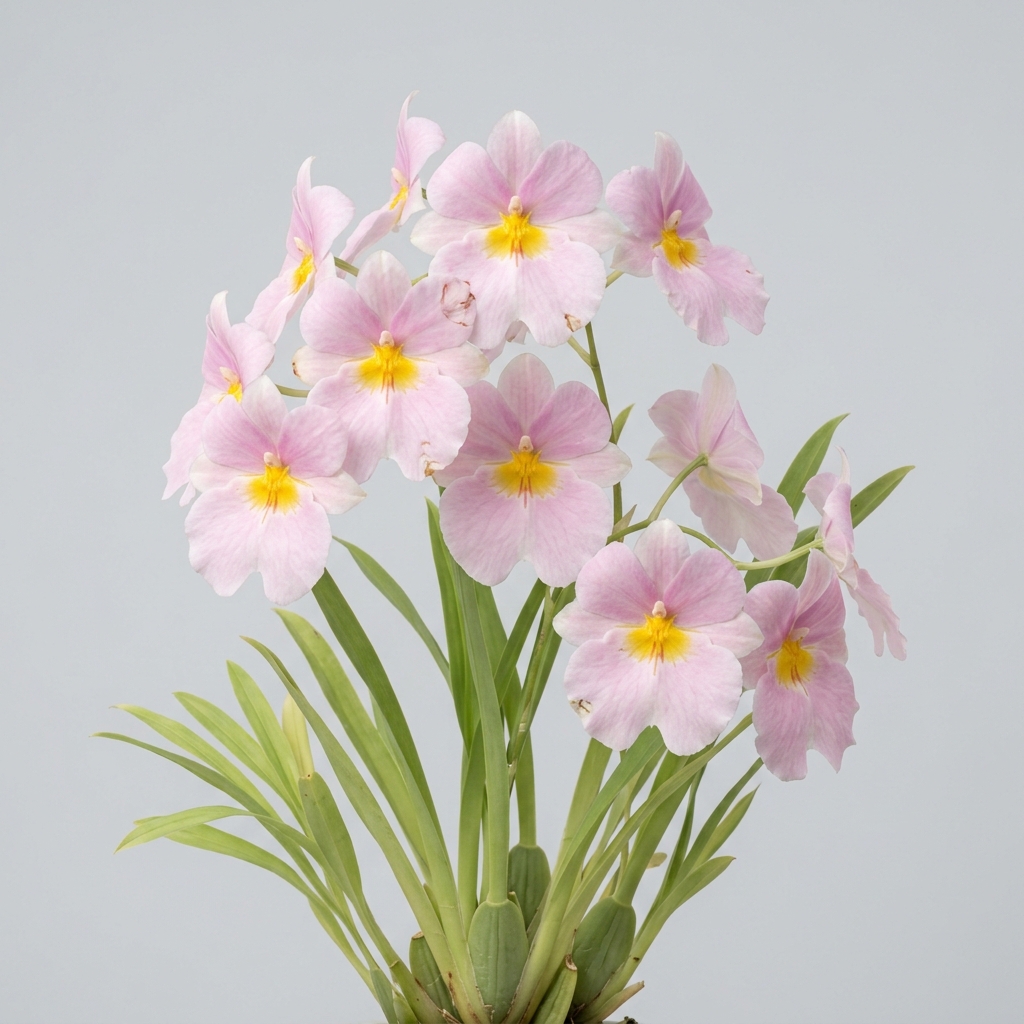
Miltoniopsis Bismarckii is a highly sought-after orchid species prized by collectors for its delicate, pansy-like blossoms and graceful growth habit. Originating from the wet montane forests of Peru, this epiphytic orchid brings a touch of cloud-forest elegance to indoor collections. Its soft, pastel-toned flowers and light green, fan-shaped foliage make it a standout representative of the Miltoniopsis genus, commonly known as pansy orchids.
While many Miltoniopsis in cultivation are complex modern hybrids, Miltoniopsis Bismarckii remains celebrated as a distinct, naturally occurring species. Cultivating this orchid successfully requires a careful balance of cool-to-intermediate temperatures, consistent moisture, and high humidity. For growers willing to meet its specific environmental preferences, it rewards patience with a stunning display of flat, open-faced blooms that epitomize the delicate beauty of the Andean cloud forests.
💡 Did You Know?
Miltoniopsis Bismarckii was discovered in the late 1980s in Peru and named after Klaus von Bismarck, who helped bring this unique species to botanical attention. Unlike many heavily hybridized pansy orchids, this species retains its wild, natural elegance, offering growers a direct connection to the delicate ecosystems of the high-altitude Andean cloud forests.
🌿 Botanical Overview
Miltoniopsis Bismarckii is characterized by its clustered, flattened pseudobulbs, each topped by a single, thin, light green leaf. Additional leaf-like sheaths envelope the base of the pseudobulb, creating a fan-like appearance that is typical of the genus. The foliage is notably thin and delicate, making it sensitive to direct sunlight and dry air, which can quickly cause leaf tip burn or accordion-like growth.
In its native Peruvian habitat, this species grows as an epiphyte on moss-covered tree branches where it benefits from constant air movement and high atmospheric moisture. The root system is relatively fine and shallow, adapted to absorbing moisture and nutrients rapidly from the damp organic debris that accumulates around tree bark. Understanding this natural growth habit is key to replicating its preferred potting and watering regime in a home or greenhouse environment.
🌸 Flower Characteristics
The flowers of Miltoniopsis Bismarckii are flat, open-faced, and closely resemble wild pansies in their overall form. The petals and sepals are typically a soft, pale pink to light rose-purple, presenting a uniform and serene coloration. The most striking feature is the broad, prominent lip or labellum, which features a distinct yellow callus at the center, occasionally accented by faint white or darker pink markings.
Individual flowers are moderately sized, usually measuring between two and three inches in diameter. They are produced on upright or slightly arching inflorescences that emerge from the base of the newly matured pseudobulbs. A single flower spike can carry several blooms, which are presented elegantly above or alongside the light green foliage, creating a highly photogenic display.
Fragrance & Bloom Profile
Unlike some of its hybrid relatives that boast intense, perfume-like scents, the fragrance of Miltoniopsis Bismarckii is generally reported as faint or subtle. Some growers describe a delicate, sweet, or slightly herbaceous aroma that is most noticeable during the morning hours when humidity and light levels rise. However, fragrance intensity can be highly dependent on individual clones, temperature, and ambient air movement.
The blooms are relatively long-lasting for a cool-growing orchid, often remaining fresh for four to six weeks under optimal conditions. To maximize the lifespan of the flowers, growers should avoid getting water directly on the petals and maintain cool, stable temperatures. Sudden environmental shifts or drafts can cause the buds to drop prematurely or shorten the duration of the bloom cycle.
Parentage & Hybrid Lineage
Miltoniopsis Bismarckii is a true species rather than a man-made hybrid, meaning its genetic makeup has been shaped by natural selection in its native Peruvian environment. It was formally described in the late 20th century and named in honor of Klaus von Bismarck, a notable figure associated with its discovery. Because of its distinct color palette and compact growth habit, it has been used occasionally in hybridizing programs to introduce soft pink tones and species vigor into modern Miltoniopsis grexes.
In horticultural trade, it is crucial to distinguish between the pure species and various hybrids that may carry similar names or appearances. True species specimens are highly valued by orchid purists who appreciate the preservation of wild genetic lines. When purchasing this orchid, sourcing from reputable nurseries that propagate via tissue culture or division helps protect wild populations from unsustainable harvesting.
🌱 Growing Conditions
Replicating the cool, humid conditions of the Andean cloud forests is essential for keeping Miltoniopsis Bismarckii healthy. This orchid thrives in cool to intermediate temperatures, ideally ranging from 60 to 75 degrees Fahrenheit during the day, with a distinct drop of 10 to 15 degrees at night. Prolonged exposure to temperatures above 80 degrees Fahrenheit can stress the plant, leading to weakened growth and susceptibility to pests.
💡 Care Tip
To keep your orchid hydrated without suffocating the roots, use a plastic pot rather than clay. Plastic pots retain moisture more evenly, which helps prevent the fine root system of this species from drying out too quickly between waterings.
Light levels should be kept moderate to low, mimicking the dappled shade of a forest canopy. East-facing windows or shaded south-facing windows are often ideal. The foliage should remain a light, grassy green; if the leaves turn dark green, the plant may not be receiving enough light to bloom, while yellowing or reddish-purple tints indicate excessive light exposure. High humidity of 60% to 80% coupled with gentle, continuous air circulation is vital to prevent fungal pathogens while keeping the thin leaves hydrated.
Watering, Feeding & Potting Media
Miltoniopsis Bismarckii does not possess large, water-storing pseudobulbs, meaning it has very little tolerance for drought. The potting medium should be kept consistently damp but never waterlogged. As a general rule, water the plant just as the medium begins to approach dryness. Using rainwater, distilled water, or reverse osmosis water is highly recommended, as this species is sensitive to mineral buildup and salts commonly found in tap water.
A fine-grade potting mix consisting of premium fir bark, perlite, and chopped sphagnum moss works exceptionally well to retain moisture while allowing adequate oxygen to reach the fine roots. During the active growing season in spring and summer, apply a balanced, highly diluted orchid fertilizer weekly or bi-weekly, ensuring you flush the pot with pure water once a month to wash away residual salts. Reduce feeding frequency during the cooler winter months when growth naturally slows.
Blooming Season & Care Notes
The primary blooming season for Miltoniopsis Bismarckii typically occurs in late spring or early summer, coinciding with the completion of new pseudobulb growth. Once the flower spike begins to emerge from the sheath at the base of the pseudobulb, maintain stable environmental conditions and avoid moving the plant to a new location. Stake the spike gently if needed to support the weight of the developing buds.
Repotting should be performed every one to two years, preferably in the autumn when cool temperatures return and new root growth is initiated. Because the roots are highly delicate, handle them with extreme care during the transition. Choose a pot that just comfortably accommodates the root mass, as overpotting can lead to excess moisture retention and later root rot.
⚠️ Common Issues
⚠️ Common Mistake
A frequent error is allowing the orchid to sit in standing water inside a decorative cachepot. While this species demands constant moisture, stagnant water at the bottom of the pot cuts off oxygen to the roots, rapidly causing root rot.
- Accordion Leaf Growth: Wrinkled or pleated leaves indicate insufficient humidity or inconsistent watering during the active growth phase.
- Root Rot: Caused by compacted, decaying potting media or overwatering, leading to mushy, brown roots and dehydrated foliage.
- Bud Blast: Sudden dropping or drying of flower buds, usually triggered by rapid temperature fluctuations, low humidity, or drafts.
- Spider Mites: These pests thrive in dry conditions and can quickly damage the thin, soft foliage of Miltoniopsis; maintain high humidity to deter them.
- Leaf Tip Burn: Often a sign of mineral buildup from hard tap water or over-fertilization; flush the media regularly with pure water.
❓ Frequently Asked Questions
Why are the leaves on my Miltoniopsis Bismarckii growing in a wrinkled, accordion-like pattern?
Accordion-like wrinkling of the foliage is a classic sign of moisture stress, typically caused by low ambient humidity or inconsistent watering while the new leaf is developing. Once the leaf is wrinkled, it will not straighten out, but you can prevent future growth from pleating by maintaining a steady humidity level of at least 60% and watering the plant consistently so the media never dries out completely.
Can I grow Miltoniopsis Bismarckii mounted on cork bark?
While it is technically possible to grow this species mounted, it is highly challenging in a standard home environment. Because Miltoniopsis Bismarckii requires constant moisture around its fine roots, a mounted plant must be misted multiple times daily and kept in an environment with exceptionally high humidity. For most indoor growers, a plastic pot with a moisture-retaining but free-draining bark and sphagnum mix is far more practical.
What is the best type of water to use for this orchid?
Miltoniopsis Bismarckii is highly sensitive to dissolved minerals and salts. Using pure water sources such as rainwater, distilled water, or reverse osmosis water is strongly recommended. Regular tap water, especially if it is hard, can cause mineral buildup in the potting medium, leading to root dieback, leaf tip burn, and overall decline of the plant.
How do I know if my orchid is getting the right amount of light?
Observe the color of the foliage to gauge light levels. Healthy Miltoniopsis Bismarckii leaves should be a light, grassy green. If the leaves turn a dark, forest green, the orchid is likely receiving too little light, which may prevent it from blooming. Conversely, if the leaves develop a yellowish cast or reddish-bronze undertones, the light is too intense, and the plant should be moved to a more shaded location.
⭐ Final Growing Notes
Miltoniopsis Bismarckii is a captivating species that rewards the dedicated orchid enthusiast with its serene, pansy-like blossoms and classic cloud-forest charm. While its requirements for cool temperatures, high humidity, and pure water make it more demanding than common hybrid orchids, mastering its care is a deeply satisfying achievement. By providing a stable environment that mimics its native Peruvian home, you can enjoy the delicate beauty of this exceptional species for many years to come.
⚕️ Health, Safety & Edibility
Understanding how a plant interacts with people, pets, and the surrounding environment is part of responsible cultivation. This section uses conservative, general guidance and does not replace professional medical or veterinary advice.
Human Safety: No published evidence currently identifies species-specific toxicity concerns for Miltoniopsis Bismarckii during normal handling. As with most ornamental plants, it should not be intentionally consumed.
Pet Safety: Published information does not indicate that this orchid commonly poses a toxicity concern for cats or dogs. However, chewing leaves, flowers, roots, or potting media may still cause mild digestive upset.
Edibility: This orchid is cultivated for ornamental display rather than food. Ornamental plants may carry fertilizers, pesticides, or other horticultural treatments that make them unsuitable for consumption.
Skin Contact: Routine handling is not generally associated with skin irritation. Gardeners with sensitive skin may prefer wearing gloves when repotting, pruning, or handling potting media.
🌱 Propagation Tip
This species is best propagated by division during repotting in the autumn. Ensure each division has at least three to four healthy, mature pseudobulbs with an active lead growth to give the new plants the energy needed to establish successfully.
⭐ Expert Advice
If your growing area naturally runs warm during the summer, place your orchid near an evaporative cooler or on a tray filled with water and pebbles. The natural evaporation process will help lower the local around the plant by a few crucial degrees.

Leave A Comment