
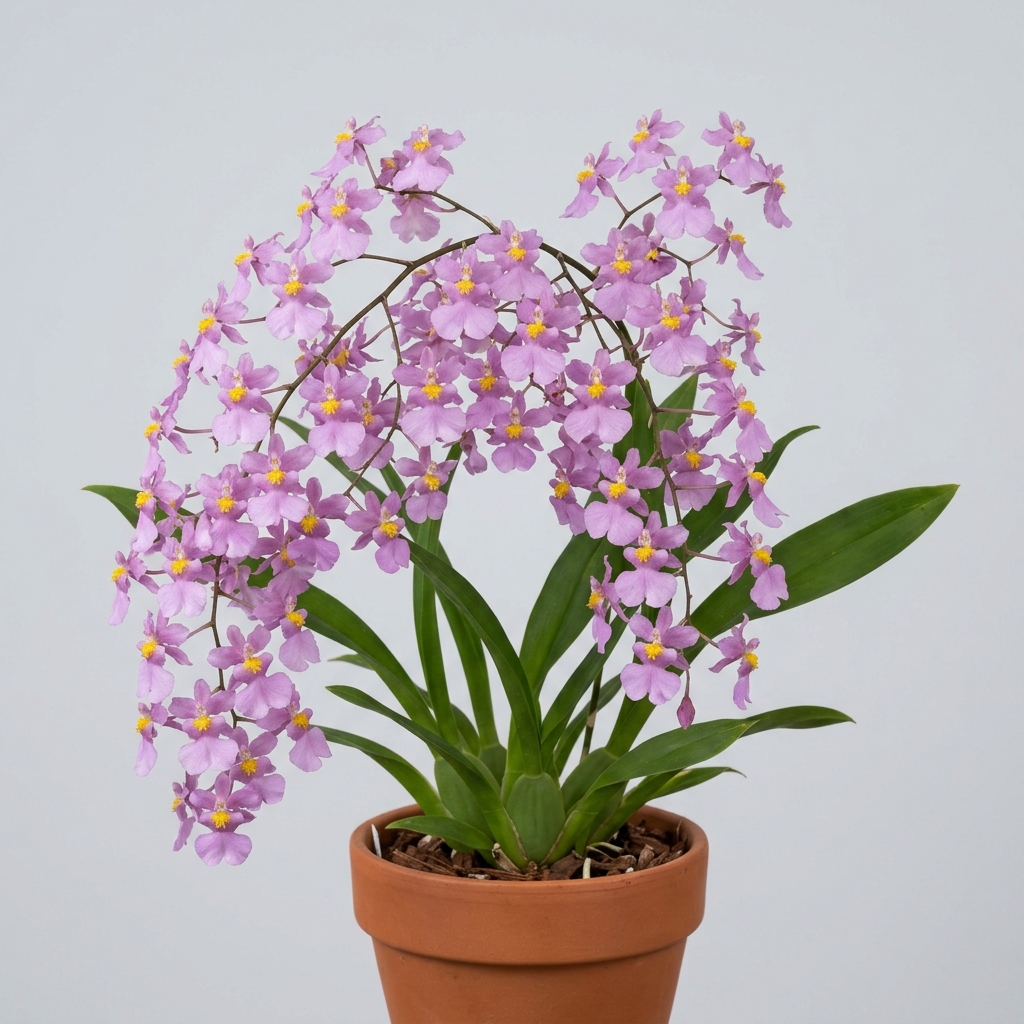
Oncidium sotoanum is a highly celebrated orchid species cherished by collectors for its spectacular displays of delicate, lavender-pink blossoms and its remarkably sweet fragrance. Native to the damp montane forests of Central America, this compact epiphyte produces dense, arching sprays of flowers that can transform any growing space into a fragrant haven. Its manageable size and free-flowering nature make it an exceptional choice for both windowsill growers and greenhouse enthusiasts.
For decades, this species was widely distributed in the orchid trade under the incorrect name Oncidium ornithorhynchum, a confusion that has only recently been resolved by taxonomists. Today, Oncidium sotoanum is recognized in its own right as a vigorous grower that rewards basic care with an abundance of blooms. Its resilience and striking floral presentation have secured its status as a staple species in modern orchid collections.
💡 Did You Know?
For over a century, Oncidium sotoanum was mistakenly sold and grown under the name Oncidium ornithorhynchum. Taxonomists eventually discovered that the true ornithorhynchum is a yellow-flowered species from a different region, finally giving this beloved pink, vanilla-scented orchid its correct scientific name in honor of Mexican botanist Miguel Ángel Soto Arenas.
🌿 Botanical Overview
Oncidium sotoanum is a sympodial epiphytic orchid characterized by its clustered, oval, slightly compressed pseudobulbs. Each pseudobulb typically produces two thin, arching, lanceolate leaves from its apex, along with several leafy sheaths at the base. The root system is relatively fine and fibrous, adapted for gripping mossy tree branches in its native habitat.
In the wild, this species thrives at elevations ranging from sea level up to around 1500 meters, where it experiences warm days, cooler nights, and high atmospheric humidity. This wide elevational range contributes to the plant’s adaptability in home cultivation, allowing it to tolerate minor fluctuations in temperature and moisture better than more delicate montane species.
🌸 Flower Characteristics
The inflorescence of Oncidium sotoanum is a magnificent, arching panicle that can reach up to 60 centimeters in length, often branching to produce dozens of individual flowers. Each blossom is relatively small, usually measuring between 1.5 and 2 centimeters across, but their sheer quantity creates a dense cloud-like effect.
The petals and sepals are typically a soft rose-pink or lavender, recurving slightly to highlight the prominent lip. The labellum, or lip, features a contrasting bright yellow callus at its center, which serves as a visual guide for pollinators. This striking color contrast, combined with the delicate, ruffled edges of the lip, gives the flowers an elegant, bird-like appearance in flight.
Fragrance & Bloom Profile
One of the primary reasons growers seek out Oncidium sotoanum is its intense, delightful fragrance. The flowers emit a powerful scent that is commonly compared to vanilla, cocoa, or sweet baking spices. This fragrance is most pronounced during the morning and early afternoon hours when temperatures rise and light levels increase.
A single mature specimen can remain in bloom for four to six weeks, with the fragrance persisting throughout the entire flowering period. Because the blooms open almost simultaneously along the branched spikes, the visual and olfactory impact is immediate and long-lasting, making it a standout showpiece during its blooming cycle.
Parentage & Hybrid Lineage
As a true species rather than a man-made hybrid, Oncidium sotoanum possesses a stable genetic profile shaped by natural evolution. However, its desirable traits—namely its compact growth habit, high flower count, and intense fragrance—have made it a highly valued parent in orchid hybridization.
It has been used extensively to introduce pink coloration and sweet scents into various Oncidium intergeneric hybrids. While its historical confusion with Oncidium ornithorhynchum means some older hybrid registrations may list the latter as a parent, modern registration authorities and hybridizers now recognize the critical role Oncidium sotoanum has played in creating popular fragrant hybrids.
🌱 Growing Conditions
To cultivate Oncidium sotoanum successfully, growers should aim to replicate its native forest canopy environment. It thrives in bright, filtered light, similar to the conditions preferred by Cattleyas, but should be shielded from direct midday sun which can easily scorch its thin leaves. A bright east or shaded south-facing window is often ideal.
💡 Care Tip
Keep a close eye on the pseudobulbs of Oncidium sotoanum. If they begin to shrivel significantly during the active growing season, it is a clear signal to increase your frequency or check the health of the root system.
Temperature: wise, this orchid is highly adaptable, comfortable in intermediate to warm conditions. Daytime temperatures between 20 and 28 degrees Celsius, paired with a nighttime drop of 4 to 6 degrees, will encourage robust growth and reliable blooming. Maintaining humidity levels between 50% and 70% is beneficial, along with gentle, continuous air movement to prevent fungal pathogens from settling on the foliage.
Watering, Feeding & Potting Media
During the active growing season in spring and summer, Oncidium sotoanum requires regular watering to keep the potting medium evenly moist but never waterlogged. The fine roots are sensitive to salt buildup and prolonged dryness, so watering should be adjusted based on the drying rate of the medium.
A high-quality, free-draining medium is essential. A mix of fine-grade fir bark, perlite, and a small amount of chopped sphagnum moss works exceptionally well in plastic or clay pots. Alternatively, plants can be mounted on cork bark if high humidity can be consistently maintained. Apply a balanced, diluted orchid fertilizer weekly at one-quarter strength during active growth, flushing the pot with pure water once a month to remove residual salts.
Blooming Season & Care Notes
Oncidium sotoanum typically initiates its blooming cycle in the autumn or early winter, triggered by the natural shortening of days and cooler night temperatures. As the flower spikes emerge from the base of the newest mature pseudobulbs, growers should avoid moving the plant to a drastically different environment to prevent bud drop.
Once the flowering cycle concludes, the plant enters a brief period of semi-dormancy. During this time, watering should be reduced slightly, allowing the medium to dry out more between waterings, and fertilizer should be withheld until new growth emerges in the spring. Repotting is best performed just as new root tips begin to show from the base of the new growths, typically every two years.
⚠️ Common Issues
⚠️ Common Mistake
Avoid using heavy, dense potting soil or oversized pots. Oncidium sotoanum has very fine roots that require rapid drainage and excellent aeration; keeping them in soggy, compacted media will quickly lead to root rot and plant decline.
- Root rot: Caused by overwatering or a decomposing potting medium that retains too much moisture around the fine root system.
- Leaf spotting: Fungal or bacterial spots can develop on the thin leaves if air circulation is poor or if water sits on the foliage overnight.
- Bud blast: Sudden changes in temperature, low humidity, or drafts can cause developing buds to yellow and drop before opening.
- Dehydration: Shriveled pseudobulbs and accordion-like pleating on new leaves indicate insufficient watering or a compromised root system unable to take up moisture.
- Pests: Spider mites, scale, and mealybugs can occasionally target the tender new growths and flower spikes, requiring prompt treatment with insecticidal soap or neem oil.
❓ Frequently Asked Questions
How do I fix accordion-like pleating on the leaves of my Oncidium sotoanum?
Accordion pleating on new leaves is a classic sign of water stress, usually caused by inconsistent watering or low humidity while the leaf was developing. Ensure you are watering regularly so the medium stays evenly moist, and increase local humidity around the plant to prevent future leaves from sticking as they emerge.
Why are the pseudobulbs on my orchid shriveling?
Slight shriveling of older pseudobulbs is normal as they transfer energy to new growths or flower spikes. However, severe shriveling indicates dehydration, which can stem from underwatering or, conversely, root rot from overwatering, which destroys the roots and prevents the plant from absorbing water.
Can I grow Oncidium sotoanum under artificial LED lights?
Yes, this species adapts very well to artificial lighting. Position the plant under full-spectrum LED grow lights, adjusting the height so the leaves receive bright, indirect light without getting too warm. Watch for a slight reddish tint on the leaf edges, which indicates optimal light levels.
Is Oncidium sotoanum suitable for a beginner orchid grower?
Absolutely. Due to its tolerance of typical household temperatures and its forgiving nature regarding minor care mistakes, it is considered one of the best species Oncidiums for beginners. Providing bright light, consistent moisture, and good drainage will almost guarantee success.
⭐ Final Growing Notes
Oncidium sotoanum remains an unmatched favorite among orchid enthusiasts for its ease of culture, compact habit, and breathtakingly fragrant floral displays. By providing bright, filtered light, maintaining moderate humidity, and ensuring the fine roots never sit in stagnant water, growers can enjoy the delightful vanilla-chocolate scent of this historical species year after year.
🌱 Propagation Tip
This species is best propagated by division during repotting in spring. Ensure each division has at least three to four healthy, mature pseudobulbs with active root leads to guarantee the new plants establish quickly and bloom in the coming season.
⭐ Expert Advice
To trigger a heavy flush of blooms in autumn, expose your Oncidium sotoanum to a slight drop in night temperatures down to around fifteen degrees Celsius for a few weeks in late summer, while simultaneously reducing fertilizer.




Leave A Comment