
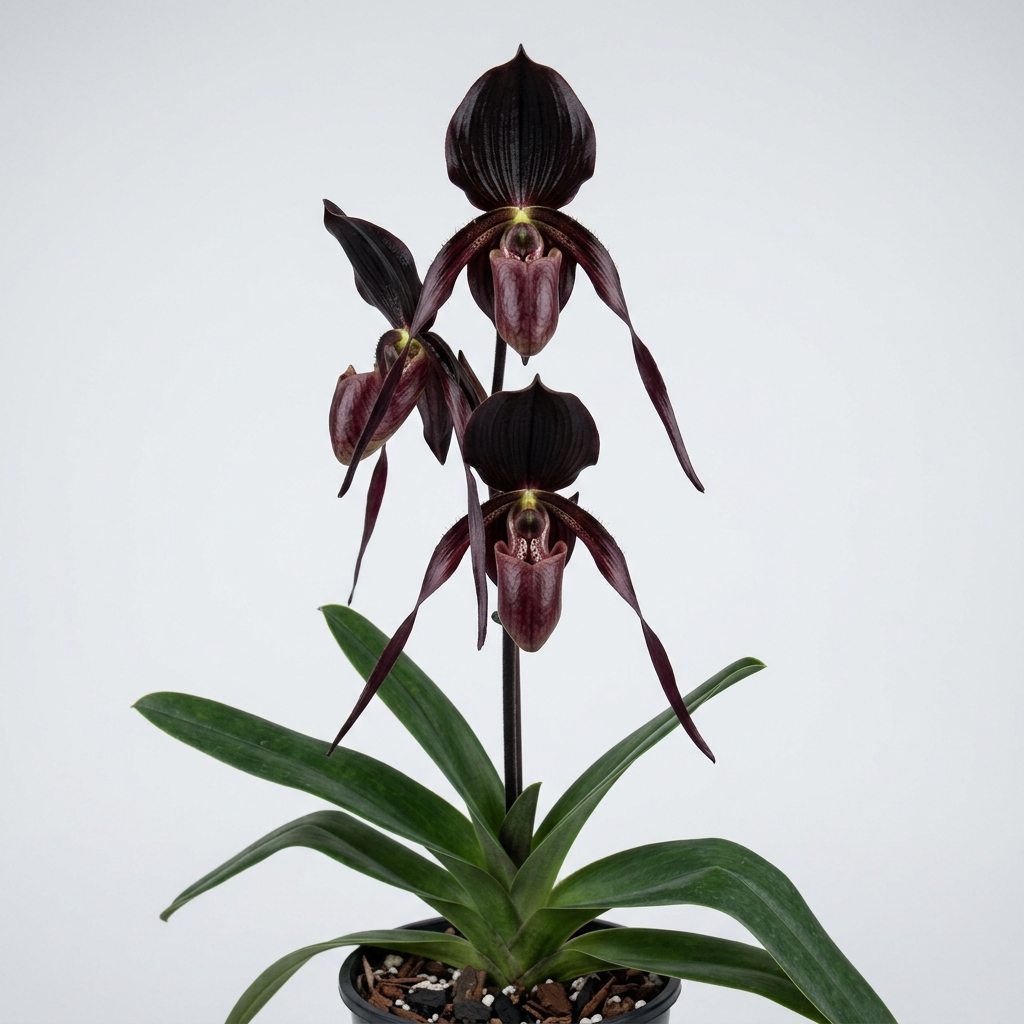
Paphiopedilum Anitum is an extraordinary and highly coveted multi-floral slipper orchid, renowned among collectors for its dramatic, dark coloration and stately growth habit. Native to the mountainous regions of the Philippines, this orchid stands out within the subgenus Polyantha due to its striking, near-black dorsal sepal and long, elegant petals. Growers prize this species for its architectural presence and the sophisticated, moody aesthetic it brings to any indoor orchid collection.
While it is a slow-growing orchid that demands patience, the reward of a mature Paphiopedilum Anitum in full bloom is unmatched. Its stately spikes can carry multiple flowers simultaneously, creating a commanding display that lasts for several weeks. Cultivating this orchid successfully requires a nuanced understanding of its tropical forest origin, making it an exciting challenge for intermediate to advanced orchid enthusiasts.
💡 Did You Know?
Paphiopedilum Anitum is highly prized for having some of the darkest flowers in the entire orchid world. Its near-black coloration is a rare trait in nature, evolved to attract specific pollinators in the deep, shaded forests of the Philippines. This dramatic pigment makes it a legendary parent in modern slipper orchid breeding programs.
🌿 Botanical Overview
Paphiopedilum Anitum, sometimes classified by taxonomists as a distinct variety of Paphiopedilum aductum, is a terrestrial or lithophytic orchid native to the island of Mindanao in the Philippines. It typically grows in shaded, humid forest environments at moderate elevations, where it clings to leaf litter and moss-covered rocks. This natural habitat dictates its preference for consistent moisture and high relative humidity in cultivation.
The vegetative growth of this orchid is characterized by strap-like, leathery green leaves that lack the mottled patterning found in some other slipper orchid groups. The solid green foliage grows in a tight fan formation, with mature fans producing a tall, dark, erect inflorescence. Because it is a slow-growing species, establishing a strong root system is critical to supporting its vegetative and reproductive cycles.
🌸 Flower Characteristics
The blossoms of Paphiopedilum Anitum are among the darkest in the entire genus, featuring a striking combination of deep maroon, near-black, and dark purple tones. The dorsal sepal is broad, heavily striped, and saturated with dark pigmentation, while the long, narrow petals droop gracefully downward, often twisting slightly as they descend. The pouch, or labellum, is deeply cupped and shows a glossy, mahogany-brown to dark purple finish.
A single flower spike can produce between two to five flowers, opening sequentially or nearly simultaneously. The dramatic contrast between the dark blooms and the bright green foliage makes a flowering specimen highly visually impactful. The flowers are long-lasting, often remaining in pristine condition for up to six weeks under optimal conditions.
Fragrance & Bloom Profile
Unlike some orchid genera known for intense perfumes, Paphiopedilum Anitum is generally considered to be unscented. While some growers occasionally report a faint, earthy aroma under warm, humid conditions, fragrance is not a primary characteristic of this orchid. The appeal of this cultivar lies entirely in its dramatic visual presentation, architectural form, and the longevity of its blooms.
Parentage & Hybrid Lineage
Paphiopedilum Anitum is recognized primarily as a distinct species or a significant botanical variety within the Paphiopedilum genus. In the hybridizing community, it is highly valued for introducing dark coloration and multi-floral habits to new grexes. When crossed with other slipper orchids, it consistently passes down its deep, saturated pigments and elegant, elongated petal structure. Because registration records can sometimes vary between taxonomic authorities, growers should consult official orchid registries for specific hybrid lineages.
🌱 Growing Conditions
To thrive, Paphiopedilum Anitum requires intermediate to warm temperatures, ideally ranging from 65 degrees Fahrenheit at night to 85 degrees Fahrenheit during the day. It prefers moderate, filtered light, similar to the dappled shade of its native canopy; direct sunlight will quickly scorch the solid green leaves. High humidity levels of 60 to 80 percent, coupled with gentle, continuous air movement, are essential to prevent stagnant air and fungal issues.
💡 Care Tip
Ensure constant, gentle air circulation around your Paphiopedilum Anitum. High is vital, but stagnant air can quickly lead to fungal infections on the leaves or crown rot, especially in the tight crevices of the leaf fans.
Watering, Feeding & Potting Media
This orchid does not possess pseudobulbs to store water, meaning it must never be allowed to dry out completely. The potting medium should remain evenly moist but free-draining to prevent root rot. A mix composed of medium-grade fir bark, perlite, charcoal, and a small amount of sphagnum moss works exceptionally well. Feed the plant with a highly diluted, balanced orchid fertilizer every two to three weeks during the active growing season, flushing the pot with pure water periodically to prevent salt buildup.
Blooming Season & Care Notes
Paphiopedilum Anitum typically initiates its blooming cycle in the spring or summer months, though timing can vary based on local growing conditions. Once the flower spike emerges from the center of the leaf fan, avoid changing the plant’s orientation to light, as this can cause the developing buds to twist unnaturally. After the blooms fade, cut the spike down to the base of the foliage and allow the plant to enter a brief period of rest with slightly reduced watering.
⚠️ Common Issues
⚠️ Common Mistake
A frequent error is allowing the potting medium to dry out completely between waterings. Because Paphiopedilum orchids lack water-storing pseudobulbs, even a brief period of severe drought can permanently damage the roots and stall growth for months.
- Root rot caused by compacted, poorly draining potting media or overwatering.
- Mealybugs and scale insects hiding in the tight crevices of the leaf fans.
- Leaf burn or yellowing from exposure to excessive direct sunlight.
- Bud blast, where developing flower buds wither and drop due to sudden changes in temperature or humidity.
- Fungal or bacterial leaf spotting resulting from water sitting on the foliage overnight.
❓ Frequently Asked Questions
How often should I repot my Paphiopedilum Anitum?
Repotting should be done every one to two years, preferably in the spring after flowering has finished or when the potting medium begins to break down. Fresh media ensures adequate aeration for the roots.
Can Paphiopedilum Anitum be grown under LED lights?
Yes, this orchid adapts well to indoor cultivation under LED grow lights. Position the plant so it receives moderate light levels, ensuring the leaves do not become warm to the touch.
Why are the leaf tips of my orchid turning brown?
Brown leaf tips are often a sign of low humidity, underwatering, or a buildup of fertilizer salts in the potting medium. Flush the pot thoroughly with pure water and monitor humidity levels.
Is Paphiopedilum Anitum suitable for beginner orchid growers?
Due to its slow growth rate, specific humidity requirements, and sensitivity to drying out, this orchid is generally recommended for intermediate to advanced growers who have experience with slipper orchids.
⭐ Final Growing Notes
Cultivating Paphiopedilum Anitum is a deeply rewarding endeavor for any dedicated orchid enthusiast. Its slow, deliberate growth demands patience, but the eventual display of its dark, majestic, multi-floral blooms is a true horticultural triumph. By providing consistent moisture, high humidity, and filtered light, you can enjoy the dramatic beauty of this exceptional slipper orchid for many years to come.
⚕️ Health, Safety & Edibility
Understanding how a plant interacts with people, pets, and the surrounding environment is part of responsible cultivation. This section uses conservative, general guidance and does not replace professional medical or veterinary advice.
Human Safety: No published evidence currently identifies species-specific toxicity concerns for Paphiopedilum Anitum during normal handling. As with most ornamental plants, it should not be intentionally consumed.
Pet Safety: Published information does not indicate that this orchid commonly poses a toxicity concern for cats or dogs. However, chewing leaves, flowers, roots, or potting media may still cause mild digestive upset.
Edibility: This orchid is cultivated for ornamental display rather than food. Ornamental plants may carry fertilizers, pesticides, or other horticultural treatments that make them unsuitable for consumption.
Skin Contact: Routine handling is not generally associated with skin irritation. Gardeners with sensitive skin may prefer wearing gloves when repotting, pruning, or handling potting media.
🌱 Propagation Tip
Unlike sympodial orchids with pseudobulbs, Paphiopedilum Anitum is propagated by division. Only attempt to divide mature, healthy specimens that have at least three to four active leaf fans, ensuring each division has a well-developed root system to survive.
⭐ Expert Advice
To encourage robust blooming, maintain a slight drop of about ten degrees Fahrenheit between day and night during the autumn months. This natural differential helps stimulate the orchid to initiate its slow-developing flower spikes.

Leave A Comment