
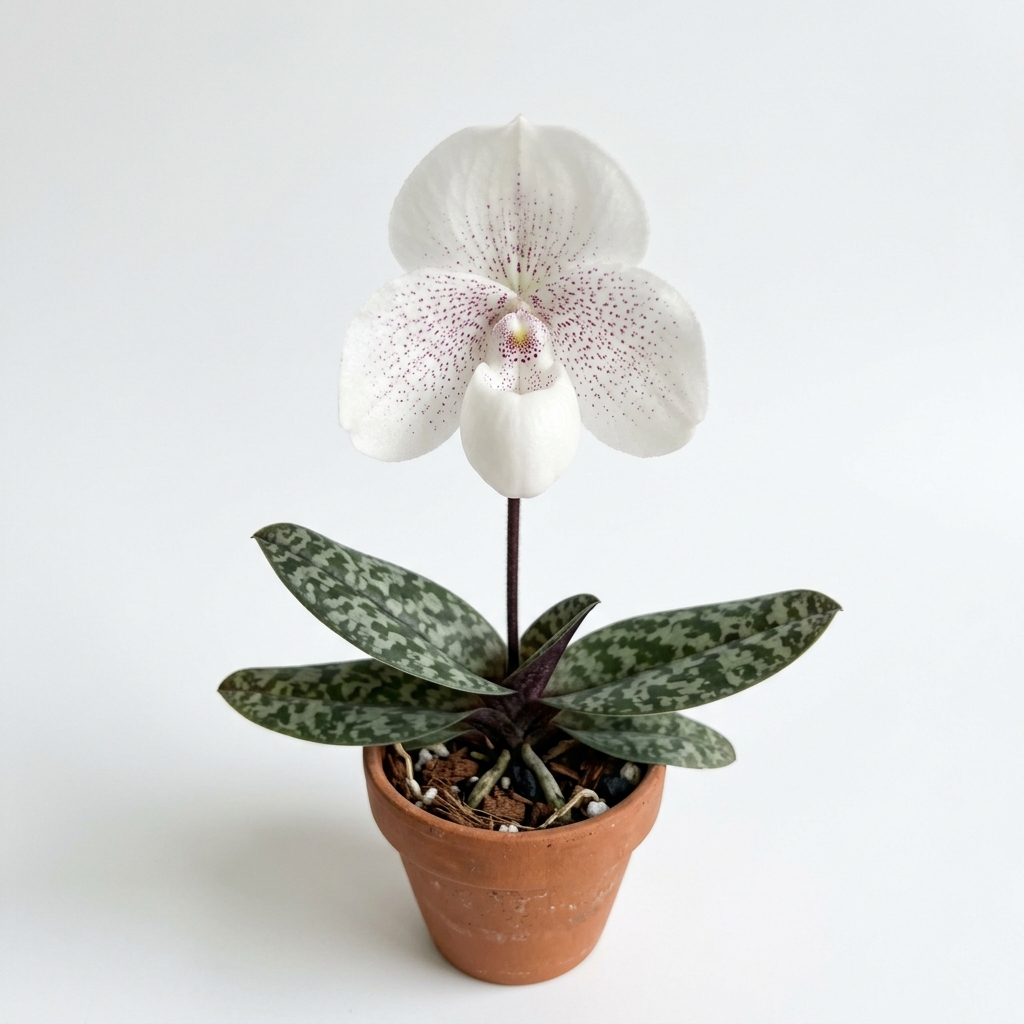
Paphiopedilum Niveum, commonly known as the snowy slipper orchid, is a highly prized species within the Brachypetalum subgenus. Renowned for its pristine white blossoms and compact growth habit, this terrestrial orchid has captivated collectors for generations. Its striking foliage, featuring a beautiful mottled pattern of dark green and silvery-grey, ensures the plant remains visually appealing even when not in bloom.
Originating from the limestone cliffs of Southeast Asia, this orchid is uniquely adapted to specific environmental niches. Growers value it not only for its elegant, rounded flowers but also for its manageable size, making it an excellent candidate for indoor windowsill cultivation or dedicated orchid cases. Understanding its native habitat is key to successfully cultivating this exquisite slipper orchid.
💡 Did You Know?
The specific epithet niveum is derived from the Latin word for snowy, perfectly describing the pristine white color of its flowers. In its native Southeast Asian habitats, this orchid grows directly on vertical limestone cliffs near the ocean, where it absorbs calcium and minerals from the dissolving rock face during tropical rainstorms.
🌿 Botanical Overview
Paphiopedilum Niveum is a compact, lithophytic or terrestrial orchid native to regions including Thailand, Malaysia, and Myanmar. In its natural habitat, it is frequently found growing in pockets of leaf litter and moss on semi-shaded limestone cliffs, often near the sea. This unique ecological niche dictates many of its cultural requirements in home cultivation.
The plant features short, fan-shaped growths with thick, leathery leaves. The upper surface of the foliage displays an attractive tessellated pattern of dark green and pale grey-green, while the underside is often suffused with a deep purple coloration. This striking foliage serves as an evolutionary adaptation to maximize light absorption in shaded forest understories.
🌸 Flower Characteristics
The flowers of Paphiopedilum Niveum are famously round, flat, and snowy white, measuring approximately five to eight centimeters in diameter. The dorsal sepal and broad lateral petals are dusted with tiny, delicate purple or reddish-brown spots concentrated near the base of the column. The pouch, or labellum, is egg-shaped, pristine white, and neatly tucked beneath the staminode.
Flowers are typically produced singly or occasionally in pairs on an upright, dark purple peduncle that rises well above the foliage. The contrast between the dark, pubescent flower spike and the pure white blossom creates a dramatic and elegant presentation that is highly sought after by orchid enthusiasts.
Fragrance & Bloom Profile
While some growers report a very faint, sweet scent under warm, humid conditions, Paphiopedilum Niveum is generally considered to be unscented. Fragrance is not consistently documented as a primary characteristic of this species. Instead, its appeal lies entirely in its exquisite visual symmetry and long-lasting floral display.
An individual flower can remain in perfect condition for six to eight weeks, provided environmental conditions remain stable. The heavy substance of the petals contributes to this impressive longevity, allowing growers to enjoy the pristine blooms for an extended period during the peak flowering season.
Parentage & Hybrid Lineage
As a true species rather than a man-made hybrid, Paphiopedilum Niveum has a documented botanical history dating back to its discovery in the late 19th century. It belongs to the section Brachypetalum, a group of slipper orchids known for their round flowers and mottled leaves.
In orchid hybridization, Paphiopedilum Niveum has played a monumental role. It has been used extensively as a parent to introduce pure white coloration, round flower form, and compact growth habits to countless modern complex hybrids. Its genetic influence is highly stable, making it a cornerstone of white slipper orchid breeding programs worldwide.
🌱 Growing Conditions
To cultivate Paphiopedilum Niveum successfully, growers should aim to replicate its warm, humid, and shaded native environment. It thrives in low to moderate indirect light, similar to the requirements of Phalaenopsis orchids. Direct sunlight must be avoided, as it can easily scorch the delicate mottled foliage.
💡 Care Tip
Always water this orchid in the morning to allow any water that splashes into the center of the leaf fan to evaporate before nightfall. Stagnant water in the crown can quickly lead to crown rot, which is often fatal to slipper orchids.
Temperature ranges should ideally remain warm to intermediate, with daytime temperatures between 75°F and 85°F, and a slight drop at night to around 65°F. High humidity of 60% to 80% is highly beneficial, accompanied by gentle, continuous air movement to prevent stagnant air pockets that can harbor fungal pathogens.
Watering, Feeding & Potting Media
Unlike some orchids with pseudobulbs, Paphiopedilum Niveum does not store large reserves of water. Consequently, the potting medium should be kept consistently moist but never waterlogged. Water the plant thoroughly when the top layer of the media begins to feel slightly dry to the touch, using pure water such as rainwater or reverse osmosis water.
A well-draining, fine-grade potting mix is essential. A combination of fine fir bark, perlite, and charcoal works well. Because of its lithophytic nature on limestone, adding a small amount of oyster shells or limestone chips to the mix helps maintain a stable, slightly alkaline to neutral pH. Feed weakly with a balanced orchid fertilizer diluted to one-quarter strength every second or third watering.
Blooming Season & Care Notes
The primary blooming season for Paphiopedilum Niveum occurs from spring through mid-summer, though occasional blooms can appear at other times of the year. To encourage bud initiation, ensure the plant experiences a slight drop in night temperatures during the late winter months.
Once the flower spike emerges, avoid changing the plant’s orientation to the light source, as this can cause the developing bud to twist or stall. After the bloom fades, cut the spike down to the base of the growth. Repotting is best performed every one to two years in the spring, immediately after flowering, to refresh the decomposing media and check root health.
⚠️ Common Issues
⚠️ Common Mistake
A frequent mistake is allowing the potting medium to dry out completely between waterings. Unlike orchids with water-storing pseudobulbs, Paphiopedilum species have fine root systems that can quickly die if left dry for too long, leading to severe dehydration.
- Root rot:
Caused by overwatering or compacted potting media that deprives roots of oxygen. - Bud blast:
Occurs when sudden changes in temperature, low humidity, or drafts cause developing buds to wither and die. - Leaf spotting: Fungal or bacterial spots can develop if water is allowed to sit in the crown of the plant overnight.
- Pests:
Mealybugs and spider mites can occasionally hide in the crevices of the fan-shaped growths or under the leaves.
❓ Frequently Asked Questions
How often should I water Paphiopedilum Niveum?
Watering frequency depends on your home environment, but generally, the medium should remain evenly moist. Water when the top half-inch of the potting mix feels dry, typically every 5 to 7 days. Never let the roots sit in standing water.
Does Paphiopedilum Niveum need calcium?
Yes, because it naturally grows on limestone cliffs, this species benefits from calcium. Adding a small handful of crushed oyster shells or dolomite limestone chips to the potting medium helps replicate its natural habitat and supports healthy growth.
Can I grow Paphiopedilum Niveum under LED lights?
Absolutely. This orchid thrives under artificial lighting. Position the plant under moderate-intensity LED grow lights, ensuring it receives about 10 to 12 hours of light daily, but keep it far enough from the light source to prevent leaf scorch.
Why are the leaves on my orchid turning yellow?
Yellowing leaves can indicate several issues, including natural aging of older outer leaves, excessive direct sunlight, or root rot from overwatering. Inspect the roots; if they are brown and mushy, repot immediately into fresh, well-draining media.
⭐ Final Growing Notes
Paphiopedilum Niveum remains one of the most rewarding slipper orchids for both novice and experienced growers. Its compact size, stunning mottled foliage, and elegant snowy-white flowers make it a standout addition to any collection. By providing consistent moisture, moderate warmth, and a calcium-rich potting medium, you can enjoy the timeless beauty of this classic Southeast Asian species for many years to come.
⚕️ Health, Safety & Edibility
Understanding how a plant interacts with people, pets, and the surrounding environment is part of responsible cultivation. This section uses conservative, general guidance and does not replace professional medical or veterinary advice.
Human Safety: No published evidence currently identifies species-specific toxicity concerns for Paphiopedilum Niveum during normal handling. As with most ornamental plants, it should not be intentionally consumed.
Pet Safety: Published information does not indicate that this orchid commonly poses a toxicity concern for cats or dogs. However, chewing leaves, flowers, roots, or potting media may still cause mild digestive upset.
Edibility: This orchid is cultivated for ornamental display rather than food. Ornamental plants may carry fertilizers, pesticides, or other horticultural treatments that make them unsuitable for consumption.
Skin Contact: Routine handling is not generally associated with skin irritation. Gardeners with sensitive skin may prefer wearing gloves when repotting, pruning, or handling potting media.
🌱 Propagation Tip
Slipper orchids like Paphiopedilum Niveum cannot be propagated by leaf or stem cuttings. Instead, propagate by carefully dividing mature plants during repotting, ensuring each new division has at least three healthy, leafy growths and an established root system.
⭐ Expert Advice
To maximize the pristine white appearance of the flowers, avoid overhead misting once the flower buds begin to open. Water droplets on the delicate petals can cause unsightly brown spots or fungal blemishes, ruining the clean aesthetic of the bloom.

Leave A Comment