
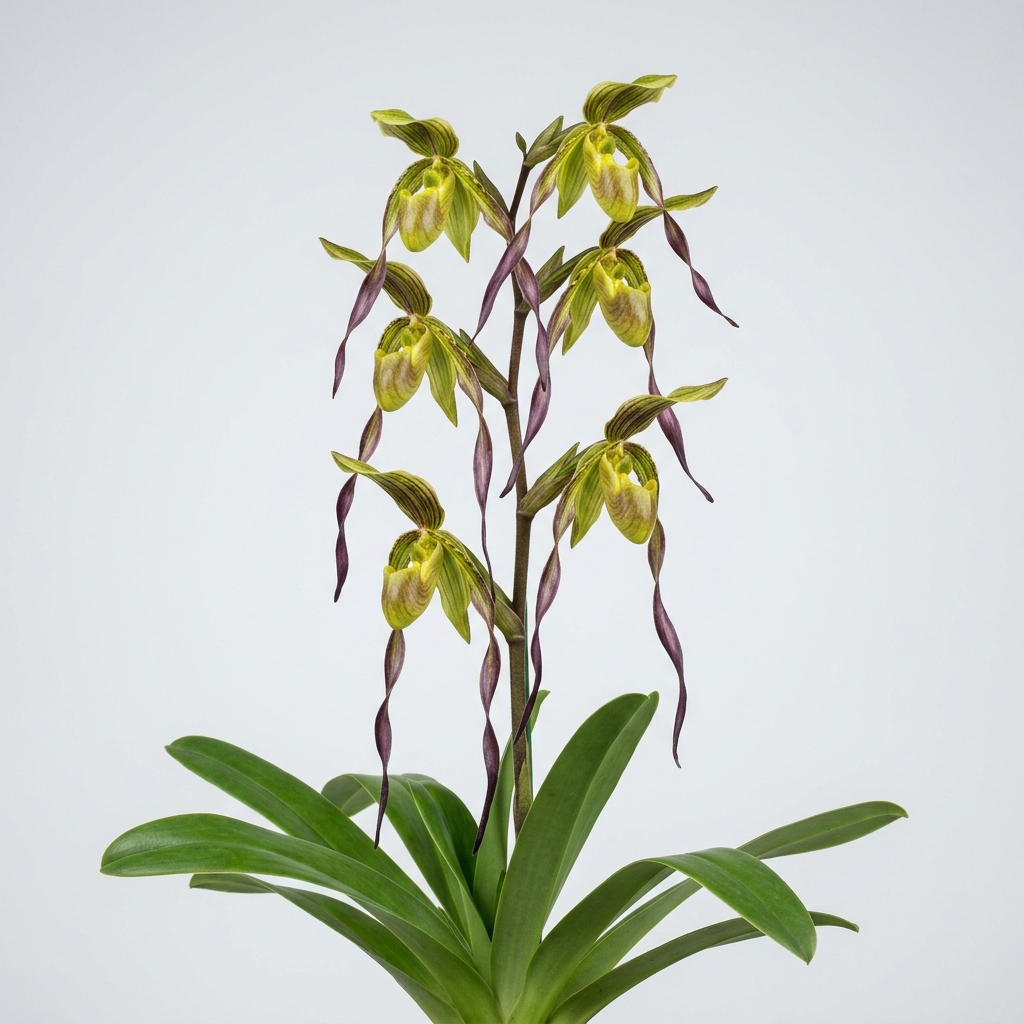
Paphiopedilum parishii is a magnificent multi-floral slipper orchid highly prized by collectors for its dramatic, exotic appearance. Unlike single-flowered slipper orchids, this species produces a stately spike adorned with several blossoms simultaneously, creating an unforgettable display. Its most striking feature is its long, twisted, ribbon-like petals that drape elegantly downward, giving the flowers a whimsical, dancing appearance.
This orchid is particularly appealing to intermediate and advanced growers who appreciate the unique challenges and rewards of cultivating species orchids. Native to the mountainous regions of Southeast Asia, it thrives in environments that mimic its humid, shaded forest habitats. With proper care and patience, this slow-growing orchid rewards its keeper with long-lasting blooms that remain beautiful for several weeks.
💡 Did You Know?
Unlike many other slipper orchids that feature mottled or variegated foliage, Paphiopedilum parishii is distinguished by its solid, leathery green leaves. This species is also notable for its epiphytic lifestyle, frequently found growing high in the mossy forks of forest trees in its native Southeast Asian habitats, rather than on the forest floor.
🌿 Botanical Overview
Paphiopedilum parishii is a robust, strap-leafed orchid species native to countries such as Myanmar, Thailand, Vietnam, and southwestern China. In its natural habitat, it is primarily found growing as an epiphyte in the mossy forks of large trees, or occasionally as a lithophyte on shaded limestone cliffs. These environments provide the plant with constant moisture, high humidity, and excellent drainage around its root system.
Unlike many other Paphiopedilum species that feature beautifully mottled or variegated foliage, this orchid produces solid, clear green leaves. The leaves are thick, leathery, and can grow quite large, forming a fan-shaped growth habit. This vegetative structure is highly efficient at capturing filtered light beneath the dense forest canopy, allowing the plant to sustain its slow but steady growth throughout the year.
🌸 Flower Characteristics
The flowering of Paphiopedilum parishii is a spectacular event. A single, stout inflorescence emerges from the center of a mature leaf fan, typically carrying anywhere from three to ten flowers. The blooms open sequentially or nearly simultaneously, creating a tiered display of exotic shapes and colors. Each flower is relatively large, dominated by its unique structural elements.
The dorsal sepal is broad, pale green or yellowish-green, and often curves slightly forward over the pouch. The most defining characteristic of this species is its petals, which are remarkably long, narrow, and twisted. These petals start as a pale green near the base, decorated with dark spots or warts, and transition into a deep, glossy purple-brown toward their tips. The pouch, or labellum, is helmet-shaped and typically presents a yellowish-green to bronze-green coloration, completing the flower’s intricate, predatory look.
Fragrance & Bloom Profile
While some orchid enthusiasts report a very faint, earthy or herbaceous scent under warm, humid conditions, a distinct or sweet fragrance is not consistently documented for Paphiopedilum parishii. Growers should cultivate this species primarily for its outstanding visual appeal rather than its scent profile.
What the flowers lack in fragrance, they more than make up for in longevity. A single bloom spike can remain in pristine condition for six to eight weeks, especially when kept in a cool, stable environment away from drafts. The sequential opening of the flowers ensures that the overall blooming period can extend over a significant portion of the summer.
Parentage & Hybrid Lineage
Paphiopedilum parishii is a distinct, naturally occurring species rather than a horticultural hybrid. Because of its unique multi-floral habit and dramatic, twisted petals, it has been used extensively in orchid hybridizing programs. Breeders have crossed it with other slipper orchid species to create stunning primary hybrids that inherit its elegant petal shape and multi-flowering characteristics.
In general grower references, the exact registration history of individual cultivars derived from this species can vary, and specific award histories are not consistently documented across all regional orchid societies. However, any hybrid carrying parishii heritage is highly sought after for its architectural beauty and reliable multi-floral blooming habit.
🌱 Growing Conditions
To grow Paphiopedilum parishii successfully, it is important to replicate its native intermediate-to-warm forest environment. It prefers bright, filtered light, similar to the conditions favored by many Phalaenopsis orchids, but can tolerate slightly brighter conditions if high humidity is maintained. Direct, midday sunlight must be avoided, as it will quickly scorch the solid green leaves.
💡 Care Tip
Provide constant, gentle air movement around your orchid at all times. High is absolutely vital for this species, but stagnant air can quickly lead to bacterial leaf spot or crown rot, especially in warm conditions.
Temperature: wise, this orchid thrives in daytime temperatures ranging from 75°F to 85°F, with a night drop to around 60°F to 65°F. This temperature fluctuation is highly beneficial, as it mimics the natural daily cycle of its mountainous habitats and helps stimulate healthy growth and eventual spike production. High humidity of 60% to 80% is ideal, and it must always be accompanied by gentle, continuous air movement to prevent fungal issues.
Watering, Feeding & Potting Media
Paphiopedilum parishii does not possess pseudobulbs to store water, meaning it requires consistent moisture at its roots. The potting medium should never be allowed to dry out completely, but it must also never remain soggy or waterlogged. Water the plant thoroughly when the top inch of the medium begins to feel slightly dry to the touch.
A well-draining potting mix is essential. A blend of medium-grade fir bark, perlite, charcoal, and a small amount of chopped sphagnum moss works exceptionally well. Because this species occasionally grows on limestone in the wild, some growers add a small amount of oyster shell or dolomite lime to the mix, though this is not strictly necessary if high-quality water and balanced fertilizers are used. Feed the plant with a highly diluted, balanced orchid fertilizer every two to three weeks during the active growing season, flushing the pot with pure water periodically to prevent salt buildup.
Blooming Season & Care Notes
The typical blooming season for Paphiopedilum parishii spans from late spring through the summer months. The development of the flower spike is a slow process that can take several months from the first appearance of the sheath in the center of the leaf fan. During this time, maintain stable environmental conditions to prevent the developing buds from blasting.
Once the flowers have faded, allow the spike to dry naturally before cutting it back close to the base of the plant. Repotting should be performed every one to two years, ideally in the spring or immediately after the blooming cycle has finished. This timing allows the plant to establish its roots in fresh media before the onset of the winter resting period.
⚠️ Common Issues
⚠️ Common Mistake
Avoid letting the potting medium dry out completely between waterings. While Paphiopedilum parishii dislikes soggy roots, prolonged dryness can permanently damage its fine root system, leading to bud blast and severely stalled growth.
- Root Rot: Caused by overwatering or compacted, decomposing potting media that suffocates the roots.
- Leaf Spotting: Fungal or bacterial spots can develop on the leaves if water is allowed to sit in the crown or if air circulation is inadequate.
- Bud Blast: The sudden drying or dropping of flower buds, usually triggered by rapid changes in temperature, low humidity, or drafty conditions.
- Pests: Mealybugs and scale can occasionally hide in the tight crevices of the leaf fans; treat promptly with insecticidal soap or horticultural oil.
❓ Frequently Asked Questions
How long do the flowers of Paphiopedilum parishii last?
Individual flowers of Paphiopedilum parishii can last between six to eight weeks. Because it is a multi-floral species with blooms that open sequentially, the entire flowering display on a single spike can often be enjoyed for up to two months under optimal conditions.
Does Paphiopedilum parishii need a winter rest?
This species does not require a severe dry winter rest, but it does benefit from a slight reduction in watering and fertilizer during the cooler, darker winter months. Maintaining a distinct temperature drop at night during this period can help stimulate the plant to produce flower spikes in the spring.
Why are the tips of my orchid’s leaves turning brown?
Brown leaf tips are commonly caused by a buildup of fertilizer salts in the potting medium or by using water with a high mineral content. To resolve this, flush the pot thoroughly with pure rainwater or distilled water, and reduce the concentration of your fertilizer.
Can I grow Paphiopedilum parishii under artificial LED lights?
Yes, Paphiopedilum parishii can be grown successfully under LED grow lights. Position the plant so it receives moderate, diffused light, ensuring the leaves do not become overly warm, and maintain a consistent light cycle of 12 to 14 hours per day.
⭐ Final Growing Notes
Paphiopedilum parishii is a true masterpiece of the orchid world, offering a dramatic architectural presence even when not in bloom. While its slow growth rate requires a measure of patience from the grower, the reward of its magnificent, multi-flowered spikes with their long, twisted petals is well worth the wait. By providing consistent moisture, high humidity, and gentle air movement, you can enjoy this spectacular slipper orchid species in your collection for many years to come.
🌱 Propagation Tip
This species is best propagated by careful division during the spring repotting cycle. Ensure that each new division has at least three healthy, mature growths with active root systems to guarantee successful establishment and minimize transplant shock.
⭐ Expert Advice
To encourage robust blooming, provide a slight drop in nighttime temperatures during the autumn and winter months. This natural differential mimics its native high-altitude habitat and helps trigger the development of strong flower spikes.




Leave A Comment