
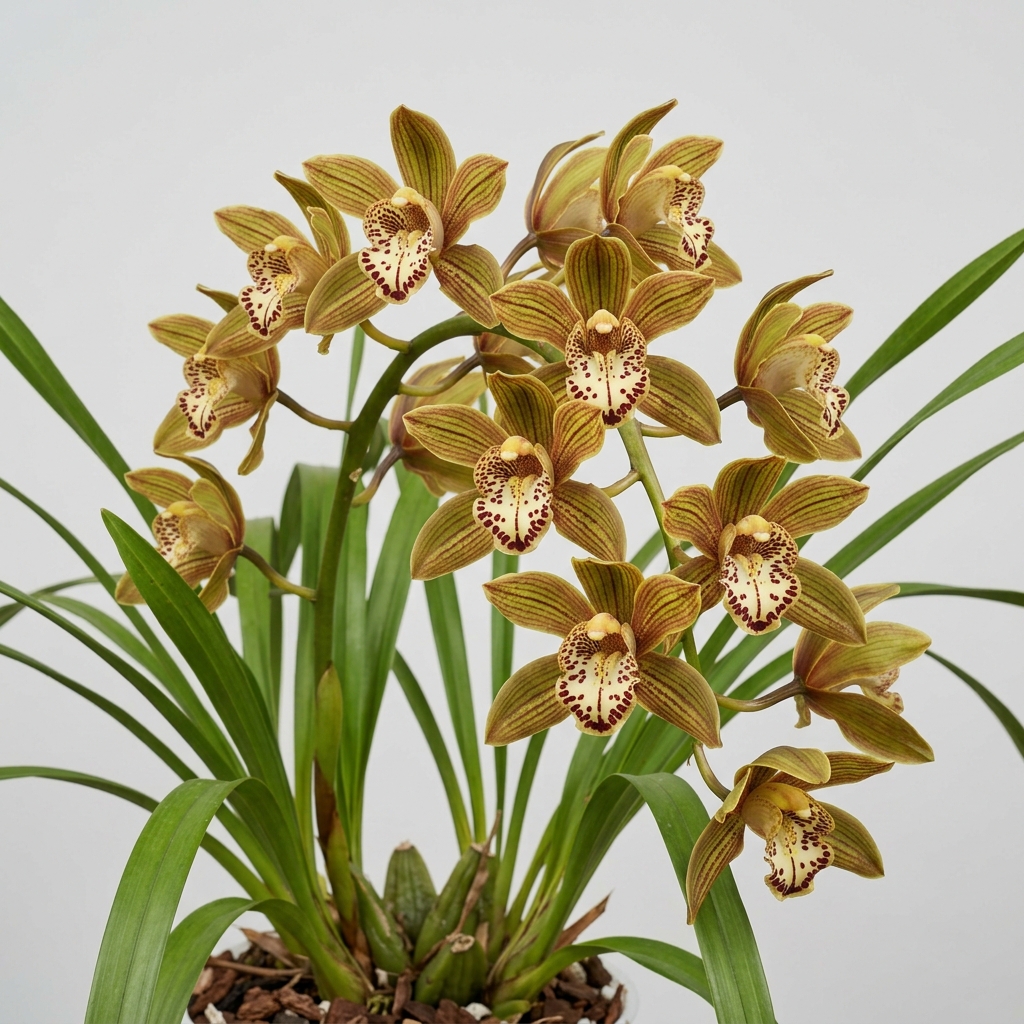
Cymbidium tracyanum is a magnificent and highly sought-after orchid species, celebrated for its dramatic, large blooms and exceptionally powerful fragrance. Originating from the cool, mountainous regions of Southeast Asia, this robust grower produces long, arching spikes laden with striking, tiger-striped flowers that command attention in any collection. Its vigorous growth habit, characterized by large pseudobulbs and elegant, strap-like foliage, makes it an impressive specimen plant that rewards attentive growers with a spectacular seasonal display.
Cultivators highly value this species not only for its exotic, wild appearance but also for its reliable autumn-to-winter blooming cycle. While it requires specific temperature drops to initiate flowering, its overall resilience makes it an excellent choice for intermediate and advanced orchid enthusiasts looking to expand their cool-growing collection. When provided with the correct seasonal cues, a mature specimen can produce multiple flower spikes, filling an entire growing space with its rich, spicy aroma.
💡 Did You Know?
Cymbidium tracyanum is part of the Cymbidium orchid group, a favorite among growers because its flowers, growth habit, and care needs make it useful for comparing cultivated orchids within the same . Observing its leaves, roots, and bloom spikes can help growers understand how this cultivar responds to indoor conditions.
🌿 Botanical Overview
In its native habitats, Cymbidium tracyanum is found growing as an epiphyte on the mossy branches of large trees, as a lithophyte on damp rocks, or occasionally as a terrestrial plant in wet montane forests. It is indigenous to regions spanning southwestern China, Myanmar, Thailand, and Vietnam, typically thriving at elevations between 1,200 and 1,900 meters. This high-altitude origin explains the orchid’s strong preference for cooler temperatures and distinct seasonal shifts.
The plant features large, ovoid pseudobulbs that are slightly compressed and grow tightly clustered together. From the top of these pseudobulbs emerge several long, arching, strap-like leaves that are dark green and leathery. The root system is extensive, consisting of thick, fleshy roots covered in velamen, designed to absorb moisture and nutrients rapidly from rain and organic debris in its natural canopy home.
🌸 Flower Characteristics
The blossoms of Cymbidium tracyanum are among the most visually striking in the genus. Each flower can measure up to 10 to 15 centimeters across, presenting a dramatic, wild aesthetic. The sepals and petals are narrow, slightly twisted, and display an olive-green to yellow-green base color, which is heavily patterned with bold, longitudinal stripes of dark reddish-brown or mahogany.
The lip, or labellum, is three-lobed and serves as the visual centerpiece of the flower. It is cream-colored, heavily spotted with reddish-brown, and features a distinctly hairy or fringed margin along the central lobe. The flowers are arranged on a stout, arching to horizontal inflorescence that can reach up to 120 centimeters in length, carrying anywhere from 10 to 20 flowers that open nearly simultaneously for a breathtaking display.
Fragrance & Bloom Profile
One of the defining characteristics of Cymbidium tracyanum is its intense, spicy-sweet fragrance. Often described as a blend of peaches, cloves, and honey, the scent is exceptionally powerful and can easily perfume a large room or greenhouse. The fragrance is typically most pronounced during the morning and early afternoon hours, stimulated by warmth and light.
The blooms are remarkably long-lasting, often remaining in pristine condition for six to eight weeks, provided the plant is kept in cool, stable conditions. Because the flowers open in late autumn and early winter, they provide a welcome splash of color and fragrance when many other orchid species are dormant.
Parentage & Hybrid Lineage
As a primary species, Cymbidium tracyanum has no hybrid parentage; it is a naturally occurring species found in the wild. However, its unique traits—namely its large flower size, striking striped patterns, and intense fragrance—have made it a highly valued parent in orchid hybridizing programs. It has been crossed with numerous other Cymbidium species and hybrids to produce popular, fragrant, cool-growing offspring.
In historical orchid literature, its introduction to cultivation in the late 19th century sparked significant interest, and it remains a cornerstone species for breeders aiming to introduce wild, exotic patterns and reliable autumn-blooming habits into modern Cymbidium lines.
🌱 Growing Conditions
To grow Cymbidium tracyanum successfully, growers should mimic its montane forest habitat. It thrives in bright, filtered light. While it can tolerate some direct morning sun, harsh afternoon sunlight should be avoided to prevent leaf scorch. A light green leaf color typically indicates the plant is receiving the ideal amount of light, whereas dark green leaves suggest it needs more light to bloom.
💡 Care Tip
For best results, grow Cymbidium tracyanum in bright filtered with steady and gentle airflow. Avoid placing the plant in harsh midday sun, but do not keep it in a dark corner; weak is one of the most common reasons cultivated orchids refuse to rebloom.
Temperature control is critical for this species. During the spring and summer growing season, it prefers intermediate temperatures ranging from 65°F to 80°F (18°C to 27°C). However, in late summer and autumn, the plant requires a distinct drop in night temperatures down to 50°F to 55°F (10°C to 13°C) for several weeks. This cool period is essential to trigger the initiation of flower spikes.
Watering, Feeding & Potting Media
During the active growing season in spring and summer, Cymbidium tracyanum requires abundant water. The potting medium should be kept consistently moist but never waterlogged. As the weather cools in autumn and winter, watering should be reduced, allowing the medium to dry out slightly between waterings, though it should never be allowed to dry out completely.
Feed the plant regularly during the growing season with a balanced orchid fertilizer. Many growers recommend switching to a low-nitrogen, high-phosphorus formula in late summer to encourage spike development. A well-draining potting mix is essential to prevent root rot. A mixture of medium-grade fir bark, perlite, charcoal, and a small amount of peat moss or chopped sphagnum works well to retain moisture while ensuring excellent drainage and aeration.
Blooming Season & Care Notes
The primary blooming season for Cymbidium tracyanum is autumn through early winter. Once the flower spikes begin to emerge from the base of the pseudobulbs, they should be monitored closely. Because the spikes are long and carry heavy flowers, they often require staking to support their weight and present the blooms elegantly.
Avoid moving or rotating the plant once the flower buds begin to swell, as sudden changes in light direction can cause the buds to twist or drop. Repotting should be performed only when necessary, typically every two to three years immediately after the blooming cycle has finished. This species prefers to be slightly pot-bound, so choose a new container that allows for only one or two years of additional growth.
⚠️ Common Issues
While generally robust, Cymbidium tracyanum can encounter several common cultivation issues:
⚠️ Common Mistake
The most common mistake is by calendar instead of root and potting-media condition. Cymbidium roots need moisture and air at the same time, so constantly wet bark or sphagnum can lead to root loss even when the leaves still look healthy.
- Bud Blast:
Sudden drops in humidity, drafty conditions, or drastic temperature fluctuations can cause developing flower buds to yellow and drop before opening. - Root Rot:
Caused by overwatering or a degraded, compacted potting medium that prevents oxygen from reaching the roots. - Spider Mites and Scale: These pests can occasionally infest the undersides of the long leaves, particularly in dry, warm environments with poor air circulation.
- Leaf Tip Burn: Often a sign of mineral buildup from hard water or excessive fertilizer application; flushing the pot thoroughly with pure water can help.
❓ Frequently Asked Questions
How do I get my Cymbidium tracyanum to bloom?
The most common reason for a lack of blooms is insufficient light or a lack of cool night temperatures in the autumn. Ensure the plant receives bright, filtered light throughout the summer, and expose it to night temperatures around 50°F to 55°F (10°C to 13°C) for several weeks in late summer and early autumn to trigger spike initiation.
Can Cymbidium tracyanum be grown indoors?
Yes, but it can be challenging due to its size and its requirement for cool autumn nights. Growing it outdoors on a shaded patio or balcony during the summer and autumn, and bringing it indoors once the flower buds begin to open, is often the most successful approach for home growers.
How often should I repot this orchid?
Repotting should typically be done every two to three years, immediately after the flowering season has ended. Only repot when the pseudobulbs have completely filled the container or when the potting medium has begun to break down and lose its drainage properties.
What does a healthy Cymbidium tracyanum look like?
A healthy plant will feature firm, plump pseudobulbs, upright to gently arching leaves of a medium-green color, and a vigorous root system with active, green-tipped roots. Leaves that are dark green often indicate insufficient light, while yellowing leaves may suggest too much direct sun or root issues.
⭐ Final Growing Notes
Cymbidium tracyanum remains a classic favorite among orchid collectors for its wild, tiger-striped beauty and unforgettable fragrance. While its large size and specific temperature requirements demand some dedication, the reward of a fully mature specimen in peak autumn bloom is unmatched. By providing bright light, consistent moisture during the growing season, and the essential cool autumn nights, growers can enjoy this spectacular Southeast Asian treasure year after year.
🌱 Propagation Tip
Propagation should be approached patiently. Most home growers should wait for natural keikis or divide only mature, healthy plants when the orchid type allows it. Never remove a young growth until it has strong roots and enough leaves to support itself away from the parent plant.
⭐ Expert Advice
Repot after flowering when fresh root tips begin to appear. This timing helps the plant anchor quickly into new bark or sphagnum and reduces stress, especially for orchids grown indoors where airflow, , and drying speed can change from season to season.




Leave A Comment