
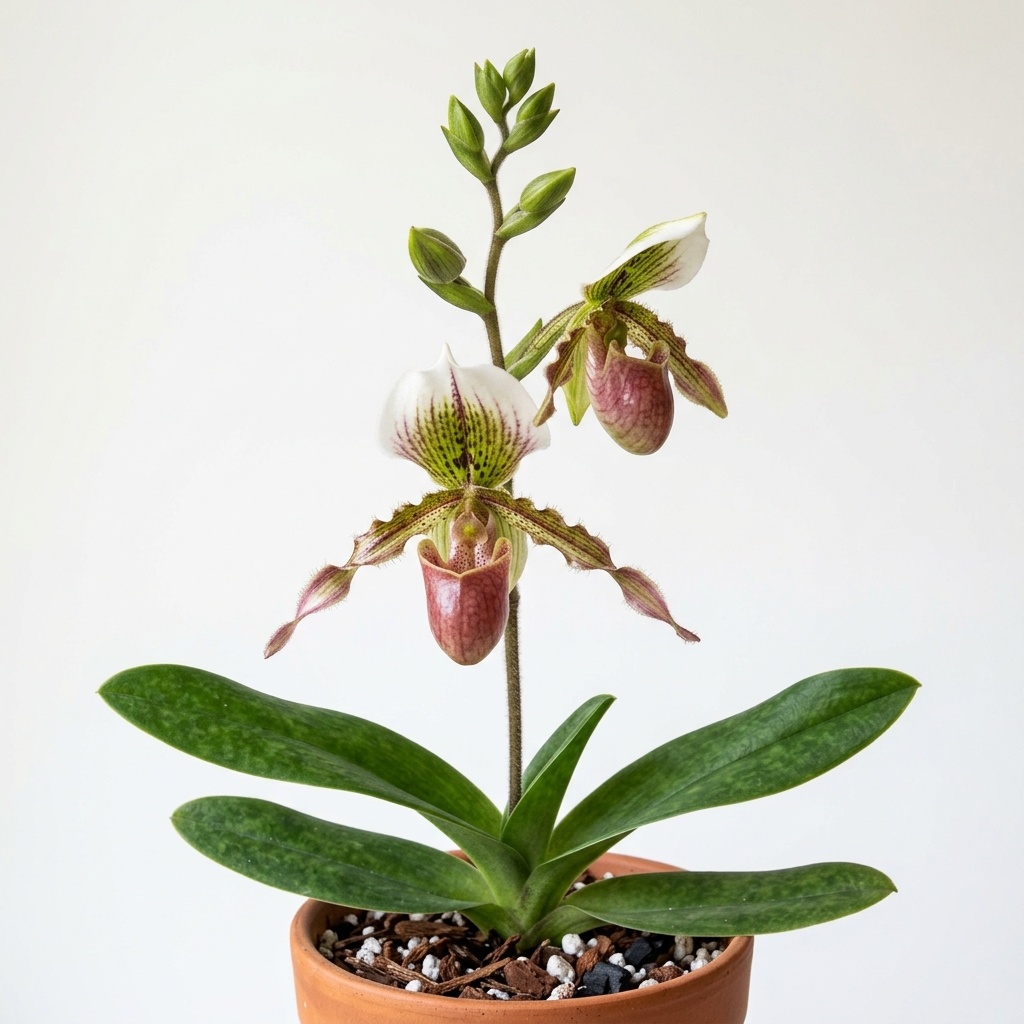
Paphiopedilum Victoria-Reginae, commonly known as the Queen Victoria slipper orchid, is a highly prized species native to the tropical forests of Sumatra. It is celebrated among collectors for its fascinating sequential blooming habit, where a single flower spike can produce blossoms continuously over several months. This unique characteristic ensures a long-lasting and dynamic display that makes it a standout addition to any indoor orchid collection.
This terrestrial orchid features attractive, strap-like green leaves and striking flowers with twisted, fringed petals and a deeply pocketed, pouch-like lip. Cultivating this species successfully requires replicating its humid, shaded forest floor habitat. While it demands consistent moisture and careful attention to humidity, the reward of its elegant, enduring blooms makes it a highly satisfying plant for intermediate growers.
💡 Did You Know?
Paphiopedilum Victoria-Reginae belongs to the Paphiopedilum orchid group, where flower presentation is often just as important as . White-flowered cultivars are especially valued indoors because their pale blooms reflect well and pair easily with many home, greenhouse, and display settings.
🌿 Botanical Overview
Paphiopedilum Victoria-Reginae is a terrestrial or lithophytic orchid species native to the island of Sumatra in Indonesia. It typically grows on steep, shaded limestone cliffs and slopes, rooted in pockets of rich leaf litter and moss. This natural environment provides constant moisture, excellent drainage, and shelter from direct tropical sunlight.
Structurally, the plant produces fans of attractive, strap-like leaves that can be solid green or exhibit subtle, dark green mottling depending on the specific population and light levels. Unlike epiphytic orchids, it lacks pseudobulbs, meaning it relies on its thick, fleshy roots and succulent leaves to store moisture and nutrients, making consistent care essential.
🌸 Flower Characteristics
The flowers of Paphiopedilum Victoria-Reginae are highly distinctive and structurally complex. The dorsal sepal is typically pale green with white margins and faint striping. The lateral petals are narrow, distinctly twisted, and fringed with fine hairs, showcasing shades of purplish-pink and green. The most prominent feature is the pouch-shaped lip, or labellum, which displays a rosy-pink to purplish hue. The flowers are produced sequentially on a sturdy, dark inflorescence, with one or two blossoms open simultaneously while new buds continuously develop at the tip.
Fragrance & Bloom Profile
Paphiopedilum Victoria-Reginae is generally not celebrated for its scent, and most growers report that the flowers are completely fragrance-free. The true appeal of its bloom profile lies in its remarkable sequential blooming habit. A single flower spike can remain active for six to twelve months, slowly producing a succession of individual flowers. This long-term display provides an exceptionally extended period of interest compared to orchids that bloom all at once.
Parentage & Hybrid Lineage
As a naturally occurring species rather than a man-made hybrid, Paphiopedilum Victoria-Reginae does not have parentage in the traditional cultivar sense. It belongs to the section Cochlopetalum within the genus Paphiopedilum. It has, however, been used as a parent in hybridizing programs to introduce sequential blooming characteristics and ruffled, twisted petals to new slipper orchid crosses. When purchasing, growers should ensure they are buying from reputable nurseries to support conservation and avoid wild-collected specimens.
🌱 Growing Conditions
To thrive, this orchid requires low to moderate indirect light, similar to the dappled shade of its native forest floor. East-facing windows or shaded south-facing windows are ideal, as direct afternoon sun will quickly scorch the foliage. It prefers intermediate to warm temperatures, ideally ranging from 65 to 80 degrees Fahrenheit during the day, with a slight drop at night to stimulate growth. High humidity levels of 60% to 80% are highly beneficial, accompanied by gentle, continuous air movement to prevent stagnant air and fungal issues.
💡 Care Tip
For best results, grow Paphiopedilum Victoria-Reginae in bright filtered with steady and gentle airflow. Avoid placing the plant in harsh midday sun, but do not keep it in a dark corner; weak is one of the most common reasons cultivated orchids refuse to rebloom.
Watering, Feeding & Potting Media
Because Paphiopedilum Victoria-Reginae lacks water-storing pseudobulbs, the potting medium should never be allowed to dry out completely. Water the plant thoroughly just as the medium approaches dryness, typically once or twice a week depending on household conditions. Use a well-draining, moisture-retentive mix consisting of fine fir bark, perlite, and horticultural charcoal. Slipper orchids are sensitive to salt buildup, so use pure water (such as rainwater or reverse osmosis water) and apply a highly diluted, balanced orchid fertilizer every two to three waterings, flushing the pot with pure water periodically.
Blooming Season & Care Notes
While individual flowers can appear at various times of the year, the primary blooming cycle typically begins in late winter or spring and can extend well into autumn due to the sequential nature of the spike. It is crucial not to cut the green flower spike even after the first flower falls, as new buds will continue to emerge from the tip. Only remove the spike once it has turned completely brown and dry. Repotting is best done every one to two years in the spring, immediately after the main blooming cycle slows down, to refresh the decomposing media.
⚠️ Common Issues
⚠️ Common Mistake
The most common mistake is by calendar instead of root and potting-media condition. Paphiopedilum roots need moisture and air at the same time, so constantly wet bark or sphagnum can lead to root loss even when the leaves still look healthy.
- Bud Blast: Sudden dropping of unopened buds, often caused by rapid changes in temperature, low humidity, or drafty locations.
- Root Rot: Caused by overwatering or compacted, poorly draining potting media that deprives the roots of oxygen.
- Leaf Scorch: Bleached or brown patches on the leaves resulting from exposure to direct, intense sunlight.
- Mealybugs and Scale: Common pests that hide in the tight crevices of the leaf fans and beneath the flower bracts.
- Fungal Leaf Spotting: Dark spots on the foliage, usually triggered by water resting on the leaves in cool, stagnant conditions.
❓ Frequently Asked Questions
How long do the flowers on Paphiopedilum Victoria-Reginae last?
While an individual flower typically lasts for three to four weeks, the entire sequential blooming process on a single spike can continue for six to twelve months, with new buds opening as older flowers fade.
Should I cut the flower spike after the first bloom drops?
No, do not cut the spike. This species is a sequential bloomer, meaning it produces flowers one after another on the same stem. Only cut the spike when it turns entirely brown, dry, and woody.
What is the best potting mix for this slipper orchid?
A mix of fine-grade fir bark, perlite, and charcoal works best. Some growers also add a small amount of chopped sphagnum moss to retain moisture, or limestone chips to mimic its natural alkaline cliffside habitat.
Why are the leaves on my Paphiopedilum turning yellow?
Yellowing leaves can indicate several issues, including overwatering leading to root rot, underwatering, or excessive light exposure. Check the roots first; if they are firm and brown, adjust your light or watering schedule accordingly.
⭐ Final Growing Notes
Paphiopedilum Victoria-Reginae remains an exceptional choice for orchid enthusiasts seeking a rewarding, long-blooming species. By providing consistent moisture, moderate warmth, and shaded conditions, growers can enjoy its unique, twisted blossoms for months on end, bringing a touch of Sumatran forest elegance to the indoor growing space.
⚕️ Health, Safety & Edibility
Understanding how a plant interacts with people, pets, and the surrounding environment is part of responsible cultivation. This section uses conservative, general guidance and does not replace professional medical or veterinary advice.
Human Safety: No published evidence currently identifies species-specific toxicity concerns for Paphiopedilum Victoria-Reginae during normal handling. As with most ornamental plants, it should not be intentionally consumed.
Pet Safety: Published information does not indicate that this orchid commonly poses a toxicity concern for cats or dogs. However, chewing leaves, flowers, roots, or potting media may still cause mild digestive upset.
Edibility: This orchid is cultivated for ornamental display rather than food. Ornamental plants may carry fertilizers, pesticides, or other horticultural treatments that make them unsuitable for consumption.
Skin Contact: Routine handling is not generally associated with skin irritation. Gardeners with sensitive skin may prefer wearing gloves when repotting, pruning, or handling potting media.
🌱 Propagation Tip
Propagation should be approached patiently. Most home growers should wait for natural keikis or divide only mature, healthy plants when the orchid type allows it. Never remove a young growth until it has strong roots and enough leaves to support itself away from the parent plant.
⭐ Expert Advice
Repot after flowering when fresh root tips begin to appear. This timing helps the plant anchor quickly into new bark or sphagnum and reduces stress, especially for orchids grown indoors where airflow, , and drying speed can change from season to season.

Leave A Comment