
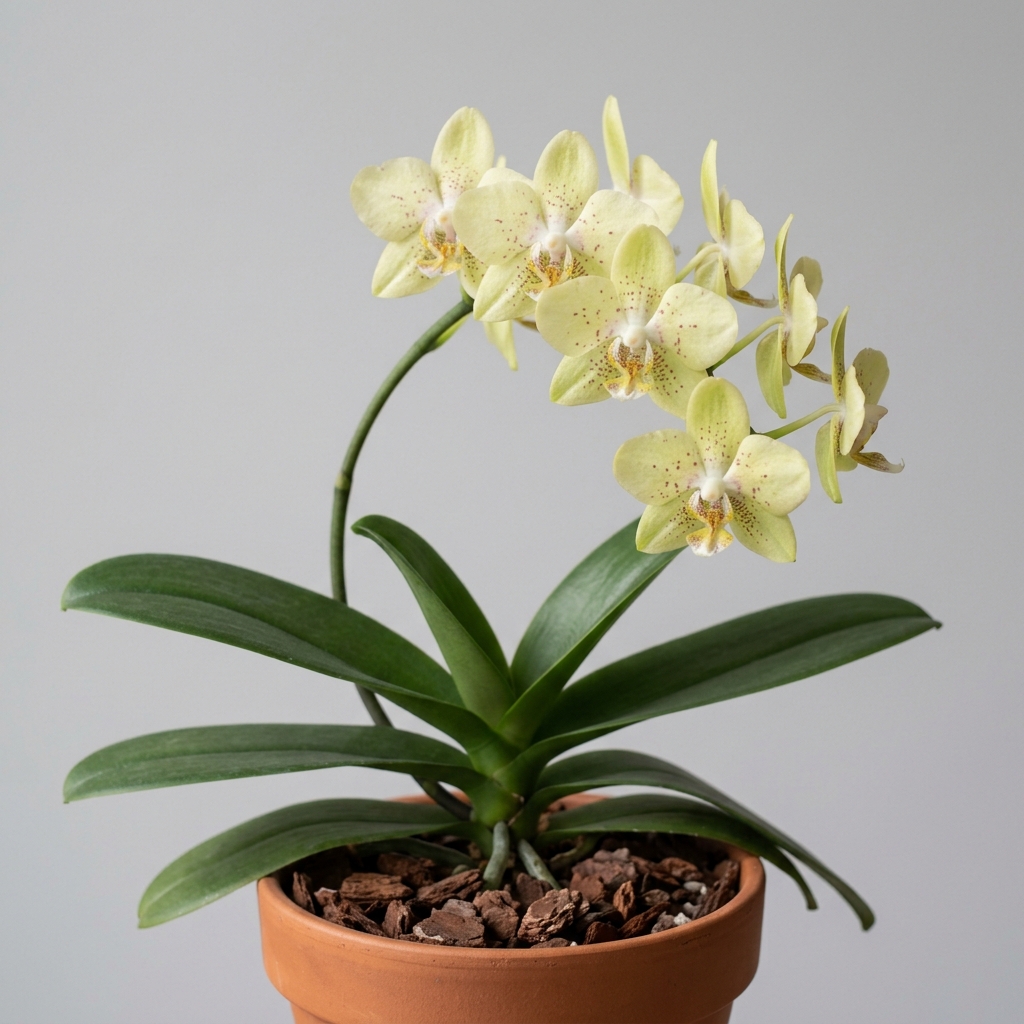
Phalaenopsis Hygrochila represents an intriguing subject within the orchid hobby, bridging the characteristics of classic moth orchids with traits reminiscent of closely related vandaceous genera. Highly valued by collectors for its distinctive growth habit and charming floral presentation, this orchid offers a unique aesthetic that departs slightly from standard commercial hybrids. Its compact size and resilient nature make it an appealing choice for growers looking to diversify their indoor collections.
While many modern Phalaenopsis hybrids are bred primarily for massive, long-lasting blooms, cultivars within the Hygrochila influence often emphasize structural elegance and intricate floral details. This orchid typically produces arching spikes adorned with uniquely shaped flowers that showcase a complex lip structure. Cultivating this plant successfully requires a basic understanding of its environmental preferences, which lean toward consistent warmth and moderate humidity.
💡 Did You Know?
Phalaenopsis Hygrochila exhibits a growth habit heavily influenced by its epiphytic ancestors, which naturally cling to rough tree bark in tropical canopies. Its thick, silvery roots are coated in velamen, a specialized spongy tissue that acts like a sponge, rapidly absorbing moisture and atmospheric nutrients from morning mists and passing rain showers before drying out quickly in the breeze.
🌿 Botanical Overview
Phalaenopsis Hygrochila is characterized by its monopodial growth habit, featuring thick, leathery leaves that grow opposite one another along a short central stem. The root system is robust, often producing thick, silvery aerial roots covered in velamen, which helps the plant absorb moisture and nutrients from the air. This growth form is typical of epiphytic orchids that naturally grow on tree trunks and branches in tropical forest canopies.
The foliage of this cultivar is generally a deep, vibrant green, though light intensity can cause subtle variations in coloration. The leaves are designed to store water, allowing the plant to withstand brief dry spells in its native-like environments. Understanding this epiphytic nature is key to providing the proper structural support and root aeration in a home or greenhouse setting.
🌸 Flower Characteristics
The blossoms of Phalaenopsis Hygrochila are a testament to the diversity of the orchid family, featuring a structure that is both delicate and complex. The petals and sepals are typically well-proportioned, often displaying a base color of creamy yellow, pale green, or soft white, frequently accented by intricate reddish-brown or purple spotting and barring. The most striking feature is the lip, or labellum, which is highly modified and often shows a fleshy, detailed structure designed to attract specific pollinators.
Flowers are borne on arching or slightly pendulous inflorescences that emerge from the leaf axils. Depending on the maturity of the plant and growing conditions, each spike can carry several well-spaced blooms. The overall presentation is elegant, with the flowers nodding slightly, creating a graceful display that lasts for several weeks under optimal conditions.
Fragrance & Bloom Profile
Fragrance within this group can be variable and is not consistently documented across all individual specimens. Some growers report a subtle, sweet, or spicy scent that becomes more pronounced during the morning hours when temperatures rise and light levels increase. However, fragrance intensity is highly dependent on environmental factors such as humidity, temperature, and air circulation, and some plants may exhibit little to no discernible aroma.
The blooming cycle typically lasts between four to eight weeks per spike. The flowers open sequentially or nearly simultaneously, providing a sustained period of visual interest. To maximize the lifespan of the blooms, it is advisable to maintain stable environmental conditions and avoid moving the plant frequently while it is in bud or active flower.
Parentage & Hybrid Lineage
The exact parentage and hybrid lineage of Phalaenopsis Hygrochila are subject to some taxonomic discussion and are not always consistently documented in standard commercial grower references. The name itself suggests a historical or structural connection to the genus Hygrochila (often associated with Hygrochila parishii, now classified by some taxonomists under Phalaenopsis). This lineage introduces distinct vegetative and floral traits, such as a more compact growth habit and uniquely shaped lips, distinguishing it from standard complex Phalaenopsis hybrids.
Because registration records for specific cultivar selections can vary, growers should treat this plant as a specialized hybrid or species-type selection. This lineage typically imparts a degree of vigor and a preference for conditions that mimic the warm, humid, monsoon-influenced climates of Southeast Asia, where ancestral species naturally thrive.
🌱 Growing Conditions
To cultivate Phalaenopsis Hygrochila successfully, growers should aim to provide bright, filtered light, avoiding direct afternoon sunlight which can easily scorch the fleshy leaves. An east-facing window or a shaded south-facing window is often ideal. If growing under artificial lights, such as LEDs, position the plant at a distance that provides moderate intensity without generating excess heat.
💡 Care Tip
Ensure your Phalaenopsis Hygrochila receives gentle, continuous air movement. Placing a small, low-powered fan near your growing area helps prevent stagnant air, which significantly reduces the risk of fungal leaf spots and crown rot while mimicking the natural breezes of its native canopy habitat.
Temperature ranges should reflect a warm-to-intermediate regime. Daytime temperatures are best maintained between 70°F and 85°F (21°C to 29°C), with a slight drop of 10°F (5°C to 6°C) at night to encourage metabolic health and trigger bud initiation. Relative humidity should ideally remain between 50% and 70%, supported by adequate air movement to prevent stagnant air pockets around the foliage and roots.
Watering, Feeding & Potting Media
Watering should be tailored to the drying cycle of the potting medium. Epiphytic orchids like Phalaenopsis Hygrochila require their roots to dry slightly between waterings to prevent suffocation and rot. Thoroughly saturate the medium when watering, then allow it to become nearly dry before watering again. Using lukewarm, low-mineral water, such as rainwater or reverse osmosis water, will help prevent mineral buildup on the sensitive roots.
A high-quality, free-draining potting mix is essential. Coarse fir bark mixed with perlite, charcoal, and a small amount of sphagnum moss works exceptionally well to balance moisture retention and aeration. Alternatively, mature plants with robust root systems can be mounted on cork bark or tree fern plaques if high humidity can be consistently maintained. Feed the plant with a balanced, diluted orchid fertilizer weekly or bi-weekly during the active growing season, using the “weakly, weekly” approach.
Blooming Season & Care Notes
Phalaenopsis Hygrochila typically initiates its blooming cycle in the late autumn or winter, with flowers opening in the winter or early spring. This process is often triggered by the natural drop in nighttime temperatures and shortening day lengths of autumn. Once the flower spike begins to emerge, maintain consistent watering and avoid shifting the plant’s orientation to the light source, as this can cause the developing buds to twist or drop prematurely.
After the blooms have faded, the flower spike can be evaluated. If the spike remains green, some growers choose to cut it back to a node just below the lowest bloom, which may encourage secondary branching and a second flush of flowers. If the spike turns brown and dry, cut it off cleanly near the base of the plant using sterilized tools. Repotting is best performed in the spring, immediately after flowering concludes and as new root tips begin to emerge.
⚠️ Common Issues
⚠️ Common Mistake
A frequent error is allowing water to collect and sit in the crown of the plant or the leaf joints overnight. This standing water creates a perfect breeding ground for bacterial crown rot, which can quickly destroy the main growing point of the orchid. Always water early in the day so foliage dries by nightfall.
- Root Rot:
Caused by overwatering or compacted, decomposing potting media that suffocates the roots. Affected roots turn mushy and brown. - Bud Blast:
The premature drying and dropping of flower buds, often triggered by sudden temperature fluctuations, low humidity, or drafts. - Leaf Spotting: Fungal or bacterial spots can develop if water is allowed to sit on the leaves or in the crown overnight, especially in cool conditions.
- Dehydration:
Characterized by wrinkled, limp leaves and dry, shriveled roots, usually due to underwatering or a severely damaged root system. - Pests:
Mealybugs, scale, and spider mites can occasionally target the crevices of the leaves and flower spikes; treat promptly with insecticidal soap or neem oil.
❓ Frequently Asked Questions
How often should I water my Phalaenopsis Hygrochila?
Watering frequency depends on your home’s temperature, humidity, and potting medium. As a general rule, water when the potting mix is nearly dry and the roots visible through the pot turn a silvery-gray color. If the roots are still green, the plant has sufficient moisture.
Can this orchid be grown mounted on bark?
Yes, Phalaenopsis Hygrochila is well-suited to mounted culture due to its epiphytic nature. However, mounted orchids dry out much faster than potted ones and typically require daily misting or soaking in environments with high humidity to prevent dehydration.
Why are the flower buds on my orchid turning yellow and falling off?
This issue, known as bud blast, is usually caused by environmental stress. Common culprits include sudden changes in temperature, cold drafts, extremely low humidity, or moving the plant to a new location while the buds are developing.
What is the best potting medium for this cultivar?
A loose, well-aerated medium is best. A mix of medium-grade fir bark, horticultural charcoal, and perlite provides excellent drainage. You can add a small amount of New Zealand sphagnum moss to help retain moisture if your growing environment is dry.
⭐ Final Growing Notes
Phalaenopsis Hygrochila is a rewarding orchid that brings a touch of exotic elegance to any indoor collection. By mimicking its natural epiphytic habitat through careful watering, excellent air circulation, and bright, filtered light, growers can enjoy its unique blooms year after year. While it requires slightly more attention to humidity and root health than mass-market hybrids, its distinctive botanical charm makes it an exceptional addition for any dedicated orchid enthusiast.
⚕️ Health, Safety & Edibility
Understanding how a plant interacts with people, pets, and the surrounding environment is part of responsible cultivation. This section uses conservative, general guidance and does not replace professional medical or veterinary advice.
Human Safety: No published evidence currently identifies species-specific toxicity concerns for Phalaenopsis Hygrochila during normal handling. As with most ornamental plants, it should not be intentionally consumed.
Pet Safety: Published information does not indicate that this orchid commonly poses a toxicity concern for cats or dogs. However, chewing leaves, flowers, roots, or potting media may still cause mild digestive upset.
Edibility: This orchid is cultivated for ornamental display rather than food. Ornamental plants may carry fertilizers, pesticides, or other horticultural treatments that make them unsuitable for consumption.
Skin Contact: Routine handling is not generally associated with skin irritation. Gardeners with sensitive skin may prefer wearing gloves when repotting, pruning, or handling potting media.
🌱 Propagation Tip
Orchid propagation for this cultivar is safest through the natural development of keikis—baby plants that occasionally form on the nodes of old flower spikes. Allow the keiki to grow several roots at least two inches long before carefully detaching it with a sterile blade and potting it in a fine bark mix.
⭐ Expert Advice
To stimulate reliable winter blooming, expose the plant to a subtle drop in nighttime temperatures of about ten degrees Fahrenheit for several weeks in early autumn. This natural differential mimics seasonal shifts and signals the orchid to initiate its flower spikes.

Leave A Comment