
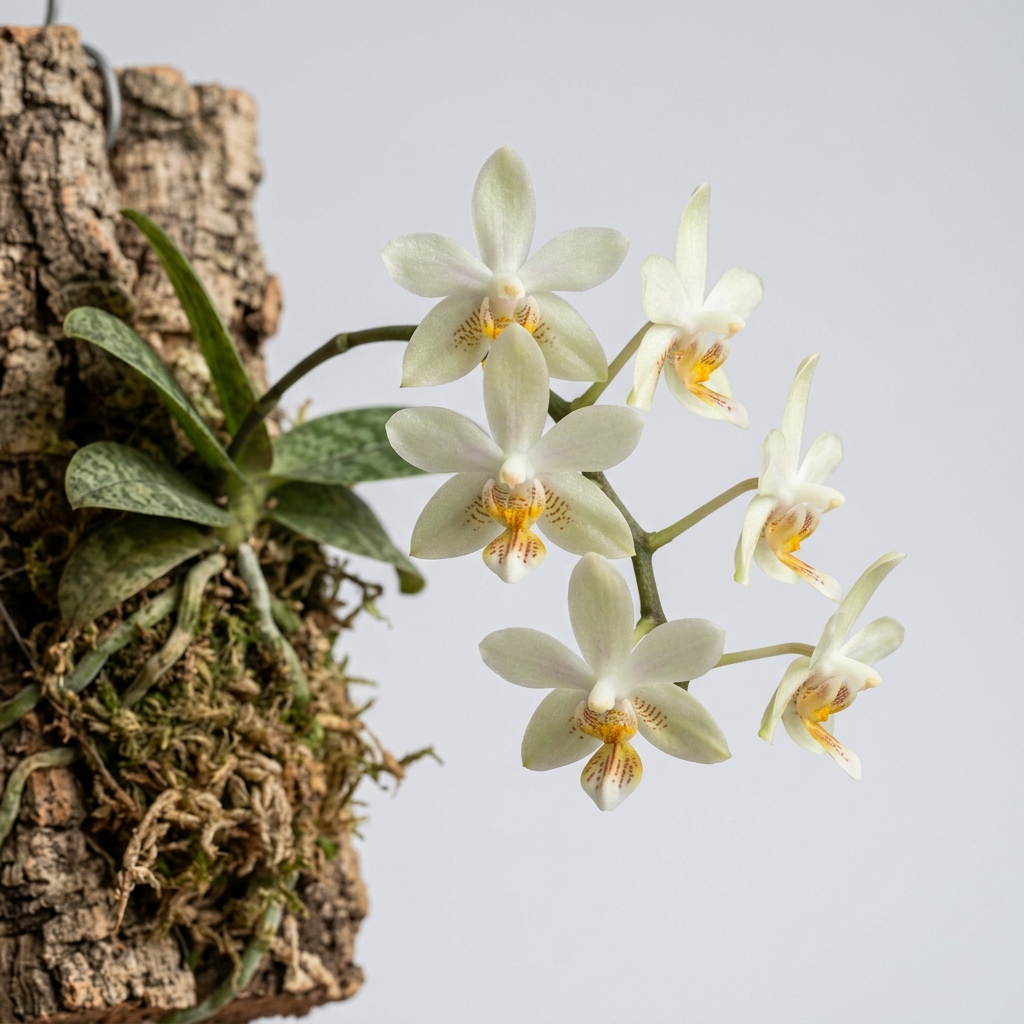
Phalaenopsis Malipoensis is a captivating miniature orchid species highly prized by collectors for its delicate stature and exquisite, pale-toned blossoms. Native to the limestone forests of southern China and northern Vietnam, this epiphytic gem brings a unique aesthetic to indoor collections, contrasting with the large, mass-market moth orchids commonly found in retail stores. Its compact growth habit makes it an exceptional choice for growers with limited space, such as those utilizing terrariums, small shelves, or dedicated orchid cases.
Hobbyists value this species not only for its charming flowers but also for its intriguing growth cycle, which reflects its seasonally dry native habitat. While it requires a bit more attention to humidity and watering cycles than standard commercial hybrids, Phalaenopsis Malipoensis rewards attentive care with elegant, long-lasting blooms. Its understated beauty and botanical significance make it a standout addition for any enthusiast looking to expand their collection beyond traditional hybrid cultivars.
💡 Did You Know?
Phalaenopsis Malipoensis belongs to the Phalaenopsis orchid group, where flower presentation is often just as important as . White-flowered cultivars are especially valued indoors because their pale blooms reflect well and pair easily with many home, greenhouse, and display settings.
🌿 Botanical Overview
Phalaenopsis Malipoensis is a deciduous to semi-evergreen miniature epiphyte that naturally grows on mossy trees and limestone cliffs in shaded, humid environments. In its native habitat, it experiences distinct seasonal shifts, including a cooler, drier winter period. The plant typically produces a small clutch of fleshy, elliptic-obovate leaves that are dark green and sometimes display a subtle silvery sheen or purple undersides when grown under optimal light conditions.
Unlike larger members of the genus, this species maintains a highly compact footprint, with leaves rarely exceeding a few inches in length. Its root system is relatively fine and adapted to clinging to damp bark or mossy rock faces, absorbing moisture rapidly from morning mists and heavy seasonal rains. Understanding this natural growth habit is key to successfully maintaining the orchid in a home environment.
🌸 Flower Characteristics
The flowers of Phalaenopsis Malipoensis are small, typically measuring around one to one and a half inches in diameter, but they possess immense botanical charm. The petals and sepals are typically a pale, translucent greenish-white or soft cream color, providing a neutral backdrop for the more colorful lip. The lip, or labellum, is the focal point of the blossom, featuring striking markings of bright yellow, orange, or reddish-brown, often accompanied by delicate callosities.
The flowers are borne on short, arching inflorescences that emerge from the base of the plant. Each spike can carry several flowers, which open sequentially or simultaneously depending on the vigor of the plant. The presentation is elegant and airy, with the delicate blooms hovering gracefully just above the foliage.
Fragrance & Bloom Profile
A light, sweet, and slightly citrusy or floral fragrance is frequently reported by growers of Phalaenopsis Malipoensis, particularly during the morning hours when humidity is high and temperatures begin to rise. However, fragrance intensity can be highly variable and is often dependent on individual plant genetics, environmental conditions, and the time of day.
The blooms are remarkably long-lasting for a miniature species, often remaining pristine for several weeks. To maximize the duration of the bloom cycle, growers should avoid spraying water directly onto the petals, as excess moisture can encourage fungal spotting or premature flower drop.
Parentage & Hybrid Lineage
Phalaenopsis Malipoensis is a distinct, naturally occurring species rather than a man-made hybrid. First described in the late 20th century, it belongs to the subgenus Parishianae, a group of miniature Phalaenopsis species known for their small size and distinctive lip structures.
While it is grown primarily as a species by collectors, hybridizers have occasionally used Phalaenopsis Malipoensis in breeding programs to introduce miniature growth habits, unique lip coloration, and cold tolerance to new novelty hybrids. Because documentation on specific commercial crosses can be limited, growers purchasing plants labeled as hybrids of this species should consult reputable registry databases to verify parentage.
🌱 Growing Conditions
To thrive, Phalaenopsis Malipoensis requires conditions that mimic its native montane forest habitat. It prefers moderate to low light levels, typical of an east-facing window or under shaded fluorescent or LED grow lights. Direct afternoon sunlight must be avoided, as the thin leaves of this miniature species are highly susceptible to scorching.
💡 Care Tip
For best results, grow Phalaenopsis Malipoensis in bright filtered with steady and gentle airflow. Avoid placing the plant in harsh midday sun, but do not keep it in a dark corner; weak is one of the most common reasons cultivated orchids refuse to rebloom.
Temperature: wise, this orchid prefers intermediate to cool conditions. Daytime temperatures should ideally range between 68°F and 78°F (20°C to 26°C), with a distinct drop of 10°F to 15°F at night, especially during the autumn and winter months. Maintaining high relative humidity, ideally between 60% and 80%, is crucial, along with gentle, continuous air movement to prevent stagnant air from harboring pathogens.
Watering, Feeding & Potting Media
Watering should be frequent enough to keep the potting medium lightly damp but never waterlogged. During the active spring and summer growing season, the plant should be watered as soon as the medium approaches dryness. In the winter, when growth slows, watering should be reduced, allowing the medium to dry out more thoroughly between waterings, mimicking the natural dry season.
A loose, highly aerated potting medium is essential. Fine-grade New Zealand sphagnum moss or a mix of fine fir bark, perlite, and charcoal works exceptionally well. Alternatively, because of its miniature size and epiphytic nature, Phalaenopsis Malipoensis is an excellent candidate for mounting on cork bark or tree fern plaques, provided the grower can maintain high humidity and water the plant daily. Feed with a highly diluted, balanced orchid fertilizer every second or third watering during the active growth phase.
Blooming Season & Care Notes
The primary blooming season for Phalaenopsis Malipoensis is typically spring, though flowers can occasionally appear at other times of the year if environmental conditions are stable. The initiation of flower spikes is often triggered by the natural drop in nighttime temperatures during late autumn and winter.
Once the blooming cycle is complete, the flower spikes should be left intact until they turn brown and dry up naturally, as the plant may occasionally produce secondary branches or keikis from active nodes. Repotting should be performed only when necessary, ideally in the spring just as new root growth begins, to minimize stress to the delicate root system.
⚠️ Common Issues
⚠️ Common Mistake
The most common mistake is by calendar instead of root and potting-media condition. Phalaenopsis roots need moisture and air at the same time, so constantly wet bark or sphagnum can lead to root loss even when the leaves still look healthy.
- Root Rot:
Caused by overwatering or compacted, poorly draining potting media that deprives roots of oxygen. - Bud Blast:
Premature dropping or drying of flower buds, often triggered by sudden changes in temperature, low humidity, or drafts. - Dehydration:
Indicated by wrinkled, limp leaves, usually resulting from underwatering or a compromised root system that cannot absorb moisture. - Pests:
Spider mites and mealybugs are common pests that can hide in the tight crevices of the miniature foliage; treat promptly with insecticidal soap or horticultural oil. - Leaf Spotting: Fungal or bacterial spots arising from water sitting on the leaves overnight or inadequate air circulation.
❓ Frequently Asked Questions
Can Phalaenopsis Malipoensis be grown mounted on cork bark?
Yes, this miniature species thrives when mounted on cork bark or tree fern plaques, as this closely mimics its natural epiphytic growth habit. However, mounted plants dry out much faster than potted ones and typically require daily misting or watering, along with high ambient humidity, to prevent dehydration.
Why are the leaves on my Phalaenopsis Malipoensis turning yellow and dropping?
While Phalaenopsis Malipoensis can be semi-deciduous and naturally shed older leaves during its winter rest period, widespread or rapid yellowing often indicates overwatering, root rot, or exposure to cold drafts. Inspect the root system immediately to ensure the roots are firm and healthy rather than mushy and brown.
How much light does Phalaenopsis Malipoensis need compared to standard Phalaenopsis?
This species prefers slightly lower light levels than standard commercial Phalaenopsis hybrids. Bright, filtered light, such as that from an east-facing window or shaded grow lights, is ideal. Avoid direct sunlight, which can quickly burn the thin, delicate leaves of this miniature orchid.
Does Phalaenopsis Malipoensis require a winter rest period?
Yes, in its native habitat, this species experiences a cooler, drier winter. In cultivation, reducing watering frequency and dropping nighttime temperatures during late autumn and winter helps mimic this cycle, which is often essential for triggering the spring bloom cycle.
⭐ Final Growing Notes
Phalaenopsis Malipoensis is a rewarding and enchanting species that brings the delicate beauty of wild montane orchids into the home. While it demands more attention to humidity, air circulation, and seasonal watering adjustments than common mass-market hybrids, its compact size and exquisite, colorful blooms make it an exceptional subject for dedicated orchid hobbyists. By respecting its natural growth cycle and providing a humid, intermediate environment, growers can enjoy the unique charm of this miniature botanical treasure for many years.
⚕️ Health, Safety & Edibility
Understanding how a plant interacts with people, pets, and the surrounding environment is part of responsible cultivation. This section uses conservative, general guidance and does not replace professional medical or veterinary advice.
Human Safety: No published evidence currently identifies species-specific toxicity concerns for Phalaenopsis Malipoensis during normal handling. As with most ornamental plants, it should not be intentionally consumed.
Pet Safety: Published information does not indicate that this orchid commonly poses a toxicity concern for cats or dogs. However, chewing leaves, flowers, roots, or potting media may still cause mild digestive upset.
Edibility: This orchid is cultivated for ornamental display rather than food. Ornamental plants may carry fertilizers, pesticides, or other horticultural treatments that make them unsuitable for consumption.
Skin Contact: Routine handling is not generally associated with skin irritation. Gardeners with sensitive skin may prefer wearing gloves when repotting, pruning, or handling potting media.
🌱 Propagation Tip
Propagation should be approached patiently. Most home growers should wait for natural keikis or divide only mature, healthy plants when the orchid type allows it. Never remove a young growth until it has strong roots and enough leaves to support itself away from the parent plant.
⭐ Expert Advice
Repot after flowering when fresh root tips begin to appear. This timing helps the plant anchor quickly into new bark or sphagnum and reduces stress, especially for orchids grown indoors where airflow, , and drying speed can change from season to season.

Leave A Comment