
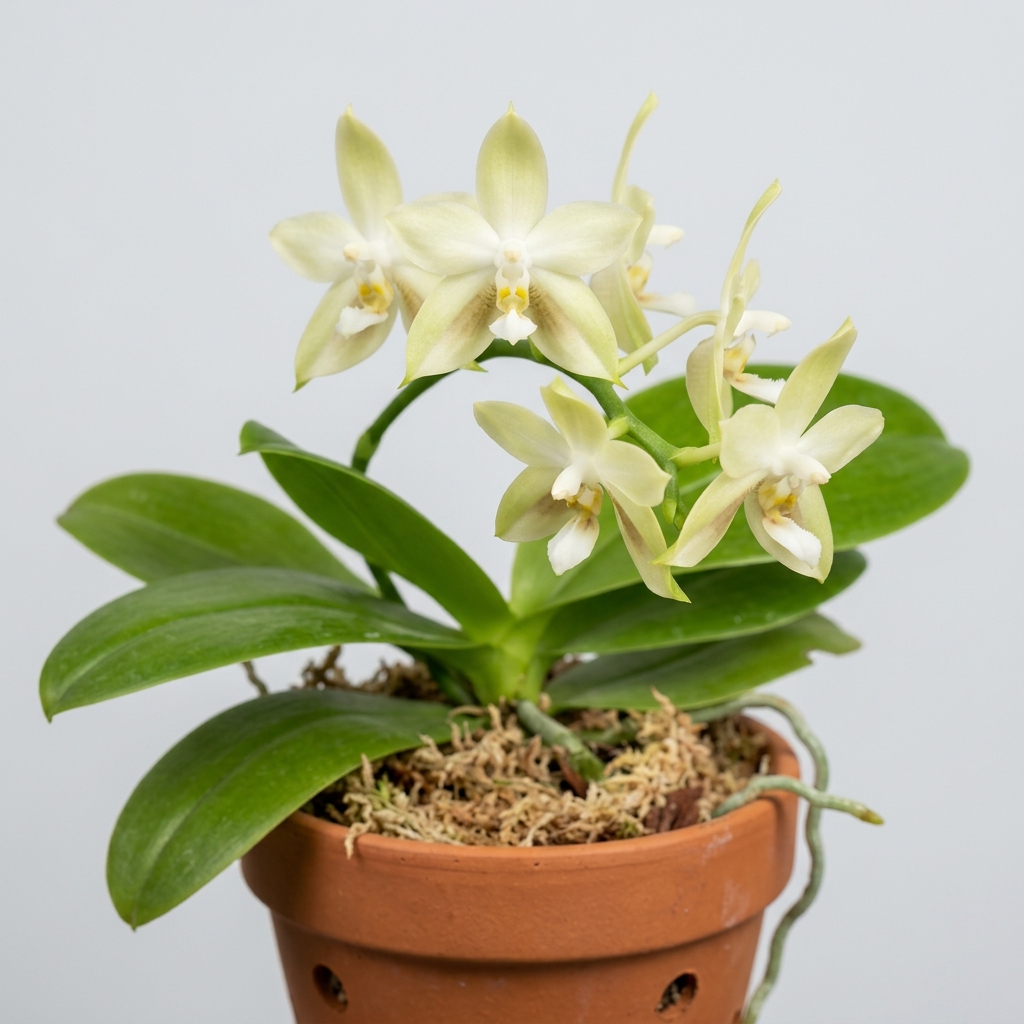
Phalaenopsis Micholitzii is a highly prized orchid species cherished by collectors for its compact growth habit and uniquely colored blossoms. Native to the damp, shaded rainforests of the Philippines, this miniature to small-sized epiphyte stands out among Phalaenopsis species due to its waxy, star-shaped flowers and glossy, broad foliage. Growers particularly value its understated elegance and its role as a parent in creating compact, fragrant hybrids.
Cultivating this exquisite orchid requires a mindful approach that mimics its natural humid, warm, and shaded canopy environment. While it can be more demanding than mass-market hybrid moth orchids, the reward of its delicate, long-lasting blooms makes it a crown jewel for dedicated indoor growers and greenhouse hobbyists alike. Understanding its specific moisture and light requirements is key to successfully maintaining this rare botanical treasure.
💡 Did You Know?
Phalaenopsis Micholitzii belongs to the Phalaenopsis orchid group, where flower presentation is often just as important as . White-flowered cultivars are especially valued indoors because their pale blooms reflect well and pair easily with many home, greenhouse, and display settings.
🌿 Botanical Overview
Phalaenopsis Micholitzii is a monopodial epiphytic orchid species characterized by its short stems and closely set, fleshy leaves. The leaves are typically obovate to elliptic, boasting a rich green color and a glossy texture that reflects its adaptation to low-light understory environments. In its native habitat, it grows on moss-covered tree trunks where it receives constant air movement and high ambient humidity.
Unlike many larger hybrid Phalaenopsis, this species maintains a compact footprint, making it ideal for terrariums, Wardian cases, or limited windowsill spaces. Its root system is relatively thick and fleshy, adapted for clinging to bark and absorbing atmospheric moisture and nutrients from organic debris washed down the tree canopy.
🌸 Flower Characteristics
The flowers of Phalaenopsis Micholitzii are distinctively star-shaped, measuring approximately 5 to 6 centimeters in diameter. The petals and sepals are fleshy, waxy, and range in color from a pristine creamy white to a soft, pale chartreuse or yellowish-green. The lip, or labellum, is relatively small, white, and features a central ridge with delicate yellow or orange markings and fine hairs, which serve to guide pollinators.
The inflorescence is short, typically bearing a few flowers clustered closely near the foliage. The spikes are often sequential bloomers, meaning they can produce flowers one after another over an extended period, so growers should avoid cutting green spikes prematurely.
Fragrance & Bloom Profile
This species is frequently reported by growers to possess a subtle, pleasant fragrance, often described as sweet, clean, or slightly citrusy. However, fragrance intensity can be highly subjective and cultivar-dependent, influenced by environmental factors such as temperature, humidity, and the time of day.
The blooms are remarkably long-lasting due to their heavy, waxy substance. A single flower can remain pristine for several weeks, and because the short spikes can produce blooms sequentially, the overall display period can extend over several months under optimal conditions.
Parentage & Hybrid Lineage
Phalaenopsis Micholitzii is a naturally occurring species rather than a man-made hybrid. Discovered in the late 19th century and named after the plant collector Wilhelm Micholitz, its genetic lineage is pure.
In orchid hybridization, this species has been highly valued for its ability to pass down its compact growth habit, waxy flower texture, and unique greenish-yellow coloration to its progeny. It has been used in numerous primary and complex hybrids to introduce fragrance and rounder, more substantial flower segments to modern Phalaenopsis cultivars.
🌱 Growing Conditions
To thrive, Phalaenopsis Micholitzii requires warm to intermediate temperatures, ideally ranging from 75°F to 85°F (24°C to 29°C) during the day, with a slight drop to 65°F to 70°F (18°C to 21°C) at night. It is sensitive to cold drafts and should never be exposed to temperatures below 60°F (15°C).
💡 Care Tip
For best results, grow Phalaenopsis Micholitzii in bright filtered with steady and gentle airflow. Avoid placing the plant in harsh midday sun, but do not keep it in a dark corner; weak is one of the most common reasons cultivated orchids refuse to rebloom.
Light levels should be kept low to moderate, mimicking the dappled shade of its native forest canopy. Direct sunlight will quickly scorch the tender, glossy leaves. High humidity of 60% to 80% is crucial, accompanied by gentle, continuous air movement to prevent stagnant air pockets that encourage fungal pathogens.
Watering, Feeding & Potting Media
Unlike many other Phalaenopsis species that tolerate drying out between waterings, Phalaenopsis Micholitzii prefers to remain consistently damp but never waterlogged. The potting medium should be highly breathable; high-quality New Zealand sphagnum moss or a mix of fine fir bark and perlite works exceptionally well.
Mounted culture on cork bark or tree fern plaques is also highly successful if high humidity can be maintained. Feed the orchid weakly with a balanced, diluted orchid fertilizer (such as a quarter-strength 20-20-20 formula) every second or third watering during the active growing season, flushing the pot with pure water periodically to prevent salt buildup.
Blooming Season & Care Notes
While blooming can occur at various times of the year, Phalaenopsis Micholitzii typically initiates its flower spikes during the warm summer and autumn months. Maintaining stable environmental conditions is vital during spike development, as sudden changes in temperature or humidity can lead to bud drop.
After the flowers fade, do not cut the green flower spike unless it turns brown and dry. The plant can produce new buds from the same spike in later seasons. Repotting should be done cautiously, preferably in spring when new root tips are actively emerging, to minimize transplant shock.
⚠️ Common Issues
⚠️ Common Mistake
The most common mistake is by calendar instead of root and potting-media condition. Phalaenopsis roots need moisture and air at the same time, so constantly wet bark or sphagnum can lead to root loss even when the leaves still look healthy.
- Root Rot:
Overwatering or using a degraded, compacted potting medium will quickly suffocate the roots, leading to rot and plant decline. - Bud Blast:
Sudden drops in humidity, drafts, or drastic temperature fluctuations can cause developing buds to yellow and drop before opening. - Leaf Scorch: Exposure to direct sunlight causes yellow or bleached patches on the leaves, which can eventually turn black and necrotic.
- Pests:
Mealybugs and spider mites can occasionally target the tender undersides of the leaves and the flower buds; treat promptly with insecticidal soap or horticultural oil.
❓ Frequently Asked Questions
How often should I water my Phalaenopsis Micholitzii?
Watering frequency depends on your growing environment and media. Generally, this species should be watered just as the medium approaches dryness, keeping it consistently damp but not soggy. If grown in sphagnum moss, water when the top layer begins to feel crispy but the core remains slightly moist.
Can Phalaenopsis Micholitzii be grown under LED lights?
Yes, this species adapts exceptionally well to indoor cultivation under artificial LED grow lights. Position the plant at a distance where it receives moderate, diffused light, ensuring the leaves do not feel warm to the touch, which indicates the light is too intense.
Why are the flower buds on my orchid falling off before opening?
This issue, known as bud blast, is typically caused by environmental stress. Common culprits include low ambient humidity, cold drafts, sudden temperature swings, or chemical fumes. Maintaining a stable, humid environment will help prevent this problem.
Should I cut the flower spike after Phalaenopsis Micholitzii finishes blooming?
No, do not cut the flower spike if it remains green. Phalaenopsis Micholitzii is a sequential bloomer and can produce additional flowers from the same spike over time. Only trim the spike back to the base if it turns completely yellow, brown, and dry.
⭐ Final Growing Notes
Phalaenopsis Micholitzii is a captivating species that rewards the attentive grower with its exquisite, waxy blooms and charming compact form. By providing stable warmth, high humidity, and consistent moisture, you can enjoy the unique beauty of this Philippine treasure for many years. It remains a highly recommended species for intermediate orchid enthusiasts looking to expand their collection beyond common hybrids.
⚕️ Health, Safety & Edibility
Understanding how a plant interacts with people, pets, and the surrounding environment is part of responsible cultivation. This section uses conservative, general guidance and does not replace professional medical or veterinary advice.
Human Safety: No published evidence currently identifies species-specific toxicity concerns for Phalaenopsis Micholitzii during normal handling. As with most ornamental plants, it should not be intentionally consumed.
Pet Safety: Published information does not indicate that this orchid commonly poses a toxicity concern for cats or dogs. However, chewing leaves, flowers, roots, or potting media may still cause mild digestive upset.
Edibility: This orchid is cultivated for ornamental display rather than food. Ornamental plants may carry fertilizers, pesticides, or other horticultural treatments that make them unsuitable for consumption.
Skin Contact: Routine handling is not generally associated with skin irritation. Gardeners with sensitive skin may prefer wearing gloves when repotting, pruning, or handling potting media.
🌱 Propagation Tip
Propagation should be approached patiently. Most home growers should wait for natural keikis or divide only mature, healthy plants when the orchid type allows it. Never remove a young growth until it has strong roots and enough leaves to support itself away from the parent plant.
⭐ Expert Advice
Repot after flowering when fresh root tips begin to appear. This timing helps the plant anchor quickly into new bark or sphagnum and reduces stress, especially for orchids grown indoors where airflow, , and drying speed can change from season to season.

Leave A Comment