
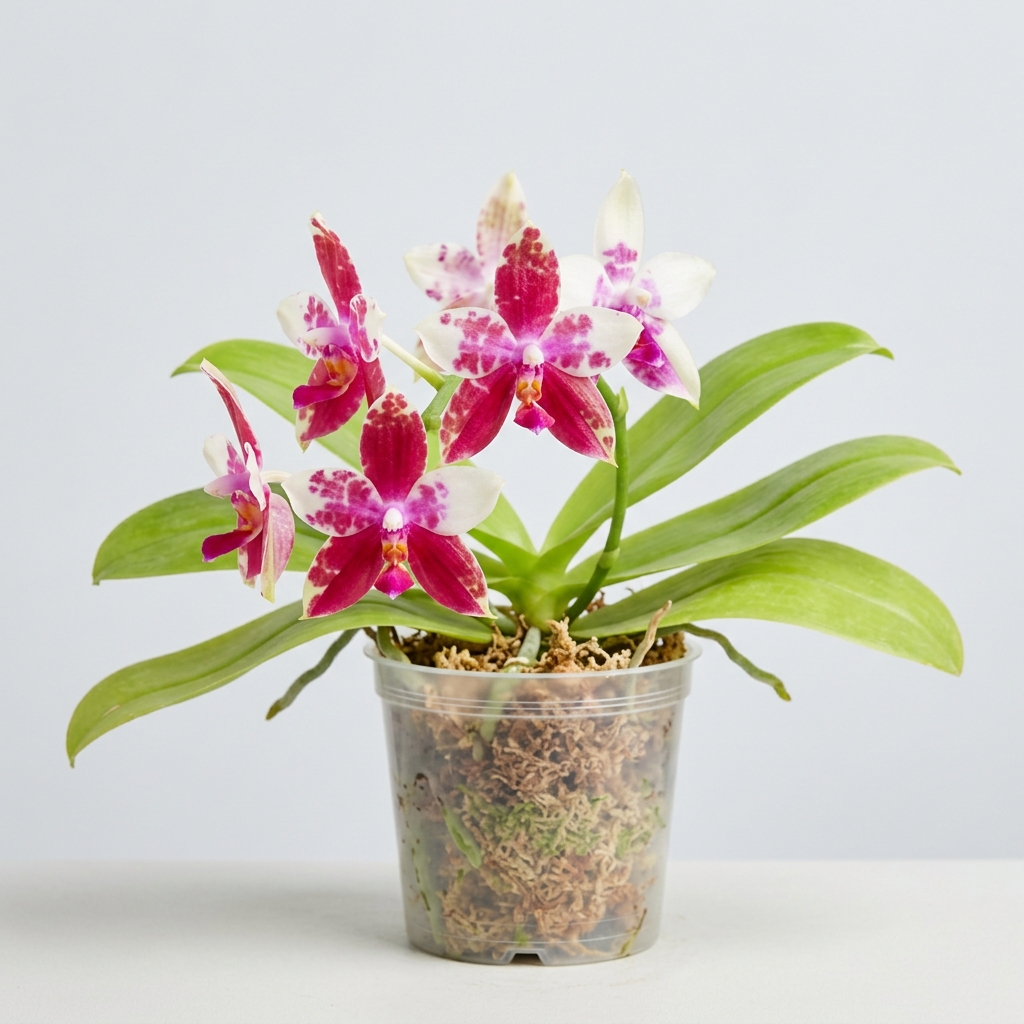
Phalaenopsis Speciosa is a highly sought-after orchid species within the genus Phalaenopsis, prized by collectors for its star-shaped blossoms and remarkable color variability. Unlike standard commercial hybrids, this species shows a charmingly unpredictable flowering habit where individual petals and sepals can display varying degrees of white and magenta-red. This natural instability means that no two flowers are exactly alike, offering a dynamic visual display that changes with every bloom cycle.
As a warm-growing epiphyte native to tropical island environments, this orchid features a compact growth habit with glossy, light green foliage. Its sequential blooming nature and delicate, sweet fragrance make it an exceptional choice for indoor growers seeking a unique botanical centerpiece. While it requires slightly more attention to humidity and watering than mass-market hybrids, its rewarding floral displays make it a favorite among intermediate and advanced orchid enthusiasts.
💡 Did You Know?
Phalaenopsis Speciosa belongs to the Phalaenopsis orchid group, where flower presentation is often just as important as . White-flowered cultivars are especially valued indoors because their pale blooms reflect well and pair easily with many home, greenhouse, and display settings.
🌿 Botanical Overview
Phalaenopsis Speciosa is native to the Andaman and Nicobar Islands, where it grows as an epiphyte on trees in warm, humid coastal forests. In these tropical habitats, the plant is exposed to consistent warmth, high atmospheric moisture, and dappled sunlight filtering through the forest canopy. Understanding these native conditions is key to successfully cultivating the orchid indoors.
The plant features a monopodial growth habit, producing a single stem that grows upward slowly, bearing a few obovate-oblong, glossy green leaves. The foliage is relatively soft and flexible compared to thicker-leaved hybrid Phalaenopsis, reflecting its preference for high humidity and protection from intense, drying winds. Healthy roots are thick, silvery-green, and covered in a velamen layer that efficiently absorbs moisture and nutrients from the air.
Taxonomically, Phalaenopsis Speciosa is closely related to Phalaenopsis tetraspis, and the two have been subject to botanical debate regarding whether they represent distinct species or variations of the same taxon. In the horticultural trade, however, they are often kept separate due to the distinct, vibrant red and magenta color forms associated with speciosa, which have made it a cornerstone for breeding colorful novelty hybrids.
🌸 Flower Characteristics
The flowers of Phalaenopsis Speciosa are star-shaped, fleshy, and typically measure between 2 to 3 inches in diameter. Unlike the rounded, flat flowers of standard grocery store orchids, these blossoms feature pointed petals and sepals that give them a wild, exotic appearance. The most famous trait of this orchid is its color mutability; a single plant can produce flowers that are solid white, solid magenta, or randomly patterned with blotches of both colors on the same spike.
The lip, or labellum, is small, three-lobed, and features a distinctively hairy or pubescent mid-lobe. This intricate structure is often highlighted by yellow or orange markings near the column, serving as a visual guide for pollinators in the wild. The flowers are borne on arching or pendulous inflorescences that emerge from the leaf axils, presenting the blooms beautifully against the green foliage.
Fragrance & Bloom Profile
In addition to its striking visual appeal, Phalaenopsis Speciosa is highly valued for its fragrance. The blooms emit a sweet, slightly spicy scent that is most noticeable during the morning and early afternoon hours when temperatures rise. This fragrance is often described as a mix of citrus and floral notes, adding an extra layer of sensory enjoyment to the growing space.
The blooming profile is sequential, meaning the flowers open one after another along the spike rather than all at once. This habit extends the overall blooming period significantly, often allowing a single spike to remain in flower for several months. Because the spikes can rebloom from the same nodes in later seasons, they should not be removed after the initial flowers fade.
Parentage & Hybrid Lineage
Phalaenopsis Speciosa is a primary species, meaning it is a naturally occurring wild species rather than a man-made hybrid. Because of its unique star-shaped form, fragrant nature, and intense red pigmentation, it has been used extensively by hybridizers to create a wide array of novelty Phalaenopsis hybrids. It passes on its sequential blooming habit and color variability to its offspring.
While historical registration records sometimes conflate Phalaenopsis Speciosa and Phalaenopsis tetraspis in hybrid parentage, modern growers recognize the distinct influence of speciosa in producing deep red, purple, and even blue-toned primary hybrids. Its genetic contribution continues to shape the development of modern, fragrant novelty orchids.
🌱 Growing Conditions
To thrive, Phalaenopsis Speciosa requires conditions that closely mimic its native tropical island habitat. It prefers bright, filtered indirect light, such as that provided by an east-facing window or a shaded south-facing window. Direct midday sunlight must be avoided, as it can easily scorch the soft, glossy leaves of this species.
💡 Care Tip
For best results, grow Phalaenopsis Speciosa in bright filtered with steady and gentle airflow. Avoid placing the plant in harsh midday sun, but do not keep it in a dark corner; weak is one of the most common reasons cultivated orchids refuse to rebloom.
Temperature control is crucial for this warm-growing orchid. Ideal daytime temperatures range between 75°F and 85°F (24°C to 29°C), with a slight drop at night to around 65°F to 70°F (18°C to 21°C). The plant should never be exposed to temperatures below 60°F (15°C), as cold drafts can cause immediate bud drop and stall vegetative growth.
High humidity is another essential requirement, ideally maintained between 60% and 80%. If growing indoors in a dry climate, using a humidifier or placing the orchid on a humidity tray filled with water and pebbles can help maintain the necessary moisture levels. Adequate air movement is equally important to prevent stagnant air, which can encourage fungal pathogens.
Watering, Feeding & Potting Media
Phalaenopsis Speciosa does not possess pseudobulbs to store water, meaning it has low tolerance for prolonged drought. The potting medium should be kept evenly moist but never waterlogged. Water the plant thoroughly when the medium approaches dryness, using room-temperature rainwater, distilled water, or reverse osmosis water to prevent mineral buildup on the sensitive roots.
During the active growing season in spring and summer, feed the orchid weakly weekly with a balanced, water-soluble orchid fertilizer diluted to one-quarter strength. Flush the pot with pure water once a month to wash away accumulated fertilizer salts, which can damage the root tips.
The ideal potting medium must provide a balance of moisture retention and excellent drainage. High-quality New Zealand sphagnum moss is highly recommended for younger plants or drier environments, while a mix of fine fir bark, perlite, and charcoal works well in humid areas. Slotted plastic pots or clay pots with drainage holes are ideal for ensuring proper root aeration.
Blooming Season & Care Notes
The primary blooming season for Phalaenopsis Speciosa spans from spring through autumn, though well-established plants kept in ideal conditions can produce flowers sporadically year-round. Because the flower spikes are sequential and can remain green and productive for multiple years, growers should avoid cutting them back unless they turn completely brown and dry.
Repotting should be performed every one to two years, preferably in the spring when new root growth is active. Choose a pot that is just large enough to accommodate the root mass, as overpotting can lead to excess moisture retention and later root rot. Handle the active root tips with extreme care during the process to avoid stalling the plant’s growth.
⚠️ Common Issues
⚠️ Common Mistake
The most common mistake is by calendar instead of root and potting-media condition. Phalaenopsis roots need moisture and air at the same time, so constantly wet bark or sphagnum can lead to root loss even when the leaves still look healthy.
- Root Rot:
Caused by overwatering or compacted, decaying potting media that suffocates the roots. Affected roots turn brown, mushy, and lose their ability to absorb water. - Bud Blast:
The sudden drying and dropping of flower buds before they open, usually triggered by low humidity, cold drafts, or sudden changes in temperature. - Spider Mites and Mealybugs: These pests can target the soft foliage, especially in dry indoor environments. Wipe the leaves with a damp cloth or treat with insecticidal soap if pests are detected.
- Leaf Spotting: Fungal or bacterial spots can develop if water is allowed to sit on the leaves or in the crown overnight. Always water early in the day and ensure good air circulation.
❓ Frequently Asked Questions
Why are the flowers on my Phalaenopsis Speciosa changing colors?
The color expression of Phalaenopsis Speciosa is highly variable and sensitive to environmental factors. Temperature and light levels during the development of the flower buds heavily influence whether the petals emerge solid magenta, solid white, or patterned. Cooler temperatures often encourage more intense red and magenta coloration.
How long do the flower spikes remain active?
The flower spikes of this species are sequential and long-lived. A single green spike can produce flowers over several seasons, sometimes remaining active for two to three years. Only prune the spike if it has turned entirely brown, dry, and woody.
Can I grow Phalaenopsis Speciosa mounted on wood?
Yes, this species is an excellent candidate for mounting on cork bark or hardwood plaques, as this mimics its natural epiphytic growth habit. However, mounted plants dry out much faster than potted ones and will require daily misting or watering in most indoor environments.
What should I do if the leaves start turning yellow?
Yellowing leaves can indicate several issues. If the oldest bottom leaf turns yellow and drops naturally, it is normal aging. However, if multiple leaves yellow quickly, it may indicate overwatering, root rot, or exposure to excessive direct sunlight. Check the root system immediately to assess its health.
⭐ Final Growing Notes
Phalaenopsis Speciosa is a rewarding and captivating species that brings a touch of wild tropical beauty into the home. By providing warm temperatures, high humidity, consistent moisture, and bright indirect light, growers can enjoy its fragrant, color-shifting blooms for many months of the year. Its unique botanical charm makes it a standout addition to any diverse orchid collection.
⚕️ Health, Safety & Edibility
Understanding how a plant interacts with people, pets, and the surrounding environment is part of responsible cultivation. This section uses conservative, general guidance and does not replace professional medical or veterinary advice.
Human Safety: No published evidence currently identifies species-specific toxicity concerns for Phalaenopsis Speciosa during normal handling. As with most ornamental plants, it should not be intentionally consumed.
Pet Safety: Published information does not indicate that this orchid commonly poses a toxicity concern for cats or dogs. However, chewing leaves, flowers, roots, or potting media may still cause mild digestive upset.
Edibility: This orchid is cultivated for ornamental display rather than food. Ornamental plants may carry fertilizers, pesticides, or other horticultural treatments that make them unsuitable for consumption.
Skin Contact: Routine handling is not generally associated with skin irritation. Gardeners with sensitive skin may prefer wearing gloves when repotting, pruning, or handling potting media.
🌱 Propagation Tip
Propagation should be approached patiently. Most home growers should wait for natural keikis or divide only mature, healthy plants when the orchid type allows it. Never remove a young growth until it has strong roots and enough leaves to support itself away from the parent plant.
⭐ Expert Advice
Repot after flowering when fresh root tips begin to appear. This timing helps the plant anchor quickly into new bark or sphagnum and reduces stress, especially for orchids grown indoors where airflow, , and drying speed can change from season to season.

Leave A Comment