
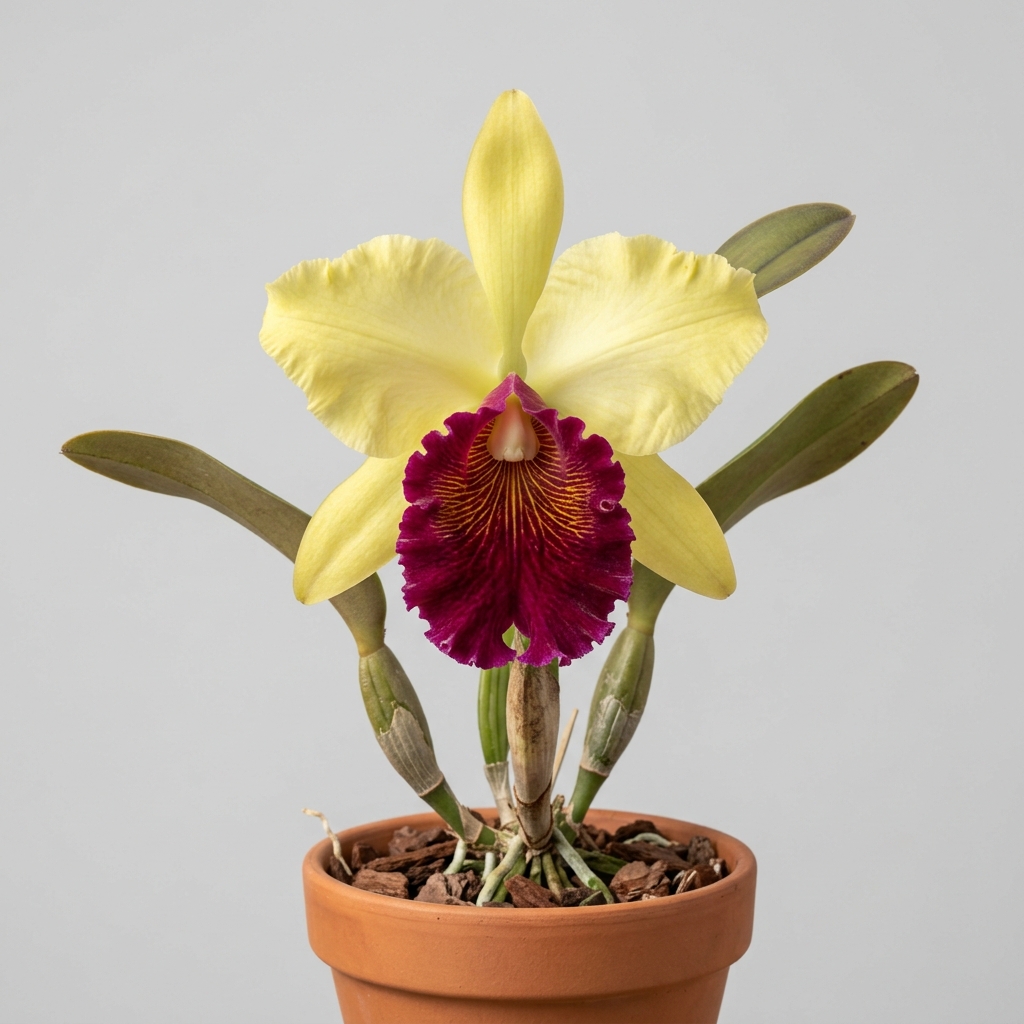
Cattleya dowiana is widely regarded as one of the most spectacular and influential species within the entire orchid family. Hailing from the wet, tropical forests of Central and South America, particularly Costa Rica and Colombia, this magnificent epiphyte has captivated collectors for generations. It is highly prized for its unique and dramatic color combination, featuring pale yellow to golden-bronze petals and sepals that contrast sharply with a large, velvety, deep crimson-purple lip adorned with intricate golden veins.
For orchid enthusiasts and hybridizers alike, this species represents the pinnacle of classic orchid beauty. While it is historically famous for introducing yellow tones and complex lip patterns into modern Cattleya hybrids, growing the pure species remains a rewarding challenge. It demands specific environmental conditions, particularly regarding watering cycles and air circulation, making it a coveted trophy plant for dedicated growers who wish to master its cultivation.
💡 Did You Know?
Cattleya dowiana is historically one of the most influential species in orchid breeding. Its discovery in the mid-19th century revolutionized Cattleya hybridization, as it was the primary source used by early breeders to introduce brilliant yellow petals and richly veined, velvety lips into modern large-flowered orchid hybrids.
🌿 Botanical Overview
Botanically, Cattleya dowiana is a sympodial epiphyte characterized by stout, club-shaped pseudobulbs that typically carry a single, leathery, oblong leaf at the apex. The pseudobulbs act as water-storage organs, helping the plant survive seasonal dry spells in its native canopy habitat. In the wild, these plants grow high up on the branches of tall trees where they receive abundant light and rapid drying from passing breezes.
There are two primary recognized geographical variations of this species: the typical form from Costa Rica and the variety aurea from Colombia. The Colombian variety often features more intense yellow coloration in the petals and even more pronounced golden veining throughout the lip. Both variations share the same fundamental growth habit, requiring warm temperatures and high humidity year-round to thrive.
🌸 Flower Characteristics
The flowers of Cattleya dowiana are exceptionally large, often reaching 12 to 15 centimeters in diameter. They are borne on a short, terminal inflorescence that emerges from a green sheath at the top of the mature pseudobulb. Each spike typically carries two to six flowers, presenting them in a striking, crowded cluster just above the foliage.
The most defining feature of the bloom is the contrast between the delicate, nankeen-yellow sepals and petals and the magnificent labellum. The lip is large, deeply ruffled, and velvety in texture. Its base color is a rich, dark crimson-purple, which is heavily patterned with radiating lines of bright gold. This dramatic visual display is designed to attract specific pollinators in its native rainforest canopy.
Fragrance & Bloom Profile
In addition to its visual beauty, Cattleya dowiana is famous for its intense, sweet fragrance. The scent is often described as a complex blend of citrus, vanilla, and honey, which can easily fill an entire greenhouse or growing room during the morning hours when the fragrance is most actively released.
The blooming period typically occurs in mid-to-late summer or early autumn, coinciding with the completion of the current season’s pseudobulb growth. While the flowers are magnificent, they are somewhat shorter-lived than those of other Cattleya species, usually lasting between 10 and 14 days. However, the sheer beauty and perfume of the blooms more than compensate for their relatively brief duration.
Parentage & Hybrid Lineage
As a true species, Cattleya dowiana does not have hybrid parentage. Instead, it stands as one of the most important foundational species in the history of orchid hybridization. It has been used as a parent in thousands of registered crosses, passing down its desirable yellow petal coloration and highly decorated lip to its progeny.
When crossed with other species, it frequently yields hybrids with improved flower size, intense fragrance, and warm, sunset-toned colors. Growers should note that while hybrids carrying its genetics are often robust and easy to grow, the pure species retains its reputation for being somewhat temperamental and sensitive to improper cultural practices.
🌱 Growing Conditions
To grow Cattleya dowiana successfully, you must replicate its warm, tropical canopy environment. It requires bright, indirect light to thrive. The foliage should be a light, grassy green color; dark green leaves indicate insufficient light, while yellowing or scorched patches suggest the light is too intense.
💡 Care Tip
Provide Cattleya dowiana with exceptionally strong air movement at all times. This species is highly susceptible to standing moisture on its foliage and roots, and constant air circulation is the best defense against fungal infections and rot.
Temperature control is critical for this species. It prefers warm daytime temperatures between 24 and 30 degrees Celsius, with a night-time drop to around 16 to 18 degrees Celsius. High humidity of 60% to 80% is essential, but it must be accompanied by strong, continuous air movement. Stagnant, humid air is a primary cause of bacterial and fungal rot in this sensitive orchid.
Watering, Feeding & Potting Media
Watering must be carefully managed according to the plant’s active growth cycle. During the spring and summer, when new roots and pseudobulbs are actively developing, the plant should be watered copiously. However, the potting medium must be allowed to dry out almost completely between waterings. Use a highly porous, fast-draining medium such as coarse fir bark mixed with charcoal and perlite, preferably housed in a clay pot which promotes rapid drying.
Fertilize weakly weekly during the active growing season using a balanced orchid fertilizer diluted to one-quarter or one-half strength. Flush the pot with pure water once a month to prevent salt buildup, which can damage the sensitive root tips. As growth slows in the autumn, reduce watering and stop fertilizing entirely to prepare the plant for its winter rest.
Blooming Season & Care Notes
The blooming season occurs as the new pseudobulb reaches maturity in the summer. Once the flower sheath appears, maintain stable environmental conditions to prevent bud drop. Avoid spraying water directly onto the developing buds or open flowers, as this can cause spotting or premature decay.
After flowering, the plant enters a critical semi-dormant phase during the winter. During this time, watering must be reduced significantly. Only water enough to prevent the pseudobulbs from shriveling excessively. Repotting should only be performed in the spring when new root growth is just beginning to emerge from the base of the newest pseudobulb, as the plant resents root disturbance when inactive.
⚠️ Common Issues
⚠️ Common Mistake
The most common mistake is overwatering during the winter dormancy period. Cattleya dowiana requires a distinct dry rest when not actively growing; keeping the potting medium constantly wet during this time will quickly lead to fatal root rot.
- Root Rot:
Caused by overwatering or compacted, poorly draining potting media. This is the most common cause of failure with this species. - Fungal Leaf Spotting: Occurs when water sits on the foliage in cool, stagnant conditions. Ensure excellent air movement to dry leaves quickly.
- Bud Blast:
The sudden drying or dropping of buds before they open, usually triggered by low humidity, drafty conditions, or sudden temperature swings. - Scale and Mealybugs: Common pests that hide in the dry sheaths of the pseudobulbs. Inspect the plant regularly and treat infestations promptly with horticultural soap or isopropyl alcohol.
❓ Frequently Asked Questions
How do I get my Cattleya dowiana to bloom?
To encourage blooming, ensure the plant receives bright, filtered light throughout the growing season and a distinct, drier rest period during the winter. Adequate light is the most crucial factor in triggering the development of the flower sheath in summer.
Why are the pseudobulbs on my orchid shriveling?
Slight shriveling during the winter rest is normal. However, severe shriveling during the active growing season usually indicates either underwatering or root loss due to rot. Inspect the root system to determine if the roots are healthy and plump or mushy and dead.
Can I grow Cattleya dowiana mounted on wood?
Yes, mounting this species on cork bark or tree fern slabs is highly successful because it allows the roots to dry rapidly after watering, mimicking its natural epiphytic habit. Mounted plants will require more frequent watering and high humidity to prevent dehydration.
What is the difference between Cattleya dowiana and variety aurea?
The typical Cattleya dowiana, native to Costa Rica, often has slightly darker, bronze-tinted yellow petals. The variety aurea, native to Colombia, typically features a brighter, clearer yellow color in the petals and sepals, with more extensive gold veining on the lip.
⭐ Final Growing Notes
While Cattleya dowiana is often considered a challenging orchid for beginners, mastering its care is one of the most rewarding achievements in orchid cultivation. By providing bright light, warm temperatures, excellent air movement, and a strict winter dry rest, you can successfully cultivate this legendary species and enjoy its breathtaking, fragrant golden blooms year after year.
🌱 Propagation Tip
Propagate this species only through division of mature, healthy plants during active root growth. Ensure each division has at least three to four healthy pseudobulbs with active eye buds, and avoid dividing weak or stressed specimens.
⭐ Expert Advice
When repotting, choose a clay pot just large enough to accommodate two years of new growth. Clay pots allow the root zone to dry out much faster than plastic, which is critical for keeping this moisture-sensitive species healthy over the long term.




Leave A Comment