
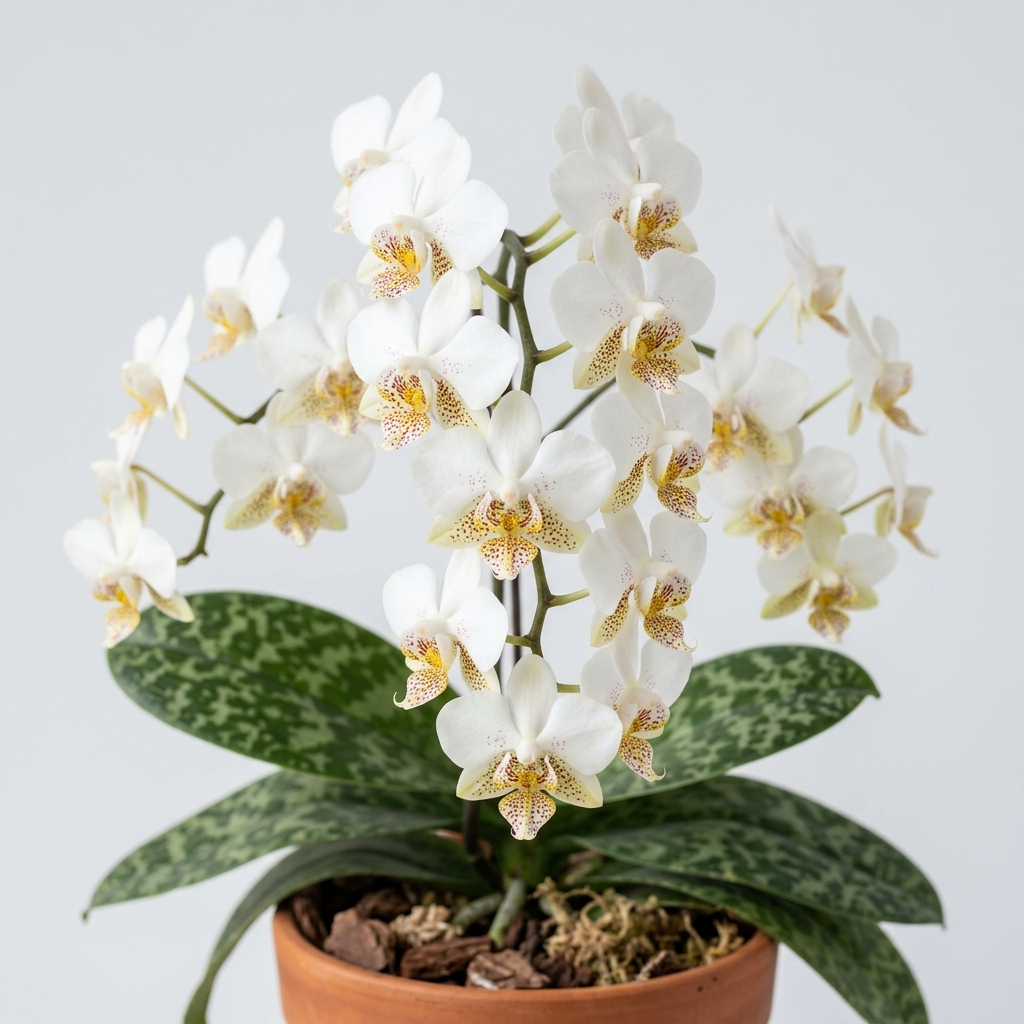
Phalaenopsis Stuartiana is a highly prized species orchid within the Phalaenopsis genus, celebrated for both its striking mottled foliage and its spectacular, multi-flowered blooming displays. Native to the rainforests of the island of Mindanao in the Philippines, this epiphytic orchid has played a foundational role in modern hybridization while remaining a sought-after treasure for dedicated collectors. Its graceful growth habit and elegant presentation make it a standout addition to any indoor orchid collection.
Unlike many standard complex hybrids, this orchid offers year-round visual interest even when out of bloom, thanks to its beautifully patterned leaves. When it does flower, a mature specimen can produce a cascading, branched spike bearing dozens of delicate, intricately spotted blossoms that exemplify classic botanical elegance. Cultivating this species successfully requires a basic understanding of its natural tropical habitat, rewarding growers with reliable seasonal beauty.
💡 Did You Know?
Phalaenopsis Stuartiana is famous for its exceptionally floriferous nature. A single, well-grown mature specimen of this orchid can produce a highly branched inflorescence carrying over one hundred individual flowers at a single time, creating a spectacular cascading drift of white and yellow blooms that can last for several weeks.
🌿 Botanical Overview
Phalaenopsis Stuartiana is an epiphytic species native to the island of Mindanao in the Philippines, where it typically grows on tree trunks and branches in warm, humid sea-level forests. In its native habitat, it is exposed to consistent warmth, high humidity, and frequent rainfall, which shapes its cultural requirements in home and greenhouse environments. The plant features a short stem clothed in overlapping leaves, supported by a robust, fleshy root system designed to cling to bark and absorb atmospheric moisture.
One of the most distinguishing non-floral characteristics of this orchid is its mottled foliage. The upper surface of the leaves displays a beautiful marbled pattern of silvery-gray and deep green, while the undersides often exhibit a rich purplish hue. This attractive leaf patterning provides aesthetic value throughout the year, making it a highly decorative plant even during its vegetative growth phases.
🌸 Flower Characteristics
The blossoms of Phalaenopsis Stuartiana are a masterclass in delicate detail. The flowers are typically two to three inches in diameter, featuring pure white petals and dorsal sepals. The lateral sepals, however, are distinctively divided: the upper half remains white, while the lower half is washed with a soft sulfur-yellow and heavily speckled with fine, reddish-brown or purplish dots. This intricate spotting extends onto the lip, or labellum, which is anchor-shaped and serves as a visual guide for natural pollinators.
What truly sets this orchid apart is its flowering habit. A mature, well-nourished plant produces a long, arching, and frequently branched inflorescence. This panicle can carry dozens of flowers simultaneously, creating a cascading cloud of blooms that can last for several weeks. The flowers open nearly all at once, presenting a magnificent and highly symmetrical display.
Fragrance & Bloom Profile
While many Phalaenopsis species are grown primarily for their visual appeal, Phalaenopsis Stuartiana is also noted for its fragrance. Growers frequently report a mild, sweet, or slightly spicy scent that is most noticeable during the morning hours when temperature and light levels begin to rise. However, fragrance intensity can be highly subjective and variable, depending on the specific clone, plant vigor, and ambient humidity levels.
The blooming cycle typically initiates in late autumn or winter, with flowers opening in the winter and lasting well into the spring. Individual flowers are relatively long-lived, often remaining fresh for four to six weeks under optimal conditions. The overall display can extend for up to two months as secondary branches on the spike continue to develop and open their buds.
Parentage & Hybrid Lineage
As a naturally occurring species rather than a man-made hybrid, Phalaenopsis Stuartiana possesses a pure genetic lineage. It was first described in the late 19th century and named in honor of Stuart Low, a prominent English nurseryman of the era. Because of its exceptional floriferousness, branching spike habit, and beautiful leaf patterning, it has been widely utilized by orchid breeders for over a century.
In hybrid breeding, this species is frequently used to introduce spotting, yellow accents on the lip, and multi-floral branching habits to modern complex hybrids. Its genetic influence can be seen in numerous award-winning white and spotted Phalaenopsis cultivars. When purchasing a plant labeled as Phalaenopsis Stuartiana, growers are typically acquiring either a direct propagation of the wild species or a line-bred selection selected for improved flower size and color intensity.
🌱 Growing Conditions
To cultivate Phalaenopsis Stuartiana successfully, growers should aim to replicate its warm, humid forest origin. It thrives in bright, filtered indirect light, requiring slightly more light than standard dark-green-leaved Phalaenopsis hybrids to stimulate optimal blooming. A east-facing window or a shaded south-facing window is usually ideal. Avoid direct afternoon sun, which can easily scorch the sensitive mottled foliage.
💡 Care Tip
To maintain the striking variegation and health of the mottled foliage, provide bright but strictly filtered indirect . Direct sunlight will quickly scorch the leaves, while too much shade may cause the unique silvery patterns to fade and reduce future blooming potential.
Temperature management is crucial for this tropical species. It prefers warm day temperatures between 75°F and 85°F, with a slight drop at night to around 65°F. It is highly sensitive to cold drafts and should not be exposed to temperatures below 60°F for extended periods. High relative humidity, ideally between 60% and 80%, combined with gentle air movement, will keep the plant vigorous and prevent fungal pathogens from establishing on the leaves.
Watering, Feeding & Potting Media
Watering should be frequent enough to keep the potting medium lightly damp but never waterlogged. In its natural environment, the roots dry quickly after rain, so stagnant moisture must be avoided. Water thoroughly when the potting medium has almost dried out, using lukewarm water. Clear plastic pots are highly recommended, as they allow growers to monitor root health and moisture levels easily; healthy active roots will appear green when wet and silvery-gray when dry.
A highly porous, free-draining potting medium is essential. Coarse fir bark mixed with perlite, charcoal, and a small amount of sphagnum moss works exceptionally well. Alternatively, experienced growers in high-humidity environments may choose to mount the orchid on cork bark or tree fern plaques, which mimics its natural epiphytic growth. Feed the plant weekly with a highly diluted, balanced orchid fertilizer during the active growing season, flushing the pot with pure water once a month to prevent salt buildup.
Blooming Season & Care Notes
The primary blooming season occurs from winter through early spring. The initiation of flower spikes is typically triggered by the natural drop in nighttime temperatures that occurs in autumn. If your plant is reluctant to bloom, exposing it to slightly cooler night temperatures (around 60°F to 62°F) for a few weeks in the fall can help stimulate spike development.
Once the flowering spike begins to grow, maintain stable environmental conditions to prevent bud drop. Avoid moving the plant or changing its orientation relative to the light source, as this can cause the developing buds to twist or blast. After the blooming cycle is complete, the old flower spike can be cut back to the base of the plant if it has turned brown and dry. If the spike remains green, some growers prefer to leave it, as it may occasionally produce secondary branches or keikis, though removing it entirely encourages stronger vegetative growth for the next season.
⚠️ Common Issues
⚠️ Common Mistake
A frequent error is allowing water to sit in the crown of the plant or in the leaf joints overnight. Because of its growth habit, trapped water easily invites bacterial crown rot, which can quickly destroy the orchid. Always water early in the day to allow foliage to dry completely.
- Root Rot:
Caused by overwatering or compacted potting media that deprives roots of oxygen. Affected roots turn brown, mushy, and hollow. - Bud Blast:
The sudden drying and dropping of flower buds before they open, usually triggered by low humidity, cold drafts, or sudden temperature fluctuations. - Crown Rot:
A fatal bacterial infection resulting from water sitting in the crown of the plant. Always water the medium directly and ensure good airflow. - Spider Mites and Mealybugs: Common pests that hide on the undersides of the mottled leaves or within the flower bracts. Treat promptly with insecticidal soap or horticultural oil.
- Leaf Scorch: Bleached or sunken dry patches on the leaves caused by exposure to direct, unfiltered sunlight.
❓ Frequently Asked Questions
How often should I water my Phalaenopsis Stuartiana?
Watering frequency depends on your home’s temperature, humidity, and the potting medium used. Generally, water when the potting mix is nearly dry and the roots visible through the pot turn a silvery-gray color. This typically translates to once or twice a week in warm weather, and less frequently during the cooler winter months.
Why are the buds on my orchid falling off before opening?
This issue, known as bud blast, is usually caused by environmental stress. Common culprits include sudden drafts, low humidity levels, rapid temperature shifts, or dry potting media. To prevent this, keep the orchid in a stable location away from heating vents, air conditioners, and cold windows during the budding stage.
Can I grow Phalaenopsis Stuartiana mounted on wood?
Yes, this species is an excellent candidate for mounting because of its natural epiphytic growth habit. Mounting on cork bark or tree fern plaques allows the roots to breathe and dry rapidly. However, mounted orchids require high ambient humidity and must be misted or watered almost daily to prevent dehydration.
Does this orchid require a cold period to bloom?
Phalaenopsis Stuartiana does not require prolonged cold, but a slight drop in nighttime temperatures of about 10°F to 15°F in the autumn helps trigger spike development. Providing night temperatures around 60°F to 62°F for two to three weeks while maintaining warm daytime temperatures is usually sufficient to initiate blooming.
⭐ Final Growing Notes
Phalaenopsis Stuartiana is a rewarding and exceptionally beautiful species that bridges the gap between common hybrid orchids and rare collector plants. By providing warm temperatures, high humidity, and bright, filtered light, growers can enjoy both its exquisite mottled foliage and its magnificent, cascading winter blooms. With a little patience and attention to root health, this classic Philippine species will remain a centerpiece of your orchid collection for many years to come.
⚕️ Health, Safety & Edibility
Understanding how a plant interacts with people, pets, and the surrounding environment is part of responsible cultivation. This section uses conservative, general guidance and does not replace professional medical or veterinary advice.
Human Safety: No published evidence currently identifies species-specific toxicity concerns for Phalaenopsis Stuartiana during normal handling. As with most ornamental plants, it should not be intentionally consumed.
Pet Safety: Published information does not indicate that this orchid commonly poses a toxicity concern for cats or dogs. However, chewing leaves, flowers, roots, or potting media may still cause mild digestive upset.
Edibility: This orchid is cultivated for ornamental display rather than food. Ornamental plants may carry fertilizers, pesticides, or other horticultural treatments that make them unsuitable for consumption.
Skin Contact: Routine handling is not generally associated with skin irritation. Gardeners with sensitive skin may prefer wearing gloves when repotting, pruning, or handling potting media.
🌱 Propagation Tip
While this species is typically propagated by seed in laboratory settings, mature plants may occasionally produce adventitious offsets known as keikis along the flower spike. Allow the keiki to develop several robust roots at least two inches long before carefully detaching and potting it.
⭐ Expert Advice
When repotting, choose a highly porous medium such as coarse fir bark mixed with charcoal and perlite. This orchid species is highly sensitive to stale, compacted media around its roots. Repot every one to two years immediately after the spring blooming cycle concludes.




Leave A Comment