
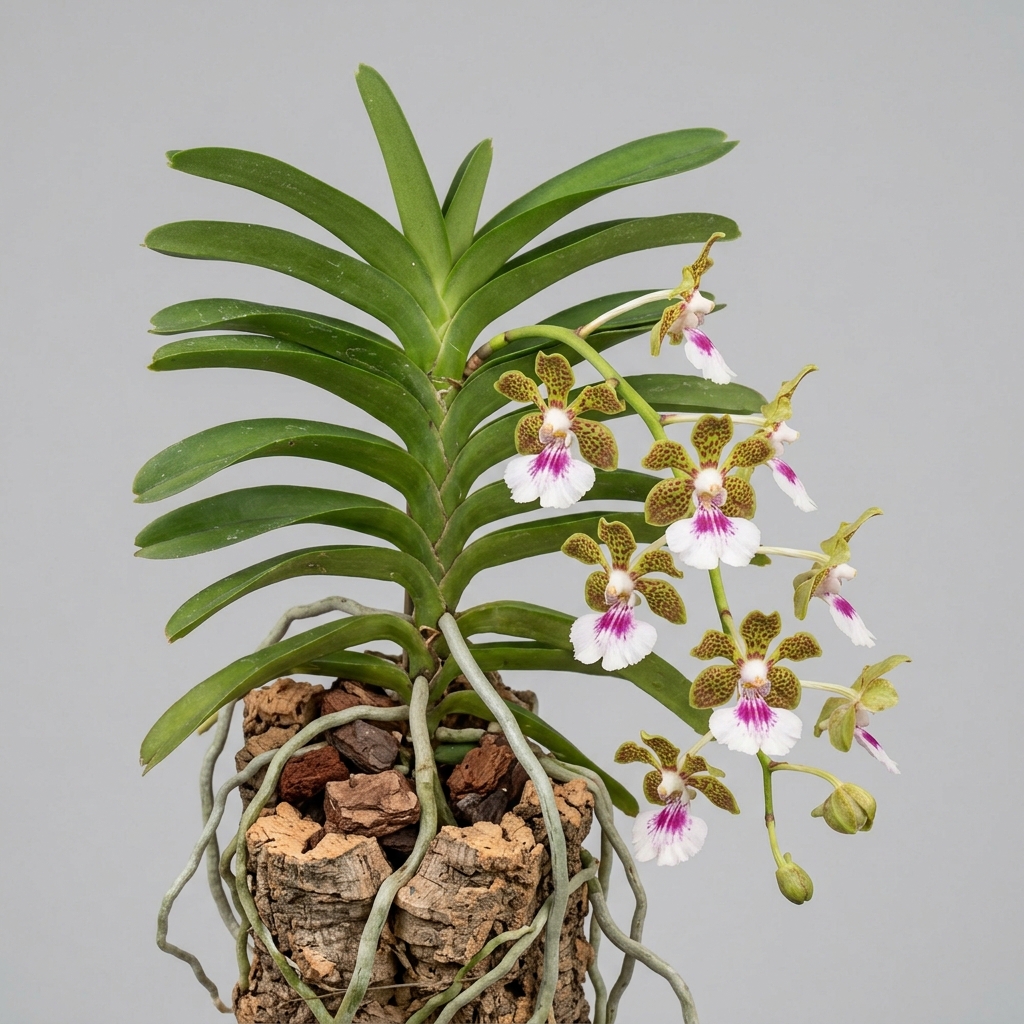
Vanda Flabellata is a captivating epiphytic orchid highly prized by collectors for its distinctive, fan-shaped lip and charmingly patterned blossoms. Originally classified by some botanists within the Aerides genus due to its spur-like floral structures, this monopodial orchid brings a unique miniature-to-medium growth habit to any collection. Its compact size compared to larger Vanda species makes it an excellent choice for indoor growers who wish to enjoy the classic beauty of vandaceous orchids without dedicating massive amounts of space.
Cultivators value Vanda Flabellata not only for its manageable footprint but also for its robust root system and delightful fragrance. The species typically produces pendulous or arching inflorescences that showcase several intricately detailed flowers. By understanding its specific requirements for high humidity, bright filtered light, and excellent root aeration, growers can successfully cultivate this remarkable orchid and enjoy its striking seasonal displays year after year.
💡 Did You Know?
The specific epithet flabellata comes from the Latin word for fan-shaped, directly referencing the orchid's highly distinctive, broad, and fringed lip. This unique floral structure evolved to provide a perfect landing platform for specific pollinating insects in its native Southeast Asian forest habitats.
🌿 Botanical Overview
Vanda Flabellata shows a classic monopodial growth habit, meaning it grows upward from a single stem rather than producing pseudobulbs. The thick, leathery leaves are arranged in a distichous, two-ranked fashion, creating a neat, fan-like appearance even when the plant is not in bloom. This compact vegetative structure allows the orchid to conserve moisture in its native habitats, which primarily span the seasonal forests of Southeast Asia.
The root system of Vanda Flabellata is exceptionally vigorous, characterized by thick, fleshy aerial roots covered in a silver-grey velamen layer. In nature, these roots cling to tree bark, absorbing moisture and nutrients directly from the humid air and passing rain. In cultivation, maintaining the health of these aerial roots is paramount, as they are the primary means by which the orchid sustains its growth and hydration.
🌸 Flower Characteristics
The blossoms of Vanda Flabellata are celebrated for their intricate morphology and striking color contrast. Each flower typically features sepals and petals that range from greenish-yellow to warm bronze, often adorned with delicate reddish-brown spotting or marbling. The defining feature of the bloom is its prominent, fan-shaped lip, or labellum, from which the species derives its name, flabellata.
This lip is generally white or pale cream, highlighted with vivid magenta, pink, or purple markings along the fringed margins. The flowers are presented on arching, axillary racemes that emerge from the leaf axils. A single inflorescence can carry multiple long-lasting blooms, creating a beautiful, dangling display that contrasts elegantly with the dark green foliage.
Fragrance & Bloom Profile
One of the most appealing attributes of Vanda Flabellata is its sweet, spicy fragrance, which is often described as reminiscent of citrus, nutmeg, or sweet clover. The scent is typically most pronounced during the morning hours when warmth and light stimulate the release of volatile oils from the petals.
The individual flowers are relatively long-lived, often remaining in pristine condition for several weeks if kept in a stable environment. While fragrance intensity can vary slightly depending on the specific clone and growing conditions, a healthy specimen in full bloom can easily perfume a small greenhouse or grow room.
Parentage & Hybrid Lineage
Vanda Flabellata is a naturally occurring species rather than a man-made hybrid, though it has been used extensively in breeding programs to introduce compact growth habits and unique lip shapes to new Vanda and Aeridovanda hybrids. In older literature, it is frequently referenced as Aerides flabellata, reflecting its historical taxonomic placement.
Because of its species status, plants sold under this name generally exhibit the consistent characteristics of the wild population, though select line-bred cultivars may display superior flower size, more intense coloration, or improved vigor. When purchasing this orchid, growers should note that its care aligns closely with other compact, warm-growing vandaceous species.
🌱 Growing Conditions
To thrive, Vanda Flabellata requires bright, filtered light. While it enjoys more light than many other orchid genera, direct midday sunlight can scorch the leaves. A position that receives bright morning light with some afternoon shade, or cultivation under high-output LED grow lights, is generally ideal.
💡 Care Tip
To ensure your Vanda Flabellata receives optimal without burning, monitor the leaf color. Healthy leaves should be a bright, grassy green. If they turn dark green, the orchid needs more ; if they develop a yellowish or reddish tint, the is too intense.
Temperature: wise, this orchid prefers warm to intermediate conditions. Daytime temperatures should ideally range between 75°F and 85°F (24°C to 29°C), with a slight drop at night to stimulate healthy growth and eventual blooming. High humidity is crucial, ideally maintained between 60% and 80%, coupled with constant, gentle air movement to prevent fungal pathogens from settling on the leaves or roots.
Watering, Feeding & Potting Media
Watering Vanda Flabellata requires a balance of frequent hydration and rapid drying. Because they lack pseudobulbs to store water, these orchids cannot tolerate prolonged dry spells. However, their roots must dry quickly after watering to prevent rot. Many growers prefer to cultivate them bare-root in wooden baskets or mounted on cork slabs, which allows the roots to hang freely.
If grown bare-root, the orchid should be misted or soaked daily, sometimes twice daily during hot summer months. During the active growing season, apply a balanced, water-soluble orchid fertilizer diluted to one-quarter strength weekly. Flush the roots with pure water periodically to prevent salt buildup, which can damage the sensitive root tips.
Blooming Season & Care Notes
Vanda Flabellata typically blooms in the spring or early summer, triggered by the natural increase in day length and temperature. As the flower spike begins to emerge from the leaf axils, avoid changing the plant’s orientation to the light source, as this can cause the developing buds to twist or fail to open properly.
Once the blooming cycle is complete, the old flower spike can be cut back close to the stem using sterilized shears. This is also the ideal time to assess the plant’s mounting or basket. If the wooden basket is decaying or the plant has outgrown its mount, carefully secure the entire basket inside a larger one to minimize root disturbance.
⚠️ Common Issues
⚠️ Common Mistake
A frequent error is potting Vanda Flabellata in heavy, dense potting soil or fine bark mixes. This orchid's thick aerial roots require constant exposure to air and will quickly suffocate and rot if buried in media that retains moisture for too long.
- Root Rot:
Occurs when roots remain wet for too long, often due to packed potting media or poor airflow. Healthy roots should be firm and green when wet, silver-grey when dry. - Leaf Spotting: Fungal or bacterial spots can develop if water sits on the leaves overnight. Always water early in the day and maintain good air circulation.
- Bud Blast:
Developing buds may yellow and drop prematurely due to sudden changes in temperature, low humidity, or drafts. - Dehydration:
Shriveled leaves and dry, brittle roots indicate insufficient watering or low humidity. Increase misting frequency. - Pests:
Mealybugs and scale can occasionally hide in the leaf axils. Treat promptly with insecticidal soap or horticultural oil.
❓ Frequently Asked Questions
Can Vanda Flabellata be grown indoors without a greenhouse?
Yes, Vanda Flabellata can be grown successfully indoors if provided with bright light from a south or east-facing window, supplemented with grow lights if necessary. To maintain the required humidity, place the orchid near a humidifier or grow it in a dedicated indoor plant tent with good ventilation.
How often should I water my Vanda Flabellata if it is grown bare-root?
Bare-root specimens typically require daily watering. In warm or dry conditions, they may need to be misted in the morning and soaked for 15 to 20 minutes in the afternoon. The roots should turn from silver-grey to a vibrant green, indicating they have absorbed sufficient moisture.
Why are the leaf tips of my orchid turning yellow or brown?
Yellowing or browning leaf tips can be a sign of low humidity, underwatering, or fertilizer burn from accumulated salts. Ensure your humidity levels are consistently above 60% and flush the root system thoroughly with pure, unfertilized water at least once a month.
Does Vanda Flabellata require a winter rest period?
While Vanda Flabellata does not require a strict, dry winter rest, it benefits from a slight reduction in watering and fertilizer during the cooler, darker winter months. Maintain high humidity and bright light, but allow the plant to rest slightly until active root growth resumes in spring.
⭐ Final Growing Notes
Vanda Flabellata is a rewarding and highly characterful orchid that brings the exotic allure of Southeast Asian species into the home or greenhouse. Its manageable size, striking fan-shaped lip, and delightful morning fragrance make it a standout addition to any collection. By mimicking its natural epiphytic environment with bright light, high humidity, and excellent root aeration, growers of all experience levels can enjoy the unique beauty of this classic vandaceous species.
⚕️ Health, Safety & Edibility
Understanding how a plant interacts with people, pets, and the surrounding environment is part of responsible cultivation. This section uses conservative, general guidance and does not replace professional medical or veterinary advice.
Human Safety: No published evidence currently identifies species-specific toxicity concerns for Vanda Flabellata during normal handling. As with most ornamental plants, it should not be intentionally consumed.
Pet Safety: Published information does not indicate that this orchid commonly poses a toxicity concern for cats or dogs. However, chewing leaves, flowers, roots, or potting media may still cause mild digestive upset.
Edibility: This orchid is cultivated for ornamental display rather than food. Ornamental plants may carry fertilizers, pesticides, or other horticultural treatments that make them unsuitable for consumption.
Skin Contact: Routine handling is not generally associated with skin irritation. Gardeners with sensitive skin may prefer wearing gloves when repotting, pruning, or handling potting media.
🌱 Propagation Tip
Monopodial orchids like Vanda Flabellata are typically propagated by top cuttings or by removing basal keikis. Only attempt division when the keiki has developed several robust roots of its own, usually at least three to four inches in length, to ensure successful establishment.
⭐ Expert Advice
If you struggle to maintain high for a bare-root Vanda Flabellata, try placing it in a large, empty glass vase. The vase helps trap around the roots while still allowing plenty of and air to reach the plant, mimicking a mini-greenhouse environment.




Leave A Comment