
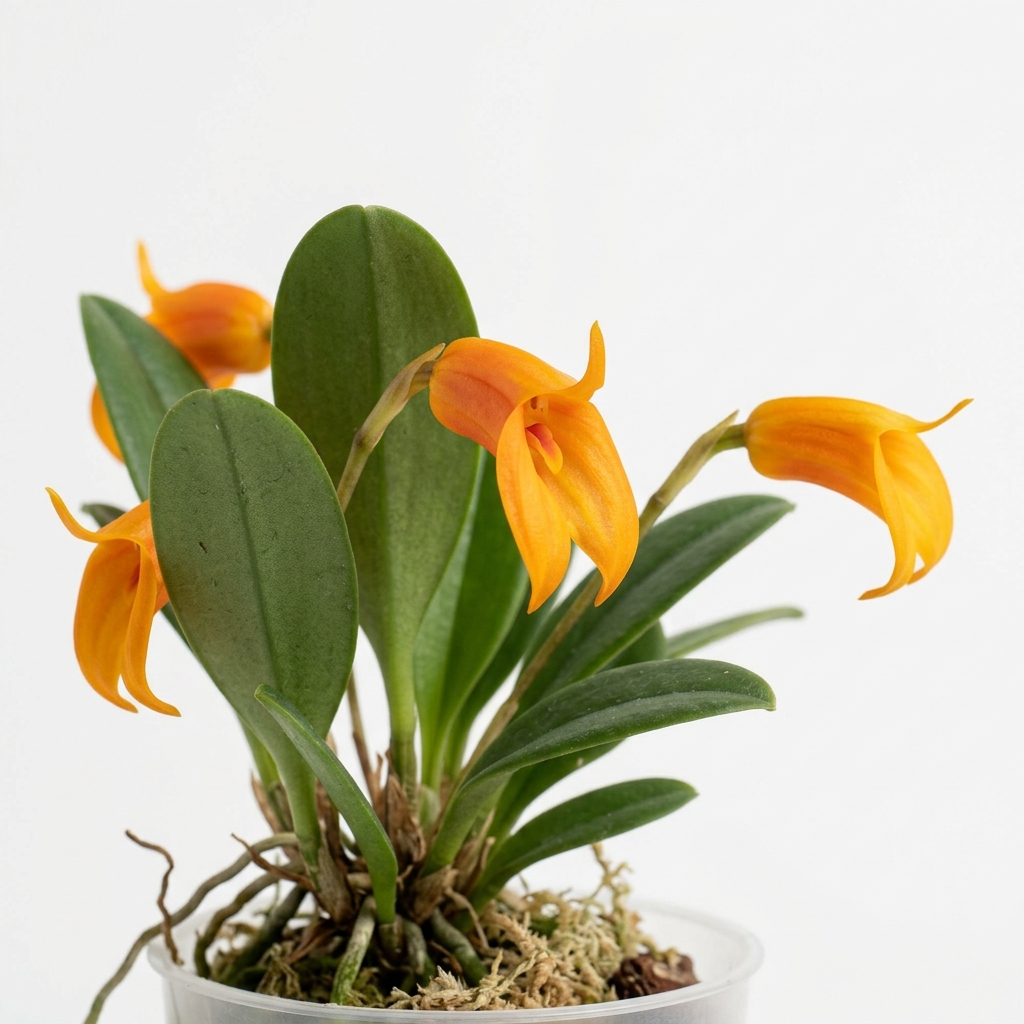
Masdevallia Mendozae is a captivating miniature orchid species highly prized by collectors for its brilliant, tubular orange blossoms. Native to the cool, high-altitude cloud forests of Ecuador, this epiphytic orchid brings a striking splash of neon color to specialized indoor grow spaces and terrariums. Its compact growth habit and unique floral morphology make it a standout representative of the Pleurothallidinae subtribe.
Growers value this orchid not only for its vivid floral display but also for its manageable size, which allows it to thrive in modest spaces. Unlike many orchids with wide, flat petals, this species features sepals fused into a distinctive bell-like shape that captures the eye. Cultivating it successfully requires replicating its damp, breezy, and cool native habitat, presenting a rewarding challenge for dedicated orchid enthusiasts.
💡 Did You Know?
Masdevallia Mendozae is part of the Masdevallia orchid group, a favorite among growers because its flowers, growth habit, and care needs make it useful for comparing cultivated orchids within the same . Observing its leaves, roots, and bloom spikes can help growers understand how this cultivar responds to indoor conditions.
🌿 Botanical Overview
Masdevallia Mendozae is a tufted, miniature epiphyte characterized by its lack of pseudobulbs. Instead, it produces erect, slender ramicauls enveloped by protective tubular sheaths. Each ramicaul bears a single, fleshy, dark green leaf that is narrowly obovate to elliptical. This foliage remains attractive year-round, forming a dense, compact cushion of greenery.
In the wild, this species grows on moss-covered branches in wet montane forests at elevations ranging from 1,800 to 2,200 meters. This high-altitude origin dictates its physiological need for cool temperatures, high humidity, and constant air movement. Because it lacks water-storing pseudobulbs, the plant is highly sensitive to dry spells and requires a consistent moisture regime to survive.
🌸 Flower Characteristics
The blossoms of Masdevallia Mendozae are celebrated for their striking tubular shape and intense orange coloration. The sepals are fused for most of their length, forming a slightly curved, inflated tube that terminates in short, reflexed tips. This tubular structure is adapted to attract specific pollinators, such as hummingbirds, in its native habitat.
The flowers are typically borne singly on semi-erect or horizontal peduncles that emerge from the base of the ramicauls. A well-grown specimen can produce a profusion of these bright orange bells, which contrast beautifully against the deep green foliage. The flowers are relatively long-lasting, often remaining in pristine condition for several weeks under optimal environmental conditions.
Fragrance & Bloom Profile
Unlike some orchid species that emit strong perfumes to attract insects, Masdevallia Mendozae is not known for a prominent fragrance. Any scent produced is generally described as faint or virtually undetectable to the human nose. The primary evolutionary draw of this orchid is its visual brilliance rather than its olfactory appeal.
The blooming cycle is highly dependent on environmental cues, particularly temperature drops and seasonal moisture shifts. While flowers can appear at various times throughout the year, a primary flush often occurs between autumn and late spring. The lack of fragrance is easily overlooked by growers who are captivated by the sheer intensity of the orange blooms.
Parentage & Hybrid Lineage
Masdevallia Mendozae is a naturally occurring species rather than a man-made hybrid. It was first scientifically described in the late 20th century, named in honor of the Ecuadorian collector who helped bring it to botanical attention. Because of its unique tubular shape and vibrant color, it has occasionally been used in hybridizing programs within the genus Masdevallia.
When used in breeding, it tends to pass on its tubular flower shape and warm orange tones to its offspring. However, registration details and specific hybrid lineages can vary, and parentage records are not always consistently documented in general hobbyist literature. For purists, growing the true species remains the ultimate goal due to its distinct, unaltered wild characteristics.
🌱 Growing Conditions
Replicating the cloud forest environment is the key to success with Masdevallia Mendozae. It requires cool to cold temperatures, ideally ranging from 50°F to 65°F (10°C to 18°C) at night, with daytime temperatures preferably not exceeding 75°F (24°C). Prolonged exposure to high temperatures can quickly stress the plant and lead to leaf drop.
💡 Care Tip
For best results, grow Masdevallia Mendozae in bright filtered with steady and gentle airflow. Avoid placing the plant in harsh midday sun, but do not keep it in a dark corner; weak is one of the most common reasons cultivated orchids refuse to rebloom.
Light should be bright but filtered, mimicking the dappled shade of a forest canopy. Direct sunlight will scorch the thin leaves, while excessively low light may inhibit flowering. High humidity of 70% to 90% is essential, coupled with continuous, gentle air movement to prevent stagnant air pockets, which can encourage fungal pathogens.
Watering, Feeding & Potting Media
Because Masdevallia Mendozae lacks pseudobulbs, it has no capacity to store water for extended periods. The potting medium must remain consistently moist but never waterlogged. Watering frequency will depend on the setup, but daily misting or watering every few days is common. Using pure water, such as rainwater, distilled water, or reverse osmosis water, is highly recommended due to the plant’s sensitivity to dissolved salts.
Fertilization should be minimal and highly diluted. A balanced, weak orchid fertilizer applied at one-quarter strength every two to three weeks during active growth is sufficient. For potting media, high-quality New Zealand sphagnum moss or a fine fir bark mix works well in small plastic or clay pots. Alternatively, the plant can be mounted on tree fern or cork slabs if high humidity can be maintained constantly.
Blooming Season & Care Notes
The primary blooming season typically spans from late autumn through the spring months, though sporadic blooms can occur at other times. To encourage a robust bloom cycle, ensure the plant experiences a distinct day-to-night temperature drop of about 10°F to 15°F (5°C to 8°C). Once the flower spikes emerge, avoid moving the plant to a different microclimate, as sudden changes can cause the buds to blast.
After the flowers fade, the old flower spikes can be cut back to the base of the plant. Repotting is best done in late winter or early spring, just as new root growth begins and before the heat of summer arrives. Minimize root disturbance during this process, as the fine roots are delicate and slow to recover from damage.
⚠️ Common Issues
⚠️ Common Mistake
The most common mistake is by calendar instead of root and potting-media condition. Masdevallia roots need moisture and air at the same time, so constantly wet bark or sphagnum can lead to root loss even when the leaves still look healthy.
- Leaf Spotting and Drop: Often caused by excessively high temperatures, poor air circulation, or water sitting on the leaves overnight.
- Root Rot:
Occurs when the potting medium degrades and becomes compacted, suffocating the roots in stagnant water. - Bud Blast:
The premature drying and dropping of flower buds, usually triggered by low humidity or sudden temperature fluctuations. - Pests:
Aphids, spider mites, and mealybugs can occasionally target the tender new growth; treat promptly with gentle, orchid-safe insecticidal soap.
❓ Frequently Asked Questions
Can Masdevallia Mendozae be grown in a standard home environment?
Growing this species in a typical home can be challenging due to its strict requirements for high humidity and cool temperatures. It is best suited for a specialized orchid case, terrarium, or a dedicated grow room where temperature and humidity can be precisely controlled.
How often should I water my Masdevallia Mendozae?
You should water frequently enough to keep the potting medium continuously damp. Depending on your humidity levels and potting media, this may mean watering every day or two. Never allow the medium to dry out completely, as this can cause rapid dehydration and leaf loss.
What is the best potting medium for this orchid?
High-quality, long-fibered sphagnum moss is highly recommended because it retains moisture well while allowing air to reach the roots. A fine-grade bark mix can also be used, or the plant can be mounted on cork bark if you have a high-humidity enclosure.
Why are the leaf tips of my orchid turning black?
Black or brown leaf tips are often a sign of salt buildup from tap water or over-fertilization. It can also indicate insufficient humidity or underwatering. Switch to pure water sources like distilled or rainwater, and ensure humidity remains consistently high.
⭐ Final Growing Notes
While Masdevallia Mendozae demands careful attention to temperature and moisture, the reward of its brilliant orange, tubular flowers is unmatched. By providing a cool, humid, and well-ventilated environment, growers can enjoy a spectacular display from this miniature Andean treasure. It remains an essential addition for any collector dedicated to the art of growing cool-climate orchids.
⚕️ Health, Safety & Edibility
Understanding how a plant interacts with people, pets, and the surrounding environment is part of responsible cultivation. This section uses conservative, general guidance and does not replace professional medical or veterinary advice.
Human Safety: No published evidence currently identifies species-specific toxicity concerns for Masdevallia Mendozae during normal handling. As with most ornamental plants, it should not be intentionally consumed.
Pet Safety: Published information does not indicate that this orchid commonly poses a toxicity concern for cats or dogs. However, chewing leaves, flowers, roots, or potting media may still cause mild digestive upset.
Edibility: This orchid is cultivated for ornamental display rather than food. Ornamental plants may carry fertilizers, pesticides, or other horticultural treatments that make them unsuitable for consumption.
Skin Contact: Routine handling is not generally associated with skin irritation. Gardeners with sensitive skin may prefer wearing gloves when repotting, pruning, or handling potting media.
🌱 Propagation Tip
Propagation should be approached patiently. Most home growers should wait for natural keikis or divide only mature, healthy plants when the orchid type allows it. Never remove a young growth until it has strong roots and enough leaves to support itself away from the parent plant.
⭐ Expert Advice
Repot after flowering when fresh root tips begin to appear. This timing helps the plant anchor quickly into new bark or sphagnum and reduces stress, especially for orchids grown indoors where airflow, , and drying speed can change from season to season.




Leave A Comment