
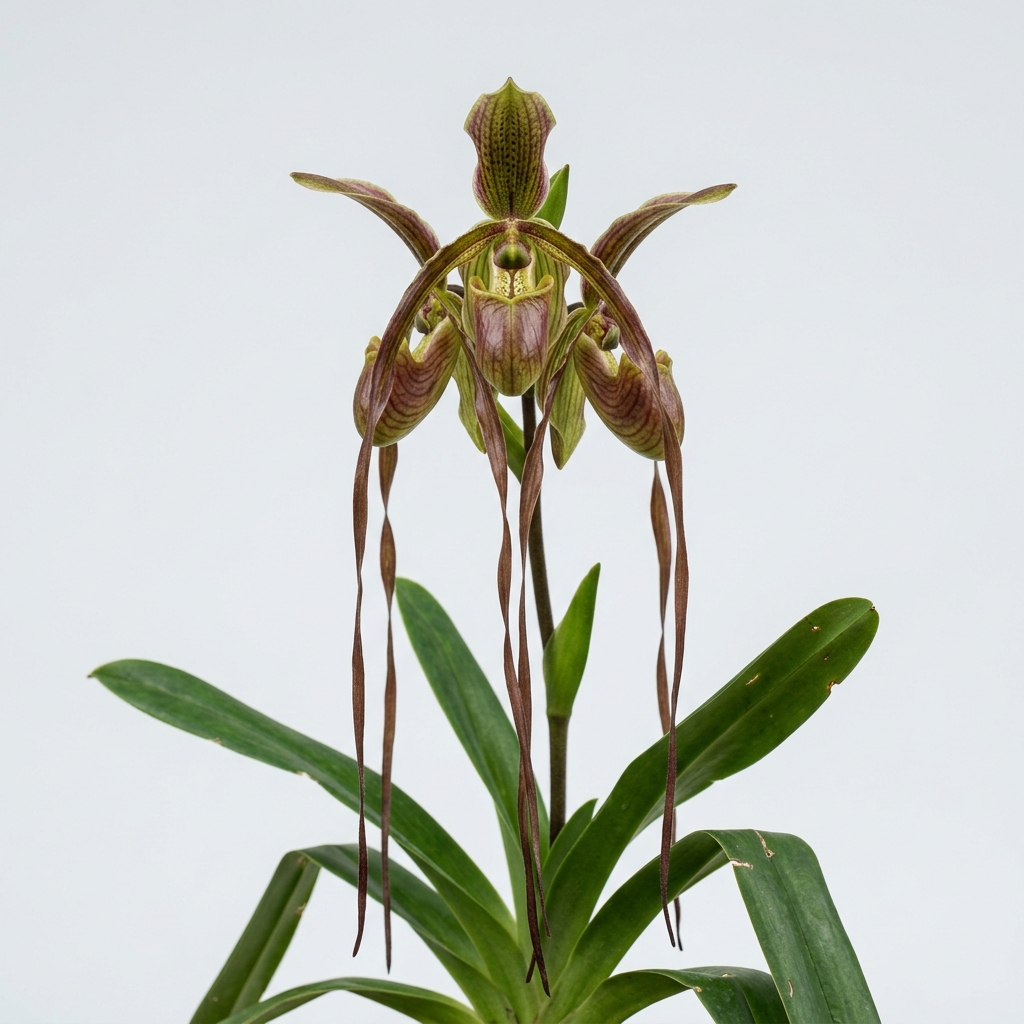
Phragmipedium Humboldtii is a highly coveted slipper orchid species native to the montane forests of Central America, particularly areas within Guatemala, Honduras, and Panama. Renowned among orchid enthusiasts for its dramatic and elegant presentation, this species is celebrated for its extraordinarily long, ribbon-like petals that cascade downward from the flower. It grows primarily as an epiphyte or lithophyte in humid, mid-elevation environments, making it a prized centerpiece for dedicated greenhouse growers and indoor collectors alike.
Cultivating this remarkable orchid requires a careful balance of high humidity, consistent moisture, and bright, filtered light. While it can be more demanding than common commercial orchids, the reward of its spectacular, long-petaled blooms makes it a highly satisfying project for intermediate to advanced growers. Understanding its natural habitat is key to successfully replicating its preferred conditions and encouraging healthy, multi-floral displays.
💡 Did You Know?
Phragmipedium Humboldtii is famous for its rapid petal elongation. Once the flower bud opens, the lateral petals can grow up to several inches per day, cascading downward like elegant ribbons until they reach their full, dramatic length.
🌿 Botanical Overview
Phragmipedium Humboldtii belongs to the subfamily Cypripedioideae, commonly known as the slipper orchids. This species is characterized by its fan-shaped growth habit, featuring strap-like, leathery green leaves that emerge from a short rhizome. Unlike some other members of the genus, it does not possess pseudobulbs, meaning it relies on its root system and foliage to store moisture and nutrients.
In its native habitat, this orchid is typically found growing on moss-covered tree branches or rocky cliffs where it receives excellent air circulation and constant moisture from mist and rainfall. The roots are thick, fleshy, and covered in a velamen layer that helps absorb water rapidly while anchoring the plant securely to its substrate.
🌸 Flower Characteristics
The defining feature of Phragmipedium Humboldtii is its spectacular, multi-floral inflorescence. A single upright spike can produce several flowers that open sequentially or nearly simultaneously. The dorsal sepal is typically pointed and marked with vertical veins of green and mahogany, while the lateral sepals are fused into a synsepal behind the pouch.
The most dramatic elements are the lateral petals, which are extremely elongated, narrow, and twist spirally as they drape downward. These petals can reach lengths of 12 to 24 inches (30 to 60 cm) or more under optimal growing conditions. The pouch, or labellum, is slipper-shaped, usually exhibiting a blend of green, bronze, and deep purple-brown coloration, designed to guide potential pollinators.
Fragrance & Bloom Profile
While some slipper orchids possess subtle scents, Phragmipedium Humboldtii is not widely recognized for having a strong or distinct fragrance. Any scent produced is typically faint and not consistently documented across different clones or growing environments. Growers value this species almost exclusively for its architectural beauty and the sheer physical scale of its cascading petals.
The blooms are long-lasting, often remaining in good condition for several weeks. Because the petals continue to elongate after the bud opens, providing adequate vertical space beneath the flower spike is essential to prevent the delicate tips from touching the ground or potting bench, which can cause them to curl or rot.
Parentage & Hybrid Lineage
Phragmipedium Humboldtii is a naturally occurring species rather than a man-made hybrid. In older literature and some historical collections, it has occasionally been confused with or classified alongside Phragmipedium caudatum or Phragmipedium warszewiczianum. Modern botanical classification generally recognizes humboldtii as a distinct species based on its specific floral morphology and geographic distribution.
In hybridizing, this species is highly valued for passing down its long-petal trait to its offspring. It has been used to create numerous spectacular primary and complex hybrids within the genus Phragmipedium, imparting dramatic form, rich mahogany coloration, and multi-floral blooming habits to its progeny.
🌱 Growing Conditions
To cultivate Phragmipedium Humboldtii successfully, growers must provide intermediate to warm temperatures, ideally ranging from 65 to 80 degrees Fahrenheit (18 to 27 degrees Celsius) during the day, with a slight drop of 10 degrees at night to mimic montane conditions. Bright, filtered light is essential; an east- or shaded south-facing window is often ideal. Avoid direct, midday sunlight, which can easily scorch the foliage.
💡 Care Tip
Always elevate the pot or mount the orchid high enough when it is in spike. This ensures the incredibly long, trailing petals have enough vertical clearance to hang freely without touching the table or floor, which prevents them from curling or rotting.
High humidity is critical for this species, ideally maintained between 60% and 80%. Excellent air movement must accompany this high humidity to prevent stagnant air from encouraging fungal or bacterial pathogens on the leaves and flowers. Using a small fan near the growing area can help maintain the necessary air circulation.
Watering, Feeding & Potting Media
Unlike some other Phragmipedium species that prefer constantly wet, swamp-like conditions, Phragmipedium Humboldtii prefers to remain evenly moist but not waterlogged. The potting medium should never be allowed to dry out completely, but it must drain rapidly to prevent root rot. Water thoroughly with pure water, such as rainwater, distilled water, or reverse osmosis water, as this species is sensitive to dissolved mineral salts.
A suitable potting mix typically consists of fine-grade fir bark blended with sphagnum moss, perlite, and charcoal to ensure both moisture retention and excellent aeration. Feed the plant with a highly diluted, balanced orchid fertilizer every two to three weeks during the active growing season, flushing the pot with pure water between feedings to prevent salt buildup.
Blooming Season & Care Notes
The primary blooming season for Phragmipedium Humboldtii is during the spring and summer months, though well-established plants in optimal conditions may occasionally bloom at other times of the year. As the flower spike begins to emerge from the center of the leaf fan, it is important to stake it gently to support the weight of the developing buds and ensure the long petals have plenty of vertical clearance to unfurl.
Repotting should be performed every one to two years, preferably just after flowering or when new root growth is initiated. Choose a pot that comfortably accommodates the root mass without being excessively large, as overpotting can lead to stale, waterlogged media that compromises root health.
⚠️ Common Issues
⚠️ Common Mistake
A frequent error is using hard tap water. Phragmipedium Humboldtii has sensitive roots that quickly decline if exposed to dissolved mineral salts, leading to leaf tip burn and eventual root loss.
- Root Rot:
Caused by compacted, poorly draining potting media or overwatering, leading to mushy, black roots and limp leaves. - Petal Damage: The long, trailing petals can easily stick to wet surfaces or curl if they touch the potting bench or pot rim during elongation.
- Leaf Tip Burn: Often a sign of excessive mineral salts from tap water or over-fertilization; always use high-quality, low-mineral water.
- Pests:
Mealybugs and scale can occasionally hide in the tight crevices of the leaf fans; treat promptly with insecticidal soap or horticultural oil. - Bacterial Rot: Can occur if water is allowed to sit in the crown of the plant overnight, especially in cool, stagnant conditions.
❓ Frequently Asked Questions
How long do the petals of Phragmipedium Humboldtii actually grow?
Under optimal growing conditions with high humidity and proper support, the lateral petals of Phragmipedium Humboldtii can reach lengths of 12 to 24 inches (30 to 60 cm) or more, draping elegantly below the flower pouch.
Does Phragmipedium Humboldtii need to be grown in standing water?
No, unlike some other Phragmipedium species that thrive in wet conditions, Phragmipedium Humboldtii prefers to be kept consistently moist but requires excellent drainage. It should never sit in stagnant water, as its roots are highly susceptible to rot.
What type of water is best for this orchid?
This species is highly sensitive to dissolved minerals and salts. It is best to water it with rainwater, distilled water, or reverse osmosis water to prevent leaf tip burn and root damage.
How do I prevent the long petals from curling or getting damaged?
Ensure the flower spike is staked high enough so that the developing petals have plenty of vertical space to hang freely without touching the pot, bench, or surrounding foliage during their rapid growth phase.
⭐ Final Growing Notes
Phragmipedium Humboldtii remains one of the most breathtaking species in the orchid world, offering a dramatic visual reward that easily justifies its specific care requirements. By providing consistent moisture, high-quality water, excellent air circulation, and ample vertical space for its cascading petals, growers can successfully cultivate this spectacular slipper orchid and enjoy its legendary, ribbon-like blooms year after year.
⚕️ Health, Safety & Edibility
Understanding how a plant interacts with people, pets, and the surrounding environment is part of responsible cultivation. This section uses conservative, general guidance and does not replace professional medical or veterinary advice.
Human Safety: Species-specific human toxicity data for Phragmipedium Humboldtii is limited. Use conservative handling practices and avoid intentional consumption.
Pet Safety: Pet-specific safety information for Phragmipedium Humboldtii is limited, so keep it away from animals that commonly chew plants.
Edibility: Phragmipedium Humboldtii should not be treated as edible. Ornamental specimens may contain natural irritants or horticultural residues that make them unsuitable for consumption.
Skin Contact: Skin irritation is not well documented for this plant, but gloves are sensible when repotting, pruning, or handling potting media.
🌱 Propagation Tip
This species is best propagated by division during repotting. Ensure each division has at least three healthy, mature leaf fans and an active growth point to give the new plants the best chance of establishing quickly.
⭐ Expert Advice
To encourage robust blooming, provide a slight drop in night temperatures during the autumn and winter months. This natural dip mimics its native montane habitat and helps trigger the development of strong, multi-floral spikes.




Leave A Comment