

Coelogyne cristata is a highly revered cool-growing orchid species famous for its cascading displays of pristine white blossoms. Originating from the high-altitude regions of the Himalayas, this epiphytic or lithophytic orchid is cherished by collectors for its vigorous growth habit and elegant, crystalline flowers. Its distinctive pseudobulbs and lush green foliage make it an attractive specimen even when not in bloom.
Cultivating this species successfully requires an understanding of its seasonal rhythms, particularly its need for a cool, dry winter rest to trigger flowering. When properly managed, Coelogyne cristata rewards growers with spectacular, multi-flowered pendulous spikes that drape beautifully over the edges of pots or hanging baskets. It remains a cornerstone species for cool-climate orchid enthusiasts worldwide.
💡 Did You Know?
Coelogyne cristata is native to the high-altitude cloud forests of the Himalayas, where it can survive near-freezing winter temperatures. Its species name, cristata, refers to the prominent, fringed golden crests on the lip of the flower, which act as a visual guide for pollinators in its misty native habitat.
🌿 Botanical Overview
Coelogyne cristata is characterized by its tightly clustered, egg-shaped to spherical pseudobulbs, which are smooth and bright green when young, becoming wrinkled with age. Each pseudobulb typically bears two narrow, leathery, dark green leaves that persist for several seasons. The plant spreads via a creeping rhizome, quickly forming large, dense clumps under optimal conditions.
In its native montane cloud forests, this orchid grows on moss-covered trees and damp rock faces at elevations between 1,500 and 2,600 meters. This high-altitude habitat exposes the plant to bright sunlight, high humidity, and significant seasonal temperature fluctuations, which dictate its growth and dormancy cycles in cultivation.
🌸 Flower Characteristics
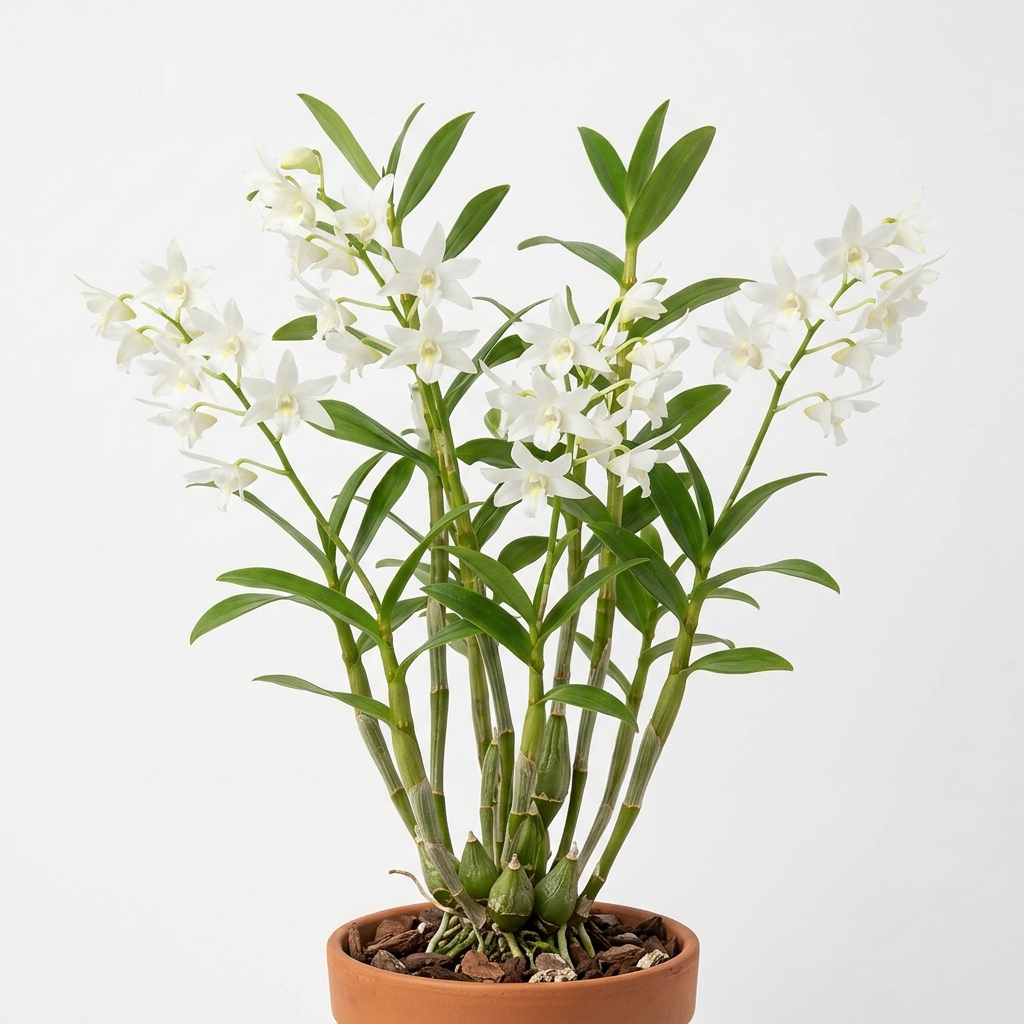
The flowers of Coelogyne cristata are renowned for their pure, snowy-white petals and sepals, which feature a delicate, wavy texture. The prominent lip, or labellum, is decorated with five raised, fringed golden-yellow crests that run down the center, serving as a striking visual contrast.
Individual blooms can measure up to 8 to 13 centimeters in diameter, making them exceptionally large for the genus. They are produced on pendulous or arching inflorescences that emerge from the base of mature pseudobulbs, with each spike carrying between three and ten closely spaced flowers that open nearly simultaneously.
Fragrance & Bloom Profile
The fragrance of Coelogyne cristata is typically described as a sweet, delicate scent with subtle musky or honey-like undertones. The perfume is most noticeable during the warmer hours of the day when the flowers are fully open and exposed to gentle air movement.
The blooms are relatively long-lasting, often remaining pristine for four to six weeks if kept in cool, dry conditions. However, the delicate white petals are highly sensitive to water spotting and physical bruising, requiring careful handling during the blooming cycle.
Parentage & Hybrid Lineage
As a distinct, naturally occurring species, Coelogyne cristata does not have a hybrid parentage. It is, however, a primary parent in several notable cool-growing Coelogyne hybrids, such as Coelogyne Colmanii and Coelogyne Intermedia.
While several selected clones and horticultural varieties exist—such as the pure white Coelogyne cristata var. hololeuca, which lacks the yellow crest on the lip—the typical species remains the most widely grown and recognized form in the orchid community.
🌱 Growing Conditions
To thrive, Coelogyne cristata requires bright, filtered light, similar to the conditions preferred by Cattleyas. Direct midday sun should be avoided to prevent leaf scorch, but high light levels are essential during the summer growing season to build up energy in the pseudobulbs for winter flowering.
💡 Care Tip
Provide excellent air movement at all times, especially during hot summer days. High combined with stagnant air can quickly lead to fungal leaf spotting and rot. A small oscillating fan near your growing area is highly beneficial.
Temperature management is critical. During the summer, the plant tolerates intermediate temperatures up to 25 degrees Celsius, provided there is high humidity and excellent air circulation. In the winter, night temperatures must drop significantly, ideally down to 5 to 10 degrees Celsius, to mimic its native Himalayan winter.
Watering, Feeding & Potting Media
During the active spring and summer growth phase, Coelogyne cristata is a thirsty plant that requires frequent, heavy watering. The potting medium should be kept consistently moist but never waterlogged. Weekly applications of a balanced orchid fertilizer diluted to quarter-strength will support the rapid development of new pseudobulbs.
The potting medium must offer excellent drainage while retaining some moisture. A mix of medium-grade fir bark, perlite, and chopped sphagnum moss works well. Because of its creeping growth habit and pendulous flower spikes, this species is exceptionally well-suited to shallow bulb pans, teak baskets, or mounts where the roots can breathe freely.
Blooming Season & Care Notes
The primary blooming season occurs from mid-winter to early spring. The initiation of flower spikes is highly dependent on a distinct winter rest period. Starting in late autumn, watering should be drastically reduced, and fertilizing must be stopped entirely.
During this rest, provide only enough water or occasional misting to prevent the pseudobulbs from shriveling excessively. Keep the plant in a cool, bright location. Once the flower spikes begin to emerge from the base of the pseudobulbs, regular watering can be gradually resumed, taking care not to wet the developing buds.
⚠️ Common Issues
⚠️ Common Mistake
The most common mistake is heavily during the winter rest. Excess moisture when temperatures are cool and the plant is dormant will rapidly rot the root system and prevent the development of flower spikes.
- Pseudobulb Shriveling: Excessive shriveling during the winter rest indicates underwatering, while shriveling during the active growing season usually points to root rot from overwatering.
- Bud Blast:
Developing flower buds may turn yellow and drop if the plant experiences sudden temperature spikes, low humidity, or if water is allowed to sit on the buds. - Leaf Tip Burn: This is often caused by a buildup of mineral salts from hard water or over-fertilizing; flush the medium thoroughly with pure water.
- Pests:
Mealybugs and scale insects can hide in the papery sheaths at the base of the pseudobulbs; inspect these areas regularly and treat with horticultural soap. - Root Rot:
Caused by compacted, poorly draining media or overwatering during the cool winter rest period.
❓ Frequently Asked Questions
How do I trigger my Coelogyne cristata to bloom?
To trigger blooming, you must provide a cool, dry winter rest starting in late autumn. Reduce watering significantly, stop fertilizing, and ensure night temperatures drop to between 5 and 10 degrees Celsius. This mimics the dry Himalayan winter and stimulates spike development.
Can I grow Coelogyne cristata indoors under LED lights?
Yes, it can be grown under high-output LED grow lights, but you must ensure the plant receives the necessary cool temperatures during the winter. Placing it near a chilly window or in an unheated room during the winter rest is crucial for success under indoor lights.
When is the best time to repot Coelogyne cristata?
Repotting should only be done when absolutely necessary, immediately after flowering as new root growth begins in spring. This species dislikes root disturbance and may refuse to bloom for a year or two after being repotted or divided.
Why are the leaves on my Coelogyne cristata turning yellow?
Yellowing leaves can be caused by natural aging of older foliage, but widespread yellowing often indicates overwatering, poor drainage, or excessive direct sunlight. Check the root system to ensure it is healthy and adjust light levels accordingly.
⭐ Final Growing Notes
Coelogyne cristata is a rewarding and spectacular orchid that brings a touch of alpine elegance to any collection. While its temperature and winter rest requirements demand some discipline, the breathtaking sight of its crystalline white, gold-crested blooms cascading from a mature specimen is well worth the effort. By respecting its natural seasonal cycle, growers can enjoy this Himalayan treasure for decades.
🌱 Propagation Tip
Propagate by division only when the plant has outgrown its container, ensuring each division has at least four healthy pseudobulbs. Because this species resents root disturbance, keep divisions intact to minimize transplant shock and blooming delays.
⭐ Expert Advice
When repotting, choose a shallow clay bulb pan or a teak basket rather than a deep pot. The shallow container accommodates the creeping rhizome and allows the potting medium to dry evenly, preventing soggy pockets that damage roots.


Leave A Comment