
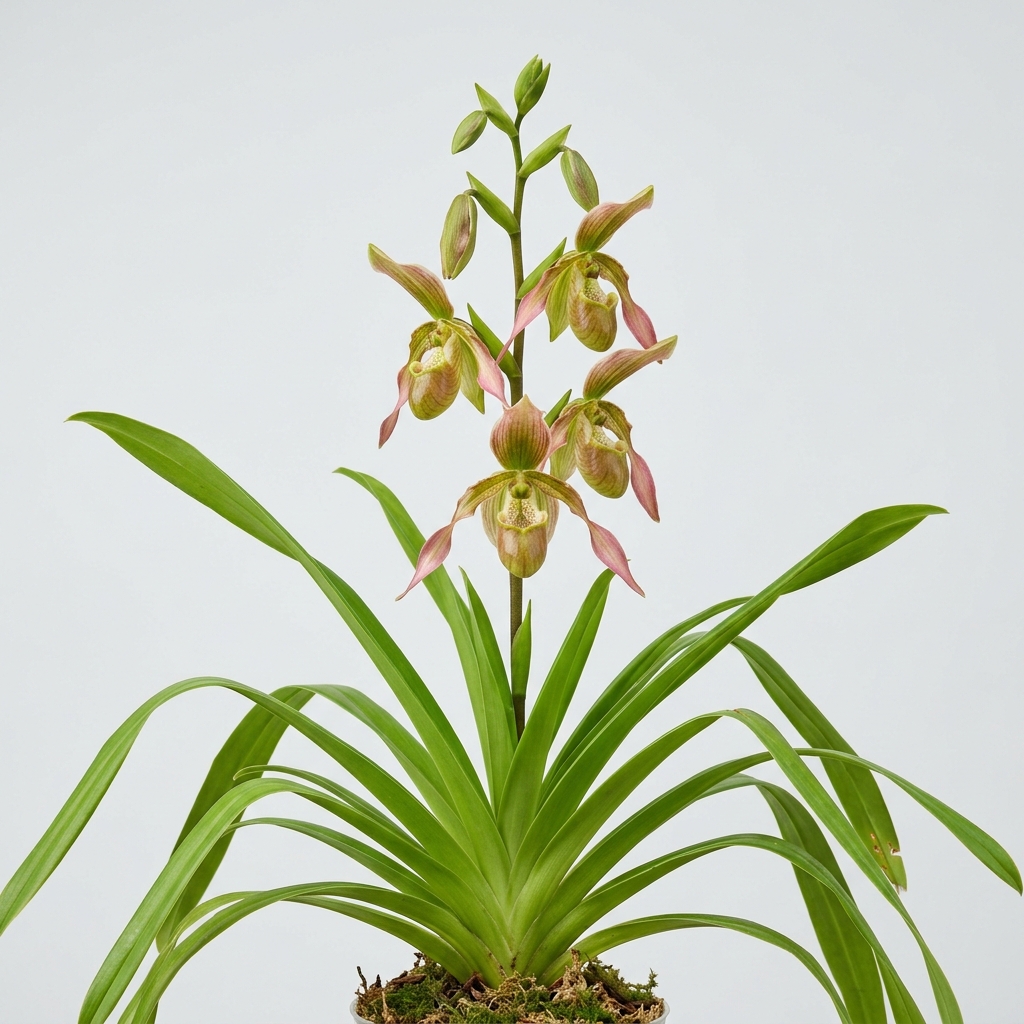
Phragmipedium longifolium is a highly celebrated species of South American slipper orchid, cherished by collectors for its robust growth habit and remarkably long-lasting floral displays. Characterized by its fan-shaped growth of strap-like, bright green leaves, this terrestrial or lithophytic orchid produces tall, erect spikes that present flowers sequentially over several months. Its architectural elegance and reliable blooming nature make it a cornerstone species for both novice and experienced orchid enthusiasts.
Unlike many orchids that bloom all at once, this species showcases a continuous succession of blossoms, ensuring that a single flower spike remains attractive for a significant portion of the year. The distinctive pouch-shaped lip and elongated, gracefully twisting petals exemplify the classic slipper orchid morphology, making it a highly desirable addition to any indoor or greenhouse collection.
💡 Did You Know?
Phragmipedium longifolium is part of the Phragmipedium orchid group, a favorite among growers because its flowers, growth habit, and care needs make it useful for comparing cultivated orchids within the same . Observing its leaves, roots, and bloom spikes can help growers understand how this cultivar responds to indoor conditions.
🌿 Botanical Overview
Phragmipedium longifolium is native to wet, humid environments stretching from southern Central America down through northwestern South America. In its natural habitat, it is frequently found growing on wet rocks near streams, seepages, or as a terrestrial in organic-rich, damp soils. This constant access to moisture shapes its unique cultural requirements in home and greenhouse environments.
The vegetative growth of this species is impressive, with individual fans of leaves reaching up to two feet in length. The foliage is thick, leathery, and arching, creating a lush, grassy appearance even when the plant is not in bloom. Because it lacks pseudobulbs, the plant relies on its extensive root system and fleshy leaves to store moisture and nutrients.
🌸 Flower Characteristics
The flowers of Phragmipedium longifolium are a masterclass in orchid complexity. Each bloom features a prominent, pouch-like labellum designed to aid in pollination, typically colored in shades of pale green to bronze with delicate spotting along the interior margins. The dorsal sepal is upright, often pale green with darker veins, while the lateral petals are long, narrow, and gracefully twist downward, often tipped with pink or purple hues. The flowers can measure up to six inches across, presenting a dramatic, exotic silhouette on a tall, dark purple or green scape.
Fragrance & Bloom Profile
While some slipper orchids possess subtle scents, Phragmipedium longifolium is generally considered non-fragrant. Any scent profile is not consistently documented in common grower references, as the primary appeal of this species lies entirely in its visual architecture and sequential blooming habit. A single inflorescence can produce dozens of flowers over its lifespan, with each individual bloom lasting for several weeks before dropping to make way for the next bud.
Parentage & Hybrid Lineage
As a naturally occurring species rather than a man-made hybrid, Phragmipedium longifolium carries no direct parental lineage. However, it has played a foundational role in orchid hybridization. It is a primary parent to many of the most famous Phragmipedium hybrids, contributing its vigorous growth habit, sequential blooming trait, and moisture tolerance to its progeny. Its genetic influence is highly valued by hybridizers seeking to create resilient, free-blooming slipper orchids.
🌱 Growing Conditions
To cultivate Phragmipedium longifolium successfully, growers should replicate its bright, humid, and airy natural habitat. It thrives in bright, filtered indirect light, similar to the conditions preferred by Phalaenopsis but slightly brighter. Avoid direct midday sun, which can scorch the long leaves. Temperatures should ideally remain in the intermediate to warm range, with daytime temperatures between 75 and 85 degrees Fahrenheit, and a slight drop at night to stimulate healthy growth and spike initiation. High humidity of 60% to 80% coupled with gentle, continuous airflow is essential to prevent fungal pathogens.
💡 Care Tip
For best results, grow Phragmipedium longifolium in bright filtered with steady and gentle airflow. Avoid placing the plant in harsh midday sun, but do not keep it in a dark corner; weak is one of the most common reasons cultivated orchids refuse to rebloom.
Watering, Feeding & Potting Media
Unlike most epiphytic orchids, Phragmipedium longifolium must never be allowed to dry out completely. Its roots are adapted to constant moisture, so the potting medium should remain evenly damp. Water thoroughly with pure water, such as rainwater, distilled water, or reverse osmosis water, as this species is highly sensitive to mineral salts and chlorine. A potting mix consisting of fine fir bark, chopped sphagnum moss, perlite, and a small amount of horticultural charcoal works exceptionally well. Feed weekly with a highly diluted, balanced orchid fertilizer, flushing the pot with pure water once a month to prevent salt buildup.
Blooming Season & Care Notes
This species is capable of blooming at almost any time of the year, though peak activity often occurs during the spring and autumn months. Because of its sequential blooming habit, do not cut the flower spike after the first bloom drops; the spike will continue to produce new buds at the tip for many months. Only remove the spike once it has completely turned brown and dried out. Repotting is best performed annually or biennially in the spring, just as new root growth begins, to ensure the potting medium does not break down and become acidic or compacted.
⚠️ Common Issues
⚠️ Common Mistake
The most common mistake is by calendar instead of root and potting-media condition. Phragmipedium roots need moisture and air at the same time, so constantly wet bark or sphagnum can lead to root loss even when the leaves still look healthy.
- Root Rot: Occurs if the potting medium degrades and loses aeration, suffocating the roots despite their love for moisture.
- Leaf Tip Burn: Often caused by mineral accumulation from tap water or over-fertilization; use pure water to resolve.
- Bud Blast: Sudden dropping of buds before opening, usually triggered by drastic changes in temperature, low humidity, or drafty conditions.
- Mealybugs and Scale: Pests can hide in the tight crevices of the leaf fans; treat early with insecticidal soap or neem oil.
❓ Frequently Asked Questions
Why are the leaf tips of my Phragmipedium longifolium turning brown?
Brown leaf tips are typically a sign of mineral sensitivity. This species is highly sensitive to dissolved salts in tap water and excessive fertilizer. Switch to rainwater, distilled water, or reverse osmosis water, and flush the pot thoroughly to leach out accumulated salts.
Can I grow Phragmipedium longifolium under artificial LED lights?
Yes, this orchid adapts very well to indoor cultivation under LED grow lights. Position the plant so it receives moderate to bright light levels, ensuring the leaves do not feel hot to the touch, and maintain a consistent 12-to-14-hour light cycle.
How often should I repot this slipper orchid?
It is best to repot every 12 to 18 months. Because the potting medium must remain constantly moist, organic materials like bark and sphagnum moss break down faster than they would in drier setups. Fresh media prevents root suffocation.
Why did the flower spike stop producing buds?
A spike may stop blooming due to environmental stress, such as a sudden drop in humidity, insufficient light, or natural exhaustion of the plant. Ensure the orchid is well-hydrated and receiving adequate nutrition to support long-term blooming cycles.
⭐ Final Growing Notes
Phragmipedium longifolium remains one of the most rewarding slipper orchids to cultivate, offering spectacular, long-lasting rewards for minimal adjustments in watering habits. By keeping its roots consistently moist with pure water and providing bright, indirect light, growers can enjoy a near-continuous parade of exotic, pouch-shaped blooms that bring a touch of the tropical cloud forest into the home.
🌱 Propagation Tip
Propagation should be approached patiently. Most home growers should wait for natural keikis or divide only mature, healthy plants when the orchid type allows it. Never remove a young growth until it has strong roots and enough leaves to support itself away from the parent plant.
⭐ Expert Advice
Repot after flowering when fresh root tips begin to appear. This timing helps the plant anchor quickly into new bark or sphagnum and reduces stress, especially for orchids grown indoors where airflow, , and drying speed can change from season to season.




Leave A Comment