
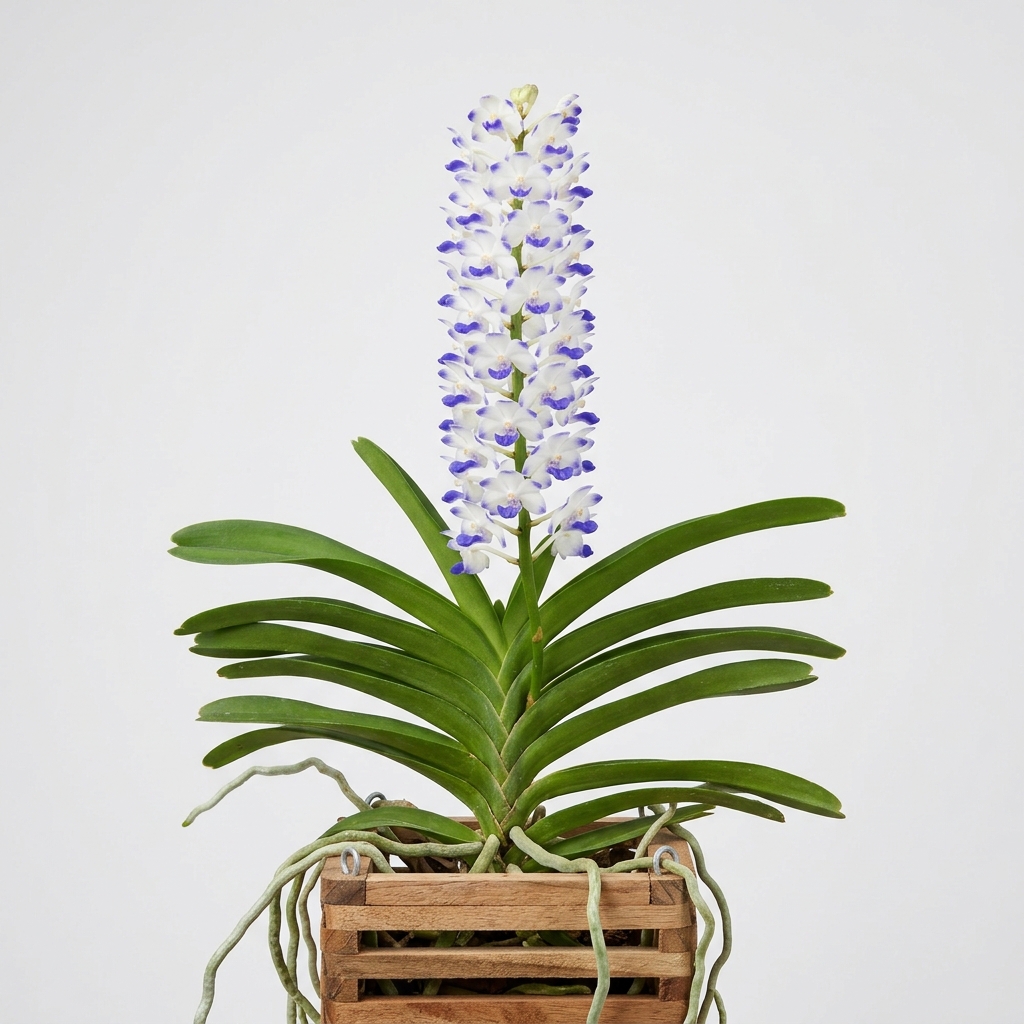
Rhynchostylis Coelestis is a highly prized monopodial epiphytic orchid native to the warm regions of Southeast Asia, particularly Thailand, Cambodia, and Vietnam. Renowned for its striking upright flower spikes and unusual blue-violet coloration, this species is a jewel in any tropical orchid collection. Unlike many of its close relatives in the Vanda alliance, it maintains a relatively compact growth habit, making it an appealing choice for growers with limited space who still crave spectacular tropical blooms.
In cultivation, this orchid is celebrated not only for its visual charm but also for its delightful, sweet fragrance that can easily fill a greenhouse or growing room. While it demands consistent warmth, high humidity, and excellent air circulation, its robust nature and reliable summer flowering make it a rewarding project for intermediate orchid enthusiasts looking to expand their collection beyond more common genera.
💡 Did You Know?
Unlike most other species in the Rhynchostylis which produce cascading or pendulous flower spikes, Rhynchostylis Coelestis is unique for its strictly upright, erect inflorescences that stand proud above the foliage.
🌿 Botanical Overview
Rhynchostylis Coelestis is characterized by its monopodial growth habit, meaning it grows upward from a single stem rather than producing pseudobulbs. The plant features thick, leathery, strap-like leaves that grow in a tight, alternating V-shaped fan. These leaves are designed to store moisture and withstand the bright conditions of its native canopy habitats.
A defining feature of this orchid is its extensive, fleshy aerial root system. In the wild, these roots cling to tree branches, absorbing moisture and nutrients directly from the air and rain. Because it lacks pseudobulbs for water storage, the plant relies heavily on these thick roots and its fleshy leaves to survive dry spells, making proper root management critical for indoor growers.
🌸 Flower Characteristics
The inflorescence of Rhynchostylis Coelestis is a spectacular sight. Unlike other members of the genus that produce drooping, fox-tail-like clusters, this species sends up strictly erect, densely packed spikes that can reach up to twelve inches in height. Each spike can carry dozens of individual flowers, creating a crowded, column-like display of color.
The individual flowers are relatively small, usually measuring around one inch across, but their coloration is striking. The sepals and petals are a clean, crystalline white, tipped with a vivid, contrasting shade of sky-blue, indigo, or violet. The lip, or labellum, is typically saturated with a deeper, more intense blue-purple hue, drawing pollinators and admirers alike to the center of the bloom.
Fragrance & Bloom Profile
One of the most compelling reasons to grow Rhynchostylis Coelestis is its intense fragrance. The flowers emit a powerful, sweet scent with distinct notes of citrus and spice, which is most potent during the warm, bright hours of the morning and early afternoon. A single plant in full bloom can easily perfume an entire greenhouse or living space.
The blooming cycle typically begins in mid-summer and can extend into early autumn. Individual flowers are quite waxy and durable, allowing the display to remain fresh and vibrant for three to six weeks, provided the plant is kept in a stable environment free from extreme temperature fluctuations or dry drafts.
Parentage & Hybrid Lineage
Rhynchostylis Coelestis is a naturally occurring species rather than a man-made hybrid. However, its unique blue coloration and upright growth habit have made it an invaluable parent in orchid hybridization. It is frequently crossed with members of the Vanda genus to create the popular intergeneric hybrid group known as Vandachostylis.
While several select clones and color forms exist within the trade, the classic blue-tipped form remains the most iconic. When purchasing this orchid, growers should note that while line-bred cultivars often exhibit improved flower size and color saturation, the fundamental care requirements remain identical to the wild species.
🌱 Growing Conditions
To successfully cultivate Rhynchostylis Coelestis, one must replicate its native tropical canopy environment. It thrives in bright, filtered light. While it enjoys more light than Phalaenopsis, direct midday sun can scorch its leathery leaves. A east- or shaded south-facing window, or high-quality LED grow lights, are ideal setup options.
💡 Care Tip
Provide constant, gentle air movement around your Rhynchostylis Coelestis. High combined with stagnant air is a recipe for fungal leaf spotting and crown rot.
Temperature control is equally important. This orchid prefers warm to hot conditions, with daytime temperatures ranging between 75°F and 85°F, and a slight drop at night to no lower than 60°F. High humidity of at least 60% is essential to keep the exposed aerial roots healthy, and constant air movement must be provided to prevent stagnant moisture from causing rot.
Watering, Feeding & Potting Media
Because Rhynchostylis Coelestis is typically grown bare-root in wooden slat baskets or mounted on cork plaques, its watering needs are distinct from potted orchids. During the active spring and summer growing seasons, the roots should be thoroughly soaked daily—sometimes twice a day in hot, dry weather. The roots will turn from a silvery-white to a vibrant green when fully hydrated, and they must be allowed to dry completely before the next watering.
Feeding should be frequent but light. A balanced, water-soluble orchid fertilizer diluted to quarter-strength can be applied weekly during the growing season. If you choose to pot this orchid, use an extremely coarse, free-draining medium such as large charcoal chunks, wine corks, or extra-large fir bark to ensure the roots receive maximum airflow and never sit in soggy conditions.
Blooming Season & Care Notes
The primary blooming season occurs during the warmest months of summer. As the flower spikes begin to emerge from the leaf axils, it is crucial to keep the plant’s position stable. Changing its orientation to the light source during spike development can cause the flowers to twist or open unevenly. Avoid spraying water directly on the developing buds, as trapped moisture can lead to bud blast or fungal spotting.
After the flowers have faded, allow the spike to dry and turn brown naturally before cutting it back close to the stem. Repotting or remounting should be done only when absolutely necessary, as this species resents root disturbance. The best time to adjust its housing is in early spring, just as new root tips begin to actively grow.
⚠️ Common Issues
⚠️ Common Mistake
Avoid planting this orchid in standard, fine-grade potting soil or dense sphagnum moss. Its thick aerial roots require rapid wet-dry cycles and will quickly suffocate and rot if kept continuously wet.
- Root Rot:
Caused by suffocating roots in dense, water-retaining media. Roots should always dry rapidly. - Leaf Spotting: Fungal or bacterial spots can develop on the foliage if humidity is high but air circulation is poor.
- Bud Blast:
Developing buds may yellow and drop prematurely due to sudden drops in temperature, low humidity, or drafts. - Dehydration:
Shriveled, leathery leaves and dry, brittle roots indicate insufficient watering or inadequate ambient humidity. - Pests:
Scale and mealybugs can occasionally hide in the tight leaf axils; treat promptly with insecticidal soap or horticultural oil.
❓ Frequently Asked Questions
How often should I water my Rhynchostylis Coelestis?
If grown bare-root in a basket, it should be watered daily during the warm growing season, allowing the roots to dry completely within a few hours. In winter, reduce watering to every two to three days, or when the roots look silvery-gray.
Why are the lower leaves of my orchid turning yellow and falling off?
While older leaves naturally shed over time, rapid yellowing of lower leaves often indicates underwatering, low humidity, or root loss. Check that the roots are healthy and receiving enough moisture.
Can I grow this orchid indoors without a greenhouse?
Yes, but you must maintain high humidity around the plant using humidifiers or humidity trays, and ensure it receives bright, indirect light from a window or dedicated grow lights.
Should I mist the aerial roots of my Rhynchostylis Coelestis?
Misting can help temporarily, but it is not a substitute for a thorough soaking. It is better to drench the roots completely under a faucet or in a bucket of water until they turn green.
⭐ Final Growing Notes
Rhynchostylis Coelestis is an exquisite orchid that rewards the patient grower with unparalleled blue-toned blooms and a captivating tropical fragrance. By prioritizing high humidity, bright indirect light, and rapid wet-dry cycles for its extensive root system, you can enjoy the spectacular summer displays of this Southeast Asian treasure for many years to come.
⚕️ Health, Safety & Edibility
Understanding how a plant interacts with people, pets, and the surrounding environment is part of responsible cultivation. This section uses conservative, general guidance and does not replace professional medical or veterinary advice.
Human Safety: No published evidence currently identifies species-specific toxicity concerns for Rhynchostylis Coelestis during normal handling. As with most ornamental plants, it should not be intentionally consumed.
Pet Safety: Published information does not indicate that this orchid commonly poses a toxicity concern for cats or dogs. However, chewing leaves, flowers, roots, or potting media may still cause mild digestive upset.
Edibility: This orchid is cultivated for ornamental display rather than food. Ornamental plants may carry fertilizers, pesticides, or other horticultural treatments that make them unsuitable for consumption.
Skin Contact: Routine handling is not generally associated with skin irritation. Gardeners with sensitive skin may prefer wearing gloves when repotting, pruning, or handling potting media.
🌱 Propagation Tip
Monopodial orchids like Rhynchostylis Coelestis do not divide like sympodial orchids. Propagation is typically achieved by carefully removing basal offsets, or keikis, only after they have developed several robust roots of their own.
⭐ Expert Advice
To trigger robust summer blooming, ensure the orchid receives a slight drop in night temperatures during the spring, along with maximum bright, filtered just short of burning the leaves.

Leave A Comment