
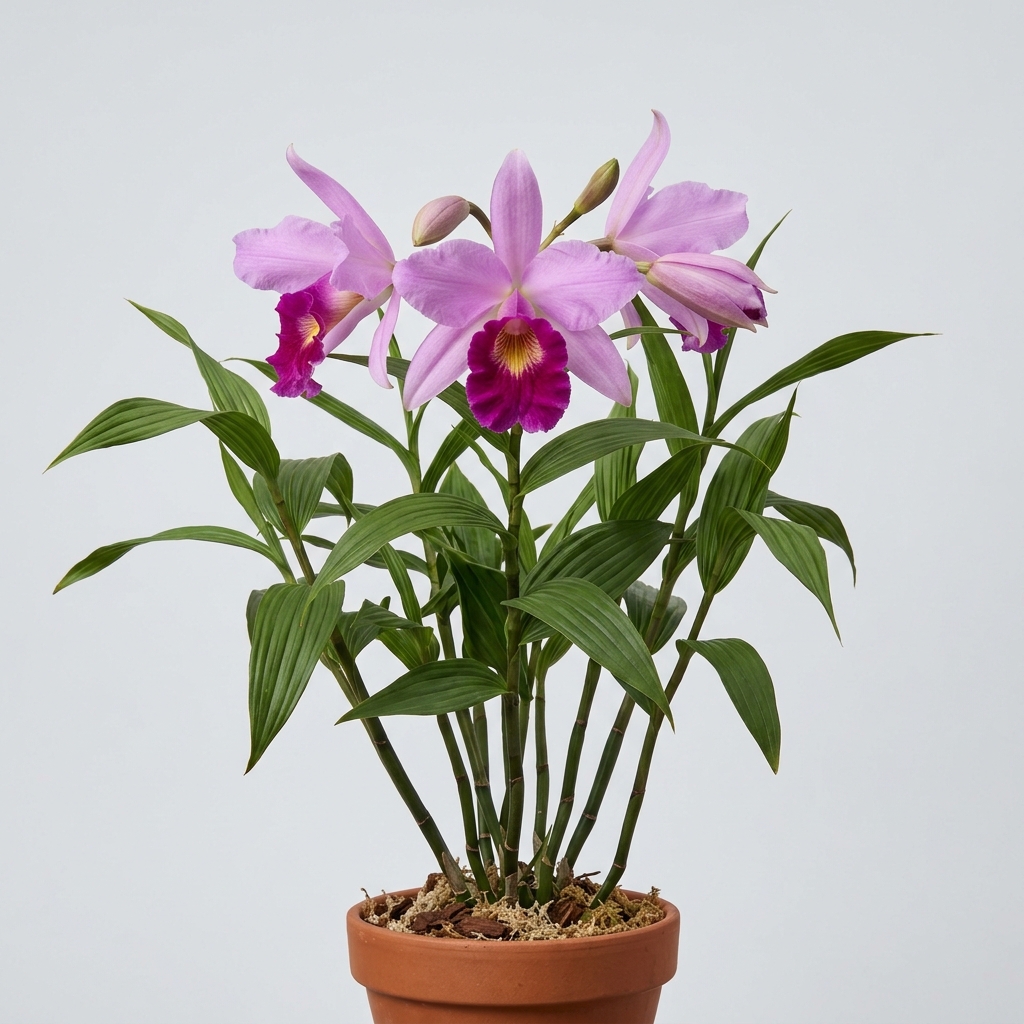
Sobralia Decora, commonly known as the beautiful Sobralia, is a striking reed-stemmed orchid species native to the humid forests of Central America. Highly prized by collectors for its large, Cattleya-like blooms and stately, bamboo-like growth habit, this orchid brings a dramatic tropical presence to any greenhouse or indoor growing space. While its individual flowers are notoriously short-lived, the plant compensates by producing a successive parade of blossoms from its terminal bracts over several weeks.
Cultivating this species offers a rewarding challenge for intermediate orchid enthusiasts who can accommodate its upright stature and specific moisture requirements. Unlike many epiphytic orchids that prefer dry-out periods, Sobralia Decora thrives in a more terrestrial-like environment with consistent moisture and high humidity. Its elegant, pleated leaves and robust root system make it an attractive foliage plant even when not in active bloom.
💡 Did You Know?
The name Sobralia honors Spanish physician and botanist Francisco Sobral. Despite their short-lived flowers, these orchids are highly valued because a mature specimen can produce dozens of canes, resulting in a spectacular, continuous display of successive blooms throughout the peak of the summer season.
🌿 Botanical Overview
Sobralia Decora is characterized by its tall, slender, cane-like pseudobulbs that closely resemble bamboo. These reed-like stems can reach heights of three to four feet under optimal cultivation, clothed in lanceolate, heavily pleated leaves that are dark green and leathery. The root system is thick, fleshy, and highly efficient at absorbing water and nutrients from the forest floor or organic debris.
In its native habitat, which ranges from Mexico through Central America, this species grows primarily as a terrestrial or lithophytic plant in wet, montane forests. It is adapted to receiving dappled sunlight through the canopy and a constant supply of leaf litter, which informs its preference for a richer, more moisture-retentive potting medium than typical epiphytic orchids.
🌸 Flower Characteristics
The flowers of Sobralia Decora are remarkably beautiful, closely mimicking the form of a classic Cattleya orchid. Each bloom features delicate, spreading sepals and petals in shades of soft lilac, rose-pink, or lavender. The most prominent feature is the large, trumpet-shaped lip, which is typically a deeper shade of purple or magenta, often adorned with a yellow or white throat and subtle fringing along the margins.
The flowers emerge from a terminal cone-like bract at the apex of the mature canes. Although the individual flowers are large—often reaching three to four inches in diameter—they are ephemeral, usually lasting only a single day. However, a single bract can produce multiple flowers in succession, ensuring a prolonged display over the blooming cycle.
Fragrance & Bloom Profile
While some growers report a delicate, sweet, or slightly floral fragrance from freshly opened blossoms, the scent profile of Sobralia Decora is not consistently documented or prominent in all specimens. The primary appeal of the bloom remains its visual impact rather than its perfume.
Because the flowers open early in the morning and typically collapse by nightfall, capturing the bloom at its peak requires attentive observation. The successive blooming habit means that as one flower fades, another bud within the terminal bract quickly develops to take its place, often opening just a few days later.
Parentage & Hybrid Lineage
Sobralia Decora is a naturally occurring species rather than a man-made hybrid. Its taxonomic history is well-established, though variations in flower color and plant size can occur depending on the specific geographic origin of the clone.
In orchid hybridization, the genus Sobralia has been used sparingly due to the short lifespan of the flowers. However, breeders occasionally use Sobralia Decora in interspecific crosses to introduce its robust, reed-like growth habit and vibrant pink-purple coloration to new generations of garden-hardy or greenhouse-tolerant hybrids.
🌱 Growing Conditions
To cultivate Sobralia Decora successfully, growers must replicate its warm, humid forest environment. It thrives in bright, filtered light, similar to the conditions preferred by Cattleya orchids. Direct midday sun should be avoided to prevent the pleated leaves from scorching, but insufficient light will result in weak, floppy canes and a lack of flowers.
💡 Care Tip
Keep this orchid in a location with excellent air movement. Because it requires high and consistent moisture, stagnant air can quickly lead to fungal leaf spot or crown rot on the tender new shoots.
Temperature ranges should ideally remain intermediate to warm, with daytime temperatures between 75°F and 85°F and a slight drop at night to around 60°F to 65°F. High humidity of 60% to 80% is critical, accompanied by constant, gentle air movement to prevent fungal pathogens from settling on the foliage.
Watering, Feeding & Potting Media
Unlike epiphytes that require a distinct wet-and-dry cycle, Sobralia Decora prefers to remain evenly moist throughout the year. The potting medium should never be allowed to dry out completely, as dehydration can cause the pleated leaves to crinkle permanently and lead to root loss. Water thoroughly with pure water, such as rainwater or reverse osmosis water, whenever the top inch of the medium begins to feel slightly dry.
A suitable potting mix should be moisture-retentive yet free-draining. A blend of fine fir bark, sphagnum moss, perlite, and a small amount of organic compost or peat moss works exceptionally well. Feed the plant regularly during the active growing season with a balanced, diluted orchid fertilizer applied at quarter or half strength every two weeks.
Blooming Season & Care Notes
The primary blooming season for Sobralia Decora typically spans from mid-summer to early autumn, coinciding with the warmest months of the year. Once a cane has finished blooming, it should not be cut down immediately unless it has completely yellowed and dried, as the old canes continue to provide energy to the developing new shoots at the base of the plant.
Repotting should be performed only when absolutely necessary, as this species resents root disturbance. The best time to repot or divide the plant is in early spring, just as new growth begins to emerge from the base. Ensure the new container allows for at least two years of growth.
⚠️ Common Issues
⚠️ Common Mistake
Allowing the potting medium to dry out completely is a common mistake. Unlike epiphytic orchids, this semi-terrestrial species lacks large pseudobulbs to store water, meaning dry spells can cause immediate leaf drop and bud blast.
- Leaf Tip Burn: Often caused by low humidity, underwatering, or a buildup of fertilizer salts in the potting medium.
- Bud Blast:
Occurs when sudden changes in temperature, drafts, or low humidity cause developing buds to yellow and drop before opening. - Root Rot:
Though the plant likes moisture, stagnant, waterlogged media with poor drainage will quickly suffocate and rot the fleshy roots. - Spider Mites:
The thin, pleated leaves can attract spider mites, particularly in dry indoor environments; regular misting and adequate humidity help deter them. - Floppy Canes: Insufficient light can lead to weak, elongated stems that require staking to remain upright.
❓ Frequently Asked Questions
How long do the flowers of Sobralia Decora last?
Individual flowers of Sobralia Decora are highly ephemeral, typically lasting only 12 to 24 hours. However, the plant produces multiple flowers in succession from the same terminal bract, extending the overall blooming period over several weeks.
Can Sobralia Decora be grown indoors under artificial lights?
Yes, it can be grown indoors under high-output LED or T5 fluorescent grow lights, provided the fixtures are positioned to accommodate its tall, reed-like stature. Maintaining high humidity and adequate air circulation is essential when growing this species indoors.
What is the best potting mix for this orchid?
A moisture-retentive but well-draining mix is ideal. A combination of fine fir bark, chopped sphagnum moss, perlite, and a small amount of peat moss or leaf mold replicates its natural semi-terrestrial growing environment perfectly.
Why are the leaves on my Sobralia Decora turning yellow?
Yellowing leaves can indicate several issues, including overwatering leading to root rot, natural shedding of older foliage on mature canes, or excessive direct sunlight scorching the sensitive, pleated leaves.
⭐ Final Growing Notes
Sobralia Decora is a magnificent orchid that rewards the patient grower with spectacular, albeit fleeting, tropical blossoms. By providing consistent moisture, high humidity, and bright, filtered light, you can enjoy the majestic bamboo-like foliage and successive summer blooms of this exceptional Central American species for many years.
⚕️ Health, Safety & Edibility
Understanding how a plant interacts with people, pets, and the surrounding environment is part of responsible cultivation. This section uses conservative, general guidance and does not replace professional medical or veterinary advice.
Human Safety: Species-specific human toxicity data for Sobralia Decora is limited. Use conservative handling practices and avoid intentional consumption.
Pet Safety: Pet-specific safety information for Sobralia Decora is limited, so keep it away from animals that commonly chew plants.
Edibility: Sobralia Decora should not be treated as edible. Ornamental specimens may contain natural irritants or horticultural residues that make them unsuitable for consumption.
Skin Contact: Skin irritation is not well documented for this plant, but gloves are sensible when repotting, pruning, or handling potting media.
🌱 Propagation Tip
Propagate this species by division during the spring repotting cycle. Ensure each division has at least three to four healthy, mature canes and a robust root system to ensure successful establishment in its new container.
⭐ Expert Advice
To maximize the blooming potential of your plant, avoid cutting back old canes until they are completely brown and dry. These canes act as vital energy reservoirs, feeding the emerging new growths that will produce next season's flowers.

Leave A Comment