

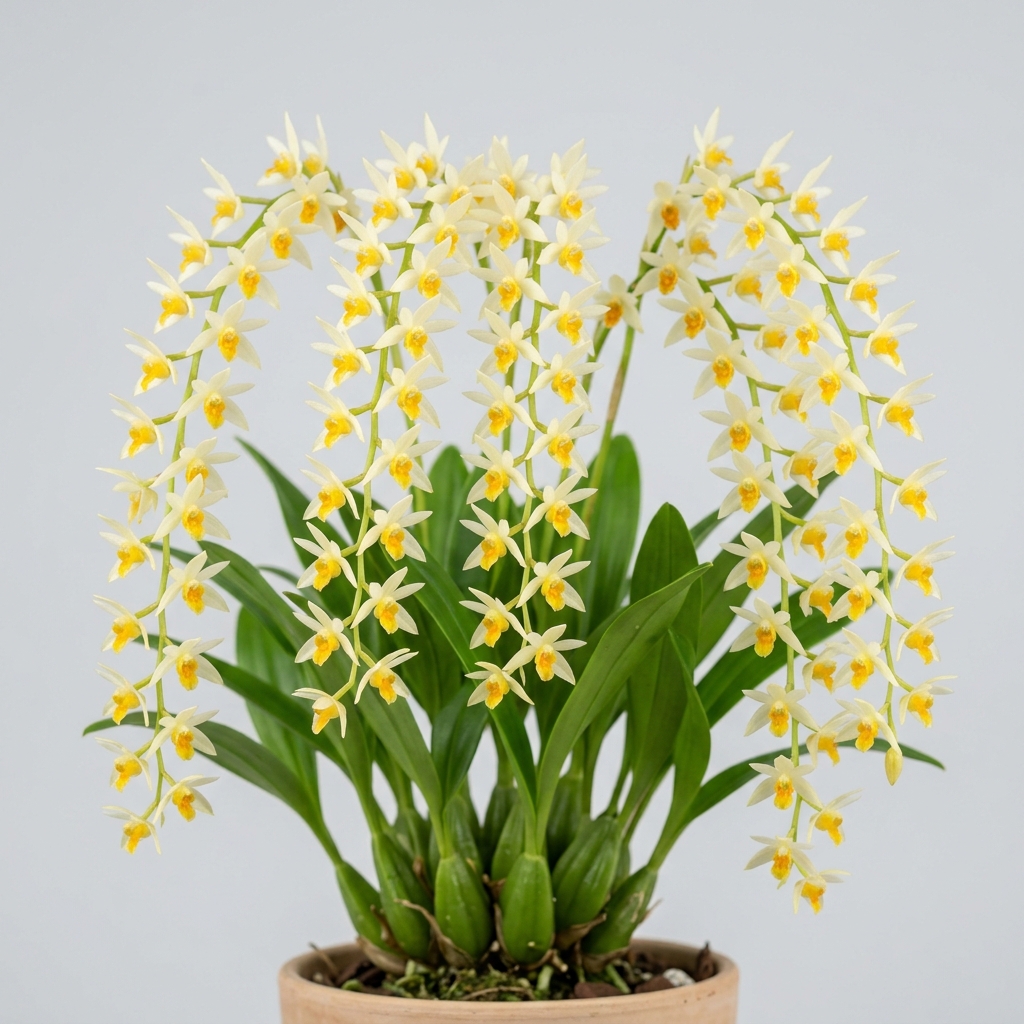
Bulbophyllum Lepidum, commonly referred to as the fan orchid or daisy orchid, is a captivating epiphytic species native to the tropical forests of Southeast Asia. Highly prized by orchid enthusiasts, this species is celebrated for its remarkable, umbrella-like flower arrangements that radiate outward from a central point, mimicking a delicate floral fan. Its compact growth habit and creeping rhizomes make it an excellent candidate for basket culture or mounting, allowing growers to showcase its unique pendulous blooms.
Cultivating this orchid offers a rewarding experience for both intermediate and advanced growers who can replicate its warm, humid native habitat. While its care requirements are slightly more demanding than those of common mass-market orchids, its consistent growth and spectacular, architectural flowering displays make it a standout addition to any diverse orchid collection.
💡 Did You Know?
The unique fan-shaped arrangement of Bulbophyllum Lepidum flowers is known botanically as an umbel. This structure is designed to maximize visibility to specific insect pollinators in the dense forest canopy, acting as a highly efficient landing pad that guides them directly to the plant's mobile, hinged lip.
🌿 Botanical Overview
Bulbophyllum Lepidum belongs to the vast and diverse genus Bulbophyllum, which is renowned for its highly specialized floral structures and varied pollination mechanisms. In the wild, this species typically grows as an epiphyte on tree trunks and branches in low-elevation, humid forests, where it benefits from constant air movement and dappled sunlight.
The vegetative structure of the plant consists of small, egg-shaped pseudobulbs spaced along a creeping rhizome. Each pseudobulb produces a single, leathery, dark green leaf that is designed to store moisture and nutrients, helping the plant survive brief periods of lower water availability in its natural habitat.
🌸 Flower Characteristics
The defining feature of Bulbophyllum Lepidum is its inflorescence, which typically bears ten to fifteen small flowers arranged in a perfect, semi-circular fan or umbel. The lateral sepals are elongated and fused, forming the prominent, cream-to-yellowish-red spokes of the fan, while the dorsal sepal and petals are much smaller and often fringed with fine hairs.
The tiny lip or labellum is highly mobile, hinged in a way that allows it to rock back and forth with the slightest breeze or insect movement. This mechanical adaptation is designed to assist in pollination by temporarily trapping or guiding visiting insects toward the reproductive column.
Fragrance & Bloom Profile
Unlike some members of the Bulbophyllum genus that emit strong, unpleasant odors to attract fly pollinators, Bulbophyllum Lepidum generally shows a very mild, slightly sweet, or occasionally musky scent. The fragrance is rarely overpowering and is often only noticeable in warm, still air or in close proximity to the blooms.
Individual flowers typically last between one to two weeks, but a mature, well-grown specimen can produce multiple flower spikes sequentially, extending the overall blooming display over several weeks.
Parentage & Hybrid Lineage
Bulbophyllum Lepidum is a naturally occurring species rather than a man-made hybrid. While it is occasionally used in breeding programs to introduce its fan-like flowering habit to new Bulbophyllum hybrids, most plants found in cultivation are species selections.
Because taxonomic classification within the Bulbophyllum genus is complex and frequently updated, some older references may list this plant under synonyms or closely related species names, such as Bulbophyllum flabellum-veneris. Growers should consult modern botanical databases for the most current nomenclature.
🌱 Growing Conditions
To thrive, Bulbophyllum Lepidum requires medium to bright, filtered light, similar to the conditions preferred by many Phalaenopsis or Cattleya orchids. Direct midday sunlight should be avoided, as it can easily scorch the thin leaves and damage the pseudobulbs.
💡 Care Tip
Because of its creeping growth habit, Bulbophyllum Lepidum thrives exceptionally well when grown in shallow, wide plastic or wooden baskets. This allows the rhizome to spread naturally and prevents the roots from becoming suffocated in deep, stagnant .
This species prefers warm to intermediate temperatures, ideally ranging from 70 to 85 degrees Fahrenheit during the day, with a slight drop at night to stimulate healthy growth and flowering. High humidity levels, ideally between 60% and 80%, coupled with gentle, continuous air movement, are essential to prevent fungal pathogens while keeping the plant hydrated.
Watering, Feeding & Potting Media
Bulbophyllum Lepidum does not possess large water-storing pseudobulbs, meaning it should never be allowed to dry out completely for extended periods. Watering should be frequent and thorough, keeping the growing medium evenly moist but not waterlogged.
A highly draining potting medium is critical; a mix of fine-grade orchid bark, sphagnum moss, and perlite works well in pots or shallow baskets. Alternatively, mounting the plant on cork bark or tree fern plaques with a small pad of sphagnum moss around the roots allows for excellent drainage and mimics its natural epiphytic growth habit. Feed weekly with a highly diluted, balanced orchid fertilizer during the active growing season.
Blooming Season & Care Notes
Blooming can occur at various times throughout the year, though it most frequently takes place in the late summer and autumn months. To encourage robust flower spikes, maintain consistent humidity and avoid moving the plant once the delicate buds begin to emerge from the base of the pseudobulbs.
After flowering is complete, the old flower spikes can be cut back to the base. Repotting or dividing should be done only when new root growth is visible, typically in the spring, to minimize transplant shock and ensure rapid establishment in the new medium.
⚠️ Common Issues
⚠️ Common Mistake
A frequent error is allowing the potting medium to dry out completely between waterings. Unlike Cattleyas, this species lacks large water-storing structures and will quickly suffer from root loss and leaf drop if subjected to prolonged dry spells.
- Root rot: Caused by compacted, poorly draining media or overwatering, leading to soft, black roots and declining plant health.
- Leaf spotting: Often a result of water droplets remaining on the foliage overnight in cool, stagnant air.
- Dehydration: Indicated by shriveled pseudobulbs and wrinkled leaves, usually due to insufficient watering or low humidity.
- Pests: Mealybugs and spider mites can occasionally colonize the undersides of leaves and the crevices around pseudobulbs.
❓ Frequently Asked Questions
How often should I water Bulbophyllum Lepidum?
Watering frequency depends on your growing setup, but the medium should remain consistently moist. Mounted plants may require daily misting or soaking, while potted specimens typically need watering two to three times a week, depending on ambient humidity and temperature.
Can Bulbophyllum Lepidum be grown under LED lights?
Yes, this species adapts well to indoor cultivation under artificial LED grow lights. Position the plant at a distance where it receives moderate light levels, ensuring the lights are kept on for 12 to 14 hours a day to simulate natural tropical day lengths.
Why are the pseudobulbs on my orchid shriveling?
Shriveled pseudobulbs usually indicate dehydration, which can be caused by underwatering, extremely low humidity, or a damaged root system that can no longer absorb water. Check the roots first; if they are healthy, increase watering frequency and humidity.
Is Bulbophyllum Lepidum suitable for beginners?
While it requires more attention to humidity and moisture than some basic houseplant orchids, it is considered one of the more forgiving and adaptable Bulbophyllum species, making it an excellent choice for intermediate growers looking to expand their collection.
⭐ Final Growing Notes
Bulbophyllum Lepidum is a rewarding and visually striking orchid that brings a touch of exotic tropical elegance to any indoor growing space. By prioritizing high humidity, consistent moisture, and gentle air circulation, growers can enjoy the spectacular, fan-like blooms of this unique species for many seasons to come.
⚕️ Health, Safety & Edibility
Understanding how a plant interacts with people, pets, and the surrounding environment is part of responsible cultivation. This section uses conservative, general guidance and does not replace professional medical or veterinary advice.
Human Safety: No published evidence currently identifies species-specific toxicity concerns for Bulbophyllum Lepidum during normal handling. As with most ornamental plants, it should not be intentionally consumed.
Pet Safety: Published information does not indicate that this orchid commonly poses a toxicity concern for cats or dogs. However, chewing leaves, flowers, roots, or potting media may still cause mild digestive upset.
Edibility: This orchid is cultivated for ornamental display rather than food. Ornamental plants may carry fertilizers, pesticides, or other horticultural treatments that make them unsuitable for consumption.
Skin Contact: Routine handling is not generally associated with skin irritation. Gardeners with sensitive skin may prefer wearing gloves when repotting, pruning, or handling potting media.
🌱 Propagation Tip
To propagate this orchid, wait until the plant has outgrown its container and is actively producing new roots. Carefully divide the rhizome using a sterile blade, ensuring that each new division contains at least three to four healthy pseudobulbs to support successful re-establishment.
⭐ Expert Advice
To stimulate abundant blooming, try providing a slight drop in night temperatures of about 10 to 15 degrees Fahrenheit during the late summer. This natural differential mimics seasonal shifts and encourages the development of flower spikes from the base of mature pseudobulbs.

Leave A Comment