
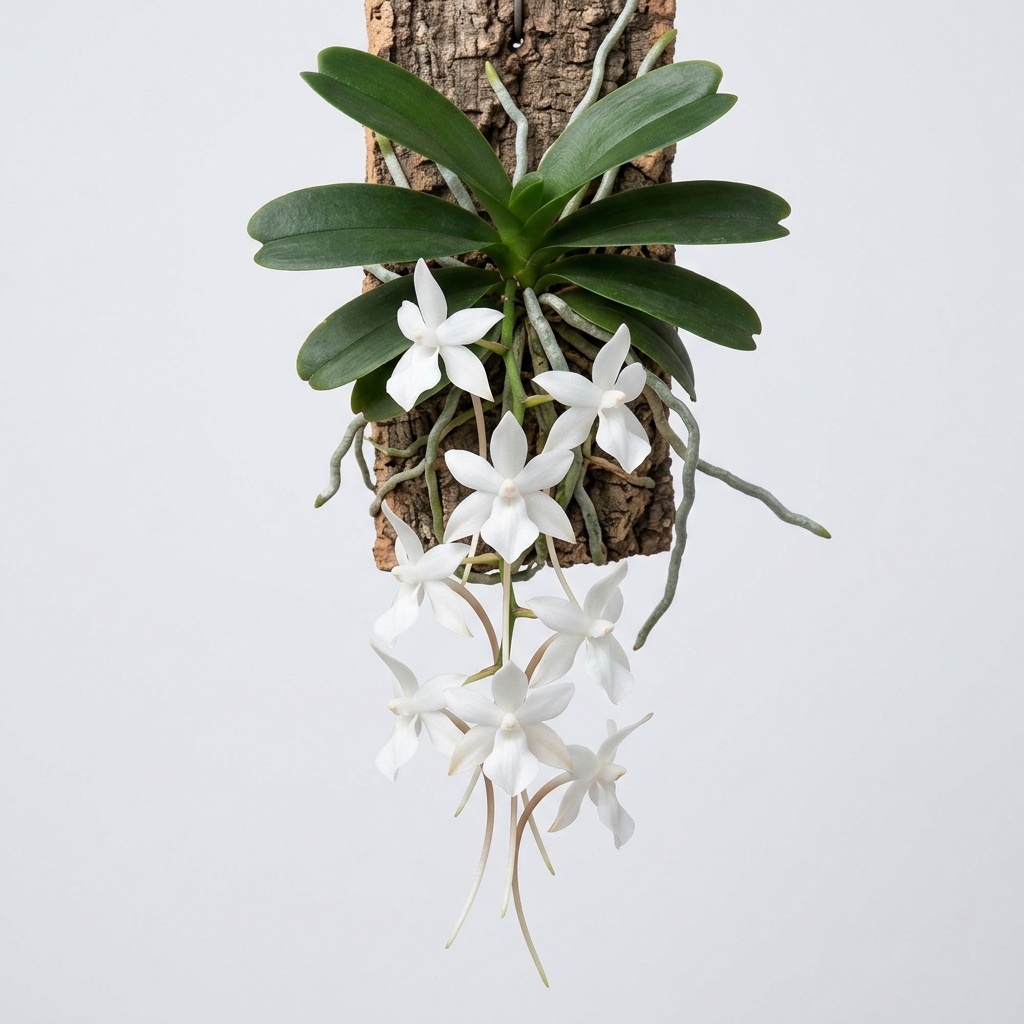
Aerangis Biloba is a highly prized African epiphytic orchid species celebrated for its elegant pendulous spikes of star-shaped white flowers. Known for its distinctive bilobed leaf tips and rich nocturnal fragrance, this monopodial orchid brings a touch of tropical elegance to specialized collections. Growers value it for its relatively compact growth habit and its striking, long-spurred blossoms that drape gracefully below the foliage.
While it is a species rather than a human-made hybrid, Aerangis Biloba is frequently cultivated and appreciated as a distinct horticultural subject. It adapts well to indoor growing conditions when provided with sufficient humidity and air circulation, making it an excellent introduction to the fascinating genus Aerangis. Its ease of culture compared to some of its more temperamental relatives has secured its place as a favorite among orchid enthusiasts worldwide.
💡 Did You Know?
The species name biloba refers to the unique, deeply cleft or two-lobed tips of its leaves. In its native West African habitats, this physical adaptation helps the plant channel rainwater directly toward its root system, allowing it to maximize moisture absorption during brief tropical downpours.
🌿 Botanical Overview
Aerangis Biloba is native to the tropical forests of West Africa, where it grows as an epiphyte on tree trunks and branches in shaded, humid environments. The plant features a monopodial growth habit, meaning it grows upward from a single stem, producing thick, leathery leaves arranged in an alternating fashion.
The most defining vegetative feature of this species is its leaves, which are distinctly bilobed at the tips—a characteristic reflected in its specific epithet biloba. The dark green foliage often shows a slightly matte texture and can develop fine black speckles, which is a natural genetic trait of many Aerangis species and not necessarily a sign of disease. Thick, silvery-grey aerial roots emerge from the stem, adapted for clinging to bark and absorbing moisture rapidly from the air.
🌸 Flower Characteristics
The inflorescence of Aerangis Biloba is a pendulous raceme that emerges from the leaf axils, typically carrying between 8 and 20 flowers arranged in two neat rows. Each flower is star-shaped, measuring approximately 1 to 1.5 inches in diameter, with lanceolate petals and sepals that flare outward.
The most striking feature of the blossom is the long, slender nectar spur extending from the back of the lip, which can reach up to 2 inches in length. The flowers are predominantly crystalline white, but as they age, they may develop a delicate peach, apricot, or pale bronze blush, particularly along the tips of the segments and the spur.
Fragrance & Bloom Profile
Like many white-flowered orchids adapted for moth pollination, Aerangis Biloba is highly fragrant, with its scent production peaking dramatically after sunset. The fragrance is commonly described as a sweet, rich perfume reminiscent of jasmine, gardenia, or white lilies.
The blooms are relatively long-lasting, often remaining pristine for four to six weeks if kept in cool, stable conditions. The combination of its cascading presentation and intense nocturnal perfume makes a mature specimen in full bloom an exceptional sensory experience.
Parentage & Hybrid Lineage
Aerangis Biloba is a naturally occurring species rather than a complex artificial hybrid. While it has been used occasionally in intergeneric and intrageneric hybridization programs to introduce its compact growth habit and floriferous nature, most plants in cultivation are line-bred selections of the wild species.
Because it is a true species, its genetic traits remain highly stable. Growers should note that while some select cultivars may exist with superior flower size or count, the standard species represents the vast majority of available plants in the horticultural trade.
🌱 Growing Conditions
To cultivate Aerangis Biloba successfully, one must replicate its native tropical forest understory habitat. It thrives in moderate to low light conditions, equivalent to those preferred by Phalaenopsis orchids. Direct sunlight should be strictly avoided, as it can easily scorch the dark green leaves.
💡 Care Tip
Ensure your growing area has a small fan running continuously. Excellent air movement is the single most important factor in preventing crown rot and leaf spot diseases in Aerangis orchids, especially when grown in high- environments.
Temperature: wise, this orchid prefers intermediate to warm conditions, with daytime temperatures ranging from 75°F to 85°F (24°C to 29°C) and a slight drop at night to around 60°F to 65°F (15°C to 18°C). High humidity of 60% to 80% is critical, accompanied by constant, gentle air movement to prevent fungal pathogens from settling on the foliage.
Watering, Feeding & Potting Media
Due to its epiphytic nature, Aerangis Biloba is highly sensitive to stagnant moisture around its roots. Mounting the plant on cork bark or hardwood plaques is the preferred method of cultivation, as this allows the extensive aerial root system to dry rapidly after watering. If mounted, the orchid requires daily watering or misting during the warm growing season.
Alternatively, it can be grown in wooden baskets or plastic pots filled with a highly porous, coarse medium such as large-grade fir bark, charcoal, and perlite. Fertilization should be light but consistent; a balanced orchid fertilizer diluted to one-quarter strength applied every second or third watering during active growth is generally sufficient.
Blooming Season & Care Notes
The primary blooming season for Aerangis Biloba occurs in the autumn and early winter months, triggered by the natural shortening of daylight hours and slight seasonal temperature drops. Once the flower spikes begin to emerge from the leaf axils, it is important to maintain stable environmental conditions to prevent bud drop.
After the blooming cycle is complete, the old flower spikes can be cut back close to the stem. Repotting or remounting should only be performed in the spring when new root growth is actively initiating, minimizing transplant shock to the sensitive root system.
⚠️ Common Issues
⚠️ Common Mistake
The most common mistake is potting this orchid in fine, dense potting soil or heavy moss. Aerangis roots require constant exposure to air; suffocating them in dense media will rapidly lead to root rot and the eventual decline of the plant.
- Root Rot:
Caused by overwatering or compacted, poorly draining potting media that deprives roots of oxygen. - Bud Blast:
Sudden drops in humidity or drafts can cause developing buds to yellow and fall off before opening. - Leaf Scorching: Exposure to direct sunlight leads to bleached or black patches on the foliage.
- Spider Mites and Mealybugs: Common pests that target the undersides of leaves and tight crevices; treat with insecticidal soap or neem oil.
- Fungal Leaf Spotting: Occurs in environments with high humidity but inadequate air circulation.
❓ Frequently Asked Questions
Can Aerangis Biloba be grown successfully under LED lights?
Yes, Aerangis Biloba adapts exceptionally well to indoor cultivation under LED grow lights. Because it prefers moderate to low light levels, it does not require high-intensity setups. Position the plant toward the periphery of the light footprint or adjust the fixture height to provide bright, indirect illumination, ensuring the leaves do not overheat.
Why are the tips of my Aerangis Biloba leaves turning black?
While small black speckles can be a natural genetic characteristic of this species, larger blackening of the leaf tips usually indicates a cultural issue. This is often caused by accumulated fertilizer salts in the media, low humidity, or fungal infections resulting from poor air movement. Flush the medium with pure water and ensure adequate ventilation.
How often should I water a mounted Aerangis Biloba?
Mounted specimens have fully exposed roots that dry out very quickly. During the active spring and summer growing seasons, they typically require daily watering or heavy misting. In winter, or during periods of high ambient humidity, watering can be reduced to every other day, but the roots should never be allowed to remain bone-dry for extended periods.
Does Aerangis Biloba require a winter rest period?
Aerangis Biloba does not require a severe dry winter rest like some other orchid genera. However, it benefits from a slight reduction in watering and fertilizer during the cooler winter months when growth naturally slows down. Maintain high humidity and ensure the roots still receive light moisture to prevent dehydration.
⭐ Final Growing Notes
Aerangis Biloba remains one of the most rewarding and accessible African orchids for home growers and greenhouse collectors alike. By providing consistent warmth, high humidity, and excellent root aeration, growers are rewarded year after year with spectacular, fragrant cascades of crystalline white stars that illuminate the autumn garden.
⚕️ Health, Safety & Edibility
Understanding how a plant interacts with people, pets, and the surrounding environment is part of responsible cultivation. This section uses conservative, general guidance and does not replace professional medical or veterinary advice.
Human Safety: No published evidence currently identifies species-specific toxicity concerns for Aerangis Biloba during normal handling. As with most ornamental plants, it should not be intentionally consumed.
Pet Safety: Published information does not indicate that this orchid commonly poses a toxicity concern for cats or dogs. However, chewing leaves, flowers, roots, or potting media may still cause mild digestive upset.
Edibility: This orchid is cultivated for ornamental display rather than food. Ornamental plants may carry fertilizers, pesticides, or other horticultural treatments that make them unsuitable for consumption.
Skin Contact: Routine handling is not generally associated with skin irritation. Gardeners with sensitive skin may prefer wearing gloves when repotting, pruning, or handling potting media.
🌱 Propagation Tip
Propagation of Aerangis Biloba is typically achieved through the separation of basal offsets, or keikis, which occasionally form on mature stems. Wait until the young plantlet has developed several robust roots of its own, at least two inches long, before carefully detaching and mounting it.
⭐ Expert Advice
If growing indoors, mount your Aerangis Biloba on a cork slab with a small pad of high-quality sphagnum moss around the roots. This setup mimics its natural epiphytic habit perfectly while retaining just enough moisture to sustain the plant between daily mistings.

Leave A Comment