
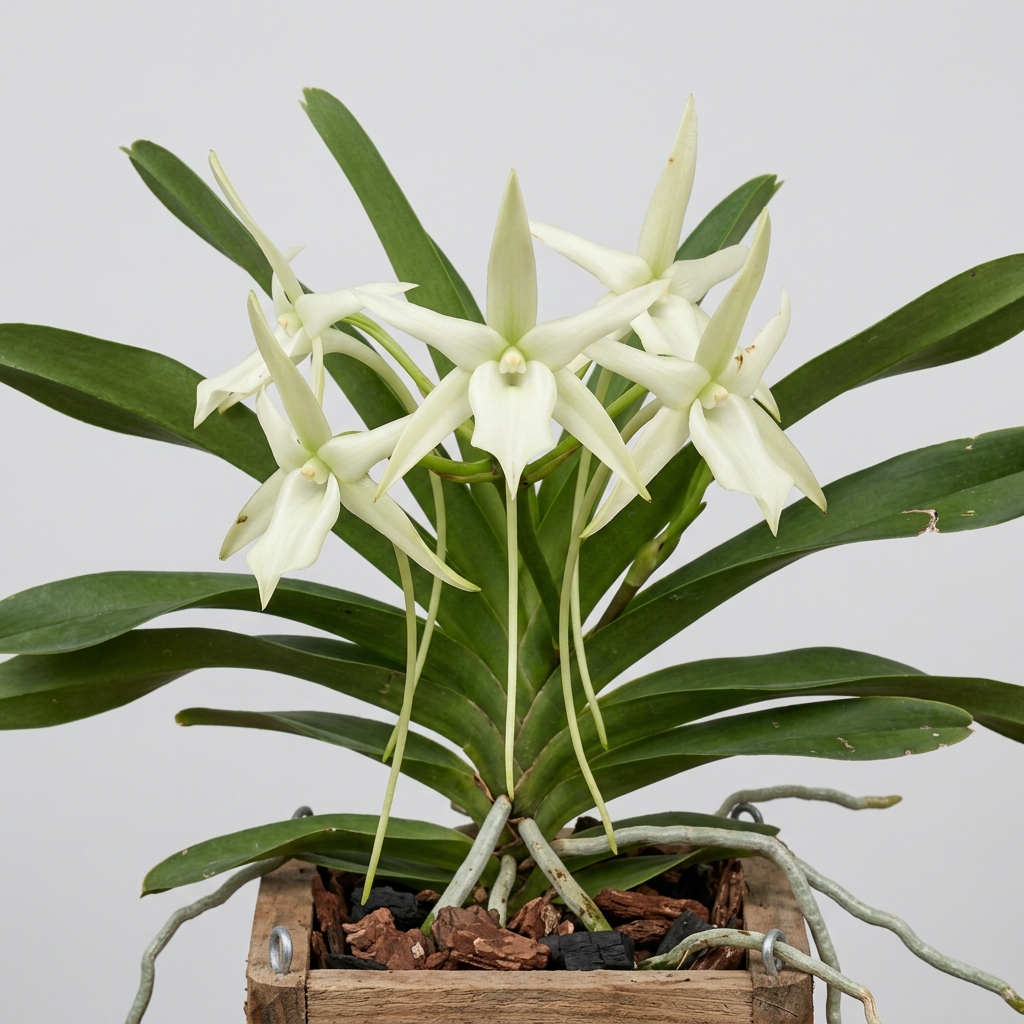
Angraecum Longicalcar is a magnificent and highly sought-after orchid, noted for its dramatic star-shaped flowers and extraordinarily long nectar spurs. Belonging to the esteemed genus Angraecum, this monopodial orchid captures the fascination of enthusiasts worldwide with its robust growth habit and architectural presence. Its pristine blooms and striking form make it a standout addition to any collection of tropical epiphytes.
Cultivated primarily by intermediate to advanced orchid growers, this plant rewards proper care with large, waxy blooms that emit a rich fragrance after dusk. Its striking presentation and historical connection to the unique evolutionary biology of Madagascar make it a crowning jewel in any serious tropical plant collection, offering a rewarding challenge for those looking to expand their orchid-growing skills.
💡 Did You Know?
Angraecum Longicalcar belongs to the Angraecum orchid group, where flower presentation is often just as important as . White-flowered cultivars are especially valued indoors because their pale blooms reflect well and pair easily with many home, greenhouse, and display settings.
🌿 Botanical Overview
Angraecum Longicalcar is a robust monopodial epiphyte characterized by its thick, leathery, strap-like leaves arranged in a fan-like pattern. The plant grows upright, slowly developing a stout stem that can support multiple active growth points over many years. Its root system is equally impressive, producing thick, silvery aerial roots covered in velamen to efficiently absorb moisture and nutrients from the air.
In its natural habitat, this orchid adapted to cling to trees or rocky outcroppings where it receives excellent air circulation and filtered sunlight. The overall structure of the plant is architectural and substantial, making it an attractive specimen even when not in bloom. Its slow but steady growth habit requires patience from the grower, but results in a highly resilient specimen once established.
🌸 Flower Characteristics
The blossoms of Angraecum Longicalcar are a marvel of evolutionary design. Each flower is star-shaped, featuring pristine white to creamy-green petals and sepals that are thick, waxy, and long-lasting. The most defining feature is the extraordinarily long, green-tinted nectar spur that drapes elegantly behind the lip, often reaching lengths of over twelve inches, creating a dramatic visual silhouette.
The flowers are produced on short, sturdy inflorescences that emerge from the leaf axils. A single spike can carry several large blooms, positioned in a way that maximizes their visibility to nocturnal pollinators. The pristine coloration contrasts beautifully against the deep green foliage, making a striking statement in any display.
Fragrance & Bloom Profile
True to its lineage, Angraecum Longicalcar is highly fragrant, but primarily during the evening and night hours. As dusk falls, the flowers release a powerful, sweet, and slightly spicy scent reminiscent of jasmine or gardenias. This nocturnal fragrance strategy is designed to attract specific moth pollinators in the wild, filling the growing space with an enchanting aroma.
The blooms are exceptionally long-lived, often remaining pristine for several weeks if kept in cool, stable conditions. The combination of visual drama and nocturnal perfume makes the blooming period a highly anticipated event for any grower, elevating the plant from a simple foliage specimen to a sensory experience.
Parentage & Hybrid Lineage
While often grown and appreciated as a distinct species within the Angraecum genus, Angraecum Longicalcar is sometimes utilized in hybridizing programs to introduce its exceptional spur length and robust growth habit to new grexes. Its exact wild origins are tied to the unique ecosystems of Madagascar, though cultivated specimens today are almost exclusively nursery-propagated to protect wild populations.
In horticultural circles, its lineage is highly respected, and growers treat it with the same care and prestige as its famous relative, Angraecum sesquipedale. Because documentation on specific artificial cultivars can vary, buyers should source plants from reputable nurseries to ensure genetic authenticity and healthy, seed-grown stock.
🌱 Growing Conditions
To cultivate Angraecum Longicalcar successfully, one must replicate its warm, humid forest canopy environment. It thrives in bright, indirect light. While it enjoys more light than many other orchid genera, direct midday sun can easily scorch the thick leaves. A east- or shaded south-facing window, or high-quality LED grow lights, work best to provide the necessary energy for growth.
💡 Care Tip
For best results, grow Angraecum Longicalcar in bright filtered with steady and gentle airflow. Avoid placing the plant in harsh midday sun, but do not keep it in a dark corner; weak is one of the most common reasons cultivated orchids refuse to rebloom.
Temperature ranges should remain warm to intermediate, ideally between 70°F and 85°F during the day, with a slight drop of 10°F at night to stimulate healthy growth and eventual blooming. High humidity of 60% to 80% is critical, paired with constant, gentle air movement to prevent fungal pathogens from settling on the foliage or in the crown.
Watering, Feeding & Potting Media
This orchid requires a delicate balance of moisture. The thick roots must dry out slightly between waterings to prevent root rot, yet the plant should never be left bone-dry for extended periods. During the active growing season in spring and summer, water thoroughly and frequently. Reduce watering slightly during the cooler winter months when growth naturally slows.
Use a highly porous, free-draining potting medium. A mix of coarse fir bark, horticultural charcoal, and large perlite chunks works exceptionally well in clay pots or wooden baskets. Fertilize weakly with a balanced, diluted orchid fertilizer every two to three waterings during the active growth phase, flushing the pot with pure water periodically to prevent salt buildup.
Blooming Season & Care Notes
Blooming typically occurs in the late autumn or winter months, triggered by the natural drop in night temperatures and shorter day lengths. Once the flower spikes begin to emerge from the leaf axils, avoid moving the plant or changing its environmental conditions, as sudden shifts can cause the developing buds to blast.
After the blooming cycle is complete, allow the plant a brief period of rest with slightly reduced watering. Repotting should be done only when absolutely necessary, as Angraecum species resent root disturbance. If the potting medium is decomposing, repot just as new root tips begin to emerge in the spring to minimize shock.
⚠️ Common Issues
⚠️ Common Mistake
The most common mistake is by calendar instead of root and potting-media condition. Angraecum roots need moisture and air at the same time, so constantly wet bark or sphagnum can lead to root loss even when the leaves still look healthy.
- Root rot caused by overwatering or compacted, decomposing potting media.
- Bud blast, where developing flower buds yellow and drop due to sudden drafts, low humidity, or temperature swings.
- Mealybugs and scale insects hiding in the tight crevices of the leaf axils.
- Leaf spotting or fungal infections resulting from high humidity combined with stagnant, still air.
- Dehydration, marked by wrinkled leaves and shriveled aerial roots, often due to inadequate watering or a compromised root system.
❓ Frequently Asked Questions
How often should I water my Angraecum Longicalcar?
Watering frequency depends on your growing environment, but typically twice a week during the active summer growth phase is ideal. Always check the potting medium first; it should be almost dry but not completely desiccated before watering again. Ensure excellent drainage so the roots never sit in standing water.
Why are the flower buds on my orchid falling off before opening?
This issue, known as bud blast, is usually caused by sudden environmental stress. Common culprits include sharp temperature drops, dry indoor air (low humidity), cold drafts, or moving the plant to a new location while the buds are developing. Maintain stable conditions to prevent this.
Can I grow Angraecum Longicalcar under artificial LED lights?
Yes, this orchid adapts well to indoor cultivation under high-output LED grow lights. Position the plant so it receives bright, diffused light for 12 to 14 hours a day, ensuring the leaves do not get too warm from proximity to the light fixture.
When is the best time to repot this orchid?
Repotting should only be done every three to four years, or when the potting medium has degraded. The best time is in the spring, just as the orchid enters its active growth cycle and new green root tips begin to emerge, which helps the plant recover quickly from root disturbance.
⭐ Final Growing Notes
While Angraecum Longicalcar demands a bit more attention to humidity and watering consistency than common grocery-store orchids, its spectacular, long-spurred blossoms and enchanting night fragrance make it an incredibly rewarding species to master. By providing bright light, excellent air movement, and respecting its sensitive root system, you can enjoy this botanical masterpiece for decades.
⚕️ Health, Safety & Edibility
Understanding how a plant interacts with people, pets, and the surrounding environment is part of responsible cultivation. This section uses conservative, general guidance and does not replace professional medical or veterinary advice.
Human Safety: No published evidence currently identifies species-specific toxicity concerns for Angraecum Longicalcar during normal handling. As with most ornamental plants, it should not be intentionally consumed.
Pet Safety: Published information does not indicate that this orchid commonly poses a toxicity concern for cats or dogs. However, chewing leaves, flowers, roots, or potting media may still cause mild digestive upset.
Edibility: This orchid is cultivated for ornamental display rather than food. Ornamental plants may carry fertilizers, pesticides, or other horticultural treatments that make them unsuitable for consumption.
Skin Contact: Routine handling is not generally associated with skin irritation. Gardeners with sensitive skin may prefer wearing gloves when repotting, pruning, or handling potting media.
🌱 Propagation Tip
Propagation should be approached patiently. Most home growers should wait for natural keikis or divide only mature, healthy plants when the orchid type allows it. Never remove a young growth until it has strong roots and enough leaves to support itself away from the parent plant.
⭐ Expert Advice
Repot after flowering when fresh root tips begin to appear. This timing helps the plant anchor quickly into new bark or sphagnum and reduces stress, especially for orchids grown indoors where airflow, , and drying speed can change from season to season.

Leave A Comment