
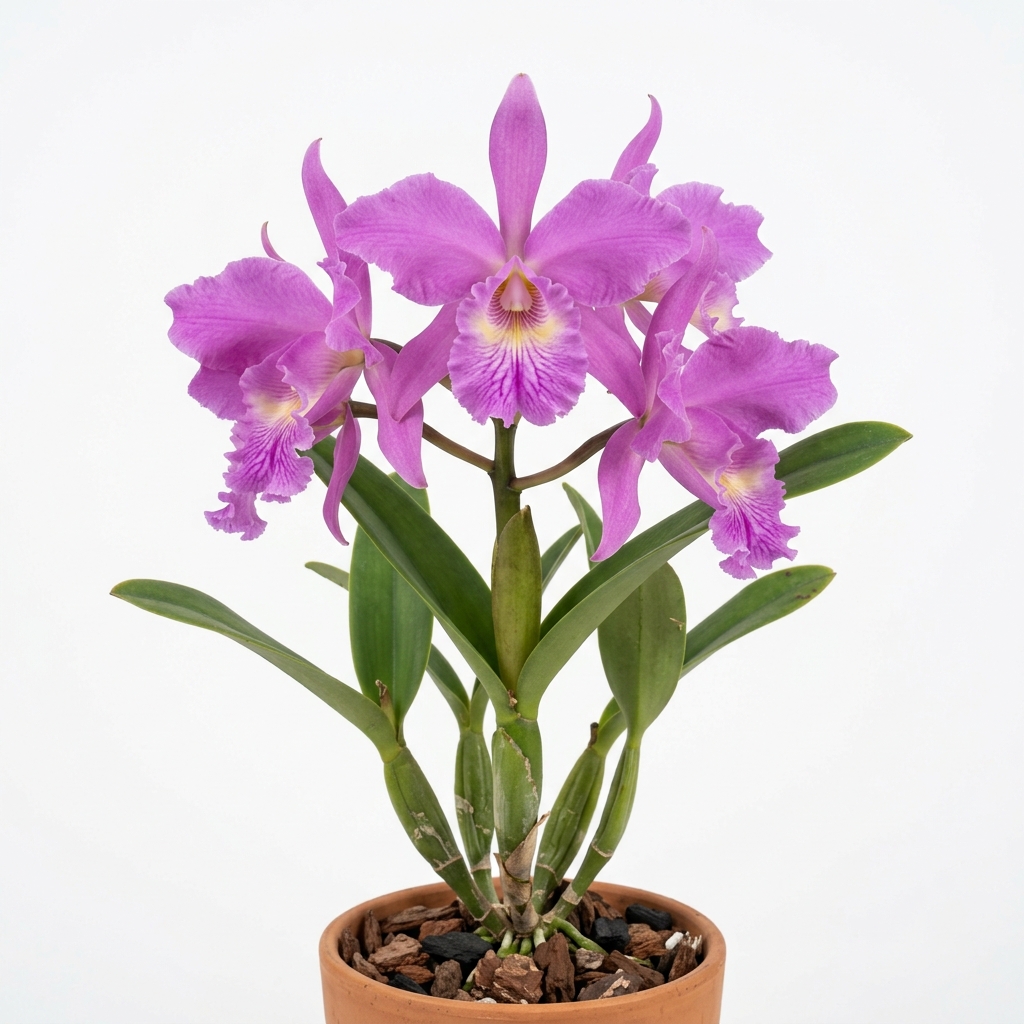
Cattleya Lobata, historically known to many orchid enthusiasts as Laelia lobata, is a striking species orchid highly prized for its elegant growth habit and vivid blossoms. Native to the coastal cliffs of Brazil, this resilient epiphyte and lithophyte produces large, showy flowers that capture the classic beauty of the Cattleya alliance. Its ability to thrive in high-light environments makes it a rewarding choice for growers looking to add a touch of dramatic coastal Brazilian flora to their collections.
Cultivators value this orchid not only for its historical significance in orchid breeding but also for its robust nature and reliable seasonal displays. The blossoms typically feature delicate, wavy petals and a deeply lobed lip that gives the species its botanical name. While it requires specific light and watering regimes to mimic its natural cliffside habitat, mastering its care yields spectacular rewards during its annual blooming cycle.
💡 Did You Know?
In its native Brazil, Cattleya Lobata is known for growing on the sheer granite cliffs of Rio de Janeiro, including the famous Sugarloaf Mountain. It clings to the bare rock face, fully exposed to intense ocean winds and direct sunlight, which explains its high tolerance and need for rapid drainage in cultivation.
🌿 Botanical Overview
Cattleya Lobata is native to a very specific and restricted geographic range along the coast of Rio de Janeiro, Brazil. In its natural habitat, it grows primarily as a lithophyte on sheer granite cliffs facing the ocean, where it is exposed to intense sunlight, strong sea breezes, and high humidity. This unique environment has adapted the plant to withstand periods of dryness followed by heavy condensation and rainfall.
Structurally, the plant features clavate pseudobulbs that can grow up to several inches tall, each topped with a single, leathery, dark green leaf. These tough leaves are designed to minimize water loss under intense sun exposure. The root system is exceptionally robust, clinging tightly to rocky crevices or rough bark to anchor the plant against strong coastal winds.
🌸 Flower Characteristics
The flowers of Cattleya Lobata are renowned for their size and delicate texture, often measuring between four and five inches in diameter. The sepals and petals are typically a soft rose-purple or pale pink, characterized by gently ruffled margins that lend the bloom an airy, elegant appearance. The standout feature is the deeply lobed labellum, or lip, which is heavily veined with richer purple tones and features a beautifully fringed edge.
Flowers are produced on an erect inflorescence that emerges from a green sheath at the apex of the mature pseudobulb. A single spike can carry between two and five blossoms, presenting them well above the foliage. While the classic rose-purple form is most common, rare color forms such as alba (pure white) and coerulea (bluish-lavender) are highly sought after by specialized collectors.
Fragrance & Bloom Profile
This orchid is celebrated for its sweet, floral fragrance, which is most pronounced during the morning hours when temperatures begin to rise. The scent is often described as a delicate blend of classic Cattleya perfume with subtle spicy undertones. A single blooming specimen can easily fill a small greenhouse or grow room with its pleasant aroma.
The individual flowers generally remain in peak condition for two to three weeks, depending on ambient temperatures and humidity levels. To maximize the lifespan of the blooms, growers should keep the plant in a slightly cooler, shaded location once the flowers have fully opened, taking care to avoid getting water directly on the petals.
Parentage & Hybrid Lineage
As a distinct naturally occurring species rather than a man-made hybrid, Cattleya Lobata carries a pure genetic lineage that has been well-documented by botanists since the nineteenth century. It was originally classified under the genus Laelia due to its eight pollinia, but modern DNA sequencing and taxonomic revisions have integrated it into the genus Cattleya.
In orchid hybridization, this species has been used to introduce ruffled petal margins, robust growth habits, and high-light tolerance to various intergeneric crosses. Its progeny often inherit the characteristic lobed lip and pastel coloration. When purchasing a specimen, growers should look for reputable nurseries that propagate plants from seed or tissue culture to help conserve wild populations.
🌱 Growing Conditions
To cultivate Cattleya Lobata successfully, growers must replicate its bright, airy coastal habitat. This orchid demands high light levels, significantly more than many other Cattleya species. It thrives under bright, filtered light and can tolerate some direct morning sun, provided there is sufficient air movement to prevent the leaves from overheating. A southern or western exposure is often ideal.
💡 Care Tip
Provide maximum air movement around this orchid, especially when growing it in high- conditions. Strong air circulation cools the thick leaves, prevents heat scorch, and ensures that the roots dry out quickly after , mimicking its natural cliffside habitat.
Temperature: wise, the plant prefers intermediate to warm conditions. Daytime temperatures should ideally range between 75 and 85 degrees Fahrenheit, with a nighttime drop to 60 or 65 degrees Fahrenheit. High humidity of 60% to 80% is essential, but it must be accompanied by continuous, active air circulation to prevent stagnant moisture from causing fungal infections.
Watering, Feeding & Potting Media
Watering should follow a strict wet-and-dry cycle. The roots must be allowed to dry out completely between waterings, mimicking the rapid drainage of its native granite cliffs. During the active growing season in spring and summer, water the plant thoroughly, then withhold water until the potting medium is dry to the touch. Reduce watering frequency significantly during the winter rest period.
A coarse, fast-draining potting medium is critical. High-quality medium or large fir bark mixed with horticultural charcoal and perlite works exceptionally well in clay pots, which promote root aeration. Alternatively, the plant can be mounted on cork bark or tree fern plaques if high humidity can be maintained. Feed with a balanced orchid fertilizer diluted to quarter-strength every second or third watering during active growth.
Blooming Season & Care Notes
Cattleya Lobata typically blooms in the late spring or early summer, shortly after the new pseudobulbs have fully matured. The flower sheath develops at the top of the pseudobulb during the winter and may remain dormant for several months before the buds begin to push through. It is crucial not to cut or damage these sheaths, even if they appear dry or papery.
Once blooming is complete, the plant enters a brief period of vegetative rest. This is the ideal time to repot if the potting medium has begun to decompose or if the plant has outgrown its container. Repotting should only be done when new root tips are actively emerging from the base of the newest pseudobulb to ensure rapid establishment.
⚠️ Common Issues
⚠️ Common Mistake
A frequent error is keeping the potting medium constantly damp. Unlike terrestrial orchids, this species has roots adapted to rapid drying. Overwatering or using a fine, water-retentive mix will quickly lead to root rot, causing the pseudobulbs to shrivel and the plant to decline.
- Root Rot:
Caused by overwatering or compacted potting media that retains too much moisture around the roots. - Leaf Scorch: Appears as bleached or blackened patches on the leaves, indicating that the light intensity is too high without adequate airflow.
- Bud Blast:
Occurs when developing buds turn yellow and drop off due to sudden changes in temperature, low humidity, or drafty conditions. - Pests:
Scale insects and mealybugs can hide in the dry sheaths of pseudobulbs; inspect regularly and treat with horticultural soap or isopropyl alcohol. - Dehydration:
Shriveled pseudobulbs and wrinkled leaves indicate insufficient watering or a compromised root system unable to absorb moisture.
❓ Frequently Asked Questions
How do I encourage my Cattleya Lobata to bloom?
To trigger blooming, ensure the plant receives exceptionally bright light throughout the year and a distinct nighttime temperature drop in the autumn. A drier winter rest period is also crucial to stimulate the development of flower buds within the sheath.
Can I grow this orchid under LED grow lights?
Yes, but because this species requires very high light levels, you must use high-output LED fixtures designed for sun-loving plants. Position the orchid close enough to the light source to receive adequate intensity, but monitor the leaves closely for signs of heat stress or bleaching.
Why are the pseudobulbs on my orchid shriveling?
Shriveled pseudobulbs usually indicate dehydration. This can be caused by underwatering or, conversely, by overwatering which has rotted the root system, leaving the plant unable to absorb water. Inspect the roots to determine the exact cause before adjusting your watering routine.
When is the best time to repot Cattleya Lobata?
The best time to repot is immediately after flowering, just as new green root tips begin to emerge from the base of the newest pseudobulb. Repotting at this stage minimizes transplant shock and allows the orchid to quickly establish itself in the fresh medium.
⭐ Final Growing Notes
While Cattleya Lobata requires a bit more attention to light and watering than some of the more common mass-market hybrids, its spectacular, fragrant spring blooms make it an incredibly rewarding species for any dedicated orchid grower. By providing bright light, excellent air movement, and a strict wet-dry cycle, you can enjoy the timeless beauty of this Brazilian coastal treasure in your own home or greenhouse for many years to come.
⚕️ Health, Safety & Edibility
Understanding how a plant interacts with people, pets, and the surrounding environment is part of responsible cultivation. This section uses conservative, general guidance and does not replace professional medical or veterinary advice.
Human Safety: No published evidence currently identifies species-specific toxicity concerns for Cattleya Lobata during normal handling. As with most ornamental plants, it should not be intentionally consumed.
Pet Safety: Published information does not indicate that this orchid commonly poses a toxicity concern for cats or dogs. However, chewing leaves, flowers, roots, or potting media may still cause mild digestive upset.
Edibility: This orchid is cultivated for ornamental display rather than food. Ornamental plants may carry fertilizers, pesticides, or other horticultural treatments that make them unsuitable for consumption.
Skin Contact: Routine handling is not generally associated with skin irritation. Gardeners with sensitive skin may prefer wearing gloves when repotting, pruning, or handling potting media.
🌱 Propagation Tip
Propagate this species by division during repotting, ensuring that each new division has at least three to four healthy, mature pseudobulbs with active eye buds. Avoid dividing the plant too frequently, as larger specimens tend to produce more spectacular and reliable floral displays.
⭐ Expert Advice
If your plant produces a flower sheath that turns brown and dry, do not cut it off. Cattleya Lobata often initiates buds inside dry, papery sheaths months after they first form. Only remove a sheath if it becomes soft, black, or clearly rotted.

Leave A Comment