
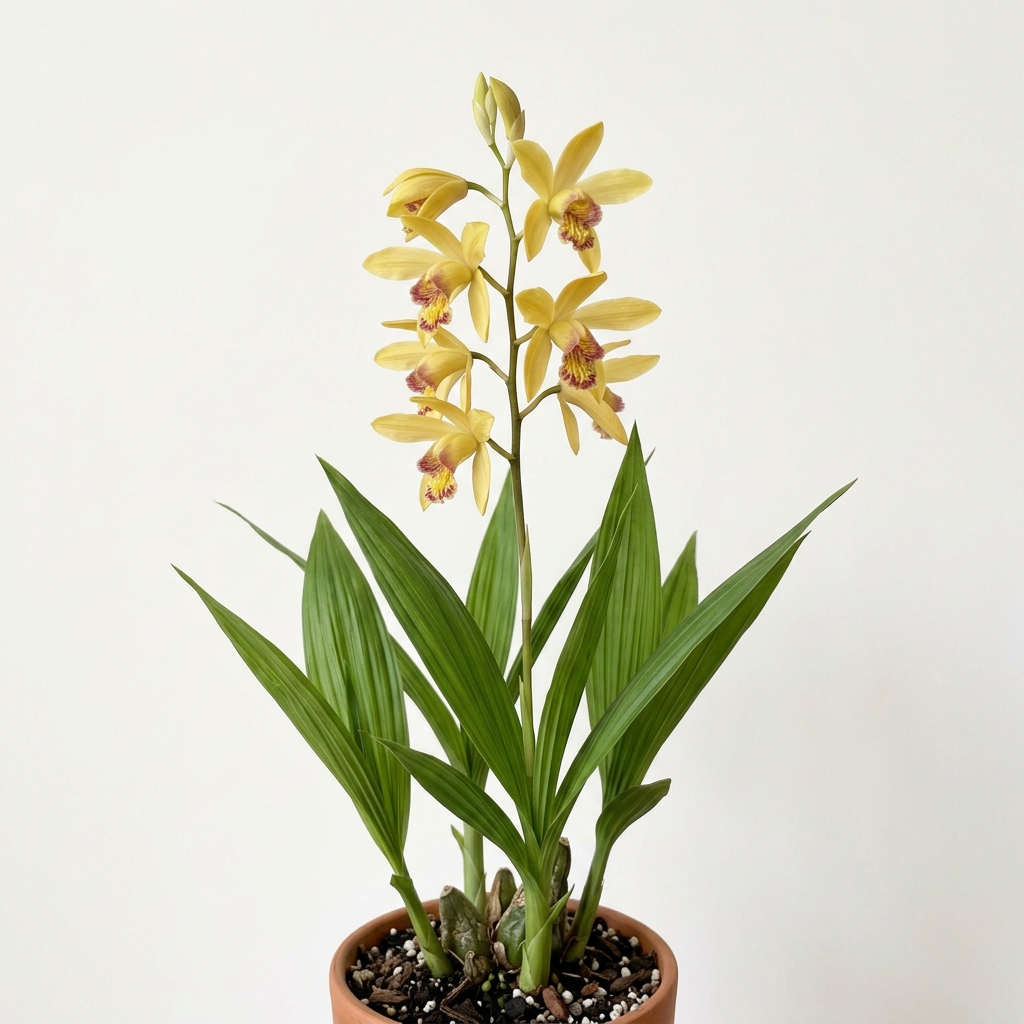
Bletilla Ochracea, commonly known as the yellow Chinese ground orchid, is a highly valued terrestrial orchid native to the grassy slopes and forest margins of China and Vietnam. Unlike the tropical epiphytic orchids that dominate indoor collections, this hardy species thrives in ground soil, making it an exceptional choice for temperate garden beds and outdoor containers. Growers prize the plant for its elegant, pleated foliage and delicate, soft yellow blossoms that bring a touch of exotic sophistication to shaded garden spaces.
This deciduous orchid grows from underground corms, forming attractive clumps over time. Its reliable growth habit and resistance to many common garden pests make it one of the most accessible orchids for beginners and experienced perennial gardeners alike. By understanding its seasonal rhythm of spring growth, summer flowering, and winter dormancy, gardeners can enjoy its refined botanical display year after year.
💡 Did You Know?
Bletilla Ochracea is part of the Bletilla orchid group, a favorite among growers because its flowers, growth habit, and care needs make it useful for comparing cultivated orchids within the same . Observing its leaves, roots, and bloom spikes can help growers understand how this cultivar responds to indoor conditions.
🌿 Botanical Overview
Bletilla Ochracea is a deciduous terrestrial orchid characterized by its underground tuberous pseudobulbs, often referred to as corms. These corms store water and essential nutrients, allowing the plant to survive cold winter temperatures when the above-ground foliage dies back completely. In early spring, new shoots emerge from the corms, rapidly developing into upright, fan-like clusters of leaves.
The foliage of this species is highly ornamental in its own right. The lanceolate leaves are deeply pleated, or plicate, resembling the foliage of young palms. They grow to a height of approximately 30 to 45 centimeters, providing a lush, textured green backdrop in the garden even when the plant is not in bloom. As autumn approaches, the leaves naturally turn yellow and wither, signaling the start of the winter rest period.
🌸 Flower Characteristics
The flowers of Bletilla Ochracea are celebrated for their delicate form and soft, warm coloration. Borne on erect terminal racemes that rise gracefully above the pleated foliage, each flower spike can carry between three and ten blossoms. The flowers typically open sequentially from the bottom of the spike upward, extending the overall display over several weeks.
Each individual blossom measures approximately two to three centimeters across. The sepals and petals are a soft, pale yellow to creamy gold. The prominent lip, or labellum, is the defining feature of the flower, showcasing intricate markings of orange, yellow, and reddish-purple along its ruffled ridges. This contrast of warm yellow petals and detailed lip patterns makes the blooms highly attractive upon close inspection.
Fragrance & Bloom Profile
The fragrance of Bletilla Ochracea is a subject of some variation among growers. While some plants are reported to produce a very mild, sweet, or grassy scent on warm, humid days, many specimens are virtually unscented. Because fragrance intensity can be influenced by temperature, light levels, and individual clonal genetics, it is best appreciated as a subtle, occasional bonus rather than a primary characteristic.
The blooming cycle typically begins in late spring and can extend into mid-summer, depending on local climate conditions. The sequential opening of the flowers ensures that the spike remains attractive for a prolonged period, with individual blossoms lasting up to ten days before fading.
Parentage & Hybrid Lineage
Bletilla Ochracea is a distinct, naturally occurring species rather than a complex artificial hybrid. It is found wild in various provinces of China, where it grows in moist grasslands, coniferous forests, and along rocky stream banks. This wild heritage contributes to its robust constitution and adaptability in temperate garden settings.
In the horticultural trade, Bletilla Ochracea has been used to create several notable interspecific hybrids. The most famous of these is Bletilla Yokohama, a cross between Bletilla Ochracea and Bletilla striata. This hybrid combines the vigorous growth and pink-purple tones of Bletilla striata with the soft yellow undertones of Bletilla Ochracea, resulting in highly resilient garden plants with intermediate flower colors.
🌱 Growing Conditions
To cultivate Bletilla Ochracea successfully, gardeners should aim to replicate its natural forest-edge habitat. It thrives in partial shade or dappled sunlight. Morning sun is highly beneficial, but protection from harsh afternoon sunlight is essential to prevent the delicate, pleated leaves from scorching or drying out prematurely.
💡 Care Tip
For best results, grow Bletilla Ochracea in bright filtered with steady and gentle airflow. Avoid placing the plant in harsh midday sun, but do not keep it in a dark corner; weak is one of the most common reasons cultivated orchids refuse to rebloom.
Temperature: wise, this orchid is remarkably hardy compared to its tropical relatives. It is generally successful in USDA Hardiness Zones 7 through 9, and can sometimes survive in Zone 6 if provided with a thick layer of protective winter mulch. A distinct winter chill is necessary to break the plant’s dormancy and stimulate the development of flower buds for the following spring.
Watering, Feeding & Potting Media
During the active growing season in spring and summer, Bletilla Ochracea requires consistent moisture. The soil should remain damp but never waterlogged, as stagnant water around the corms can quickly lead to fungal rot. As the foliage begins to yellow and die back in autumn, watering should be gradually reduced, and kept to a bare minimum during the winter dormancy phase.
A balanced, highly diluted liquid orchid fertilizer can be applied every two to three weeks during the spring and early summer. Avoid heavy feeding, as excessive nitrogen can promote lush foliage at the expense of flower production. Stop fertilizing entirely by late summer to allow the plant to prepare for dormancy.
Unlike epiphytic orchids that grow in pure bark or moss, Bletilla Ochracea requires a terrestrial potting medium. A suitable mix consists of equal parts loam, leaf mold or peat moss, perlite, and fine orchid bark. This combination ensures excellent drainage while retaining the consistent moisture and organic nutrients that the roots require.
Blooming Season & Care Notes
The primary blooming season occurs from late spring through early summer. Once the flowering period concludes, it is important to leave the green foliage intact. The leaves continue to photosynthesize throughout the summer, storing vital energy in the underground corms to support the next year’s growth and bloom cycle.
If the orchid is grown in a container, repotting is best performed in early spring just as the first signs of new growth emerge, or in late autumn after the foliage has completely died back. This minimizes disturbance to the active root system. Division of large clumps can also be undertaken at these times.
⚠️ Common Issues
⚠️ Common Mistake
The most common mistake is by calendar instead of root and potting-media condition. Bletilla roots need moisture and air at the same time, so constantly wet bark or sphagnum can lead to root loss even when the leaves still look healthy.
- Corm Rot: Caused by overwatering or poorly draining soil, especially during the cold winter dormancy period. Ensure the growing medium drains rapidly.
- Leaf Spotting: Fungal or bacterial spots can develop on the pleated leaves if overhead watering is used or if air circulation is poor. Water at the base of the plant and ensure adequate spacing.
- Slugs and Snails: These pests are highly attracted to the tender, emerging shoots in early spring. Protect new growth with pet-safe barriers or organic baits.
- Bud Blast:
Sudden changes in temperature, extreme dry spells, or low humidity can cause developing flower buds to yellow and drop before opening.
❓ Frequently Asked Questions
How do I overwinter Bletilla Ochracea in colder climates?
In USDA Zone 6 or colder, Bletilla Ochracea grown in the ground should be protected with a thick layer of straw or leaf mulch after the foliage dies back in autumn. If grown in containers, the pots can be moved to an unheated garage, shed, or cold frame where temperatures remain cool but do not drop significantly below freezing.
Why are the leaves on my Bletilla Ochracea turning yellow in late summer?
Natural yellowing of the leaves in autumn is a normal part of the plant’s life cycle, indicating that it is entering its winter dormancy. However, if the leaves turn yellow in mid-summer, it may be a sign of underwatering, excessive direct sunlight, or root damage due to waterlogged soil.
Can Bletilla Ochracea be grown successfully indoors?
While it can be grown in pots on a cool windowsill, Bletilla Ochracea is challenging to maintain indoors long-term. It requires a distinct, cold winter dormancy period to trigger future blooming, which is difficult to replicate in a consistently warm indoor home environment.
How often should I divide my ground orchid clumps?
Bletilla Ochracea generally prefers to grow in established clumps and does not require frequent division. You should only divide the plant every four to five years, or when the clump becomes overcrowded and flower production begins to decline.
⭐ Final Growing Notes
Bletilla Ochracea represents a wonderful bridge between the worlds of traditional perennial gardening and orchid cultivation. By respecting its need for a well-draining terrestrial soil, dappled shade, and a dry winter rest, gardeners can enjoy the elegant beauty of this hardy yellow orchid with minimal effort. Its reliable performance and unique botanical charm make it a standout addition to any semi-shaded garden border or woodland display.
⚕️ Health, Safety & Edibility
Understanding how a plant interacts with people, pets, and the surrounding environment is part of responsible cultivation. This section uses conservative, general guidance and does not replace professional medical or veterinary advice.
Human Safety: Species-specific human toxicity data for Bletilla Ochracea is limited. Use conservative handling practices and avoid intentional consumption.
Pet Safety: Pet-specific safety information for Bletilla Ochracea is limited, so keep it away from animals that commonly chew plants.
Edibility: Bletilla Ochracea should not be treated as edible. Ornamental specimens may contain natural irritants or horticultural residues that make them unsuitable for consumption.
Skin Contact: Skin irritation is not well documented for this plant, but gloves are sensible when repotting, pruning, or handling potting media.
🌱 Propagation Tip
Propagation should be approached patiently. Most home growers should wait for natural keikis or divide only mature, healthy plants when the orchid type allows it. Never remove a young growth until it has strong roots and enough leaves to support itself away from the parent plant.
⭐ Expert Advice
Repot after flowering when fresh root tips begin to appear. This timing helps the plant anchor quickly into new bark or sphagnum and reduces stress, especially for orchids grown indoors where airflow, , and drying speed can change from season to season.

Leave A Comment