
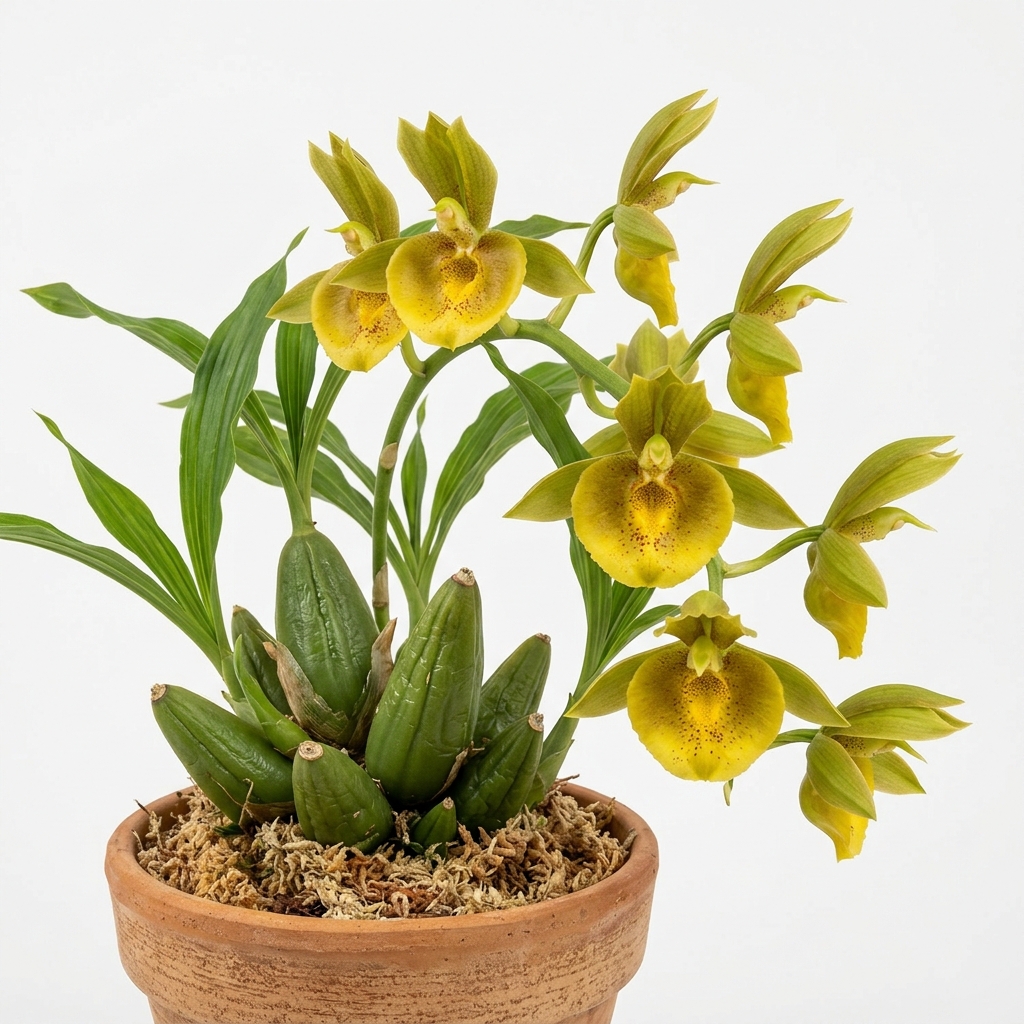
Catasetum Expansum is a highly prized orchid species within the Catasetinae subtribe, celebrated for its dramatic floral morphology and fascinating growth cycle. Native to the tropical dry forests of Ecuador, this deciduous orchid captures the attention of collectors with its large, spindle-shaped pseudobulbs and spectacular, shield-like flowers. Its unique ability to produce distinct male and female flowers on separate spikes adds an element of botanical intrigue that few other orchid genera can match.
Cultivating this species requires an understanding of its seasonal rhythms, which alternate between a period of rapid, water-heavy summer growth and a strict winter dormancy. When provided with the correct balance of light, moisture, and seasonal rest, it rewards growers with robust growth and long-lasting, highly fragrant blooms. This guide outlines the essential care requirements to help both intermediate and advanced orchid enthusiasts successfully grow and flower this remarkable species.
💡 Did You Know?
Catasetum Expansum features a highly specialized pollination mechanism. When an insect touches the sensitive antennae inside a male flower, the pollinia are forcibly ejected at high speed, sticking instantly to the pollinator's back.
🌿 Botanical Overview
Catasetum Expansum is an epiphytic orchid native to western Ecuador, where it typically grows on trees in seasonally dry tropical forests. The plant features large, spindle-shaped pseudobulbs that store water and nutrients, allowing it to survive prolonged dry seasons. These pseudobulbs produce thin, plicate (pleated) leaves that drop off at the onset of dormancy, leaving the plant bare during the winter months.
The growth habit is highly seasonal. In spring, new growth emerges from the base of the mature pseudobulbs, rapidly developing roots and leaves. This active phase is characterized by an intense demand for water and nutrients, which fuels the development of the current season’s pseudobulbs and later flower spikes.
🌸 Flower Characteristics
The flowers of Catasetum Expansum are among the largest and most striking in the genus, often measuring up to four inches across. The most prominent feature is the massive, fleshy, shield-shaped lip (labellum), which is typically flat or slightly concave with a central cavity. The sepals and petals are relatively small and point backward or flare outward, framing the dominant lip.
Coloration is highly variable within the species. Blooms can range from pure green or creamy white to bright yellow, often adorned with varying degrees of red or maroon spotting, particularly around the central callus of the lip. The flowers are borne on arching or pendulous inflorescences that emerge from the base of the pseudobulb, carrying anywhere from five to fifteen flowers.
Fragrance & Bloom Profile
The fragrance of Catasetum Expansum is intense and complex, often described as a mixture of wintergreen, camphor, or sweet rye. This powerful scent is strongest during the morning hours, designed to attract specific euglossine bee pollinators in its native habitat.
Like other members of the genus, this species shows floral dimorphism, meaning it can produce either male or female flowers depending on environmental conditions, particularly light intensity. Male flowers feature an active trigger mechanism that forcibly ejects the pollinia onto visiting insects, while female flowers are typically simpler in structure, thicker, and fewer in number.
Parentage & Hybrid Lineage
As a naturally occurring species rather than a man-made hybrid, Catasetum Expansum represents a primary genetic building block within Catasetinae breeding. It has been widely used by hybridizers to introduce large flower size, flat lip presentation, and vibrant color variations into modern Catasetum hybrids.
While its exact wild variations are well-documented, its performance in hybrid lineages is highly valued. Growers should note that offspring inheriting Catasetum Expansum genetics often retain its strong seasonal dormancy requirements and robust growth habit.
🌱 Growing Conditions
To thrive, Catasetum Expansum requires bright, filtered light, similar to Cattleya conditions. Providing approximately 3,000 to 4,000 foot-candles of light encourages strong pseudobulb development and increases the likelihood of producing male flowers, which are generally preferred by hobbyists for their intricate trigger mechanisms.
💡 Care Tip
During the peak summer growing season, keep the potting medium consistently moist and provide high . This orchid is a heavy feeder, so apply a balanced fertilizer weekly while it is actively growing.
Temperatures should remain warm to intermediate throughout the active growing season, with daytime highs between 75°F and 85°F and nighttime lows not dropping below 60°F. High humidity of 60% to 80% combined with strong air movement is essential to prevent leaf spot and fungal pathogens on the soft, pleated foliage.
Watering, Feeding & Potting Media
Watering must be strictly aligned with the plant’s growth cycle. During the active spring and summer growth phase, the plant should be watered heavily and never allowed to dry out completely. Regular, balanced fertilizing at half-strength is highly beneficial during this period to support the rapid expansion of the pseudobulbs.
Sphagnum moss is the preferred potting medium for many growers, as it retains the consistent moisture required during the summer. Alternatively, a fine bark mix in plastic pots can be used. When dormancy begins in late autumn, watering must be gradually reduced and eventually stopped entirely once the leaves have dropped.
Blooming Season & Care Notes
Blooming typically occurs in late summer or autumn, emerging from the base of the newly matured pseudobulb. Once the flowers fade, the plant prepares for its winter rest. Leaves will begin to yellow and drop, which is the signal to suspend watering and fertilizing.
During the dry dormancy, the pseudobulbs may shrivel slightly, which is normal. No water should be given until the new spring growth is at least two to three inches tall and has produced roots that are several inches long. Watering too early in the spring is the most common cause of root rot and crop failure.
⚠️ Common Issues
⚠️ Common Mistake
The most common mistake is the plant too early in the spring. Waiting until the new roots are several inches long prevents the new growth from rotting at the base.
- Root rot caused by premature watering in early spring before new roots are established.
- Spider mites, which are highly attracted to the thin, pleated leaves under dry conditions.
- Leaf spotting or fungal infections resulting from poor air circulation in high-humidity environments.
- Bud blast due to sudden changes in temperature or humidity while the flower spike is developing.
- Pseudobulb rot if water is allowed to sit in the crown of new growths.
❓ Frequently Asked Questions
How do I know when to start watering my Catasetum Expansum in spring?
Only begin watering when the new growth is approximately two to three inches tall and has developed active roots that are at least two inches long. Watering before these roots are established will lead to rot.
Why are the leaves on my orchid turning yellow and falling off?
This is a natural part of the plant’s annual cycle. In autumn, the leaves yellow and drop as the orchid enters its winter dormancy. Once this begins, gradually reduce and then stop all watering.
Can I grow Catasetum Expansum under LED lights?
Yes, they can be grown under high-output LED lights. Ensure the lights provide sufficient intensity to mimic bright Cattleya-level conditions, and adjust the photoperiod to reflect seasonal changes.
How do I trigger male flowers instead of female flowers?
Male flowers are typically produced under slightly lower light levels and cooler temperatures, whereas high light and warm temperatures tend to trigger the development of female flowers.
⭐ Final Growing Notes
Mastering the seasonal rhythm of Catasetum Expansum is the key to long-term success. While its strict dormancy requirement can be intimidating to beginners, the reward of its massive, fragrant, and structurally fascinating blooms makes it an essential addition to any serious orchid collection.
⚕️ Health, Safety & Edibility
Understanding how a plant interacts with people, pets, and the surrounding environment is part of responsible cultivation. This section uses conservative, general guidance and does not replace professional medical or veterinary advice.
Human Safety: Species-specific human toxicity data for Catasetum Expansum is limited. Use conservative handling practices and avoid intentional consumption.
Pet Safety: Pet-specific safety information for Catasetum Expansum is limited, so keep it away from animals that commonly chew plants.
Edibility: Catasetum Expansum should not be treated as edible. Ornamental specimens may contain natural irritants or horticultural residues that make them unsuitable for consumption.
Skin Contact: Skin irritation is not well documented for this plant, but gloves are sensible when repotting, pruning, or handling potting media.
🌱 Propagation Tip
Propagation is best achieved by dividing mature plants during the spring repotting process. Ensure each division has at least two or three healthy, mature pseudobulbs to support the new growth.
⭐ Expert Advice
To encourage the spectacular male flowers rather than the simpler female ones, grow the plant in bright but slightly shaded conditions. Extreme high and heat often trigger female blooms.

Leave A Comment