
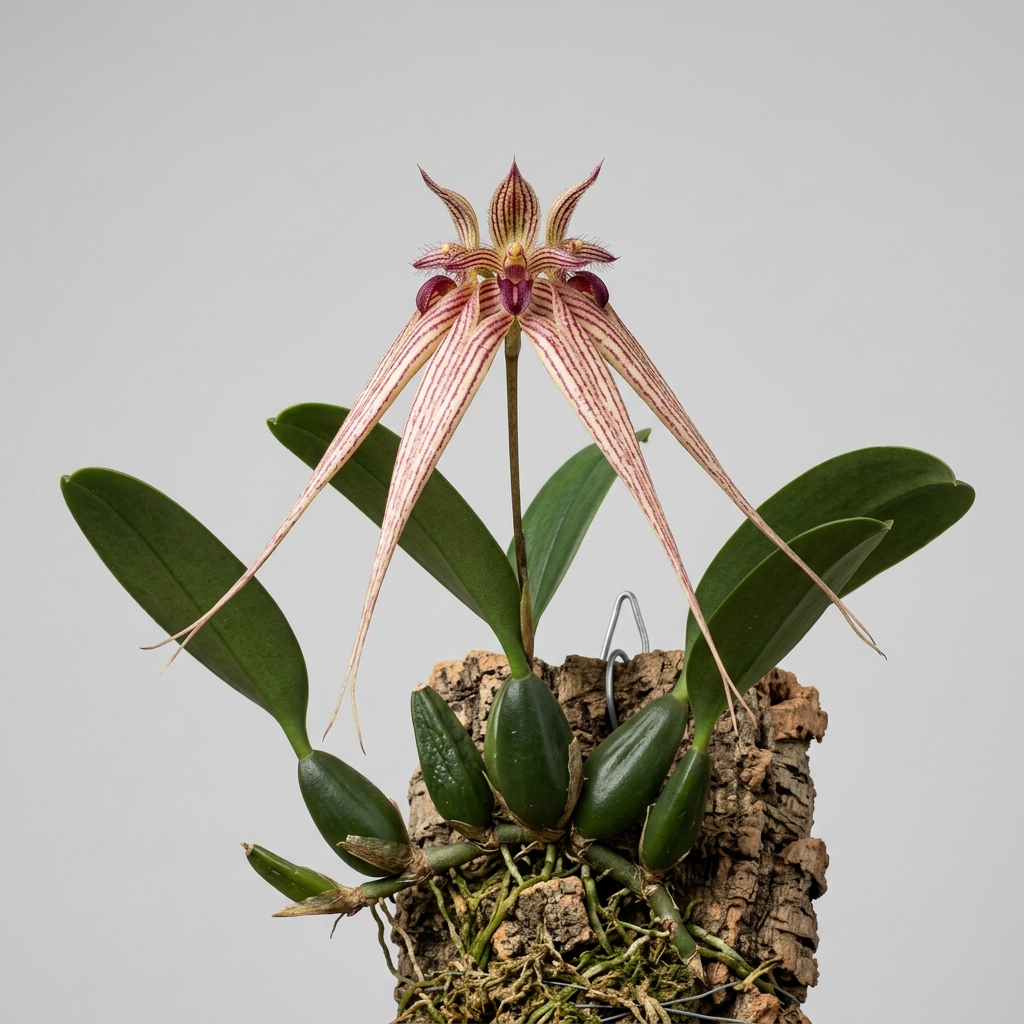
Bulbophyllum Sumatranum is a captivating epiphytic orchid highly prized by collectors for its intricate, exotic floral morphology and creeping growth habit. Native to the warm, humid rainforests of Southeast Asia, this species belongs to one of the largest and most diverse genera in the orchid family. Enthusiasts value it for its unique vegetative structure, featuring prominent pseudobulbs spaced along a wandering rhizome, which allows the plant to quickly colonize mounting plaques or shallow baskets.
The primary appeal of this orchid lies in its striking, solitary blooms that emerge from the base of mature pseudobulbs. With their elongated sepals, detailed striping, and a characteristically hinged, mobile labellum that moves with the slightest breeze, the flowers present a fascinating display of evolutionary adaptation. While it requires specific humidity and moisture levels to thrive, intermediate to warm-growing orchid enthusiasts find it to be a rewarding and visually stunning addition to their collections.
💡 Did You Know?
The mobile lip, or labellum, of Bulbophyllum Sumatranum is so delicately hinged that even a gentle breeze or the weight of a tiny insect causes it to rock back and forth. This movement is a highly specialized evolutionary mechanism designed to physically tip visiting pollinators directly against the orchid's reproductive column, ensuring successful pollination.
🌿 Botanical Overview
Bulbophyllum Sumatranum shows a classic sympodial growth habit characterized by a creeping rhizome that produces distinct, single-leaved pseudobulbs. These pseudobulbs are typically ovate to tetragonal, serving as vital water and nutrient storage organs that help the plant survive brief periods of dryness in its natural canopy habitat. The leaves are leathery, oblong, and dark green, designed to capture filtered light beneath the dense forest canopy.
In the wild, this epiphyte clings to the mossy branches of trees where it benefits from constant air movement and high ambient humidity. Its root system is relatively fine and shallow, spreading along the bark to absorb moisture and dissolved organic nutrients rapidly. Understanding this natural growth habit is essential for replicating its preferred environment in a domestic greenhouse or indoor growing space.
🌸 Flower Characteristics
The flowers of Bulbophyllum Sumatranum are renowned for their complex structure and dramatic presentation. Typically produced singly on short, slender inflorescences arising from the base of the pseudobulb, each bloom features prominent, elongated lateral sepals that often dwarf the rest of the floral segments. The base coloration ranges from cream to pale yellow, heavily overlaid with intricate reddish-brown or purple veins and speckles that draw pollinators toward the center.
Perhaps the most remarkable feature of the flower is the hinged lip, or labellum. This structure is delicately balanced and highly mobile, designed to tip forward under the weight of visiting insects to facilitate pollination. The petals and dorsal sepal are comparatively small, sometimes fringed with fine hairs, adding to the overall intricate and slightly bizarre appearance of the blossom.
Fragrance & Bloom Profile
The fragrance of Bulbophyllum Sumatranum is a subject of much discussion among growers, as is common within this genus. While some clones produce a faint, slightly sweet or musky scent, others may emit a more pronounced, earthy aroma that some describe as less than pleasant. This olfactory profile is an evolutionary adaptation designed to attract specific fly species that serve as its primary pollinators in the wild.
Individual blooms generally last between one to two weeks, depending on ambient temperatures and humidity levels. Because the flowers are produced sequentially or sporadically from different pseudobulbs on the rhizome, a mature, well-established specimen can remain in bloom over an extended period, offering multiple displays throughout its active growing season.
Parentage & Hybrid Lineage
As a naturally occurring species rather than a man-made hybrid, Bulbophyllum Sumatranum carries a pure genetic heritage shaped by its native environment in Sumatra and surrounding regions. In horticultural trade, it is occasionally referred to under various synonyms or confused with closely related species within the section Sestochilos of the genus Bulbophyllum.
While it has been used occasionally in hybridizing programs to introduce its unique flower shape and bold striping to new grexes, registered hybrids remain relatively uncommon compared to other popular orchid genera. Most specimens found in cultivation are propagated via division or grown from seed lines selected for superior floral form and color intensity.
🌱 Growing Conditions
To cultivate Bulbophyllum Sumatranum successfully, growers must replicate its native tropical rainforest climate. It thrives in low to medium light conditions, similar to those preferred by Phalaenopsis orchids. Direct, intense sunlight must be avoided, as it can quickly scorch the thin leaves; bright, filtered light or high-quality LED grow lights are ideal for promoting healthy growth and flowering.
💡 Care Tip
Because Bulbophyllum Sumatranum has a creeping growth habit, it performs exceptionally well when mounted on a cork slab with a small pad of sphagnum moss around the roots. This setup mimics its natural epiphytic environment and helps prevent root rot by ensuring maximum airflow.
Temperature: wise, this orchid prefers intermediate to warm conditions, with daytime temperatures ranging between 75°F and 85°F (24°C to 29°C) and a slight drop at night to stimulate bloom development. High relative humidity is critical, ideally maintained between 60% and 80%. Excellent air circulation is mandatory to prevent stagnant air pockets, which can lead to fungal infections in high-humidity environments.
Watering, Feeding & Potting Media
Consistent moisture is key to keeping Bulbophyllum Sumatranum healthy. Unlike orchids with large pseudobulbs that tolerate prolonged drought, this species prefers its root zone to remain evenly moist but never waterlogged. Water the plant thoroughly just as the potting medium begins to approach dryness. During the active growing season in spring and summer, watering frequency should be increased.
A weak, balanced orchid fertilizer applied at one-quarter strength every two weeks is generally sufficient to support steady growth. Due to its creeping rhizome, this orchid is exceptionally well-suited to being mounted on cork bark or tree fern plaques, provided high humidity can be maintained. Alternatively, it can be grown in shallow plastic pans or wooden baskets filled with a highly draining medium such as fine fir bark mixed with sphagnum moss and perlite.
Blooming Season & Care Notes
Bulbophyllum Sumatranum typically initiates its blooming cycle during the spring and summer months, though opportunistic flowering can occur at other times of the year if optimal growing conditions are maintained. To encourage bud development, ensure the plant receives a slight drop in night temperatures and consistent humidity during the late winter.
Once the flower spikes begin to emerge from the base of the pseudobulbs, avoid moving the plant or changing its orientation to the light source, as this can cause the developing buds to blast. After flowering has finished, allow the old flower spikes to dry naturally before snipping them close to the pseudobulb base. Repotting or remounting is best done in early spring, just as new root growth begins to emerge from the leading pseudobulbs.
⚠️ Common Issues
⚠️ Common Mistake
A frequent error is letting the potting medium dry out completely between waterings. Unlike Cattleyas, Bulbophyllum Sumatranum lacks large water-storage capacity and will quickly suffer from dehydrated pseudobulbs and stalled growth if left dry for too long.
- Root Rot:
Caused by overwatering or compacted, poorly draining potting media that deprives the roots of oxygen. - Leaf Spotting: Fungal or bacterial pathogens can attack the foliage if humidity is high but air circulation is inadequate.
- Bud Blast:
Sudden changes in temperature, low humidity, or drafts can cause developing flower buds to yellow and drop before opening. - Dehydration:
Shriveled pseudobulbs and wrinkled leaves indicate insufficient watering or a compromised root system unable to absorb moisture. - Pests:
Mealybugs, spider mites, and scale insects can occasionally hide in the crevices of the pseudobulbs and under leaves.
❓ Frequently Asked Questions
How often should I water my Bulbophyllum Sumatranum?
Watering frequency depends heavily on your growing setup. Mounted plants may require daily misting or watering in warm weather, while those grown in baskets or pots with sphagnum moss should be watered just as the medium begins to dry out, typically every two to three days.
Can I grow Bulbophyllum Sumatranum under artificial LED lights?
Yes, this orchid adapts very well to indoor cultivation under LED grow lights. Position the plant in a zone that receives moderate light intensity, ensuring it is not too close to the light source to prevent heat stress or foliage scorch.
Why are the pseudobulbs on my orchid shriveling?
Shriveled pseudobulbs are a sign of water stress. This can be caused by underwatering or, conversely, by overwatering which has rotted the root system, leaving the plant unable to take up water. Inspect the roots to determine the exact cause.
Is Bulbophyllum Sumatranum suitable for beginner orchid growers?
While it is not the most difficult orchid to grow, its high humidity and consistent moisture requirements make it better suited for intermediate growers or beginners who have successfully managed other moisture-loving tropical plants.
⭐ Final Growing Notes
Bulbophyllum Sumatranum remains a highly rewarding species for orchid enthusiasts who can accommodate its tropical humidity and moisture requirements. Its fascinating floral architecture, characterized by a mobile lip and intricate striping, provides a unique focal point in any collection. By focusing on consistent watering, excellent air movement, and appropriate mounting or potting techniques, growers can enjoy the exotic beauty of this remarkable Southeast Asian epiphyte for many years.
⚕️ Health, Safety & Edibility
Understanding how a plant interacts with people, pets, and the surrounding environment is part of responsible cultivation. This section uses conservative, general guidance and does not replace professional medical or veterinary advice.
Human Safety: No published evidence currently identifies species-specific toxicity concerns for Bulbophyllum Sumatranum during normal handling. As with most ornamental plants, it should not be intentionally consumed.
Pet Safety: Published information does not indicate that this orchid commonly poses a toxicity concern for cats or dogs. However, chewing leaves, flowers, roots, or potting media may still cause mild digestive upset.
Edibility: This orchid is cultivated for ornamental display rather than food. Ornamental plants may carry fertilizers, pesticides, or other horticultural treatments that make them unsuitable for consumption.
Skin Contact: Routine handling is not generally associated with skin irritation. Gardeners with sensitive skin may prefer wearing gloves when repotting, pruning, or handling potting media.
🌱 Propagation Tip
To propagate this orchid, wait until the plant has at least six to eight healthy pseudobulbs. Carefully divide the rhizome using a sterile blade, ensuring each new division has at least three mature pseudobulbs and an active lead growth to support rapid recovery.
⭐ Expert Advice
To maximize bloom production, maintain a high- microclimate around the plant using a tray or humidifier, and ensure gentle, continuous air movement. A slight drop in night temperatures during late winter can help trigger a more robust spring flush of flowers.

Leave A Comment