
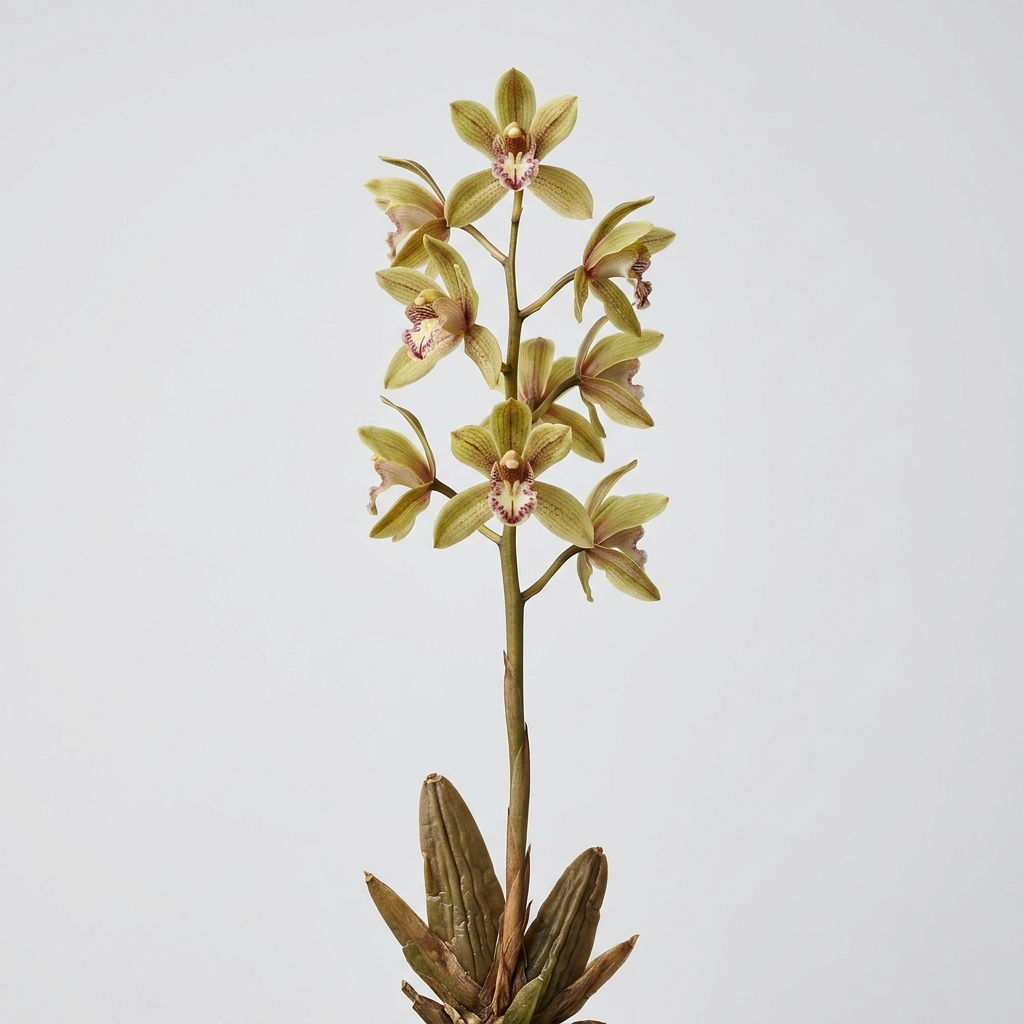
Cymbidium Defoliatum is an elegant and highly specialized terrestrial orchid species native to the mountainous regions of East Asia, particularly within subtropical forest habitats. Unlike many of its lush, leafy relatives in the Cymbidium genus, this unique orchid is characterized by its highly reduced, scale-like foliage, which gives it a distinctively minimalist or nearly leafless appearance. This fascinating evolutionary adaptation makes it a prized collector’s plant for growers who appreciate unusual botanical forms and the subtle beauty of wild orchid species.
In cultivation, this orchid is valued not only for its intriguing growth habit but also for its delicate, fragrant flowers that emerge on upright spikes. While it requires more precise environmental conditions than common mass-market hybrids, intermediate and advanced orchid enthusiasts find the cultivation of this species to be an incredibly rewarding endeavor. Its compact size and understated elegance make it an excellent addition to a specialized cool-growing orchid collection.
💡 Did You Know?
Cymbidium Defoliatum is often referred to as a leafless orchid because its leaves are reduced to small, sheath-like scales. Unlike typical leafy orchids, this species relies on its green pseudobulbs and specialized underground rhizomes to photosynthesize and store energy, making it an extraordinary example of evolutionary adaptation to its native forest floor habitats.
🌿 Botanical Overview
Cymbidium Defoliatum is primarily a terrestrial or lithophytic orchid, naturally occurring on damp, humus-rich slopes, rocky crevices, and forest floors. In its native habitats, it grows under the protective canopy of mixed forests, where it is shielded from direct, intense sunlight. The plant utilizes small, underground or semi-buried pseudobulbs to store water and essential nutrients, allowing it to survive seasonal fluctuations in moisture.
The most striking botanical feature of this species is its reduced foliage. While most Cymbidiums produce long, strap-like leaves, this species features highly reduced, bract-like leaves that wrap tightly around the base of the pseudobulbs. This adaptation reduces water loss through transpiration, making the plant highly efficient in its native microclimate. Photosynthesis is largely carried out by the green surfaces of the pseudobulbs and the flower spikes themselves.
🌸 Flower Characteristics
The flowers of this orchid are borne on erect, slender spikes that rise directly from the base of the pseudobulbs. Each inflorescence typically carries several well-spaced blooms, creating a graceful and airy presentation. The flowers are moderate in size, featuring lanceolate sepals and petals that frame a prominent, trilobed lip or labellum.
Coloration can vary slightly depending on the specific clone and growing conditions, but the flowers generally exhibit soft shades of pale yellow, olive green, or muted brownish-red. The lip is often the visual highlight, adorned with intricate spots, streaks, or flush patterns of deep purple-red or magenta. This contrasting pattern serves as a natural guide for pollinators in the wild.
Fragrance & Bloom Profile
Many growers prize this orchid for its delightful fragrance, which is typically described as soft, sweet, and clean, reminiscent of classic Asian miniature Cymbidiums. The scent is most noticeable during the morning hours when warmth and light stimulate the release of volatile oils from the petals.
The blooming cycle generally occurs from mid-summer into the early autumn months. Under optimal, cool indoor or greenhouse conditions, individual flowers can remain fresh and attractive for several weeks. To maximize the lifespan of the blooms, keep the plant in a cool, draft-free location once the buds begin to open.
Parentage & Hybrid Lineage
Cymbidium Defoliatum is a naturally occurring species rather than a man-made hybrid. Because of its highly specialized growth habit and specific cultural requirements, it is primarily grown and preserved as a species by collectors. Its unique genetic profile makes it an intriguing subject for orchid breeders looking to introduce compact growth habits or reduced foliage traits into hybrid lines, though such registered hybrids remain exceptionally rare in the commercial market.
🌱 Growing Conditions
To cultivate this orchid successfully, growers must replicate its native montane forest environment. It thrives in cool to intermediate temperatures, ideally ranging from 60 to 75 degrees Fahrenheit during the day, with a distinct drop of 10 to 15 degrees at night. This diurnal temperature fluctuation is crucial for the overall health of the plant and is a primary trigger for flower spike development.
💡 Care Tip
To mimic its natural habitat, place this orchid in a location with bright, filtered morning and cool afternoon shade. Ensure constant, gentle air movement around the pot to prevent stagnant moisture from accumulating near the base of the pseudobulbs.
Light should be bright but thoroughly filtered. Direct midday sun can easily scorch the sensitive pseudobulbs and flower spikes, while excessive shade may inhibit blooming. A position near an east-facing window or under shaded greenhouse glass is generally ideal. Maintain relative humidity levels between 50% and 70%, supported by gentle, continuous air movement to prevent fungal pathogens from settling on the plant.
Watering, Feeding & Potting Media
Unlike epiphytic orchids that prefer to dry out completely between waterings, this terrestrial species requires consistent, moderate moisture. The potting medium should remain damp but never waterlogged. Water thoroughly with rainwater, distilled water, or reverse osmosis water, allowing the excess to drain freely from the bottom of the pot.
A specialized, free-draining terrestrial orchid mix is essential. A blend of fine fir bark, perlite, peat moss, and a small amount of horticultural charcoal or loam works well to retain light moisture while ensuring excellent aeration around the roots. Feed the plant with a highly diluted, balanced orchid fertilizer every two to three weeks during the active spring and summer growing phases, flushing the pot with pure water periodically to prevent salt buildup.
Blooming Season & Care Notes
As the summer transition begins, monitor the base of the pseudobulbs for the emergence of new flower spikes. During this period, avoid moving the plant or altering its environmental conditions abruptly, as sudden changes can cause the developing buds to fail. Once the spikes are fully formed, they may require light staking to support the weight of the blossoms.
After the blooming cycle concludes in autumn, the orchid enters a semi-dormant rest period. During the winter months, reduce watering frequency slightly, allowing the top layer of the medium to dry out between light waterings, and suspend all fertilizer applications until active growth resumes in the spring.
⚠️ Common Issues
⚠️ Common Mistake
A frequent error is potting this species in coarse, dry epiphytic bark. Because it is a terrestrial orchid, its roots require a finer, more moisture-retentive medium that does not dry out completely, though it must still drain rapidly to prevent rot.
- Root Rot:
Caused by overwatering or using a heavy, poorly draining potting medium that suffocates the root system. - Bud Blast:
The premature dropping or drying of flower buds, often triggered by sudden temperature drops, drafts, or low humidity. - Spider Mites:
These pests can target the plant during dry winter periods; maintain adequate humidity to deter them. - Fungal Spotting: Dark spots on the pseudobulbs or sheaths, usually resulting from stagnant air and excessive moisture.
❓ Frequently Asked Questions
Why does my Cymbidium Defoliatum have no true leaves?
This is a natural evolutionary characteristic of the species. The leaves are reduced to small, protective sheaths around the pseudobulbs, allowing the plant to conserve moisture. Photosynthesis is primarily conducted by the green pseudobulbs and flower stems.
What type of pot is best for this orchid?
Deep plastic or clay pots with ample drainage holes are ideal. Terrestrial orchids prefer slightly deeper root runs than epiphytes, but the container must allow water to drain away rapidly to prevent root rot.
How often should I repot Cymbidium Defoliatum?
Repotting should only be done every two to three years, or when the potting medium begins to break down. This species dislikes root disturbance, so repotting should be performed carefully in early spring just as new growth begins.
Can I grow this orchid under artificial lights?
Yes, it can be grown successfully under LED or fluorescent grow lights. Position the plant so it receives moderate light intensity, and ensure you maintain the necessary cool nighttime temperature drop to encourage blooming.
⭐ Final Growing Notes
Cymbidium Defoliatum is a captivating botanical treasure that rewards patient growers with its unique form and delicate, fragrant flowers. By providing a well-draining terrestrial medium, consistent moisture, and cool, humid conditions with a distinct nightly temperature drop, you can enjoy the minimalist beauty of this exceptional orchid species for many years to come.
⚕️ Health, Safety & Edibility
Understanding how a plant interacts with people, pets, and the surrounding environment is part of responsible cultivation. This section uses conservative, general guidance and does not replace professional medical or veterinary advice.
Human Safety: No published evidence currently identifies species-specific toxicity concerns for Cymbidium Defoliatum during normal handling. As with most ornamental plants, it should not be intentionally consumed.
Pet Safety: Published information does not indicate that this orchid commonly poses a toxicity concern for cats or dogs. However, chewing leaves, flowers, roots, or potting media may still cause mild digestive upset.
Edibility: This orchid is cultivated for ornamental display rather than food. Ornamental plants may carry fertilizers, pesticides, or other horticultural treatments that make them unsuitable for consumption.
Skin Contact: Routine handling is not generally associated with skin irritation. Gardeners with sensitive skin may prefer wearing gloves when repotting, pruning, or handling potting media.
🌱 Propagation Tip
Propagation is best achieved through careful division of mature clumps during repotting. Ensure each division has at least three healthy pseudobulbs and active root systems, and avoid dividing the plant too frequently as it dislikes root disturbance.
⭐ Expert Advice
To encourage reliable blooming, expose the plant to a distinct drop of 10 to 15 degrees Fahrenheit between day and night during the late summer. This natural cooling mimicry is the primary trigger for flower spike initiation.

Leave A Comment