
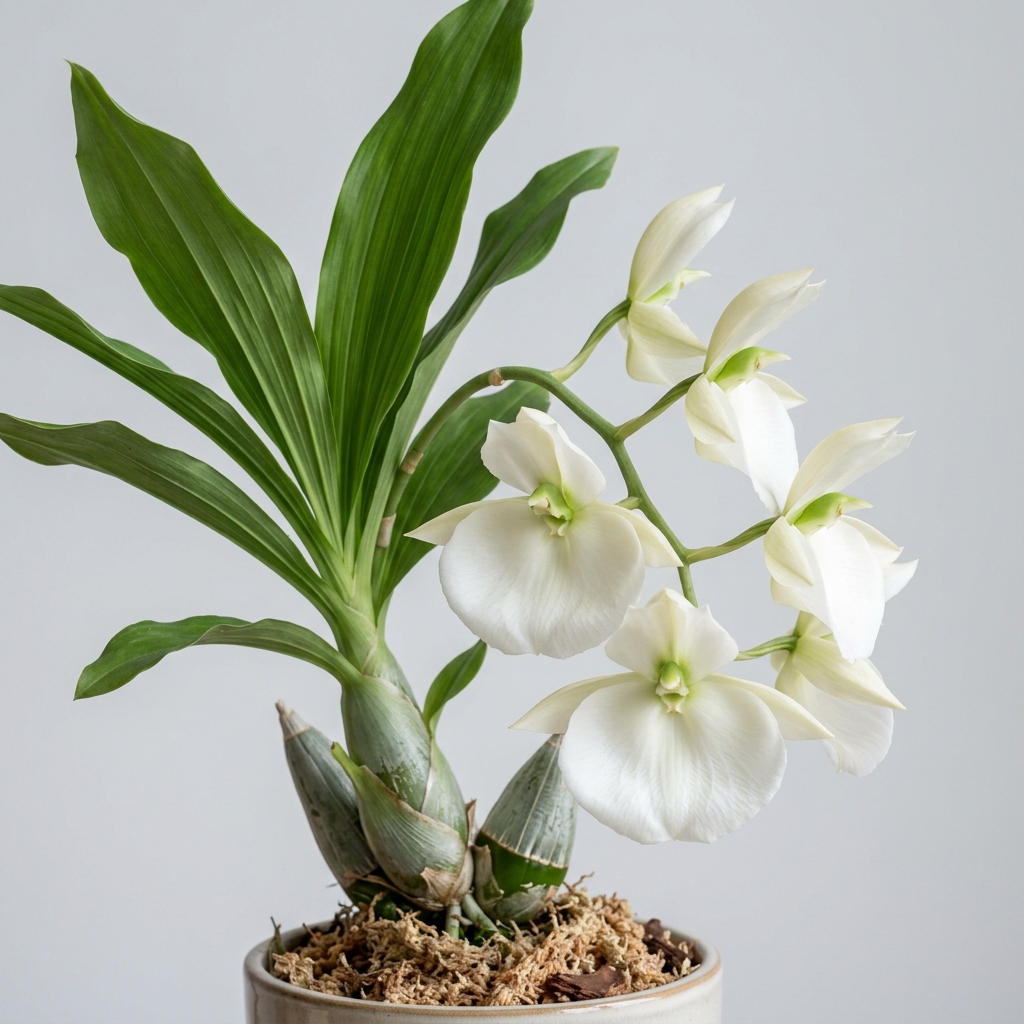
Catasetum Pileatum is one of the most spectacular and sought-after species within the Catasetinae subtribe, celebrated for its exceptionally large, cup-shaped blossoms. Native to the warm, humid regions of northern South America, particularly Venezuela, this deciduous orchid is highly prized by collectors for its dramatic growth cycle and showy floral displays. The plant features robust, spindle-shaped pseudobulbs that produce lush, pleated leaves, creating an imposing and attractive vegetative presence even when not in bloom.
Growers value Catasetum Pileatum not only for its striking visual appeal but also for its fascinating botanical complexity, including its sexually dimorphic flowers and explosive pollination mechanism. While it requires a distinct seasonal care regimen that mimics its native wet-and-dry tropical habitat, mastering its cycle of active growth and winter dormancy is highly rewarding. This orchid is an excellent choice for intermediate to advanced hobbyists looking to experience the unique dynamics of deciduous orchid cultivation.
💡 Did You Know?
Catasetum Pileatum possesses a highly sensitive, spring-loaded trigger mechanism inside its male flowers. When an insect steps on the trigger, the pollen pollinia are forcefully ejected and stick to the insect's back, ensuring efficient cross-pollination in its native tropical habitat.
🌿 Botanical Overview
Catasetum Pileatum is a prominent epiphytic species characterized by its large, clustered pseudobulbs. These pseudobulbs serve as vital water and nutrient storage organs, allowing the plant to survive prolonged dry seasons in its natural habitat. During the spring and summer active growth phase, the pseudobulbs rapidly produce several thin, veined, lanceolate leaves that can reach up to thirty centimeters in length.
As a deciduous orchid, Catasetum Pileatum undergoes a dramatic transformation in late autumn or winter. The leaves yellow and drop, leaving bare, silvery pseudobulbs that enter a strict period of dormancy. Understanding this natural cycle is fundamental to the plant’s survival, as its physiological needs shift completely between the vigorous summer growing season and the dry winter rest.
🌸 Flower Characteristics
The flowers of Catasetum Pileatum are among the largest in the genus, often measuring up to ten to twelve centimeters across. The most prominent feature is the broad, deeply concave labellum, or lip, which resembles a wide cup or saucer. The sepals and petals are typically arranged behind this dominant lip, pointing backward or spreading outward to frame the central structure.
While the classic wild form displays pristine white to pale ivory-green flowers, various color forms exist, including yellow, green, and rare reddish-brown variants. The flowers are produced on arching or pendulous inflorescences that emerge from the base of the mature pseudobulbs, carrying anywhere from four to a dozen blooms. Additionally, this species shows sexual dimorphism, occasionally producing distinct male or female flowers depending on light and environmental conditions.
Fragrance & Bloom Profile
The blooms of Catasetum Pileatum are highly fragrant, emitting a strong, sweet, and resinous scent that is most intense during the morning hours. This fragrance is chemically adapted to attract specific euglossine bee pollinators in the wild. The scent is often described as a blend of wintergreen, eucalyptus, and sweet spice, though individual perceptions of the aroma can vary.
The blooming period typically occurs in late summer or autumn as the new pseudobulbs reach maturity. While the individual flowers are relatively short-lived compared to other orchid genera—usually lasting between one to two weeks—their sheer size, dramatic presentation, and powerful fragrance make the blooming event a highlight of the growing year.
Parentage & Hybrid Lineage
As a distinct botanical species rather than a man-made hybrid, Catasetum Pileatum has no direct parental lineage. It was formally described in the late nineteenth century and has since served as a foundational parent in orchid hybridization. Its genetics are highly influential in creating popular intergeneric hybrids, such as Clowesetum and Catamodes, where it contributes its large lip size and robust growth habit.
Because wild populations can exhibit significant color variation, several selected cultivars and line-bred strains exist within the horticultural trade. Growers should note that while many plants labeled as Catasetum Pileatum are true species, some may be highly refined line-bred selections or unregistered natural hybrids, making purchase from reputable specialty nurseries advisable for historical accuracy.
🌱 Growing Conditions
To cultivate Catasetum Pileatum successfully, growers must provide conditions that mimic the warm, tropical lowlands of its native South American range. During the active growing season, this orchid thrives in bright, filtered light, similar to the levels required by Cattleyas. High light levels encourage robust pseudobulb development and promote the production of female flowers, while lower light levels tend to produce male flowers.
💡 Care Tip
During the peak summer growing season, keep this orchid in a warm location with excellent air movement and high . This allows you to water and fertilize heavily without risking stagnant moisture on the leaves.
Temperatures should remain warm throughout the year, with daytime highs between twenty-five and thirty-two degrees Celsius, and nighttime lows rarely dropping below eighteen degrees Celsius. High humidity of sixty to eighty percent, paired with strong air movement, is essential to prevent leaf pathogens and support the rapid transpiration of the lush summer foliage.
Watering, Feeding & Potting Media
The watering regimen for Catasetum Pileatum is strictly divided by its growth phases. During the active spring and summer growth period, the plant has an insatiable appetite for water and nutrients. Once new roots are at least five to eight centimeters long, watering should be frequent and thorough, keeping the medium constantly moist. Weekly applications of a balanced, water-soluble fertilizer at half strength support the rapid expansion of the pseudobulbs.
In contrast, watering must be completely suspended once the leaves begin to yellow and drop in autumn. During winter dormancy, the plant should be kept dry, with only occasional light misting if the pseudobulbs show extreme shriveling. Suitable potting media include high-grade sphagnum moss in plastic pots to retain moisture during summer, or a well-draining bark mix. Some growers also succeed with mounting the plant on cork slabs, provided high humidity can be maintained.
Blooming Season & Care Notes
The primary blooming season for Catasetum Pileatum spans from late summer through autumn, coinciding with the maturation of the current season’s pseudobulb. Inflorescences emerge from the basal nodes of the pseudobulb and develop rapidly. During this time, care should be taken not to get water on the developing buds, as this can cause bud blast or fungal spotting.
Repotting is best performed at the very beginning of the active growth cycle, just as the new growth emerges from the base of the old pseudobulb but before the new roots have grown long enough to be damaged during handling. Dividing the plant is also appropriate at this time, ensuring that each division retains at least two to three healthy, mature pseudobulbs.
⚠️ Common Issues
⚠️ Common Mistake
The most common mistake is the plant too early in the spring. Initiating before the new roots are at least five centimeters long will almost always lead to root rot and the loss of the new growth.
- Root Rot:
Occurs when watering is initiated too early in the spring before new roots are sufficiently developed, or if the medium remains soggy during winter dormancy. - Spider Mites:
The thin, pleated leaves are highly susceptible to spider mite infestations, especially in dry, low-humidity environments. - Bud Blast:
Sudden changes in temperature, drafty conditions, or water droplets resting on developing buds can cause them to yellow and drop prematurely. - Pseudobulb Shriveling: Minor shriveling during winter dormancy is normal, but excessive shriveling indicates a severe lack of ambient humidity or a compromised root system from the previous season.
- Fungal Leaf Spotting: Poor air circulation combined with high humidity can lead to unsightly black spots on the foliage, which can be mitigated by increasing fan movement.
❓ Frequently Asked Questions
How do I know when to start watering my Catasetum Pileatum in spring?
Watering should only begin when the new growth has produced roots that are at least five to eight centimeters long. Watering too early can easily rot the emerging growth and prevent the root system from establishing properly.
Why are the leaves on my orchid turning yellow and falling off?
This is a natural part of the deciduous cycle of Catasetum Pileatum. In late autumn, the plant naturally sheds its leaves to prepare for winter dormancy. Reduce and eventually stop watering as this process begins.
Can I grow Catasetum Pileatum under artificial LED lights?
Yes, this species can be grown successfully under high-output LED grow lights. Ensure the lights provide sufficient intensity to mimic bright, filtered sunlight, and adjust the height to prevent leaf scorch.
How do I trigger blooming in this orchid?
Blooming is naturally triggered by the maturation of the pseudobulb and the seasonal shift in light and temperature. Providing optimal light, water, and heavy feeding during the summer ensures the pseudobulb has the energy to produce flowers.
⭐ Final Growing Notes
Catasetum Pileatum remains a crown jewel of the orchid world, offering a dynamic and deeply engaging cultivation experience. By respecting its strict seasonal rhythm of heavy summer watering and dry winter rest, growers can enjoy some of the most spectacular, fragrant, and structurally unique flowers in the entire plant kingdom.
⚕️ Health, Safety & Edibility
Understanding how a plant interacts with people, pets, and the surrounding environment is part of responsible cultivation. This section uses conservative, general guidance and does not replace professional medical or veterinary advice.
Human Safety: Species-specific human toxicity data for Catasetum Pileatum is limited. Use conservative handling practices and avoid intentional consumption.
Pet Safety: Pet-specific safety information for Catasetum Pileatum is limited, so keep it away from animals that commonly chew plants.
Edibility: Catasetum Pileatum should not be treated as edible. Ornamental specimens may contain natural irritants or horticultural residues that make them unsuitable for consumption.
Skin Contact: Skin irritation is not well documented for this plant, but gloves are sensible when repotting, pruning, or handling potting media.
🌱 Propagation Tip
Propagate Catasetum Pileatum by dividing the pseudobulbs during spring repotting. Ensure each division has at least two to three mature, healthy pseudobulbs to provide enough stored energy for the new growth.
⭐ Expert Advice
To encourage the production of large, healthy pseudobulbs and robust flower spikes, apply a high-nitrogen fertilizer regularly during the active summer growth phase, but stop all feeding completely once dormancy begins.

Leave A Comment