

Oncidium Hastatum is a captivating orchid species native to the mountainous regions of Mexico, highly prized by collectors for its elegant, starry blooms and robust growth habit. Belonging to the diverse Oncidium alliance, this epiphytic orchid produces distinctive pseudobulbs and long, arching flower spikes that can carry dozens of intricately patterned blossoms. Growers value this species for its classic orchid charm and its ability to adapt to intermediate indoor growing environments.
In cultivation, Oncidium Hastatum rewards attentive hobbyists with a spectacular floral display that typically emerges during the cooler months of the year. Its flowers feature a striking contrast between barred tepals and a prominent, lighter-colored lip, making it a standout addition to any orchid collection. While it requires consistent moisture and bright, filtered light to thrive, its straightforward care requirements make it an excellent choice for growers looking to transition from common hybrids to true species orchids.
💡 Did You Know?
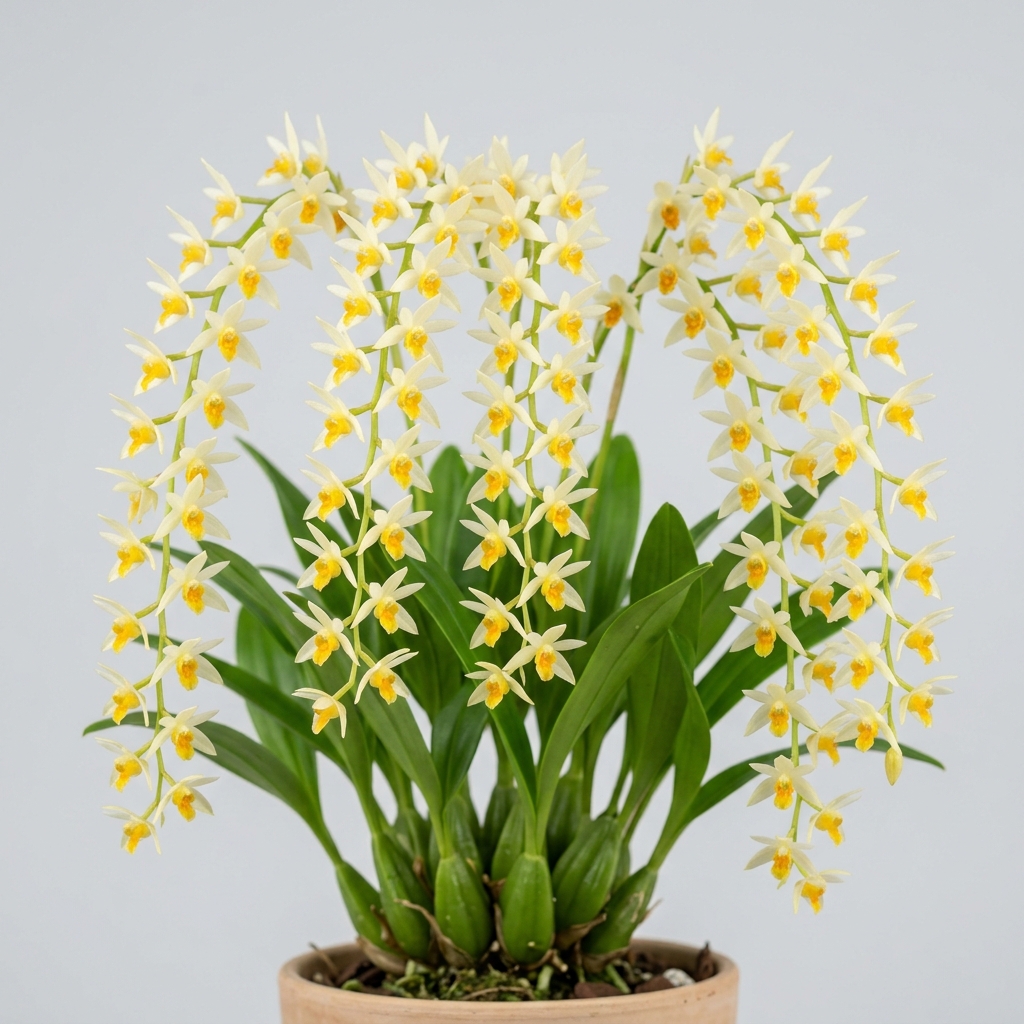
Oncidium Hastatum belongs to the Oncidium orchid group, where flower presentation is often just as important as . White-flowered cultivars are especially valued indoors because their pale blooms reflect well and pair easily with many home, greenhouse, and display settings.
🌿 Botanical Overview
Oncidium Hastatum is characterized by its clustered, compressed pseudobulbs that support long, strap-like, leathery green leaves. These pseudobulbs serve as vital water and nutrient storage organs, allowing the plant to survive seasonal dry spells in its native habitat. The root system is typical of epiphytic Oncidiums, consisting of thin, white, velamen-coated roots that anchor the plant to tree branches and absorb moisture from the air.
In the wild, this species is found growing at intermediate elevations, where it experiences distinct seasonal shifts in temperature and moisture. This evolutionary background dictates its growth cycle in cultivation, where it alternates between active vegetative growth in the spring and summer, and a semi-dormant resting period during the cooler winter months.
🌸 Flower Characteristics
The blossoms of Oncidium Hastatum are celebrated for their starry, geometric form and intricate color patterns. Each flower typically measures between one and two inches across, arranged along a tall, sometimes branched inflorescence that can reach several feet in length. The sepals and petals are narrow and pointed, featuring a base color of greenish-yellow or olive green heavily marked with rich brown bars or spots.
The defining feature of the bloom is its prominent lip, or labellum, which is distinctly spear-shaped (hastate) at the base. The lip is usually white, cream, or pale rose, providing a dramatic contrast against the darker, heavily patterned tepals. A yellow callus sits at the center of the lip, serving as a visual guide for natural pollinators.
Fragrance & Bloom Profile
While fragrance can vary depending on individual clones and environmental conditions, Oncidium Hastatum is widely reported to produce a pleasant, sweet scent. The fragrance is typically most noticeable during the morning hours when temperatures begin to rise and light levels increase. The blooms are remarkably long-lasting, often remaining fresh on the spike for six to eight weeks under optimal conditions.
To maximize the bloom duration, growers should keep the plant in a cool, draft-free location once the buds begin to open. Sudden changes in temperature or dry indoor air can cause the delicate flowers to fade prematurely.
Parentage & Hybrid Lineage
As a naturally occurring species rather than a man-made hybrid, Oncidium Hastatum possesses a pure genetic lineage that has evolved over millennia. In the orchid world, it is highly valued by hybridizers who seek to introduce its starry flower shape, robust spike habit, and unique color contrast into modern Oncidium and Odontoglossum intergeneric crosses.
Because taxonomic classifications within the Oncidium alliance are subject to ongoing botanical study, some references may list this species under alternative genera, such as Cuitlauzina. However, in the horticultural trade, it remains most commonly recognized and labeled as Oncidium Hastatum.
🌱 Growing Conditions
To cultivate Oncidium Hastatum successfully, growers should aim to replicate its native montane forest habitat. It thrives in bright, indirect light, similar to the conditions preferred by Cattleyas. A location near an east- or shaded south-facing window is ideal, where it can receive strong morning light without the risk of scorching its leaves under intense afternoon sun.
💡 Care Tip
For best results, grow Oncidium Hastatum in bright filtered with steady and gentle airflow. Avoid placing the plant in harsh midday sun, but do not keep it in a dark corner; weak is one of the most common reasons cultivated orchids refuse to rebloom.
Temperature: wise, this orchid prefers intermediate to cool conditions. Daytime temperatures should ideally range between 70°F and 80°F (21°C to 27°C), with a nighttime drop of 10°F to 15°F (5°C to 8°C) to stimulate healthy growth and trigger bud development. Adequate air movement is crucial at all times to prevent stagnant air from harboring fungal pathogens.
Watering, Feeding & Potting Media
During its active growth phase in spring and summer, Oncidium Hastatum requires regular watering to keep the potting medium evenly moist but never waterlogged. The thin roots are sensitive to salt buildup and rot, so it is best to water thoroughly and allow the medium to approach dryness before watering again. In the winter, watering should be reduced, allowing the pseudobulbs to dry slightly between waterings without shriveling excessively.
A well-draining potting mix is essential. A blend of medium-grade fir bark, perlite, and a small amount of sphagnum moss works exceptionally well in plastic or clay pots. Alternatively, experienced growers in high-humidity environments may choose to mount this species on cork bark. Feed the plant weekly with a balanced, diluted orchid fertilizer during the growing season, flushing the pot with pure water once a month to remove residual salts.
Blooming Season & Care Notes
Oncidium Hastatum typically initiates its blooming cycle in late autumn or winter, with flower spikes emerging from the base of the newly matured pseudobulbs. As the spike develops, it may require gentle staking to support the weight of the numerous buds. Avoid moving the plant to a drastically different environment while the buds are forming, as this can lead to bud drop.
Repotting should be performed every two to three years, ideally just as new root growth begins to emerge from the base of the newest pseudobulb in the spring. Choose a pot that allows for two years of future growth, as overpotting can lead to excess moisture retention and later root rot.
⚠️ Common Issues
⚠️ Common Mistake
The most common mistake is by calendar instead of root and potting-media condition. Oncidium roots need moisture and air at the same time, so constantly wet bark or sphagnum can lead to root loss even when the leaves still look healthy.
- Root Rot:
Caused by overwatering or compacted potting media that retains too much moisture. - Pseudobulb Shriveling: A sign of dehydration, which can result from underwatering or a loss of roots due to rot.
- Leaf Spotting: Small black spots can appear on the leaves if water is allowed to sit on the foliage in cool, stagnant conditions.
- Pests:
Spider mites and mealybugs are common pests that hide in the crevices of the leaves and pseudobulbs. - Bud Blast:
The premature drying and dropping of flower buds, often caused by sudden drafts, low humidity, or extreme temperature fluctuations.
❓ Frequently Asked Questions
How do I trigger blooms on my Oncidium Hastatum?
To encourage blooming, ensure the orchid experiences a distinct temperature drop of 10°F to 15°F (5°C to 8°C) at night during the autumn months, along with a slight reduction in watering. This mimics its natural seasonal transition and signals the plant to initiate flower spikes from the base of mature pseudobulbs.
Why are the leaves on my orchid turning yellow?
Yellowing leaves can indicate several issues. If the oldest leaves at the base of mature pseudobulbs turn yellow and drop, it is often a natural aging process. However, widespread yellowing can be a sign of excessive direct sunlight, overwatering, or root rot. Inspect the root system to determine the cause.
Can I grow Oncidium Hastatum mounted on wood?
Yes, this species can be successfully grown on cork bark or hardwood mounts, provided you can maintain high ambient humidity (60% or higher) and water the plant daily. Mounting allows the roots to dry rapidly, mimicking its natural epiphytic growth habit.
What should I do with the flower spike after blooming?
Once all the flowers have faded and fallen, the flower spike will naturally turn brown and dry out. Use a sterilized pair of shears to cut the dead spike back to the base of the pseudobulb. Unlike some Phalaenopsis orchids, Oncidium spikes will not produce secondary blooms from old nodes.
⭐ Final Growing Notes
Oncidium Hastatum is a rewarding and elegant species that brings a touch of wild botanical beauty into the home or greenhouse. By providing bright, filtered light, maintaining a distinct day-to-night temperature differential, and ensuring excellent drainage, growers can enjoy its spectacular, fragrant blooms year after year. Its unique starry form and reliable growth make it a true classic among orchid enthusiasts.
⚕️ Health, Safety & Edibility
Understanding how a plant interacts with people, pets, and the surrounding environment is part of responsible cultivation. This section uses conservative, general guidance and does not replace professional medical or veterinary advice.
Human Safety: No published evidence currently identifies species-specific toxicity concerns for Oncidium Hastatum during normal handling. As with most ornamental plants, it should not be intentionally consumed.
Pet Safety: Published information does not indicate that this orchid commonly poses a toxicity concern for cats or dogs. However, chewing leaves, flowers, roots, or potting media may still cause mild digestive upset.
Edibility: This orchid is cultivated for ornamental display rather than food. Ornamental plants may carry fertilizers, pesticides, or other horticultural treatments that make them unsuitable for consumption.
Skin Contact: Routine handling is not generally associated with skin irritation. Gardeners with sensitive skin may prefer wearing gloves when repotting, pruning, or handling potting media.
🌱 Propagation Tip
Propagation should be approached patiently. Most home growers should wait for natural keikis or divide only mature, healthy plants when the orchid type allows it. Never remove a young growth until it has strong roots and enough leaves to support itself away from the parent plant.
⭐ Expert Advice
Repot after flowering when fresh root tips begin to appear. This timing helps the plant anchor quickly into new bark or sphagnum and reduces stress, especially for orchids grown indoors where airflow, , and drying speed can change from season to season.

Leave A Comment