
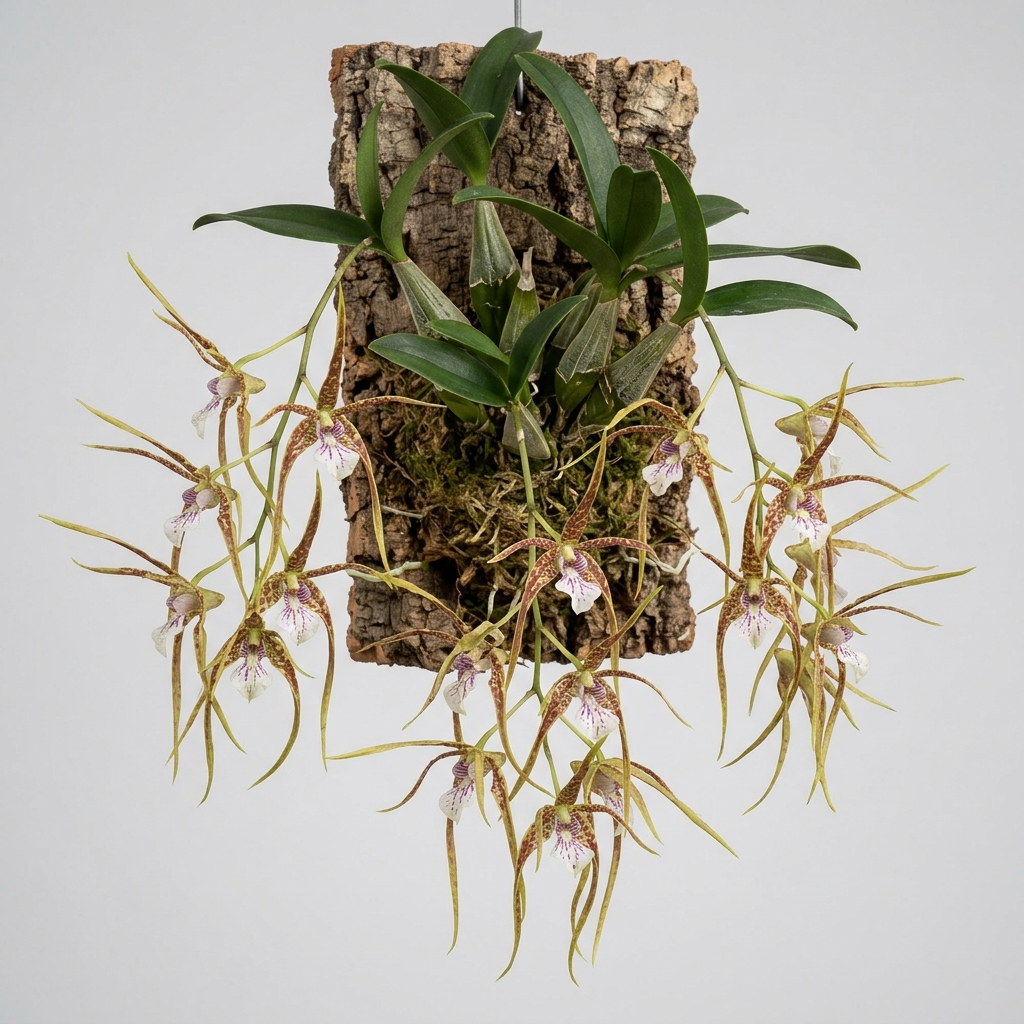
The Dendrobium Tetragonum orchid is a highly distinctive species native to the eastern coast of Australia, widely celebrated among collectors for its unusual growth habit and striking, spider-like blossoms. Known colloquially as the rectangular-stemmed dendrobium, this epiphytic orchid stands out due to its uniquely angled, four-sided pseudobulbs that taper dramatically at both ends. Growers value this plant not only for its architectural curiosity but also for its pendulous display of star-shaped flowers that bring a wild, natural aesthetic to any indoor or greenhouse collection.
Cultivating this species offers a rewarding experience for orchid enthusiasts who can accommodate its preference for high humidity and excellent air circulation. Unlike many upright-growing dendrobiums, its cascading growth habit makes it an useful selection for mounting on cork bark or tree fern plaques. When provided with the correct balance of filtered light and seasonal moisture, it rewards growers with highly fragrant, long-lasting blooms that showcase the diverse beauty of the orchid family.
💡 Did You Know?
The species name 'tetragonum' literally translates to 'four-angled' in Latin, directly referencing the orchid's highly unusual, square-shaped pseudobulbs. This structural adaptation helps the plant store water efficiently in its native Australian canopy while presenting a highly architectural silhouette that is virtually unique within the vast Dendrobium .
🌿 Botanical Overview
Dendrobium Tetragonum is primarily characterized by its unusual vegetative structure. The pseudobulbs are thin and wiry at the base, expanding into a prominent, square or four-angled cross-section before tapering again near the apex where the leaves emerge. This tetragonous shape is a key identifying feature that distinguishes it from almost all other members of the genus. The leaves are typically thin, leathery, and dark green, arranged in pairs or small clusters at the top of the pseudobulbs.
In its native Australian habitat, this orchid grows as an epiphyte or occasional lithophyte, clinging to tree trunks and rocks in moist, shaded forests. It has adapted to environments that experience high rainfall followed by periods of relative dryness, developing a robust root system capable of rapidly absorbing moisture and nutrients. Understanding this natural cycle is essential for replicating its growth requirements in a domestic setting.
🌸 Flower Characteristics
The flowers of Dendrobium Tetragonum are famously spider-like, featuring extremely elongated, narrow sepals and petals that drape gracefully downward. The base color of the blossoms ranges from pale green to creamy yellow, often heavily outlined or spotted with rich reddish-brown or bronze markings. The labellum, or lip, is relatively small, recurved, and white to cream-colored, adorned with distinct purple or red transverse bars. These flowers are produced on short racemes arising from the upper nodes of both old and new pseudobulbs, presenting a dramatic, dangling display.
Fragrance & Bloom Profile
This species is highly regarded for its strong, pleasant fragrance, which is often described as sweet, vanilla-like, or reminiscent of honey with a hint of spice. The scent is typically most intense during the morning hours when temperatures begin to rise and light levels increase. Individual flowers can last for several weeks under optimal conditions, and because the plant can bloom from both mature and newly matured pseudobulbs, a well-established specimen can remain in flower for an extended period.
Parentage & Hybrid Lineage
As a naturally occurring species rather than a man-made cultivar, Dendrobium Tetragonum does not have a hybrid parentage. However, it has been extensively utilized by orchid breeders to create highly successful primary and complex hybrids. Its influence is clearly visible in famous offspring, where it consistently passes on its star-shaped flower form, unique coloration, and robust growth habit. In standard horticultural literature, any specific cultivar selections of this species are valued for maintaining the wild integrity of the original Australian forest populations.
🌱 Growing Conditions
To thrive, this orchid requires bright, filtered light, mimicking the dappled canopy of its native forest home. Direct midday sunlight should be avoided as it can easily scorch the thin leaves, while excessive shade will result in weak, elongated pseudobulbs and poor flowering. It prefers intermediate to warm temperatures, ideally ranging from 65 to 80 degrees Fahrenheit during the day, with a distinct drop of 10 to 15 degrees at night to stimulate healthy growth and bud initiation. High humidity levels of 60% to 80% are crucial, accompanied by constant, gentle air movement to prevent fungal pathogens.
💡 Care Tip
Because of its pendulous growth habit, mount this orchid on a cork bark plaque rather than potting it. This mimics its natural epiphytic state, allowing the roots to breathe and dry rapidly after , which drastically reduces the risk of root rot.
Watering, Feeding & Potting Media
During the active growing season in spring and summer, Dendrobium Tetragonum requires frequent watering to keep the roots moist but never waterlogged. Because of its pendulous habit, mounting the plant on cork bark, tree fern slabs, or in open slatted baskets is highly recommended, as this allows the roots to dry rapidly after watering. If grown in pots, a highly porous, fast-draining medium such as coarse fir bark mixed with perlite or charcoal must be used. Apply a balanced, diluted orchid fertilizer weekly during the growing phase, flushing the medium with pure water once a month to prevent salt buildup.
Blooming Season & Care Notes
The primary blooming season typically occurs in winter and early spring, though sporadic flowering can happen at other times of the year depending on local growing conditions. As winter approaches, growers should gradually reduce watering and suspend fertilizing to allow the plant a semi-dormant rest period. This cooler, drier phase is essential for triggering the development of flower buds. Once flower spikes begin to emerge from the nodes, regular watering can be carefully resumed. Repotting or remounting should only be performed in late spring, immediately after flowering has finished and new root growth is visible.
⚠️ Common Issues
⚠️ Common Mistake
A frequent error is keeping the potting medium constantly wet during the winter months. Overwatering during this cool, semi-dormant phase prevents the plant from entering its necessary rest period, often leading to root decay and a complete failure to initiate flower buds.
- Root rot caused by overwatering or compacted, poorly draining potting media.
- Leaf scorch or yellowing due to exposure to direct, unfiltered sunlight.
- Bud blast, where developing buds dry up and drop, often triggered by sudden temperature fluctuations or low humidity.
- Dehydration, indicated by shriveled pseudobulbs, which can occur if mounted plants are not watered frequently enough during hot weather.
- Pests such as spider mites, scale, and mealybugs, which tend to hide in the crevices of the angled pseudobulbs and under leaves.
❓ Frequently Asked Questions
Why are the pseudobulbs on my Dendrobium Tetragonum shriveling?
Shriveling pseudobulbs are typically a sign of dehydration, which can be caused by underwatering or, paradoxically, root rot. If the roots have rotted due to soggy media, they can no longer absorb water, leading to dehydration. Check the root system first; if healthy, increase watering frequency, especially for mounted specimens.
Can I grow Dendrobium Tetragonum in a standard plastic pot?
While it is possible to grow this orchid in a pot, it is not ideal due to its pendulous growth habit and need for rapid drying. If you must use a pot, choose a shallow clay pot or orchid basket with a very coarse, free-draining bark mix to ensure the roots receive plenty of oxygen and do not remain wet.
How do I trigger my Dendrobium Tetragonum to bloom?
To encourage abundant blooming, provide a distinct winter rest period. Reduce watering frequency, stop fertilizing, and allow the plant to experience cooler night temperatures (around 50 to 55 degrees Fahrenheit) for several weeks in late autumn. This environmental cue is essential for flower bud initiation.
Does this orchid require high humidity to survive?
Yes, Dendrobium Tetragonum thrives in high humidity, ideally between 60% and 80%. If grown indoors where humidity is low, use a humidity tray, group plants together, or use a humidifier. Adequate air circulation is equally important to prevent stagnant air from causing fungal issues in high humidity.
⭐ Final Growing Notes
Dendrobium Tetragonum remains one of the most captivating species for orchid collectors seeking something beyond the standard hybrid forms. Its architectural, four-sided pseudobulbs and delicate, spider-like blossoms offer an exotic appeal that rewards attentive care. By replicating its native Australian forest conditions—specifically through mounting, maintaining high humidity, and providing a cooler winter rest—growers can enjoy the unique form and delightful fragrance of this remarkable orchid for many years.
⚕️ Health, Safety & Edibility
Understanding how a plant interacts with people, pets, and the surrounding environment is part of responsible cultivation. This section uses conservative, general guidance and does not replace professional medical or veterinary advice.
Human Safety: No published evidence currently identifies species-specific toxicity concerns for Dendrobium Tetragonum during normal handling. As with most ornamental plants, it should not be intentionally consumed.
Pet Safety: Published information does not indicate that this orchid commonly poses a toxicity concern for cats or dogs. However, chewing leaves, flowers, roots, or potting media may still cause mild digestive upset.
Edibility: This orchid is cultivated for ornamental display rather than food. Ornamental plants may carry fertilizers, pesticides, or other horticultural treatments that make them unsuitable for consumption.
Skin Contact: Routine handling is not generally associated with skin irritation. Gardeners with sensitive skin may prefer wearing gloves when repotting, pruning, or handling potting media.
🌱 Propagation Tip
Propagate mature specimens by division during spring repotting, ensuring each new division has at least three to four healthy, mature pseudobulbs with active lead growth. Avoid dividing the plant too frequently, as larger clumps produce far more spectacular floral displays.
⭐ Expert Advice
To maximize bloom production, ensure the orchid experiences a drop of 10 to 15 degrees Fahrenheit between day and night during autumn. This thermal contrast, combined with reduced , acts as the primary physiological trigger for the development of its fragrant, spider-like flower spikes.

Leave A Comment