
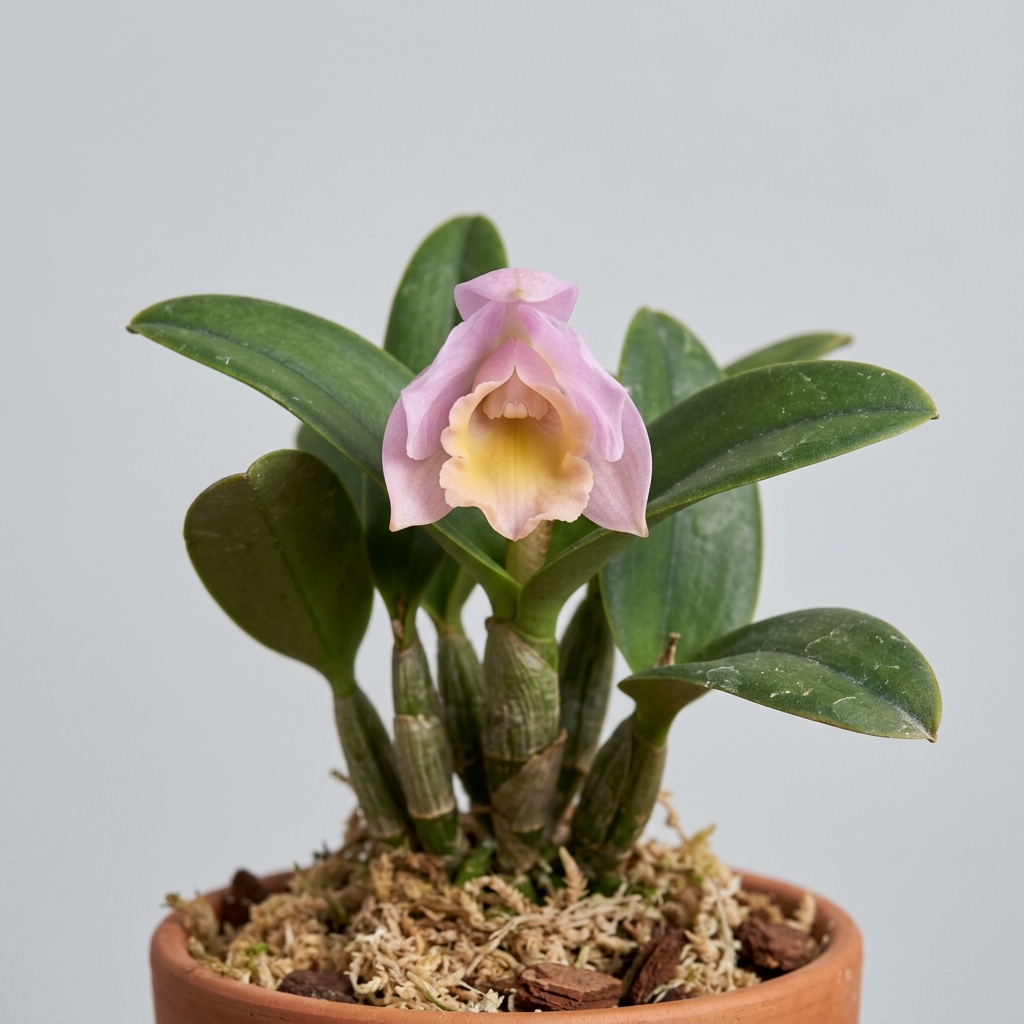
Cattleya Alaorii is a highly prized miniature orchid species celebrated by collectors for its compact growth habit and delicate, cup-shaped blossoms. Originally native to the humid coastal forests of Brazil, this charming epiphyte belongs to the renowned Cattleya genus and offers a perfect solution for growers with limited space. Its diminutive size makes it an useful selection for terrarium culture, windowsill growing, or specialized under-lights setups.
Unlike its larger, more flamboyant relatives, this orchid possesses a subtle elegance defined by soft pastel blooms that nestle closely against its leathery, deep green foliage. Orchid enthusiasts value the plant not only for its space-saving dimensions but also for its relatively forgiving nature when provided with consistent humidity and appropriate moisture. It serves as an excellent introduction to miniature Cattleya species for intermediate hobbyists looking to expand their collections.
💡 Did You Know?
Unlike many of its larger relatives in the Cattleya , Cattleya Alaorii produces flowers that do not fully open, maintaining a charming, cup-like shape throughout their bloom cycle. This unique botanical trait helps protect the delicate inner column and reproductive structures from heavy rainfall in its native Brazilian rainforest canopy.
🌿 Botanical Overview
Cattleya Alaorii is characterized by its distinctively small stature, rarely exceeding a few inches in height. The plant produces tightly clustered, cylindrical pseudobulbs, each topped with a single, thick, elliptic leaf. These leathery leaves are designed to conserve moisture in its native canopy habitat, where it grows as an epiphyte on moss-covered tree trunks.
In its native Brazilian environment, the species thrives in warm, humid conditions with constant air movement. Because of its compact rhizome development, the plant forms neat, dense clumps over time. This growth habit makes it highly manageable, allowing growers to maintain mature, flowering-size specimens in pots as small as two to three inches.
🌸 Flower Characteristics
The blossoms of Cattleya Alaorii are notable for their unique, cup-like form, as the petals and sepals typically do not open completely flat. This semi-closed presentation gives the flowers a delicate, bell-shaped appearance. The flowers generally measure between one and two inches in diameter and emerge from the center of the developing new growth, often appearing nestled against the leaf base.
Coloration is typically a soft, pale pink to lavender-pink, though near-white forms are also highly sought after by collectors. The lip, or labellum, is tubular and features a gently ruffled margin, often highlighted by a soft yellow or cream-colored throat. Despite the small size of the plant, the flowers are remarkably proportional and present a striking contrast against the dark green foliage.
Fragrance & Bloom Profile
While some growers report a faint, sweet, or slightly citrusy scent, the fragrance of Cattleya Alaorii is generally subtle and may not be highly noticeable in all growing environments. The strength of the scent is often cultivar-dependent and influenced by ambient temperature, humidity, and light levels during the blooming cycle.
A single pseudobulb typically produces one to two flowers per bloom cycle. The blossoms are relatively long-lasting for a miniature species, often remaining fresh for three to four weeks under optimal conditions. Because the flowers sit low on the foliage rather than on tall spikes, they create an intimate display that invites close inspection.
Parentage & Hybrid Lineage
Cattleya Alaorii is recognized as a distinct species rather than a man-made hybrid, though it has been widely used in modern breeding programs to introduce compact growth habits to larger Cattleya hybrids. In older literature, it was classified under the genus Laelia before botanical reclassification placed it within Cattleya.
When used in hybridization, it frequently passes down its miniature size, round flower shape, and pastel coloration. Because its genetic history is rooted in a specific wild origin, maintaining pure species lines through selfing or sibling crosses is a priority for conservation-minded growers, while hybridizers continue to value it for creating space-saving mini-catts.
🌱 Growing Conditions
To cultivate Cattleya Alaorii successfully, growers should aim to replicate its native humid forest canopy. It prefers moderate, filtered light, similar to the levels required by Phalaenopsis or slightly brighter, but it should be protected from direct, midday sunlight which can easily scorch the tender leaves. Leaf color is a good indicator of light quality; a healthy plant should maintain a medium, grass-green hue.
💡 Care Tip
To keep your orchid thriving, place it in a location with strong, indirect and constant, gentle air movement. If the leaves turn a dark, forest green, the plant needs more ; if they turn yellow or develop red tinting, the is too intense.
Temperature ranges should ideally fall within the intermediate to warm category, with daytime temperatures between 70 and 85 degrees Fahrenheit and a slight drop at night to stimulate healthy growth and eventual blooming. Consistent, gentle air circulation is vital to prevent stagnant air pockets, which can lead to fungal pathogens in high-humidity setups.
Watering, Feeding & Potting Media
Watering practices must balance the plant’s need for moisture with its requirement for rapid drainage. When grown in pots, a mix of fine-grade fir bark, perlite, and charcoal works well, though many growers prefer high-quality New Zealand sphagnum moss to maintain consistent moisture around the fine roots. Alternatively, mounting the orchid on cork bark or tree fern plaques mimics its natural epiphytic habit beautifully, provided the grower can supply daily misting.
During the active growing season, apply a balanced, highly diluted orchid fertilizer weekly, often referred to as weakly, weekly. Flush the growing medium thoroughly with pure water once a month to prevent harmful mineral salt buildup, which can damage the sensitive root tips. Reduce watering and halt fertilization slightly during the cooler winter months when growth naturally slows.
Blooming Season & Care Notes
The primary blooming season for Cattleya Alaorii typically occurs in late summer through autumn, though well-established plants under stable indoor conditions may bloom at variable times of the year. The flower buds develop within the protection of the emerging leaf sheath on new pseudobulbs.
Once the flowers fade, avoid cutting the green pseudobulb, as it continues to store water and nutrients for the plant. Repotting or remounting should only be performed when new root growth is visible at the base of the newest pseudobulb, ensuring the plant establishes quickly in its new medium with minimal transplant shock.
⚠️ Common Issues
⚠️ Common Mistake
A common error is potting this miniature epiphyte in a container that is too large. Excess holds too much moisture for too long, which quickly suffocates and rots the fine root system of this compact species.
- Root Rot:
Caused by overwatering or compacted, decomposing potting media that suffocates the root system. - Dehydration:
Indicated by shriveled pseudobulbs and wrinkled leaves, often due to underwatering or a loss of functional roots. - Bud Blast:
Occurs when sudden changes in temperature, low humidity, or drafts cause developing buds to yellow and drop before opening. - Pests:
Scale insects and mealybugs can occasionally hide in the tight crevices at the base of the pseudobulbs or under the dry sheaths. - Fungal Leaf Spotting: Triggered by high humidity combined with poor air circulation, resulting in unsightly dark spots on the foliage.
❓ Frequently Asked Questions
Can Cattleya Alaorii be grown on a windowsill?
Yes, this miniature orchid is well-suited for windowsill cultivation. A east-facing window that receives bright, filtered morning light is ideal, provided you maintain adequate humidity around the plant using a pebble tray or room humidifier.
How often should I water a mounted Cattleya Alaorii?
Mounted specimens dry out much faster than potted ones and typically require daily watering or heavy misting in average household humidity. During hot summer weather, they may benefit from being watered twice a day.
Why are the pseudobulbs on my orchid shriveling?
Shriveled pseudobulbs usually indicate dehydration. This can be caused by simple underwatering or, conversely, by overwatering which has rotted the roots, leaving the plant unable to absorb moisture. Inspect the roots to determine the cause.
Does this orchid require a dry winter rest?
While it does not require a severe, bone-dry winter rest, you should reduce watering frequency and withhold fertilizer during the cooler winter months when the plant is not actively growing, allowing the medium to dry out slightly more between waterings.
⭐ Final Growing Notes
Cattleya Alaorii remains a jewel among miniature orchids, offering the classic beauty of the Cattleya alliance in a remarkably compact package. By focusing on high humidity, moderate light, and a well-aerated root zone, growers can enjoy the delicate, cup-shaped blooms of this Brazilian treasure year after year. Its manageable size and charming presentation make it a rewarding addition to any indoor orchid collection.
⚕️ Health, Safety & Edibility
Understanding how a plant interacts with people, pets, and the surrounding environment is part of responsible cultivation. This section uses conservative, general guidance and does not replace professional medical or veterinary advice.
Human Safety: No published evidence currently identifies species-specific toxicity concerns for Cattleya Alaorii during normal handling. As with most ornamental plants, it should not be intentionally consumed.
Pet Safety: Published information does not indicate that this orchid commonly poses a toxicity concern for cats or dogs. However, chewing leaves, flowers, roots, or potting media may still cause mild digestive upset.
Edibility: This orchid is cultivated for ornamental display rather than food. Ornamental plants may carry fertilizers, pesticides, or other horticultural treatments that make them unsuitable for consumption.
Skin Contact: Routine handling is not generally associated with skin irritation. Gardeners with sensitive skin may prefer wearing gloves when repotting, pruning, or handling potting media.
🌱 Propagation Tip
Propagation is best achieved by division during repotting, ensuring each new division has at least three to four healthy, mature pseudobulbs with active root initials. Avoid dividing the plant too frequently, as larger, established clumps produce more abundant blooms.
⭐ Expert Advice
For the best aesthetic and cultural results, try mounting this species on a cork bark plaque with a small pad of high-quality sphagnum moss. This closely mimics its natural growth habit and prevents the root rot issues often associated with traditional pot culture.

Leave A Comment