
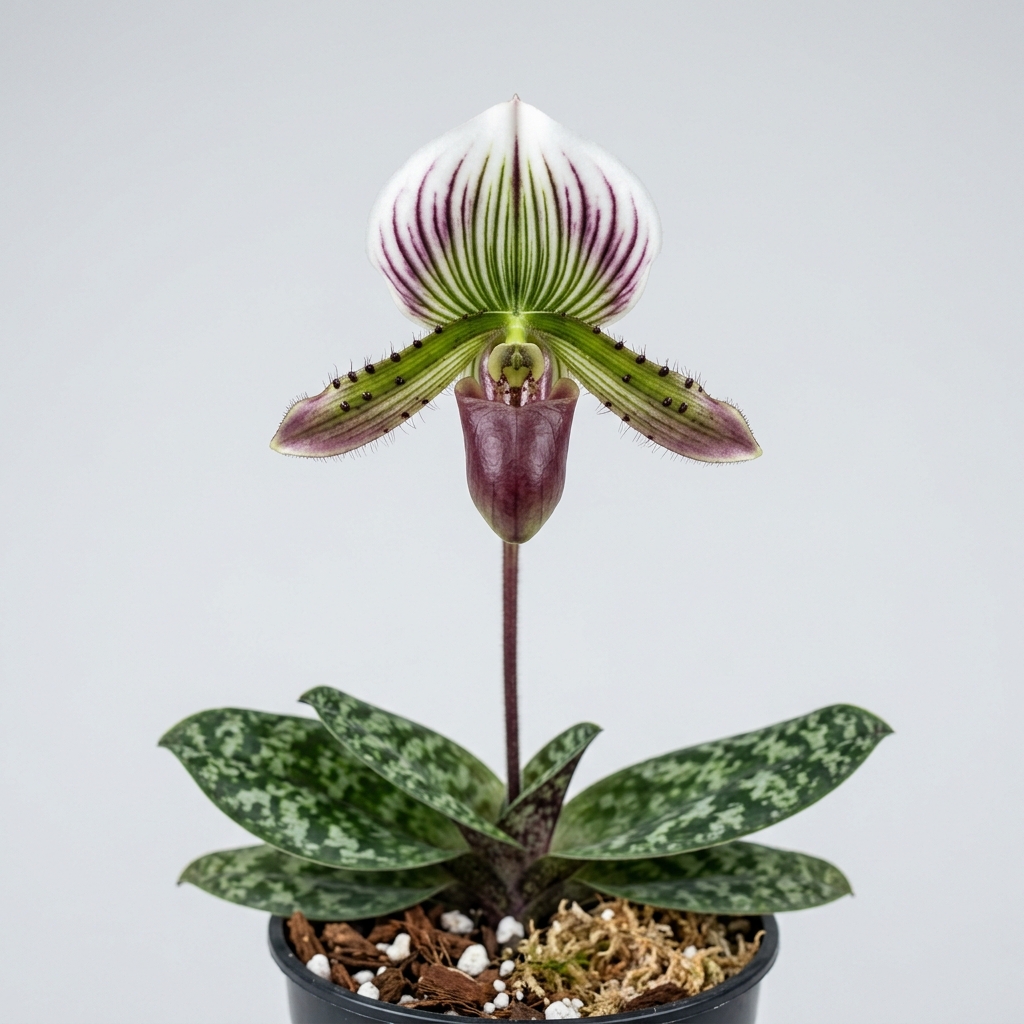
Paphiopedilum Lawrenceanum is a highly esteemed species of slipper orchid native to the tropical rainforests of Borneo. Renowned for its striking, exotic flowers and beautifully patterned foliage, this species has captivated orchid enthusiasts and collectors for generations. It belongs to the subgenus Sigmatopetalum, a group celebrated for its mottled leaves and dramatic, solitary blooms that stand proudly on tall, upright spikes.
Growers value Paphiopedilum Lawrenceanum not only for its ornamental appeal but also for its relatively straightforward care requirements compared to other slipper orchids. Its compact growth habit makes it an excellent choice for indoor cultivation on windowsills or under artificial lights, where its unique foliage provides year-round visual interest even when the plant is not in bloom.
💡 Did You Know?
Paphiopedilum Lawrenceanum is one of the primary ancestors of the famous Maudiae-type slipper orchid hybrids. Its distinctive mottled foliage and heavily striped dorsal sepal have been passed down through generations of hybrids, making it a cornerstone of modern slipper orchid breeding.
🌿 Botanical Overview
Paphiopedilum Lawrenceanum is native to the island of Borneo, where it typically grows as a terrestrial or lithophytic plant in the leaf litter of moist, shaded forests. It is found at relatively low elevations, which dictates its preference for warm to intermediate temperatures. The plant features a fan-shaped growth habit with striking, tessellated leaves that display a beautiful mosaic of light and dark green patterns.
Unlike epiphytic orchids that possess water-storing pseudobulbs, Paphiopedilum Lawrenceanum relies on its thick, fleshy roots and succulent leaves to sustain itself. This botanical structure means the plant has limited drought tolerance and requires a consistent environment to thrive. Its growth is sympodial, slowly producing new leads from the base of the mature fans over time.
🌸 Flower Characteristics
The flower of Paphiopedilum Lawrenceanum is a masterpiece of natural architecture. Each mature growth produces a single, long, upright inflorescence that can reach up to 12 to 18 inches in height, presenting the flower well above the foliage. The blossom itself is large, often measuring 3 to 4 inches across, and is dominated by a broad, flat dorsal sepal that is white with striking vertical stripes of green and deep purple-maroon.
The lateral petals extend horizontally, slightly drooping, and are adorned with distinctive dark warts and fine hairs along their margins. The labellum, or lip, is modified into a deep, glossy, helmet-shaped pouch of a rich brownish-purple hue. This pouch serves an evolutionary purpose, guiding potential pollinators toward the reproductive columns to ensure successful pollination.
Fragrance & Bloom Profile
While some orchid species are prized for their intense perfumes, Paphiopedilum Lawrenceanum is not known for its scent. Fragrance is not consistently documented in this species, and most growers report that the flowers are entirely unscented. However, what it lacks in aroma, it more than makes up for in visual impact and longevity.
A single bloom can remain pristine on the plant for six to eight weeks, and sometimes even longer under optimal environmental conditions. The sturdy stem and durable flower substance ensure that the display remains vibrant throughout its blooming cycle, making it a highly rewarding subject for display in the home or greenhouse.
Parentage & Hybrid Lineage
As a true species, Paphiopedilum Lawrenceanum does not have hybrid parentage, but its contribution to orchid hybridization is monumental. It is one of the primary species used to create the classic Maudiae-type hybrids, which are among the most popular and widely grown slipper orchids in the world. By crossing Paphiopedilum Lawrenceanum with other species such as Paphiopedilum callosum, hybridizers have created robust, easy-to-grow plants that inherit the striking striped dorsal sepal and mottled foliage of their parents.
Because of its historical significance and desirable traits, this species remains highly sought after by breeders looking to introduce strong form, rich coloration, and vigorous growth habits into new slipper orchid lines. When purchasing, growers should look for plants from reputable nurseries to ensure they are obtaining a true species rather than a complex hybrid.
🌱 Growing Conditions
To cultivate Paphiopedilum Lawrenceanum successfully, one must replicate its native tropical forest floor environment. It thrives in low to medium indirect light, similar to the light levels preferred by Phalaenopsis orchids. Direct sunlight should be strictly avoided, as it can easily scorch the sensitive mottled leaves. An east-facing window or a shaded south-facing window is often ideal.
💡 Care Tip
Keep this orchid in shaded conditions where it receives bright, filtered but never direct sunlight. If the mottled leaves begin to fade or turn pale green, the plant may be receiving too much , whereas dark, dull leaves can indicate a need for slightly brighter conditions.
Temperature: wise, this species prefers warm to intermediate conditions. Daytime temperatures should ideally range between 75°F and 85°F, with a slight drop at night to around 60°F to 65°F. Maintaining a relative humidity level of 50% to 70% is crucial for preventing leaf tip burn and supporting healthy root development. Good, gentle air movement is also essential to prevent stagnant air, which can encourage fungal pathogens.
Watering, Feeding & Potting Media
Watering is the most critical aspect of Paphiopedilum Lawrenceanum care. Because these plants lack pseudobulbs, they should never be allowed to dry out completely. The potting medium should remain evenly moist but not soggy. Water thoroughly when the top half-inch of the medium begins to feel dry to the touch, using tepid water to avoid shocking the roots.
Feeding should be light and consistent. Use a balanced, water-soluble orchid fertilizer diluted to one-quarter strength every two to three waterings during the active growing season. Flush the pot with pure water once a month to wash away accumulated fertilizer salts, which can damage the sensitive root tips. The ideal potting medium is a fine-grade fir bark mix blended with perlite, charcoal, and a small amount of sphagnum moss to retain moisture while ensuring excellent drainage.
Blooming Season & Care Notes
Paphiopedilum Lawrenceanum typically initiates its blooming cycle in the spring and summer, though well-grown plants may occasionally bloom at other times of the year. The development of the flower spike is a slow process, often taking several weeks from the first appearance of the bud in the center of the leaf fan to the fully opened flower. Patience is key during this period.
Once the bloom has faded, the flower spike should be cut back close to the base of the leaf fan. The mature fan that produced the flower will not bloom again; instead, the plant will redirect its energy into producing new growths from the base. Repotting is best performed every one to two years in the spring, just after flowering has finished, to ensure the potting medium remains fresh and free-draining.
⚠️ Common Issues
⚠️ Common Mistake
Allowing the potting medium to dry out completely is a common mistake that can quickly damage the root system. Unlike orchids with pseudobulbs, Paphiopedilum species lack water-storage organs and require consistent, even moisture to prevent leaf desiccation and root loss.
- Root Rot:
Caused by overwatering or compacted, decomposing potting media that suffocates the roots. Ensure excellent drainage and repot regularly. - Mealybugs and Scale: These pests often hide in the tight crevices at the base of the leaf fans. Treat promptly with insecticidal soap or horticultural oil.
- Leaf Spotting: Fungal or bacterial spots can occur if water sits on the foliage overnight or if air circulation is inadequate. Always water early in the day.
- Bud Blast:
The premature drying and dropping of flower buds can be caused by sudden changes in temperature, low humidity, or drafts.
❓ Frequently Asked Questions
How often should I water my Paphiopedilum Lawrenceanum?
Watering frequency depends on your home environment, but generally, this orchid should be watered every 5 to 7 days. The goal is to keep the potting medium evenly moist but never waterlogged. Always check the moisture level of the mix before watering.
Can I grow Paphiopedilum Lawrenceanum under LED lights?
Yes, this species adapts exceptionally well to artificial lighting. Place the plant under broad-spectrum LED grow lights, keeping them at a moderate distance to avoid overheating or bleaching the mottled foliage. Aim for a 12-hour photoperiod.
Why are the tips of my orchid’s leaves turning brown?
Brown leaf tips are usually a sign of low humidity or a buildup of fertilizer salts in the potting medium. Increase the humidity around the plant using a tray or humidifier, and flush the pot thoroughly with pure water to leach out excess salts.
Is Paphiopedilum Lawrenceanum suitable for beginners?
While it requires more attention to watering than some common hybrids, it is generally considered one of the easier Paphiopedilum species to grow. If you can successfully grow Phalaenopsis orchids, you can likely succeed with this species by adjusting your watering routine.
⭐ Final Growing Notes
Paphiopedilum Lawrenceanum remains a jewel of the orchid world, offering a captivating blend of dramatic floral architecture and exquisite foliage. By providing consistent moisture, moderate humidity, and shaded light, growers can enjoy the enduring beauty of this Bornean species for many years. It is a rewarding addition to any collection, bridging the gap between historical botanical heritage and modern indoor gardening.
⚕️ Health, Safety & Edibility
Understanding how a plant interacts with people, pets, and the surrounding environment is part of responsible cultivation. This section uses conservative, general guidance and does not replace professional medical or veterinary advice.
Human Safety: No published evidence currently identifies species-specific toxicity concerns for Paphiopedilum Lawrenceanum during normal handling. As with most ornamental plants, it should not be intentionally consumed.
Pet Safety: Published information does not indicate that this orchid commonly poses a toxicity concern for cats or dogs. However, chewing leaves, flowers, roots, or potting media may still cause mild digestive upset.
Edibility: This orchid is cultivated for ornamental display rather than food. Ornamental plants may carry fertilizers, pesticides, or other horticultural treatments that make them unsuitable for consumption.
Skin Contact: Routine handling is not generally associated with skin irritation. Gardeners with sensitive skin may prefer wearing gloves when repotting, pruning, or handling potting media.
🌱 Propagation Tip
Slipper orchids like Paphiopedilum Lawrenceanum cannot be propagated by leaf or stem cuttings. Instead, propagate by division during repotting, ensuring each new division has at least three mature, healthy growths with an active root system to support successful establishment.
⭐ Expert Advice
When repotting, select a fine-grade bark mix blended with perlite and charcoal to maintain moisture while ensuring excellent drainage. Repot every one to two years immediately after the blooming cycle completes to refresh the media before it begins to decompose and suffocate the roots.

Leave A Comment