
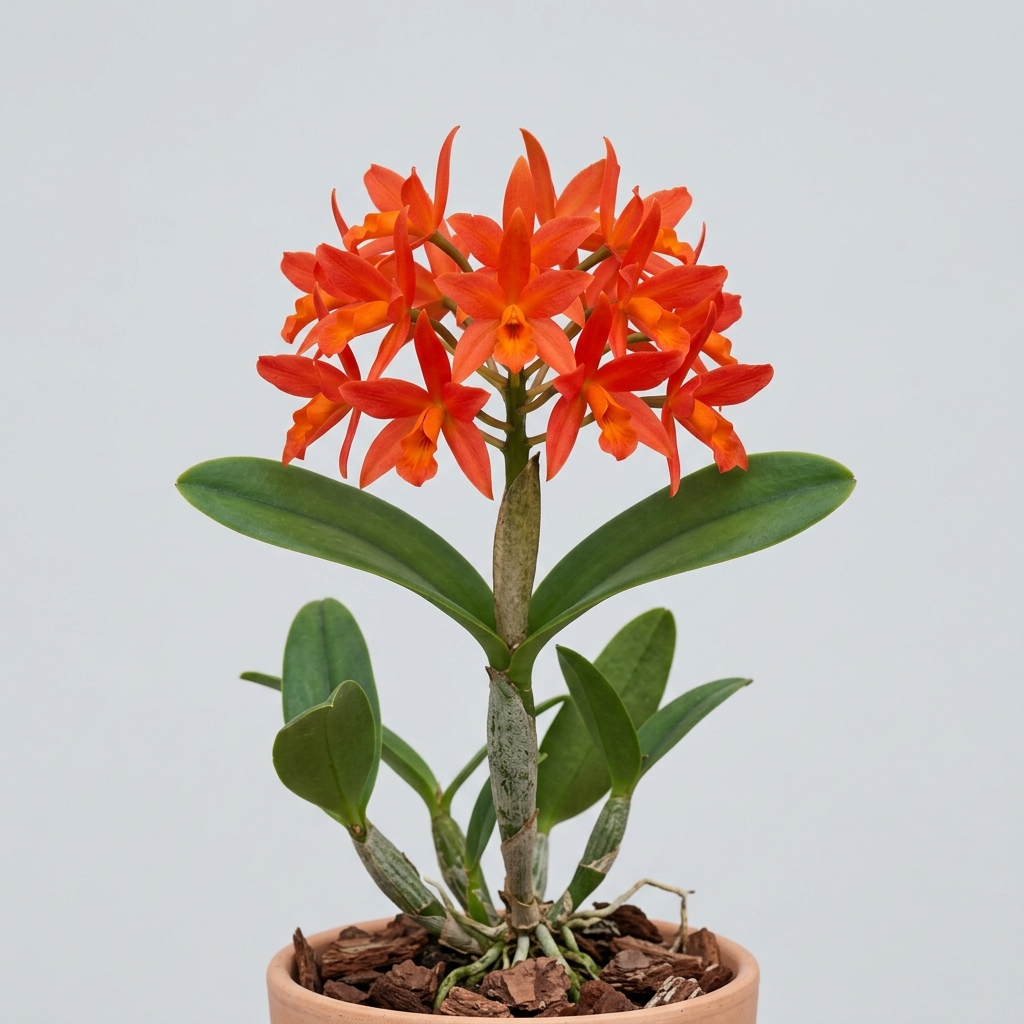
Cattleya Aurantiaca, also widely recognized in modern taxonomy as Guarianthe aurantiaca, is a highly celebrated orchid species valued for its brilliant, fiery orange blossoms. Native to the seasonally dry forests of Mexico and Central America, this resilient epiphyte brings a striking splash of warm color to orchid collections. Its compact growth habit and cluster-blooming nature make it an exceptional choice for both intermediate growers and dedicated collectors seeking reliable spring color.
Unlike many of its larger, pastel-toned relatives in the Cattleya alliance, this orchid produces dense heads of star-shaped flowers that command attention. Its robust constitution and adaptability to typical household and greenhouse conditions have cemented its status as a foundational species in orange-flowered orchid hybridization. Cultivators appreciate its vigorous root system and its ability to thrive when mounted or grown in well-draining pots.
💡 Did You Know?
Cattleya Aurantiaca is the only species within its group that frequently exhibits cleistogamy, a botanical phenomenon where flowers self-pollinate and set seed without ever fully opening. To avoid this, selective growers always propagate open-flowered clones vegetatively through division rather than seed.
🌿 Botanical Overview
Cattleya Aurantiaca features slender, club-shaped pseudobulbs that typically reach twelve to fifteen inches in height. Each pseudobulb is topped by two thick, leathery, oblong leaves that are deep green and capable of handling high light levels. In its natural habitat, this species grows lithophytically on rocky cliffs or epiphytically on deciduous trees, experiencing distinct wet and dry seasons.
The species is notable for its evolutionary transition to the genus Guarianthe, a move based on molecular data that distinguishes it from true South American Cattleya species. Despite this botanical reclassification, it remains widely labeled and traded under its traditional Cattleya designation in commercial horticulture. Its growth habit is robust, producing multiple leads over time to form impressive specimen plants.
🌸 Flower Characteristics
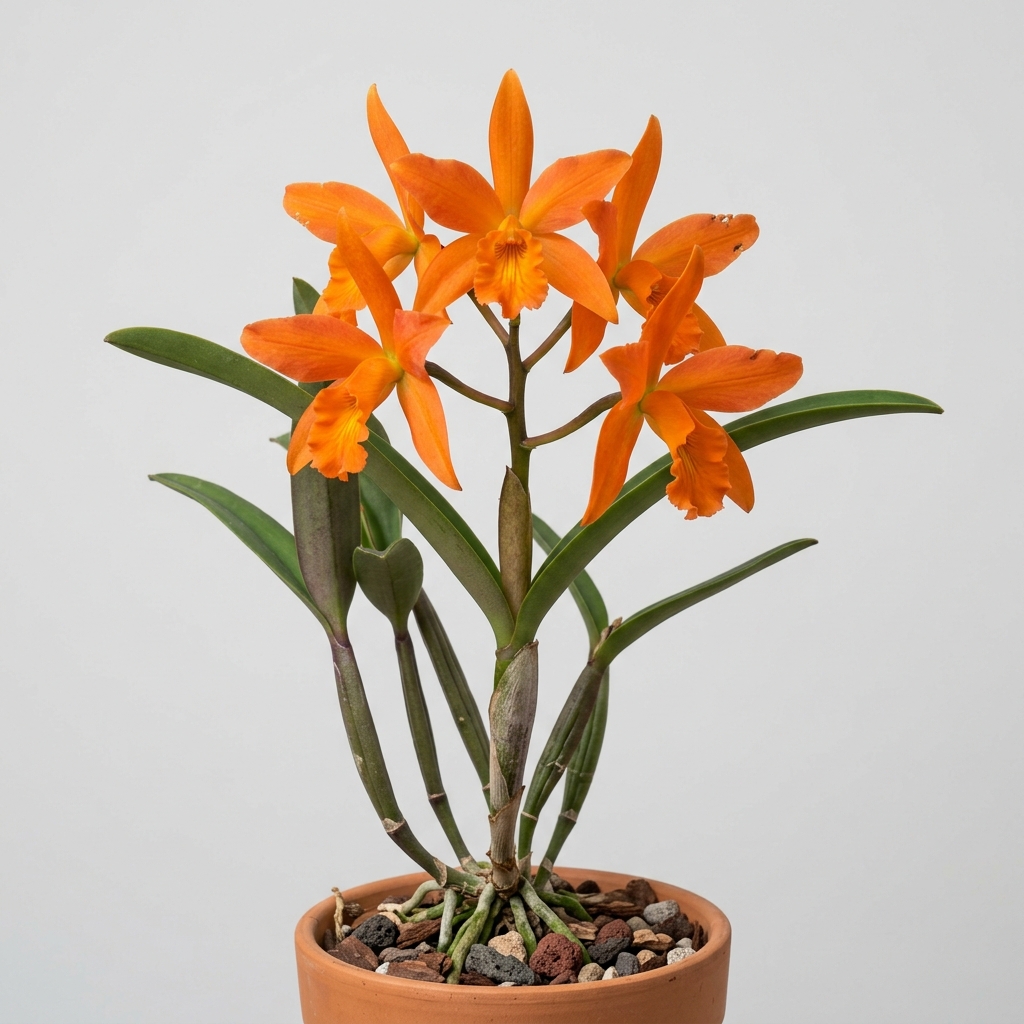
The blossoms of Cattleya Aurantiaca are relatively small, usually measuring between one and two inches in diameter, but they make up for their size through sheer numbers. A single upright inflorescence can bear anywhere from five to over twenty flowers clustered tightly together. The petals and sepals are narrow, lanceolate, and display a brilliant, glossy orange to reddish-orange hue.
The lip is small, rolled around the column, and often features subtle, dark red or brown striations deep within the throat. Growers should note that some wild strains exhibit cleistogamy, a trait where the flowers self-pollinate and fade without fully opening. Horticultural selections, however, are specifically bred to ensure fully open, long-lasting floral displays.
Fragrance & Bloom Profile
While many members of the Cattleya alliance are famous for their intense, perfume-like scents, Cattleya Aurantiaca is generally considered to have little to no fragrance. Some growers report a very faint, sweet, or grassy aroma when the plants are exposed to warm, bright midday sun, but this is highly variable and cultivar-dependent.
The primary appeal of this orchid lies in its visual impact rather than its olfactory profile. The flowers possess a heavy, waxy substance that contributes to their longevity, often remaining pristine for four to six weeks if kept in cool, dry conditions after opening.
Parentage & Hybrid Lineage
As a naturally occurring species rather than a man-made hybrid, Cattleya Aurantiaca carries a pure genetic lineage. However, its role in orchid breeding is monumental. It is the primary source of yellow, orange, and red coloration in modern Cattleya hybrids, passing on its intense carotenoid pigments to its progeny.
When crossed with larger-flowered species, it reduces the overall plant size while increasing the flower count per spike. Famous primary hybrids, such as Cattleya Guatemalensis (a natural hybrid with Cattleya skinneri), showcase the dominant orange and pink blending that this species reliably introduces to its offspring.
🌱 Growing Conditions
To cultivate Cattleya Aurantiaca successfully, provide bright, filtered light. It tolerates more direct morning sun than many other orchids, and its leaves should ideally maintain a light, grassy-green color. If the foliage turns dark green, the plant is likely receiving insufficient light to trigger blooming.
💡 Care Tip
Provide this orchid with bright, filtered equivalent to cattleya-level conditions. The foliage should maintain a , grassy-green color; dark green leaves indicate insufficient , which will prevent the plant from producing its signature orange blooms.
Temperature requirements are intermediate to warm, with daytime temperatures ranging from seventy-five to eighty-five degrees Fahrenheit, and a night drop to sixty or sixty-five degrees. Good air movement is essential at all times to prevent leaf burn under high light and to discourage fungal pathogens from settling on the foliage.
Watering, Feeding & Potting Media
During the active growing season in spring and summer, water the orchid copiously, allowing the potting medium to dry out almost completely between waterings. A coarse, open medium such as medium-grade fir bark mixed with charcoal and perlite is ideal, as it ensures rapid drainage and excellent aeration around the roots.
Apply a balanced orchid fertilizer weekly at one-quarter strength during periods of active vegetative growth. As autumn approaches, gradually reduce both watering frequency and fertilizer. This mimics the dry winter rest period of its native habitat, which is crucial for consolidating energy and initiating flower buds.
Blooming Season & Care Notes
Cattleya Aurantiaca typically blooms in late winter to early spring, with buds emerging from a green sheath at the apex of the mature pseudobulb. Once the flower spike begins to push through the sheath, maintain stable environmental conditions and avoid moving the plant to prevent bud drop.
Repotting should only be performed when new root growth emerges from the base of the newest pseudobulb, usually immediately after the flowering cycle concludes. Avoid disturbing the root system unnecessarily, as this species can take a season to recover if repotted at the wrong time or if its roots are severely damaged.
⚠️ Common Issues
⚠️ Common Mistake
The most common mistake is failing to provide a distinct dry rest period during the winter months. Overwatering during this dormant phase leads to root rot and prevents the orchid from developing flower buds inside the sheath.
- Bud Blast:
Sudden temperature drops, low humidity, or drafts can cause developing buds to yellow and drop before opening. - Root Rot:
Overwatering or using a degraded, water-retaining potting medium will quickly suffocate and rot the thick, sensitive roots. - Scale and Mealybugs: These pests often hide in the dry sheaths surrounding the pseudobulbs; regular inspection and removal of dead sheaths help prevent infestations.
- Cleistogamy: Purchasing unflowered seed-grown plants may occasionally result in specimens whose flowers self-pollinate and wither prematurely.
❓ Frequently Asked Questions
Why are the flowers on my Cattleya Aurantiaca falling off before they fully open?
This is often due to cleistogamy, a genetic trait found in some wild strains of this species where the flowers self-pollinate and close before opening. To avoid this, purchase established, vegetatively propagated cultivars known for open flowers, and ensure the plant is not subjected to extreme low humidity or temperature stress during bud development.
How much light does Cattleya Aurantiaca need compared to other orchids?
It requires bright, filtered light, similar to or slightly higher than standard Cattleya orchids. The leaves should be a light, healthy green. If they are dark green, the light is too low, which will severely limit or prevent blooming.
Can I grow Cattleya Aurantiaca on a mount instead of a pot?
Yes, this species performs exceptionally well when mounted on cork bark or tree fern plaques. Because it experiences a dry season in nature, mounting allows the roots to dry rapidly. However, mounted plants require more frequent watering during the hot summer months.
What should I do with the sheath after the flowers fade?
Once the flowers have faded, cut the old flower spike back close to the base of the sheath. Leave the sheath itself intact unless it begins to turn black or yellow, indicating rot, in which case it should be carefully removed to protect the pseudobulb.
⭐ Final Growing Notes
Cattleya Aurantiaca remains a classic and rewarding orchid that bridges the gap between wild species charm and reliable greenhouse performance. By respecting its seasonal need for a dry winter rest and providing bright, buoyant conditions, growers are rewarded year after year with an unmatched display of vibrant orange blossoms.
⚕️ Health, Safety & Edibility
Understanding how a plant interacts with people, pets, and the surrounding environment is part of responsible cultivation. This section uses conservative, general guidance and does not replace professional medical or veterinary advice.
Human Safety: No published evidence currently identifies species-specific toxicity concerns for Cattleya Aurantiaca during normal handling. As with most ornamental plants, it should not be intentionally consumed.
Pet Safety: Published information does not indicate that this orchid commonly poses a toxicity concern for cats or dogs. However, chewing leaves, flowers, roots, or potting media may still cause mild digestive upset.
Edibility: This orchid is cultivated for ornamental display rather than food. Ornamental plants may carry fertilizers, pesticides, or other horticultural treatments that make them unsuitable for consumption.
Skin Contact: Routine handling is not generally associated with skin irritation. Gardeners with sensitive skin may prefer wearing gloves when repotting, pruning, or handling potting media.
🌱 Propagation Tip
Propagate mature specimens by division during the spring, ensuring each new division has at least three to four healthy, mature pseudobulbs. Only divide the plant when new root tips are actively emerging from the base of the lead pseudobulb.
⭐ Expert Advice
Keep a close eye on the dry papery sheaths that cover the pseudobulbs. While they protect emerging growth, they can also harbor scale insects. Gently peel away completely dry, loose sheaths to eliminate pest hiding spots without damaging the plant.

Leave A Comment