

Cattleya Aurea stands as one of the most magnificent and historically significant yellow-flowered orchids in the horticultural world. Highly prized by collectors and hybridizers alike, this epiphytic orchid is celebrated for its large, striking blooms that showcase a dramatic contrast between golden-yellow segments and an intricately patterned lip. Its robust growth habit and commanding presence make it a centerpiece in any serious orchid collection.
Originating from the tropical forests of South America, particularly Colombia, this orchid has played a pivotal role in breeding modern yellow Cattleya hybrids. While it can be somewhat more demanding than standard commercial hybrids, providing the correct balance of light, warmth, and wet-to-dry watering cycles rewards growers with an unparalleled floral display.
💡 Did You Know?
Cattleya Aurea is highly revered in orchid history for its role as a primary parent in yellow hybridizing. Its discovery in the 19th century revolutionized orchid breeding, as hybridizers finally had access to a large-flowered species that could reliably pass down a brilliant golden-yellow color to its offspring, a trait previously difficult to achieve.
🌿 Botanical Overview
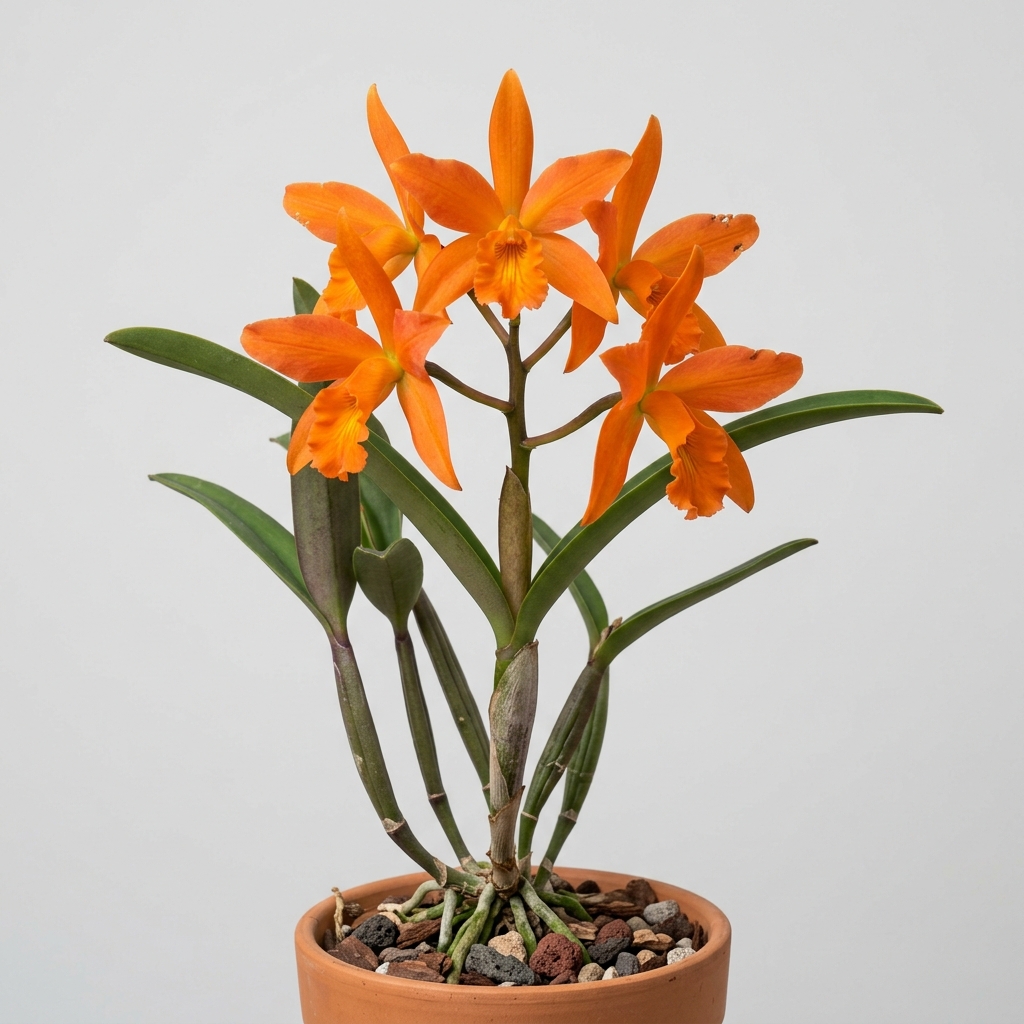
Cattleya Aurea is characterized by its clavate, club-shaped pseudobulbs, which typically bear a single, leathery, oblong leaf at the apex. These pseudobulbs act as water and nutrient storage organs, allowing the plant to survive seasonal dry periods in its natural habitat. The foliage is a rich, matte green, providing a handsome backdrop even when the plant is not in bloom.
In nature, this orchid grows as an epiphyte high in the forest canopy, where it receives excellent air circulation and dappled, intense sunlight. Understanding this natural growth habit is key to successful cultivation, as the root system requires rapid drainage and access to atmospheric moisture to prevent suffocation and rot.
🌸 Flower Characteristics
The flowers of Cattleya Aurea are exceptionally large, often reaching five to seven inches in diameter. The sepals and petals are a brilliant, clear yellow to pale gold, sometimes showing subtle undertones of green or bronze. The defining feature of this orchid is its magnificent, expansive labellum, or lip.
The lip is typically a deep, velvety crimson or reddish-purple, adorned with a complex network of bright golden-yellow veins radiating from the throat. This intricate patterning creates a dramatic visual contrast that has captivated orchid enthusiasts for generations. The flowers are produced on a short, terminal inflorescence arising from a green sheath at the top of the mature pseudobulb.
Fragrance & Bloom Profile
The fragrance of Cattleya Aurea is highly celebrated, often described as a rich, sweet, and complex perfume with distinct citrus and floral notes. The scent is typically most intense during the morning hours when temperatures begin to rise, filling the growing area with a pleasant aroma.
Individual flowers generally last between two to three weeks, depending on environmental conditions. To maximize the lifespan of the blooms, growers should keep the plant in a slightly cooler, shaded location once the flowers have fully opened and avoid getting water directly on the petals.
Parentage & Hybrid Lineage
Cattleya Aurea is a naturally occurring species, often classified by taxonomists as Cattleya dowiana var. aurea, though select line-bred cultivars exist within cultivation. Because of its outstanding yellow coloration and heavily veined lip, it has been extensively used in hybridization programs since the late 19th century.
It is a primary ancestor of countless modern yellow, orange, and red Cattleya hybrids. When crossed with other species, it consistently passes on its warm color palette and fragrant qualities, although hybridizers must work carefully to overcome its sensitivity to excess moisture and cold temperatures.
🌱 Growing Conditions
To thrive, Cattleya Aurea requires bright, filtered light. A south or east-facing window with sheer curtains, or a shaded greenhouse, provides the ideal light intensity. The leaves should be a light, grassy green; dark green leaves indicate insufficient light, while yellowing or scorched spots suggest too much direct sun.
💡 Care Tip
Ensure your Cattleya Aurea receives strong air movement at all times. Placing a small, gentle fan near your growing area helps dry out the quickly after and prevents moisture from pooling on the leaves, significantly reducing the risk of fungal infections.
Temperature control is critical, as this orchid prefers warm to intermediate conditions. Daytime temperatures should ideally range between 75°F and 85°F, with a nighttime drop to around 60°F to 65°F. High humidity of 60% to 80% is essential, coupled with strong, continuous air movement to prevent fungal pathogens from settling on the foliage.
Watering, Feeding & Potting Media
Watering should be frequent during the active growing season in spring and summer, but the potting medium must be allowed to dry out almost completely between applications. Overwatering is the most common cause of failure, as the roots are highly susceptible to rot if kept constantly wet.
A coarse, free-draining potting mix is mandatory. Most growers prefer medium to large-grade fir bark mixed with horticultural charcoal and perlite, or growing the plant in open wooden baskets. Feed the orchid weekly with a diluted, balanced orchid fertilizer during active growth, flushing the pot with pure water once a month to prevent salt buildup.
Blooming Season & Care Notes
Cattleya Aurea typically blooms in the late summer or early autumn, following the completion of its annual pseudobulb growth. As the new pseudobulb matures, a green sheath will emerge from the leaf joint, from which the flower buds will eventually develop.
During the winter rest period, watering should be significantly reduced, providing only enough moisture to prevent the pseudobulbs from shriveling. Repotting should only be performed when new root growth is visible at the base of the lead pseudobulb, usually in early spring, to minimize transplant shock.
⚠️ Common Issues
⚠️ Common Mistake
A frequent mistake is Cattleya Aurea on a strict calendar schedule. Because environmental and fluctuate, always check the potting medium manually; when the mix is still damp inside will quickly suffocate the roots and lead to systemic rot.
- Root Rot:
Caused by overwatering or compacted, decaying potting media that retains too much moisture. - Bud Blast:
Sudden dropping or drying of flower buds, often triggered by abrupt changes in temperature, low humidity, or drafty conditions. - Scale and Mealybugs: Common pests that hide in the crevices of pseudobulbs and under leaf sheaths; treat promptly with insecticidal soap or horticultural oil.
- Fungal Leaf Spotting: Black or brown spots on foliage resulting from high humidity combined with stagnant, stagnant air.
❓ Frequently Asked Questions
How often should I water my Cattleya Aurea?
Watering frequency depends on your environment, but generally, you should water thoroughly and then allow the potting medium to dry out almost completely before watering again. During the active summer growth phase, this may be every few days, while in the winter rest period, it may be reduced to once every two weeks.
Why are the leaves on my Cattleya Aurea turning dark green?
Dark green leaves are a classic sign of insufficient light. Cattleya Aurea requires bright, filtered light to produce the energy needed for blooming. Gradually move the plant to a brighter location, aiming for a light, grassy-green leaf color.
How do I encourage my Cattleya Aurea to bloom?
To trigger blooming, ensure the plant receives adequate light throughout the growing season and experiences a distinct temperature drop of about 10 to 15 degrees Fahrenheit between day and night. A dry winter rest period with reduced watering is also essential for bud initiation.
Can I grow Cattleya Aurea mounted on wood?
Yes, Cattleya Aurea performs exceptionally well when mounted on cork bark or hardwood plaques, as this mimics its natural epiphytic habit. However, mounted plants dry out very quickly and will require daily watering or misting in typical home environments to maintain adequate hydration.
⭐ Final Growing Notes
Cultivating Cattleya Aurea requires an attentive hand and an understanding of its tropical forest origins, but the reward is one of the most spectacular floral displays in the orchid kingdom. By prioritizing excellent drainage, bright light, and robust air circulation, growers can enjoy the legendary golden blooms and captivating fragrance of this historic orchid for many years.
⚕️ Health, Safety & Edibility
Understanding how a plant interacts with people, pets, and the surrounding environment is part of responsible cultivation. This section uses conservative, general guidance and does not replace professional medical or veterinary advice.
Human Safety: No published evidence currently identifies species-specific toxicity concerns for Cattleya Aurea during normal handling. As with most ornamental plants, it should not be intentionally consumed.
Pet Safety: Published information does not indicate that this orchid commonly poses a toxicity concern for cats or dogs. However, chewing leaves, flowers, roots, or potting media may still cause mild digestive upset.
Edibility: This orchid is cultivated for ornamental display rather than food. Ornamental plants may carry fertilizers, pesticides, or other horticultural treatments that make them unsuitable for consumption.
Skin Contact: Routine handling is not generally associated with skin irritation. Gardeners with sensitive skin may prefer wearing gloves when repotting, pruning, or handling potting media.
🌱 Propagation Tip
Propagate Cattleya Aurea by division only when the plant has outgrown its container and has at least six healthy pseudobulbs. Carefully divide the rhizome using sterile tools, ensuring each new division retains at least three mature pseudobulbs and an active growing eye to support new growth.
⭐ Expert Advice
To achieve the best floral display, pay close attention to the winter rest period. Reducing water and withholding fertilizer once the autumn bloom cycle finishes encourages the plant to rest properly, conserving energy for robust pseudobulb development and abundant flowering the following summer.

Leave A Comment