
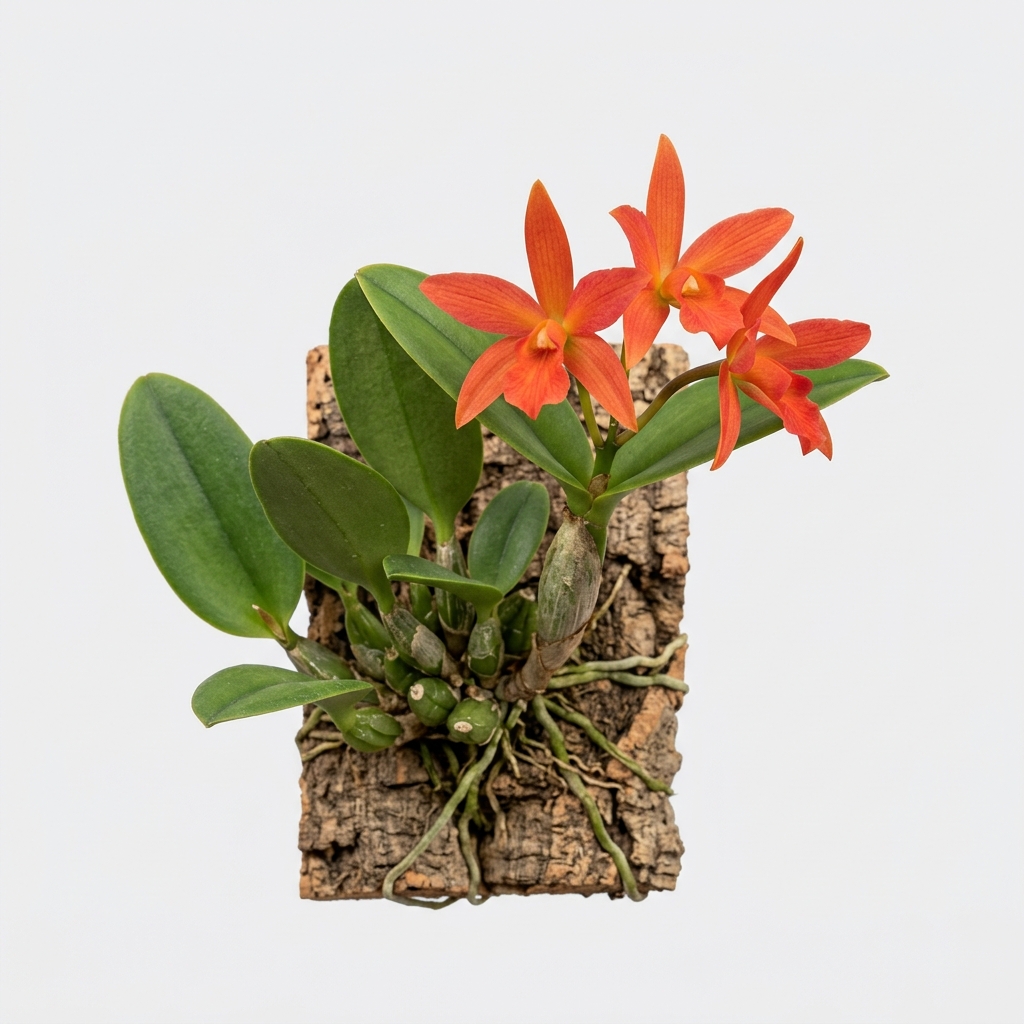
Cattleya Cernua, historically classified as Sophronitis cernua, is a highly prized miniature orchid species celebrated for its brilliant, star-shaped blossoms and compact growth habit. Native to the warm, humid regions of South America, this charming epiphyte produces clusters of vivid orange to reddish-orange flowers that stand out dramatically against its deep green, fleshy foliage. Orchid enthusiasts value this cultivar for its ability to deliver a striking visual impact while occupying minimal space in a greenhouse, terrarium, or windowsill collection.
Despite its diminutive size, Cattleya Cernua shows a robust growth habit, forming dense mats of creeping pseudobulbs over time. Its ease of cultivation on mounts or in small baskets makes it an excellent choice for both intermediate growers and dedicated collectors of miniature orchids. When provided with bright light and excellent air circulation, this resilient species rewards growers with reliable seasonal displays of bright, cheerful blooms.
💡 Did You Know?
Cattleya Cernua was once classified under the Sophronitis due to its small size and bright orange flowers. Modern DNA analysis eventually grouped it with Cattleya, but it retains its unique miniature habit, making it a favorite for growers who want the classic beauty of a Cattleya orchid in a fraction of the space.
🌿 Botanical Overview
Cattleya Cernua is a sympodial orchid characterized by its creeping rhizomes and small, tightly clustered pseudobulbs. Each pseudobulb typically bears a single, thick, coriaceous leaf that is ovate to elliptical in shape. These fleshy leaves serve as water-storage organs, helping the plant survive dry spells in its natural habitat, where it grows as an epiphyte on tree trunks or occasionally as a lithophyte on rocky outcrops.
The growth habit of this species is distinctly spreading, with new pseudobulbs emerging along a creeping rhizome. This makes the plant exceptionally well-suited for mounting on cork bark or tree fern plaques, where its roots can scramble freely and dry rapidly after watering. In cultivation, maintaining this natural growth habit is key to achieving a healthy, multi-lead specimen that produces multiple flower spikes simultaneously.
🌸 Flower Characteristics
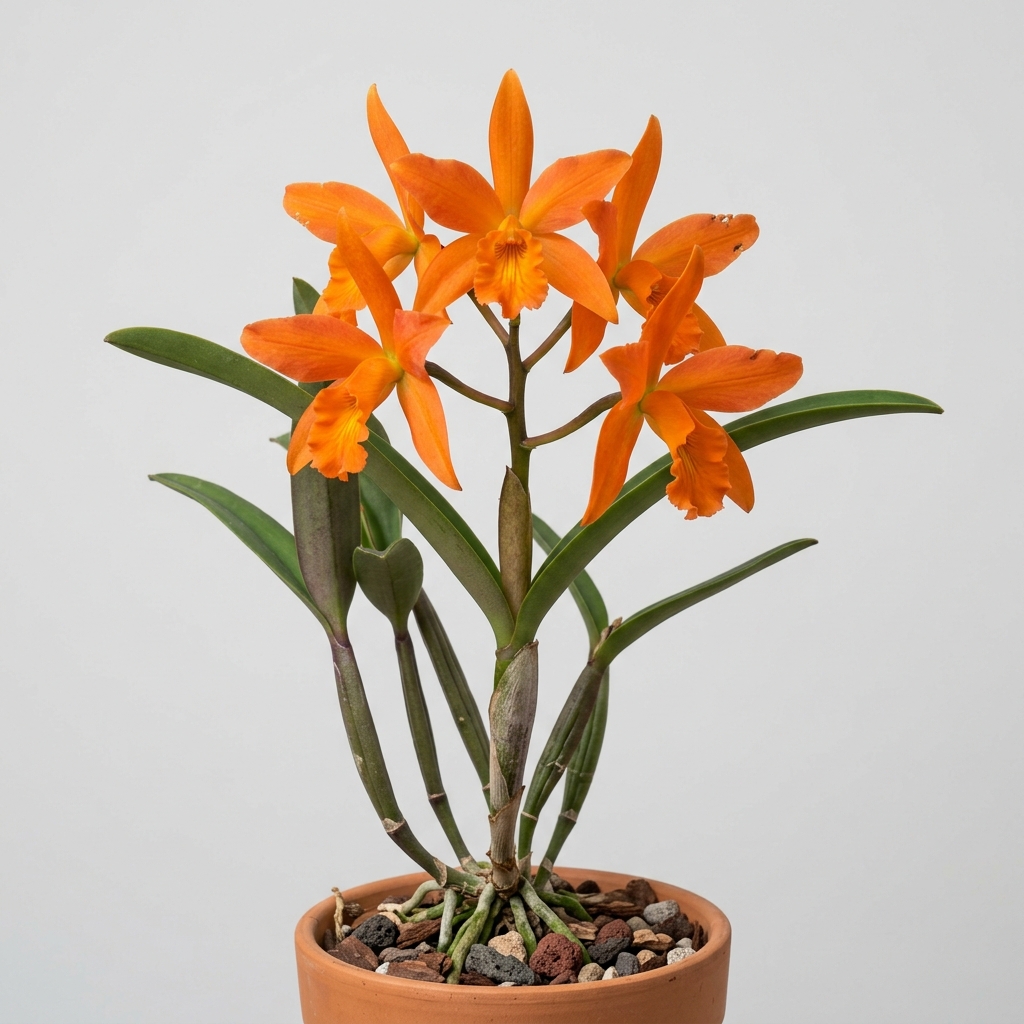
The flowers of Cattleya Cernua are small but remarkably vibrant, typically measuring between 2 to 2.5 centimeters in diameter. They are borne on short, terminal inflorescences that emerge from the apex of mature pseudobulbs, with each spike carrying between two and six blossoms. The petals and sepals are typically a brilliant shade of orange, scarlet, or vermilion, though color variations ranging from pale yellow to deep red can occasionally occur depending on the specific clone.
The lip, or labellum, is relatively small and features a yellow or whitish base, often adorned with subtle red or orange markings. The flowers open fully, presenting a flat, star-like appearance that maximizes their visual appeal. Although individual blooms are delicate, their intense coloration and clustered presentation ensure they command attention despite their miniature stature.
Fragrance & Bloom Profile
Unlike many of its larger relatives in the Cattleya alliance, Cattleya Cernua is not widely known for a strong or distinct fragrance. Most growers report that the flowers are virtually unscented, though some individuals detect a very faint, clean aroma under warm, humid conditions. Because fragrance is highly subjective and can vary based on environmental factors such as temperature and light intensity, it is generally considered a minor attribute of this species.
The primary appeal of the bloom profile lies in its visual longevity and striking color contrast. Individual flowers typically remain fresh for three to four weeks, provided the plant is kept in a cool, stable environment away from drafts. The lack of a strong scent is easily overlooked by collectors who prize the orchid for its brilliant floral display and neat, space-saving presentation.
Parentage & Hybrid Lineage
Cattleya Cernua is a distinct species rather than a complex artificial hybrid, meaning its genetic lineage is derived directly from wild populations native to Brazil, Paraguay, and northeastern Argentina. Historically, it was classified under the genus Sophronitis due to its small size and red-orange flowers, but modern DNA sequencing has led taxonomists to reclassify it within the broader Cattleya genus.
In orchid breeding, this species has been highly valued for its ability to introduce compact growth habits and intense red-orange coloration to hybrid offspring. It is a parent to numerous miniature Cattleya hybrids, often imparting its robust, creeping growth style and multi-flowered habit to its progeny. When purchasing this orchid, growers should look for reputable nurseries to ensure they are acquiring a true-to-type species or a well-documented primary hybrid.
🌱 Growing Conditions
To cultivate Cattleya Cernua successfully, growers should aim to replicate its native canopy environment. This orchid thrives in bright, indirect light, similar to the conditions preferred by standard Cattleya species. A location that receives strong morning sun with filtered afternoon light is ideal, as excessive direct sunlight can scorch the thick leaves, while insufficient light will result in weak growth and a failure to bloom.
💡 Care Tip
To ensure your mounted Cattleya Cernua thrives, mount it on a piece of rough cork bark with a very small pad of sphagnum moss around the roots. This setup provides the rapid drying cycle the roots crave while retaining just enough moisture to prevent dehydration.
Temperature: wise, this species is quite adaptable, preferring intermediate to warm conditions. Ideal daytime temperatures range from 21 to 29 degrees Celsius, with a nighttime drop to 15 to 18 degrees Celsius to encourage bud development. High humidity levels of 60% to 80% are crucial, especially when the plant is grown mounted, and must be accompanied by constant, gentle air movement to prevent fungal pathogens from establishing on the foliage.
Watering, Feeding & Potting Media
Watering practices for Cattleya Cernua must be tailored to its mounting or potting medium. Because its roots are highly sensitive to prolonged wetness, the plant must dry out rapidly after watering. Mounted specimens typically require daily watering or misting during the active growing season, whereas plants grown in small, well-draining baskets with coarse fir bark or tree fern fiber may only need watering two to three times a week.
Fertilization should be light but consistent. A balanced, highly diluted orchid fertilizer applied weekly at one-quarter strength during the spring and summer active growth phases is highly effective. Growers should flush the root system with pure water periodically to prevent salt buildup. During the cooler winter months, watering frequency and fertilization should be significantly reduced to allow the plant a semi-dormant rest period.
Blooming Season & Care Notes
Cattleya Cernua typically blooms in the autumn or early winter, although flowering can occasionally occur at other times of the year depending on local growing conditions. The flower buds develop within a small sheath at the base of the leaf on newly matured pseudobulbs. During this critical period, it is important to maintain stable environmental conditions and avoid moving the plant, as sudden changes in temperature or humidity can cause bud blast.
Once flowering has concluded, the old flower spikes can be cut back close to the base of the leaf, taking care not to damage the surrounding tissue. Repotting or remounting is best performed in the spring, just as new root tips begin to emerge from the base of the newest pseudobulbs. This timing ensures the plant establishes quickly in its new medium with minimal transplant shock.
⚠️ Common Issues
While generally resilient, Cattleya Cernua can encounter several common cultivation challenges if its environmental needs are not met.
⚠️ Common Mistake
The most frequent error is overpotting this miniature orchid in a container that is too large. Excess retains moisture for too long, leading to root rot. If potting, always choose the smallest possible container that fits the root mass.
- Root Rot: Caused by overwatering or compacted, poorly draining potting media that deprives roots of oxygen.
- Dehydration: Indicated by shriveled pseudobulbs and wrinkled leaves, often due to underwatering mounted plants.
- Bud Blast: The premature dropping or drying of flower buds, usually triggered by sudden drafts, low humidity, or temperature extremes.
- Pests: Scale insects and mealybugs can hide in the crevices of the tightly packed pseudobulbs and beneath the dry sheaths.
- Fungal Leaf Spotting: Occurs when water sits on the foliage overnight in stagnant air, emphasizing the need for good ventilation.
❓ Frequently Asked Questions
Can Cattleya Cernua be grown successfully in a pot?
Yes, it can be grown in small clay pots or net baskets, but the potting medium must be extremely coarse and fast-draining, such as medium-grade fir bark or tree fern fiber, to prevent root rot.
How often should I water a mounted Cattleya Cernua?
Mounted plants dry out very quickly and typically require daily watering or thorough misting during the warm spring and summer months, reducing to every few days in winter.
Why is my Cattleya Cernua not blooming?
The most common reason for a lack of flowers is insufficient light. Ensure the plant receives bright, filtered light and a slight drop in nighttime temperatures during the autumn to trigger bud initiation.
What is the best way to propagate this orchid?
Propagation is best achieved by division during spring repotting. Ensure each division has at least three to four healthy, mature pseudobulbs with active root growth.
⭐ Final Growing Notes
Cattleya Cernua remains a quintessential choice for orchid enthusiasts seeking a rewarding, space-saving species with exceptional visual appeal. By mimicking its natural epiphytic habitat through bright light, high humidity, and rapid wet-dry cycles, growers can enjoy healthy, creeping mats of foliage topped with brilliant orange blossoms year after year.
⚕️ Health, Safety & Edibility
Understanding how a plant interacts with people, pets, and the surrounding environment is part of responsible cultivation. This section uses conservative, general guidance and does not replace professional medical or veterinary advice.
Human Safety: No published evidence currently identifies species-specific toxicity concerns for Cattleya Cernua during normal handling. As with most ornamental plants, it should not be intentionally consumed.
Pet Safety: Published information does not indicate that this orchid commonly poses a toxicity concern for cats or dogs. However, chewing leaves, flowers, roots, or potting media may still cause mild digestive upset.
Edibility: This orchid is cultivated for ornamental display rather than food. Ornamental plants may carry fertilizers, pesticides, or other horticultural treatments that make them unsuitable for consumption.
Skin Contact: Routine handling is not generally associated with skin irritation. Gardeners with sensitive skin may prefer wearing gloves when repotting, pruning, or handling potting media.
🌱 Propagation Tip
When dividing Cattleya Cernua, always wait until new root growth is visible at the base of the newest pseudobulbs. Ensure each division contains at least three to four healthy pseudobulbs to provide the plant with enough energy to establish itself quickly.
⭐ Expert Advice
To trigger a heavy bloom cycle, provide a distinct cooling period in the autumn. Dropping the nighttime by five to eight degrees Celsius while slightly reducing water will signal the plant to initiate flower buds within its newly matured sheaths.

Leave A Comment