
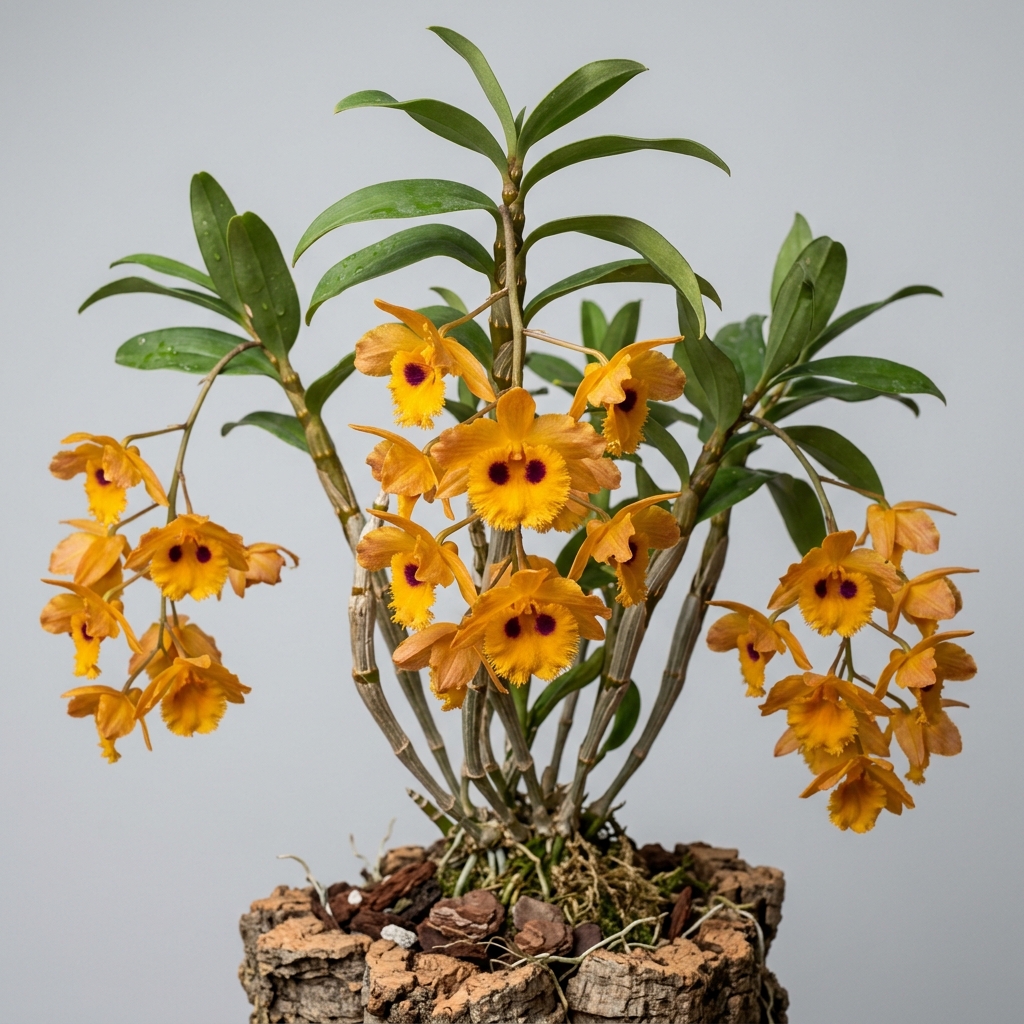
Dendrobium Gibsonii is a striking epiphytic orchid species highly prized by collectors for its vibrant, lantern-like floral displays. Native to the mountainous regions of Southeast Asia and the Himalayas, this orchid produces pendulous, cane-like pseudobulbs that can grow quite long, creating a dramatic cascading effect when grown in hanging baskets or mounted on slabs. Its architectural growth habit and brilliant coloration make it a standout specimen in any intermediate to warm greenhouse collection.
Growers are particularly drawn to this orchid for its spectacular clusters of golden-yellow to deep orange flowers, which feature a highly detailed, fringed lip adorned with contrasting dark purple eyes. While it requires a bit of seasonal discipline to trigger its abundant spring blooms, its robust nature and rewarding floral presentation make it an excellent choice for orchid enthusiasts looking to expand their collection beyond common hybrids.
💡 Did You Know?
Dendrobium Gibsonii is part of the Dendrobium orchid group, a favorite among growers because its flowers, growth habit, and care needs make it useful for comparing cultivated orchids within the same . Observing its leaves, roots, and bloom spikes can help growers understand how this cultivar responds to indoor conditions.
🌿 Botanical Overview
Dendrobium Gibsonii is a sympodial epiphytic orchid characterized by its slender, arching, or pendulous pseudobulbs, commonly referred to as canes. These canes are multi-noded, slightly swollen, and can reach lengths of up to two to three feet under optimal cultivation. The leaves are lanceolate, leathery, and arranged alternately along the upper portion of the canes, providing a lush green backdrop to the pendulous flower spikes.
In its native habitat, this orchid grows on the trunks and branches of trees in moist, mossy forests, where it experiences a distinct seasonal shift. The plant has adapted to survive dry winter periods by storing water and nutrients within its fleshy canes. Understanding this natural cycle is key to successfully maintaining the orchid in a home or greenhouse environment.
🌸 Flower Characteristics
The inflorescences of Dendrobium Gibsonii emerge from the upper nodes of both leafy and leafless mature canes. Each pendulous raceme can carry several closely spaced flowers, creating a dense, cascading cluster of color. The individual blooms are typically two to three inches across, featuring sepals and petals of a rich, waxy golden-yellow or warm orange hue.
The most distinctive feature of the flower is its prominent labellum, or lip. The lip is rounded, finely fringed along the margins, and displays a velvety texture. At the throat of the lip, there are two striking, dark maroon or deep purple-black spots that serve as nectar guides for natural pollinators. This dramatic contrast gives the flowers a highly expressive, almost face-like appearance.
Fragrance & Bloom Profile
The fragrance of Dendrobium Gibsonii is a subject of some debate among growers, as it is not consistently documented in standard horticultural literature. Some cultivators report a very mild, sweet, or slightly musky scent that is most noticeable during the warmest hours of the morning. Others find the blooms to be virtually unscented.
The flowers typically open simultaneously along the raceme, providing a sudden and dramatic burst of color. Individual blooms can last for two to three weeks, depending on environmental conditions such as temperature and humidity. Keeping the plant in a cooler, draft-free location once the flowers open can help extend the life of the display.
Parentage & Hybrid Lineage
Dendrobium Gibsonii is a naturally occurring species rather than a man-made hybrid. Because of this, its lineage is not a product of selective crossing, but rather millions of years of natural evolution in the wild. It belongs to the large and diverse genus Dendrobium, specifically within sections that favor seasonal temperature and moisture fluctuations.
While it is primarily grown as a species specimen by collectors, its vibrant color and striking lip markings make it an intriguing candidate for hybridization. However, documented registered hybrids utilizing Dendrobium Gibsonii as a direct parent remain relatively uncommon in commercial trade, meaning most plants available on the market are true species selections.
🌱 Growing Conditions
To thrive, Dendrobium Gibsonii requires bright, filtered light. It enjoys conditions similar to those preferred by Cattleya orchids, where the leaves are a healthy light green rather than dark green. Direct midday sun should be avoided to prevent leaf scorch, but ample morning or late afternoon light is highly beneficial.
💡 Care Tip
For best results, grow Dendrobium Gibsonii in bright filtered with steady and gentle airflow. Avoid placing the plant in harsh midday sun, but do not keep it in a dark corner; weak is one of the most common reasons cultivated orchids refuse to rebloom.
Temperature management is crucial for this species. During the active growing season in spring and summer, it prefers warm to intermediate temperatures, ranging from 75 to 85 degrees Fahrenheit during the day. In the winter, the plant requires a cooler period, with nighttime temperatures dropping to 50 to 55 degrees Fahrenheit, which helps initiate the development of flower buds.
Watering, Feeding & Potting Media
During the active spring and summer growth phase, Dendrobium Gibsonii should be watered copiously. The potting medium should be allowed to approach dryness but not dry out completely between waterings. Weekly applications of a balanced, diluted orchid fertilizer will support the rapid development of new canes.
As autumn approaches, watering and feeding must be progressively reduced. During the winter rest period, water should be provided sparingly—only enough to prevent the pseudobulbs from shriveling excessively. A coarse, fast-draining potting mix consisting of medium-grade fir bark, charcoal, and perlite works well. Alternatively, due to its pendulous habit, this orchid is an excellent candidate for mounting on cork slabs or growing in slatted wooden baskets.
Blooming Season & Care Notes
The primary blooming season for Dendrobium Gibsonii occurs in the spring and early summer. The trigger for this spectacular show is the cool, dry winter rest. Without this seasonal drop in temperature and reduction in water, the plant may produce vegetative offsets, known as keikis, instead of flower buds along the nodes of the canes.
Once the flower spikes begin to emerge from the nodes in late winter, growers can gradually resume regular watering and warmer temperatures. It is important not to disturb or repot the plant while it is in bud or active bloom, as this can cause bud drop. Repotting is best done in late spring, immediately after flowering has finished and just as new root growth begins from the base of the new leads.
⚠️ Common Issues
⚠️ Common Mistake
The most common mistake is by calendar instead of root and potting-media condition. Dendrobium roots need moisture and air at the same time, so constantly wet bark or sphagnum can lead to root loss even when the leaves still look healthy.
- Bud Blast: Sudden changes in temperature, drafty conditions, or low humidity can cause developing flower buds to yellow and drop before opening.
- Shriveled Canes: While some wrinkling is normal during the winter rest, extreme shriveling indicates severe dehydration, requiring a light misting or watering.
- Root Rot: Overwatering during the winter rest period or using a degraded, waterlogged potting medium will quickly lead to root decay.
- Pests: Mealybugs and spider mites can occasionally hide in the crevices of the leaves and bracts, especially in dry, low-humidity environments.
- Lack of Blooms: Failing to provide a distinct cool, dry winter rest is the most common reason for a healthy plant refusing to flower.
❓ Frequently Asked Questions
How do I trigger blooms on my Dendrobium Gibsonii?
To trigger blooming, you must provide a distinct cool, dry rest period during the winter months. Reduce watering significantly, stop fertilizing, and expose the plant to cooler nighttime temperatures around 50 to 55 degrees Fahrenheit for several weeks until flower buds begin to form at the nodes.
Can I grow Dendrobium Gibsonii mounted on wood?
Yes, because of its natural pendulous growth habit, Dendrobium Gibsonii thrives when mounted on cork bark or tree fern slabs. Mounted plants will require more frequent watering and higher humidity than those grown in pots, especially during the hot summer months.
What should I do if my orchid produces keikis instead of flowers?
If your orchid produces vegetative offsets (keikis) along the canes instead of flower buds, it is usually a sign that the winter rest period was too warm or too wet. Allow the keikis to develop several roots at least two inches long before gently detaching and potting them separately.
Why are the leaves on my Dendrobium Gibsonii turning yellow and falling?
It is natural for older canes of Dendrobium Gibsonii to shed their leaves as they mature, especially during the autumn and winter rest periods. However, if young leaves on active growth are turning yellow, it may indicate overwatering, poor drainage, or a root system issue.
⭐ Final Growing Notes
Dendrobium Gibsonii is a rewarding and visually spectacular species that brings a touch of wild tropical elegance to any orchid collection. By respecting its natural seasonal cycle of wet, warm summers and cool, dry winters, growers can enjoy a reliable and breathtaking display of golden-orange blossoms year after year. Its unique pendulous form and dramatic flowers make the extra care well worth the effort.
⚕️ Health, Safety & Edibility
Understanding how a plant interacts with people, pets, and the surrounding environment is part of responsible cultivation. This section uses conservative, general guidance and does not replace professional medical or veterinary advice.
Human Safety: No published evidence currently identifies species-specific toxicity concerns for Dendrobium Gibsonii during normal handling. As with most ornamental plants, it should not be intentionally consumed.
Pet Safety: Published information does not indicate that this orchid commonly poses a toxicity concern for cats or dogs. However, chewing leaves, flowers, roots, or potting media may still cause mild digestive upset.
Edibility: This orchid is cultivated for ornamental display rather than food. Ornamental plants may carry fertilizers, pesticides, or other horticultural treatments that make them unsuitable for consumption.
Skin Contact: Routine handling is not generally associated with skin irritation. Gardeners with sensitive skin may prefer wearing gloves when repotting, pruning, or handling potting media.
🌱 Propagation Tip
Propagation should be approached patiently. Most home growers should wait for natural keikis or divide only mature, healthy plants when the orchid type allows it. Never remove a young growth until it has strong roots and enough leaves to support itself away from the parent plant.
⭐ Expert Advice
Repot after flowering when fresh root tips begin to appear. This timing helps the plant anchor quickly into new bark or sphagnum and reduces stress, especially for orchids grown indoors where airflow, , and drying speed can change from season to season.

Leave A Comment