
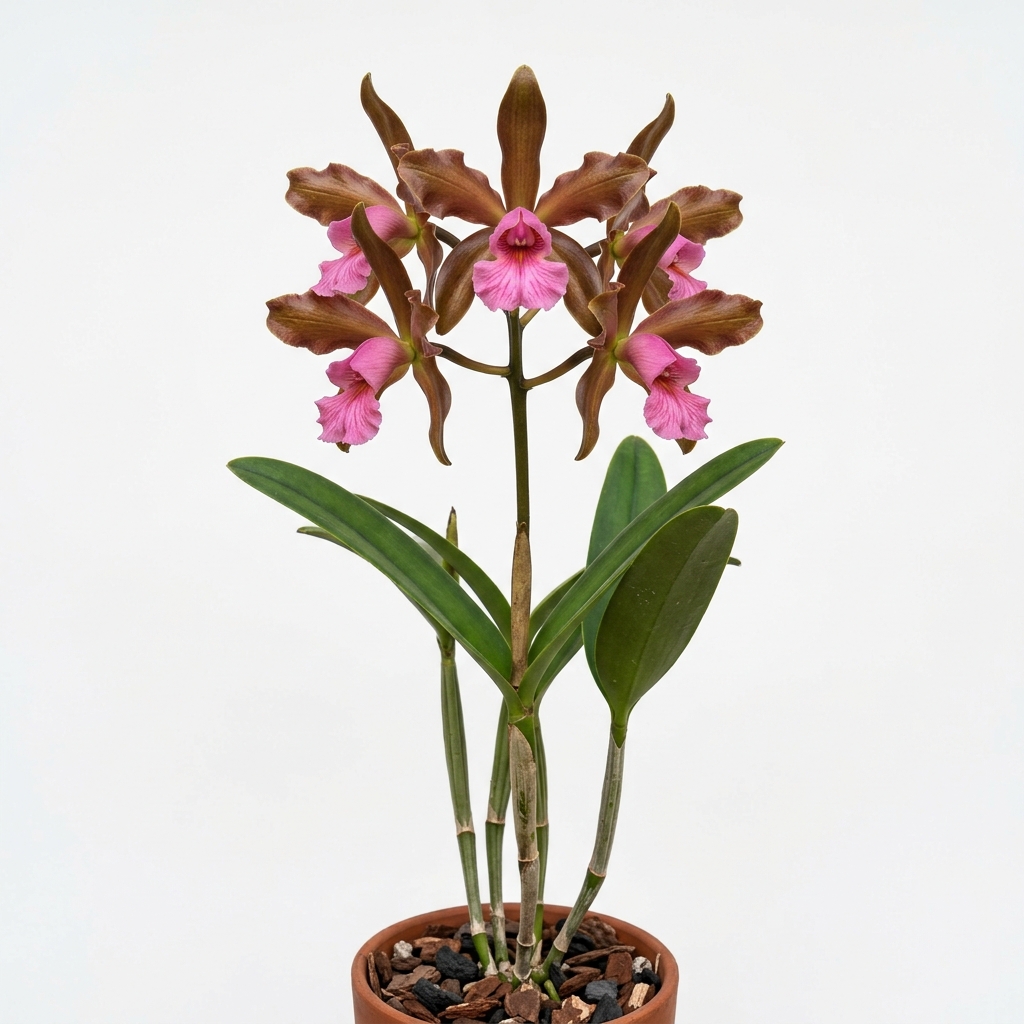
Cattleya elongata is a magnificent bifoliate orchid species native to the high-elevation rocky landscapes of Brazil. Renowned for its architectural growth habit, this orchid produces exceptionally tall, slender pseudobulbs topped with rigid, leathery leaves. Growers highly prize this species for its dramatic, long-lasting flower spikes that elevate clusters of waxy, richly colored blooms well above the foliage.
In cultivation, Cattleya elongata offers a rewarding challenge for intermediate and advanced orchid enthusiasts. Its striking combination of bronze-to-copper petals and a contrasting rose-pink lip makes it a standout specimen in any collection. When provided with the bright light and excellent drainage it craves, this resilient species rewards its keeper with spectacular seasonal displays and a delightful fragrance.
💡 Did You Know?
Cattleya elongata is part of the Cattleya orchid group, a favorite among growers because its flowers, growth habit, and care needs make it useful for comparing cultivated orchids within the same . Observing its leaves, roots, and bloom spikes can help growers understand how this cultivar responds to indoor conditions.
🌿 Botanical Overview
Cattleya elongata is primarily a rupicolous species, meaning it is adapted to growing directly on rocks rather than on trees. In its native Brazilian habitats, it clings to sandstone outcrops in the Bahia and Minas Gerais regions. These environments expose the plant to intense solar radiation, strong winds, and dramatic shifts in daily moisture, shaping its unique evolutionary adaptations.
The vegetative structure of this orchid is characterized by its impressive pseudobulbs, which can reach heights of up to one meter in optimal conditions, though they typically remain more compact in home cultivation. These pseudobulbs are slender, cylindrical, and topped with two thick, rigid, elliptic leaves that help the plant conserve water during dry spells.
🌸 Flower Characteristics
The flowers of Cattleya elongata are celebrated for their heavy, waxy substance and distinctive color palette. The sepals and petals are typically undulated, featuring wavy margins that add texture and movement to the bloom. Their coloration ranges from deep bronze and coppery-brown to rich mahogany or purplish-red, providing a dramatic backdrop for the lip.
The labellum, or lip, is the crowning glory of the flower. It is deeply trilobed, showcasing a vibrant rose-pink, magenta, or violet hue that contrasts sharply with the darker petals. The flowers are presented in clusters of up to ten or more on an exceptionally long, erect spike that emerges from the apex of the pseudobulb, holding the blooms high above the foliage for maximum visibility.
Fragrance & Bloom Profile
This species is highly regarded for its delightful fragrance, which is typically described as sweet, floral, and slightly spicy, often reminiscent of fresh clover or honey. The scent is most intense during the morning and early afternoon hours, filling the growing space with a pleasant aroma when exposed to warm temperatures and bright light.
Because the flowers possess a thick, waxy texture, they are remarkably long-lasting. A well-grown spike can maintain its pristine beauty for four to six weeks, provided the ambient humidity is stable and the flowers are kept dry. The sequential opening of the blooms can further extend the overall display period.
Parentage & Hybrid Lineage
As a naturally occurring species, Cattleya elongata does not have man-made parentage. It represents a distinct genetic line shaped by its specific ecological niche in Brazil. In orchid breeding, however, it has been utilized by hybridizers seeking to introduce its desirable traits to new grexes.
Hybridizers value this species for its ability to pass down tall, multi-flowered spikes, heavy flower substance, and the unique wavy margins of its petals. While its exact hybrid history is not always consistently documented in common grower references, it remains an important genetic contributor to many modern bifoliate Cattleya hybrids.
🌱 Growing Conditions
To cultivate Cattleya elongata successfully, growers must replicate its bright, airy native environment. This orchid requires very high light levels, significantly more than standard unifoliate Cattleyas. It thrives in bright, filtered sunlight, and can tolerate some direct morning sun, which is often necessary to stimulate the development of flower spikes.
💡 Care Tip
For best results, grow Cattleya elongata in bright filtered with steady and gentle airflow. Avoid placing the plant in harsh midday sun, but do not keep it in a dark corner; weak is one of the most common reasons cultivated orchids refuse to rebloom.
Temperature: wise, it prefers warm daytime temperatures between 75 and 85 degrees Fahrenheit, with a distinct drop of 10 to 15 degrees at night. Excellent air circulation is absolutely vital at all times; constant air movement cools the thick leaves under intense light and prevents fungal pathogens from settling on the foliage.
Watering, Feeding & Potting Media
During the active spring and summer growing season, Cattleya elongata requires frequent and thorough watering. However, because of its rupicolous nature, the roots must dry out rapidly. A highly porous potting medium is essential; a mix of coarse fir bark, charcoal, and perlite works well, though many growers prefer mounting the plant on cork slabs or tree fern plaques.
Apply a balanced, water-soluble orchid fertilizer at quarter or half strength every two weeks during active growth. Flush the pot with pure water between fertilizations to prevent salt buildup, which can damage the sensitive root tips. Reduce watering and halt feeding entirely during the cooler winter months when the plant enters dormancy.
Blooming Season & Care Notes
Cattleya elongata typically initiates its blooming cycle in late summer or early autumn. As the new pseudobulb matures, the flower spike will begin to emerge from the terminal sheath. During this period, avoid changing the plant’s orientation to the light source, as this can cause the developing buds to twist or fail to open properly.
Once blooming is complete, the orchid enters a crucial rest period. Cut the spent flower spike near the base, taking care not to damage the surrounding foliage. Minimize watering during this time, providing only enough moisture to prevent the pseudobulbs from shriveling excessively. Repotting should only be performed when new root growth is actively visible at the base of the newest pseudobulb.
⚠️ Common Issues
⚠️ Common Mistake
The most common mistake is by calendar instead of root and potting-media condition. Cattleya roots need moisture and air at the same time, so constantly wet bark or sphagnum can lead to root loss even when the leaves still look healthy.
- Root Rot:
Caused by overwatering or a decomposing, compacted potting medium that retains moisture for too long. - Leaf Scorch: Appears as bleached or blackened patches on the leaves, resulting from sudden exposure to direct, unaccustomed sunlight.
- Bud Blast:
The premature drying and dropping of flower buds, often triggered by sudden drafts, low humidity, or rapid temperature fluctuations. - Pests:
Scale insects and mealybugs can hide in the dry sheaths of the pseudobulbs; inspect regularly and treat with horticultural soap or isopropyl alcohol.
❓ Frequently Asked Questions
How do I know if my Cattleya elongata is getting enough light?
The leaves of a healthy Cattleya elongata receiving adequate light should be a light, grassy green color, often with a slight reddish or purple pigmentation along the margins. If the leaves are dark green, the light is too low, which will likely prevent the orchid from blooming.
Can I grow Cattleya elongata under LED grow lights?
Yes, this species can be grown successfully under high-output LED grow lights. Ensure the lights are positioned close enough to provide high intensity, but monitor the leaf temperature to prevent heat stress or leaf scorch.
Why are the pseudobulbs on my orchid shriveling?
Slight shriveling of the older pseudobulbs is normal during the winter rest period. However, severe shriveling during the growing season usually indicates either underwatering or root loss due to rot, which prevents the plant from absorbing moisture.
Does Cattleya elongata require a winter rest?
Yes, a distinct winter rest is essential for this species. Reducing water and halting fertilizer during the cooler months mimics its natural dry season in Brazil, which helps mature the pseudobulbs and prepares the plant for the next blooming cycle.
⭐ Final Growing Notes
While Cattleya elongata demands careful attention to light, drainage, and seasonal watering rhythms, it remains one of the most rewarding bifoliate species for dedicated orchid collectors. Its architectural presence, combined with the dramatic contrast of its waxy, copper-toned blooms and vibrant pink lip, ensures it remains a prized centerpiece in any greenhouse or indoor growing setup.
🌱 Propagation Tip
Propagation should be approached patiently. Most home growers should wait for natural keikis or divide only mature, healthy plants when the orchid type allows it. Never remove a young growth until it has strong roots and enough leaves to support itself away from the parent plant.
⭐ Expert Advice
Repot after flowering when fresh root tips begin to appear. This timing helps the plant anchor quickly into new bark or sphagnum and reduces stress, especially for orchids grown indoors where airflow, , and drying speed can change from season to season.




Leave A Comment