
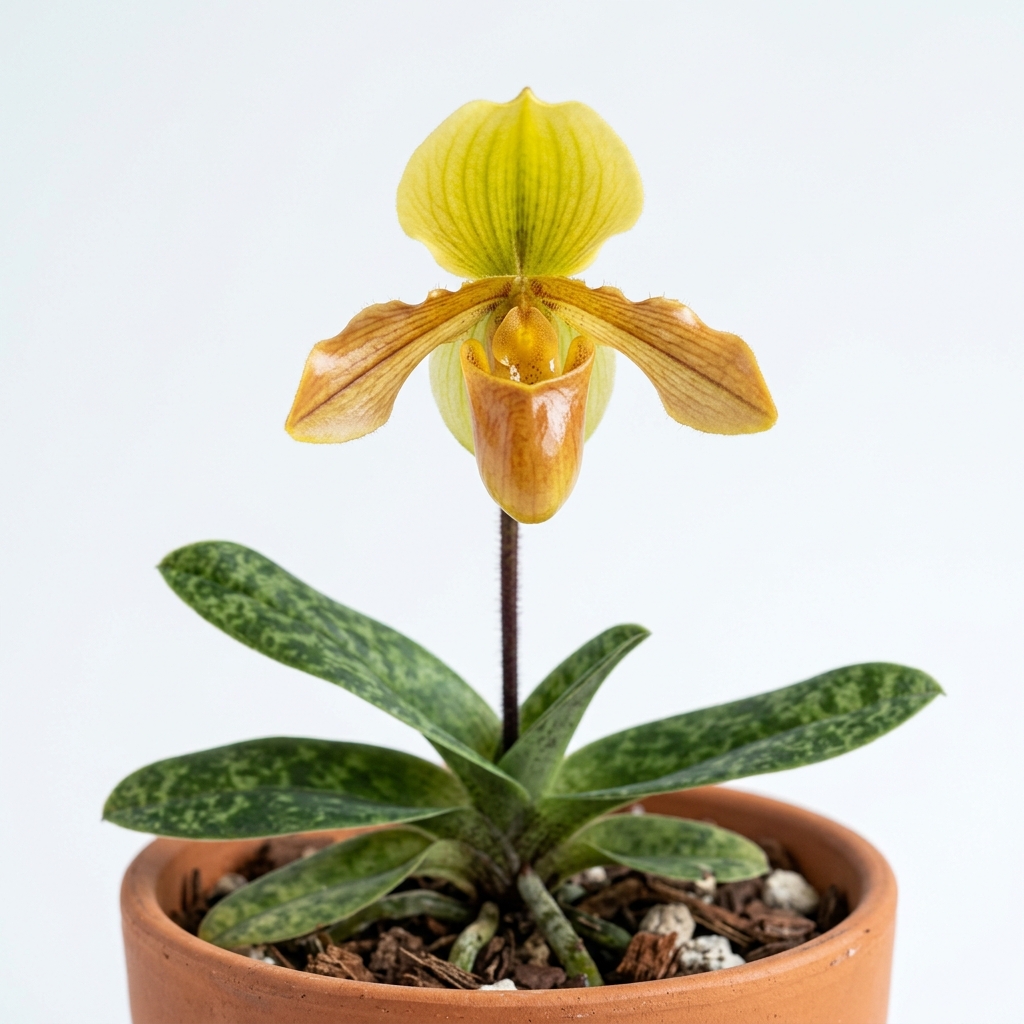
Paphiopedilum Helenae is a highly coveted miniature slipper orchid celebrated for its diminutive size and remarkably cheerful blooms. As one of the smallest known species within the Paphiopedilum genus, this charming orchid is highly prized by collectors who appreciate its compact growth habit and space-saving qualities. Its endearing proportions make it an excellent candidate for indoor growers, windowsill culture, or specialized terrariums where space is at a premium.
Despite its small stature, this orchid produces relatively large, striking flowers that feature a bright yellow dorsal sepal contrasted against warm, honey-toned petals and a glossy, slipper-shaped pouch. Growers value Paphiopedilum Helenae not only for its unique aesthetic appeal but also for its relative resilience compared to other miniature orchid species. When provided with the proper balance of moisture, shade, and humidity, this delightful slipper orchid rewards its keeper with long-lasting blooms that brighten any growing space.
💡 Did You Know?
Paphiopedilum Helenae belongs to the Paphiopedilum orchid group, where flower presentation is often just as important as . White-flowered cultivars are especially valued indoors because their pale blooms reflect well and pair easily with many home, greenhouse, and display settings.
🌿 Botanical Overview
Paphiopedilum Helenae is native to the karst limestone regions of northern Vietnam and southern China, where it naturally grows as a lithophyte or low-elevation epiphyte. In its native habitat, it clings to mossy crevices on steep limestone cliffs, sheltered from direct sunlight by surrounding vegetation. This specific ecological niche dictates many of its unique cultural requirements in cultivation, particularly its affinity for calcium-rich environments and excellent root aeration.
The plant itself is remarkably compact, typically producing fan-shaped growths of thick, fleshy, dark green leaves that rarely exceed three to four inches in length. These rigid, succulent-like leaves help the orchid conserve moisture during brief dry spells in its natural habitat. Because of its miniature growth habit, a mature specimen can easily thrive in a three-inch pot, making it a favorite among hobbyists with limited growing space.
🌸 Flower Characteristics
The flower of Paphiopedilum Helenae is a masterclass in miniature elegance, usually measuring between one and two inches in diameter. The most prominent feature is the broad, upright dorsal sepal, which displays a vibrant yellow to golden-orange hue, often finished with a clean white margin. The lateral petals are slightly wavy, spreading horizontally or curving gently forward, and are typically shaded in warm tones of brownish-yellow or tan.
The characteristic slipper-shaped pouch, or labellum, is glossy and ranges from a soft yellow-tan to a deeper amber color. Each single-flowered inflorescence emerges from the center of the leaf fan on a short, upright, pubescent green spike. The contrast between the bright yellow dorsal sepal and the deeper tones of the pouch creates a highly visible, cheerful presentation that belies the plant’s tiny footprint.
Fragrance & Bloom Profile
Unlike some orchid genera known for intense perfumes, Paphiopedilum Helenae is generally considered to be unscented. While some growers occasionally report a very faint, clean, or earthy aroma under warm, humid conditions, a distinct fragrance profile is not consistently documented in common horticultural literature.
What this orchid lacks in scent, it more than makes up for in bloom longevity. A single flower can remain pristine on the plant for six to eight weeks, and sometimes even longer if kept in cool, stable conditions. The blooms open sequentially across different growths if the plant has clumped into a multi-growth specimen, extending the overall display period significantly.
Parentage & Hybrid Lineage
Paphiopedilum Helenae is recognized as a distinct, naturally occurring species rather than a man-made hybrid. It was scientifically described in the late 1990s, making it a relatively recent addition to the botanical world. Because of its unique miniature size and bright yellow coloration, hybridizers have frequently used it as a parent plant to introduce compact growth habits and yellow tones into modern Paphiopedilum breeding lines.
When researching its lineage, growers should note that while the species itself is genetically stable, individual cultivars may exhibit slight variations in color intensity or flower size. Its primary hybrids, which are crosses between Paphiopedilum Helenae and other slipper orchid species, often inherit the compact foliage and robust nature of this parent, though these hybrid traits can vary depending on the specific cross.
🌱 Growing Conditions
To cultivate Paphiopedilum Helenae successfully, growers should attempt to replicate its native limestone cliff environment. It thrives in moderate to bright indirect light, similar to the light levels preferred by African violets or mottled-leaf slipper orchids. Direct afternoon sunlight must be avoided, as it can quickly scorch the small, fleshy leaves. East- or shaded south-facing windows are often ideal, as is growing under modern LED setup systems.
💡 Care Tip
For best results, grow Paphiopedilum Helenae in bright filtered with steady and gentle airflow. Avoid placing the plant in harsh midday sun, but do not keep it in a dark corner; weak is one of the most common reasons cultivated orchids refuse to rebloom.
Temperature: wise, this orchid is quite adaptable, classified generally as an intermediate to warm grower. It prefers daytime temperatures between 70°F and 80°F, with a natural drop of 10°F to 15°F at night. This nocturnal temperature drop is particularly beneficial in the autumn to help trigger the development of flower spikes. Adequate air movement is essential to prevent stagnant air pockets around the dense leaf fans.
Watering, Feeding & Potting Media
Consistent moisture is key to keeping Paphiopedilum Helenae healthy, as slipper orchids do not possess pseudobulbs to store water. The potting medium should remain damp but never waterlogged or soggy. Water the plant thoroughly when the top layer of the medium begins to feel dry to the touch. Using pure water, such as rainwater, distilled water, or reverse osmosis water, is highly recommended to prevent harmful mineral salt buildup on the sensitive roots.
Because of its lithophytic origin on limestone, this species benefits from a potting mix that provides excellent drainage while retaining light moisture. A mix of fine-grade fir bark, perlite, charcoal, and chopped sphagnum moss works exceptionally well. Many successful growers also incorporate a small amount of oyster shells or limestone chips into the mix to provide a slow release of calcium. Feed the orchid with a highly diluted, balanced orchid fertilizer every second or third watering during the active growing season, flushing the pot with pure water periodically.
Blooming Season & Care Notes
The primary blooming season for Paphiopedilum Helenae occurs in the autumn and early winter months. As the days shorten and night temperatures begin to cool, the plant will initiate flower buds from the center of mature leaf fans. During this period, it is important to maintain stable environmental conditions and avoid moving the plant excessively, which can stress the developing bud.
Once the bloom cycle is complete, the old flower spike can be cut back close to the base of the leaf fan. The leaf fan that produced the flower will not bloom again; instead, the plant will direct its energy into producing new vegetative leads from the base. Repotting is best performed in the spring, just as new root growth begins, typically every one to two years to ensure the potting medium remains fresh and free of decay.
⚠️ Common Issues
⚠️ Common Mistake
The most common mistake is by calendar instead of root and potting-media condition. Paphiopedilum roots need moisture and air at the same time, so constantly wet bark or sphagnum can lead to root loss even when the leaves still look healthy.
- Root Rot: Caused by overwatering or compacted potting media that deprives the roots of oxygen.
- Leaf Scorch: Bleached or brown patches on the leaves resulting from exposure to direct, intense sunlight.
- Bud Blast: Premature drying and dropping of flower buds, often triggered by sudden changes in temperature, low humidity, or drafts.
- Mealybugs and Scale: Common pests that hide in the tight crevices of the leaf fans; treat promptly with insecticidal soap or horticultural oil.
- Bacterial Soft Rot: Dark, watery spots on the leaves that spread rapidly in warm, stagnant, and overly wet conditions.
❓ Frequently Asked Questions
How often should I water my Paphiopedilum Helenae?
Watering frequency depends on your home environment, but generally, this orchid should be watered every five to seven days. The goal is to keep the potting medium evenly moist but not saturated. Always check the moisture level of the mix before watering, and ensure the pot drains completely.
Does Paphiopedilum Helenae require calcium supplements?
Yes, because this species naturally grows on limestone cliffs, it benefits significantly from calcium. Adding a small handful of crushed oyster shells or limestone chips to the potting mix, or using a calcium-magnesium supplement during feeding, will support healthy root and leaf development.
Can I grow Paphiopedilum Helenae under artificial lights?
Absolutely. This miniature orchid is exceptionally well-suited for artificial light setups, including LED grow lights. Position the plant far enough from the light source to provide bright, indirect illumination without overheating the leaves, aiming for a photoperiod of 12 to 14 hours daily.
Why are the leaf tips of my orchid turning brown?
Brown leaf tips are often a sign of mineral salt accumulation from tap water or over-fertilization. To resolve this, flush the potting medium thoroughly with distilled or rainwater, and ensure you are using a highly diluted fertilizer solution during your regular feeding schedule.
⭐ Final Growing Notes
Paphiopedilum Helenae is a true gem of the orchid world, offering a delightful combination of miniature proportions, vibrant autumn blooms, and a highly accommodating nature. By respecting its limestone heritage with a well-drained, calcium-rich medium and maintaining consistent moisture and humidity, growers of all experience levels can successfully cultivate this charming species. It stands as a testament to the diverse beauty of the slipper orchid family, proving that some of the most captivating botanical treasures come in the smallest packages.
⚕️ Health, Safety & Edibility
Understanding how a plant interacts with people, pets, and the surrounding environment is part of responsible cultivation. This section uses conservative, general guidance and does not replace professional medical or veterinary advice.
Human Safety: No published evidence currently identifies species-specific toxicity concerns for Paphiopedilum Helenae during normal handling. As with most ornamental plants, it should not be intentionally consumed.
Pet Safety: Published information does not indicate that this orchid commonly poses a toxicity concern for cats or dogs. However, chewing leaves, flowers, roots, or potting media may still cause mild digestive upset.
Edibility: This orchid is cultivated for ornamental display rather than food. Ornamental plants may carry fertilizers, pesticides, or other horticultural treatments that make them unsuitable for consumption.
Skin Contact: Routine handling is not generally associated with skin irritation. Gardeners with sensitive skin may prefer wearing gloves when repotting, pruning, or handling potting media.
🌱 Propagation Tip
Propagation should be approached patiently. Most home growers should wait for natural keikis or divide only mature, healthy plants when the orchid type allows it. Never remove a young growth until it has strong roots and enough leaves to support itself away from the parent plant.
⭐ Expert Advice
Repot after flowering when fresh root tips begin to appear. This timing helps the plant anchor quickly into new bark or sphagnum and reduces stress, especially for orchids grown indoors where airflow, , and drying speed can change from season to season.

Leave A Comment