
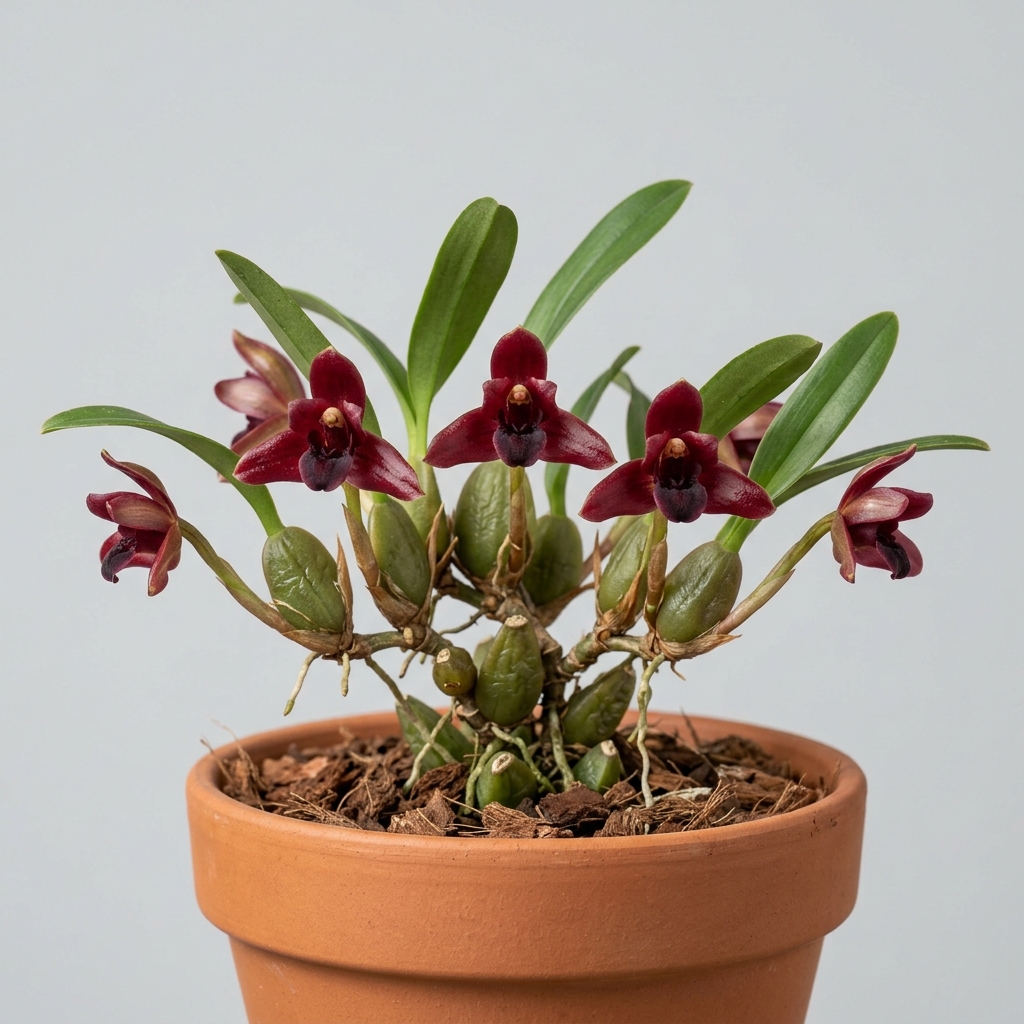
Maxillaria Variabilis is a highly popular and adaptable miniature orchid species prized by collectors for its charming growth habit and remarkably diverse color forms. Belonging to the diverse Maxillaria genus, this orchid is native to a wide range spanning Mexico through Central America and into South America, where it thrives in various forest environments as an epiphyte or lithophyte.
Growers particularly value this species for its compact size, creeping rhizomatous growth, and its tendency to produce multiple small, jewel-like flowers over an extended period. Because it is highly adaptable and relatively forgiving of minor cultural slips, it serves as an excellent entry point for orchid enthusiasts looking to venture beyond more common grocery-store genera.
💡 Did You Know?
Maxillaria Variabilis is named for its incredible color diversity, with flowers ranging from bright yellow to deep, near-black red. In the wild, these distinct color forms can sometimes be found growing in close proximity, creating a beautiful natural tapestry that has fascinated botanists and orchid collectors for generations.
🌿 Botanical Overview
Maxillaria Variabilis is characterized by its distinct creeping growth habit, utilizing a branching rhizome that connects small, slightly flattened, ovoid pseudobulbs. Each pseudobulb is topped by a single, linear-lanceolate, leathery leaf that remains attractive year-round. Over time, a single plant can quickly form a dense, cascading mat, making it highly suitable for basket culture or mounting on cork bark.
In its native habitats, this species grows as an epiphyte on tree branches or occasionally as a lithophyte on moss-covered rocks. This wide ecological distribution from sea level up to mid-elevation montane forests explains its robust nature and high tolerance for varying home temperatures and humidity levels.
🌸 Flower Characteristics
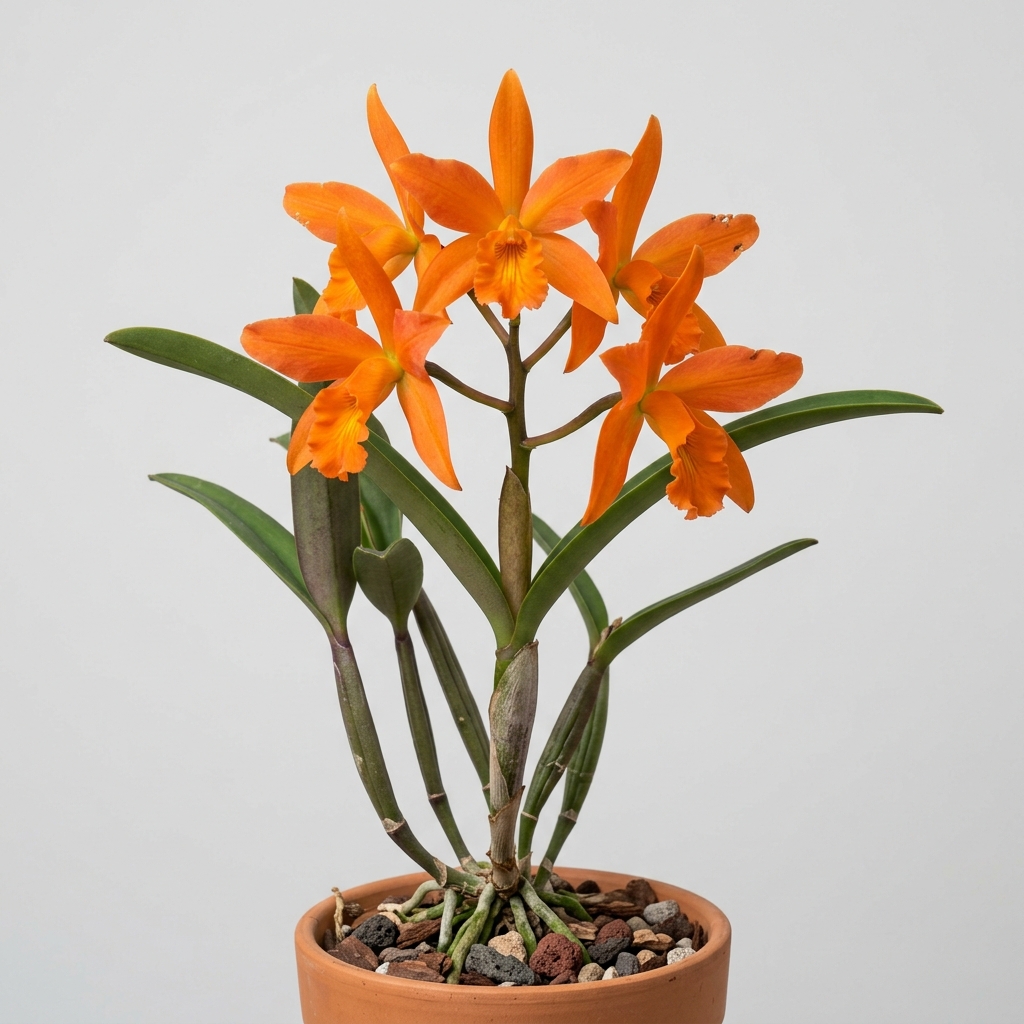
The flowers of Maxillaria Variabilis are relatively small, typically measuring between 1.5 to 2 centimeters in diameter, but they make up for their size with their striking, glossy texture and rich coloration. True to its specific epithet, “variabilis,” the blooms exhibit an extraordinary range of colors, including deep burgundy, bright yellow, orange, and occasionally a dark, near-black purple.
Each single-flowered inflorescence emerges from the base of the newly matured pseudobulb. The sepals and petals are typically similar in color, forming a cup-like shape around a prominent, fleshy lip that often features a darker, contrasting callus or spot in the center, drawing the eye inward.
Fragrance & Bloom Profile
The fragrance of Maxillaria Variabilis is a subject of much discussion among growers, as its intensity and profile can vary significantly between individual clones. Many specimens emit a subtle, sweet scent reminiscent of licorice, cocoa, or light honey, which is most noticeable on warm, sunny mornings.
However, some color forms or individual plants may produce little to no discernible fragrance. The blooms are long-lasting, often remaining fresh for several weeks, and because the plant produces flowers from successive pseudobulbs, a mature specimen can remain in bloom for months at a time.
Parentage & Hybrid Lineage
As a naturally occurring species rather than a man-made hybrid, Maxillaria Variabilis does not have a complex pedigree of parent cultivars. It is a stable species within the Orchidaceae family, though several distinct color forms have been selected and propagated vegetatively by specialty nurseries.
In orchid hybridization, the species is occasionally used to introduce compact growth habits, temperature tolerance, and intense color saturation to new Maxillaria hybrids. However, most plants found in cultivation are pure species selections valued for their wild, natural charm.
🌱 Growing Conditions
To cultivate Maxillaria Variabilis successfully, provide medium to bright indirect light, similar to the light levels preferred by Cattleya or Miltoniopsis orchids. Avoid direct midday sunlight, which can easily scorch the thin leaves, but ensure the light is sufficient to encourage robust blooming and tight, compact pseudobulb growth.
💡 Care Tip
To maintain the ideal balance of moisture for Maxillaria Variabilis, consider using a plastic pot with extra drainage holes or a net pot. This allows you to water frequently to keep the media damp while ensuring excellent oxygen flow to the roots, preventing the stagnant conditions that lead to rot.
This orchid thrives in intermediate to warm temperatures, with daytime highs between 70°F and 85°F (21°C to 29°C) and a slight drop at night to around 60°F to 65°F (15°C to 18°C). It can tolerate cooler winter temperatures down to 50°F (10°C) if kept slightly drier. Maintain relative humidity between 50% and 70%, supported by good air movement to prevent stagnant air and fungal issues.
Watering, Feeding & Potting Media
Unlike some orchids that require a distinct dry rest, Maxillaria Variabilis prefers consistent moisture throughout the year. The potting medium should remain damp but never waterlogged. Water the plant thoroughly just as the medium begins to approach dryness, ensuring that water drains freely from the container.
A potting mix consisting of fine-grade fir bark mixed with perlite and chopped sphagnum moss works exceptionally well to retain moisture while allowing air to reach the roots. Alternatively, the plant can be grown in pure high-quality New Zealand sphagnum moss in a plastic or clay pot. Feed weakly with a balanced, diluted orchid fertilizer every two to three weeks during the active growing season, flushing the pot with pure water once a month to prevent salt buildup.
Blooming Season & Care Notes
While Maxillaria Variabilis can produce occasional flowers at almost any time of the year, its primary blooming peak typically occurs in late winter and throughout the spring. As new pseudobulbs mature, keep a close eye on their bases for the emergence of small, pointed flower buds.
Repotting is best performed in the spring, immediately after the main flowering flush has finished and as new root growth begins to emerge from the base of the newest pseudobulbs. Because of its creeping rhizome, choose a shallow pot or a wide pan that allows the plant room to spread, or consider mounting it on a cork slab with a pad of sphagnum moss to accommodate its natural climbing habit.
⚠️ Common Issues
⚠️ Common Mistake
A frequent mistake is allowing Maxillaria Variabilis to dry out completely between waterings, treating it like a Cattleya. Because its pseudobulbs are relatively small, they have limited water storage capacity. Prolonged dry spells will quickly lead to root loss, leaf drop, and severely stunted new growth.
- Root rot:
Caused by overwatering or compacted, poorly draining potting media that suffocates the delicate root system. - Shriveled pseudobulbs: A sign of dehydration, which can result from underwatering or, paradoxically, from root loss due to rot.
- Leaf tip burn: Often indicates low humidity, excessive fertilizer salts in the media, or the use of water with high mineral content.
- Pests:
Mealybugs and spider mites can occasionally hide in the tight spaces between the pseudobulbs and leaf bases. - Lack of blooms: Usually caused by insufficient light levels during the active growing phase.
❓ Frequently Asked Questions
How often should I water Maxillaria Variabilis?
Watering frequency depends on your growing environment, but as a general rule, Maxillaria Variabilis should be watered just as the potting medium begins to dry out. Unlike some orchids, it does not have a dormant period and prefers to remain consistently damp. In typical home conditions, this may mean watering two to three times a week during the warm summer months and reducing the frequency slightly during the cooler winter season.
Can Maxillaria Variabilis be grown mounted on wood?
Yes, Maxillaria Variabilis is an excellent candidate for mounting on cork bark or tree fern slabs due to its creeping rhizomatous growth habit. When mounting, secure a generous pad of high-quality sphagnum moss around the roots to help retain moisture. Keep in mind that mounted plants dry out much faster than potted ones and will require daily misting or watering in most indoor environments.
Why are the pseudobulbs on my orchid shriveling?
Shriveled pseudobulbs indicate that the orchid is not absorbing enough water. This can be caused by simple underwatering, but it is also a common symptom of root rot. If the roots have rotted due to soggy, degraded media, they can no longer take up moisture, leading to dehydration. Inspect the root system; if the roots are mushy and brown, repot the plant in fresh media and adjust your watering routine.
What is the best light level for Maxillaria Variabilis?
This orchid prefers medium to bright indirect light. A east-facing window or a shaded south- or west-facing window is ideal. The leaves should be a healthy, light green color. If the leaves turn dark green, the plant is likely not receiving enough light to bloom well. Conversely, if the leaves develop yellow patches or a bleached appearance, the light is too intense and the plant should be moved to a more shaded location.
⭐ Final Growing Notes
Maxillaria Variabilis remains a highly rewarding species that brings a touch of wild tropical beauty to any indoor orchid collection. Its compact size, ease of culture, and fascinating color variations make it a delightful subject for both windowsill growers and greenhouse hobbyists. By providing consistent moisture, bright indirect light, and adequate air circulation, you can enjoy its charming, jewel-like blooms and lush, creeping foliage for many years to come.
⚕️ Health, Safety & Edibility
Understanding how a plant interacts with people, pets, and the surrounding environment is part of responsible cultivation. This section uses conservative, general guidance and does not replace professional medical or veterinary advice.
Human Safety: No published evidence currently identifies species-specific toxicity concerns for Maxillaria Variabilis during normal handling. As with most ornamental plants, it should not be intentionally consumed.
Pet Safety: Published information does not indicate that this orchid commonly poses a toxicity concern for cats or dogs. However, chewing leaves, flowers, roots, or potting media may still cause mild digestive upset.
Edibility: This orchid is cultivated for ornamental display rather than food. Ornamental plants may carry fertilizers, pesticides, or other horticultural treatments that make them unsuitable for consumption.
Skin Contact: Routine handling is not generally associated with skin irritation. Gardeners with sensitive skin may prefer wearing gloves when repotting, pruning, or handling potting media.
🌱 Propagation Tip
This species is easily propagated by division during repotting. Ensure that each division contains at least three to four healthy, mature pseudobulbs with an active lead or new growth. Gently cut the rhizome with a sterile tool, apply a dab of cinnamon powder to the cut to prevent infection, and pot the new division in fresh, moist media.
⭐ Expert Advice
If you struggle to get your Maxillaria Variabilis to bloom, try providing a slight drop in night temperatures during the autumn months. A differential of about 10 to 15 degrees Fahrenheit between day and night, combined with bright indirect , often acts as a strong trigger for abundant bud initiation.

Leave A Comment