
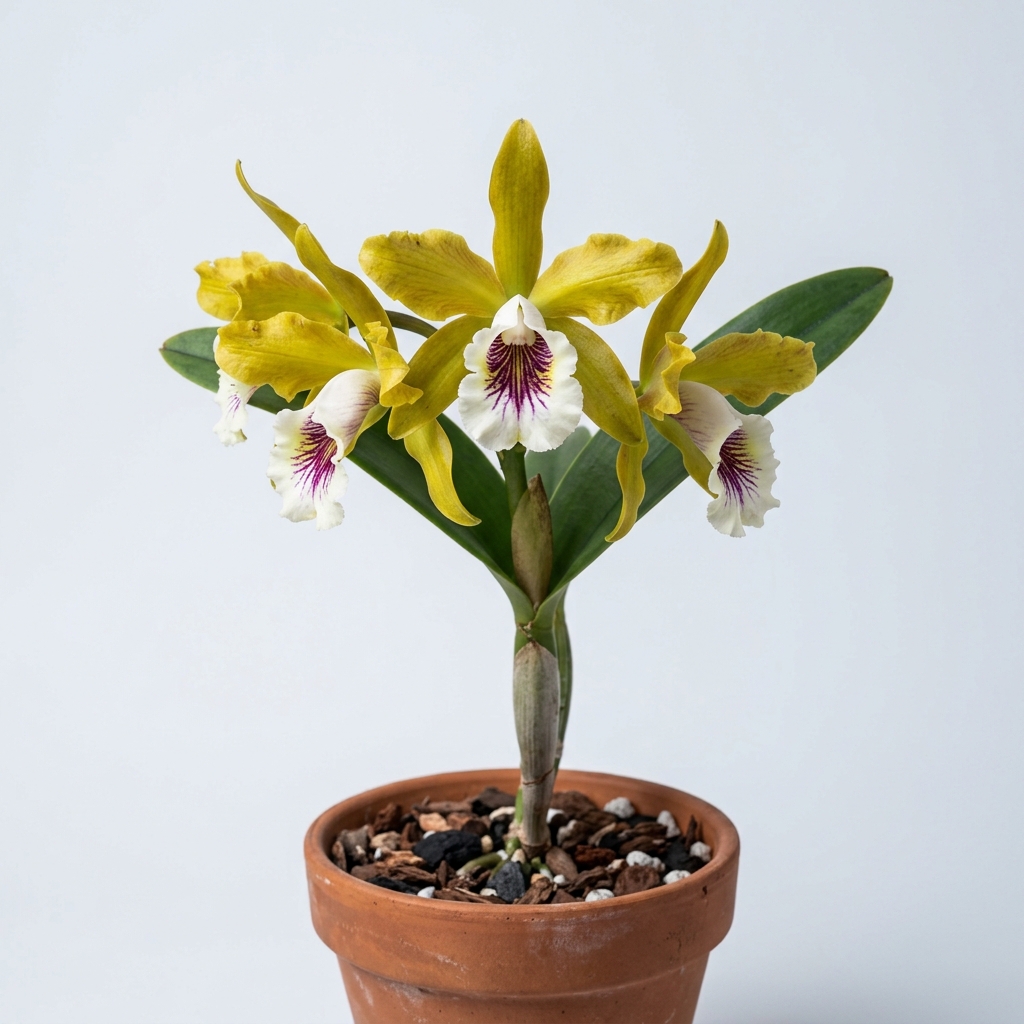
Cattleya Xanthina is a highly esteemed bifoliate orchid species native to the Atlantic forest region of Brazil. Prized by collectors and hybridizers alike, this species is celebrated for its distinctive yellow to greenish-yellow flowers that contrast beautifully with a white, intricately veined lip. The plant shows a robust growth habit, characterized by slender, club-shaped pseudobulbs topped with two leathery, dark green leaves that provide a handsome backdrop even when the orchid is not in bloom.
Growers value Cattleya Xanthina not only for its striking botanical aesthetic but also for its historical importance in orchid breeding. It has been used extensively to introduce warm yellow tones and elegant lip patterns to modern Cattleya hybrids. While it requires a bit more attention to watering and light than some mass-market hybrids, its rewarding floral display and classic tropical charm make it a centerpiece of any serious orchid collection.
💡 Did You Know?
Cattleya Xanthina played a foundational role in the history of orchid hybridization. In the late nineteenth and early twentieth centuries, hybridizers heavily relied on this Brazilian species to introduce vibrant yellow and gold tones into modern large-flowered Cattleya hybrids, making it an ancestral cornerstone of many famous yellow orchids grown today.
🌿 Botanical Overview
Cattleya Xanthina is an epiphytic orchid species indigenous to the cool, humid canopy of Brazil’s coastal forests. In its natural habitat, it grows anchored to the bark of trees, where it is exposed to dappled sunlight, high humidity, and frequent rainfall followed by rapid drying. This environmental niche dictates its cultural preferences in cultivation, particularly its need for excellent root aeration.
The vegetative structure of this orchid consists of upright, club-like pseudobulbs that typically reach heights of eight to twelve inches. Each mature pseudobulb bears two thick, oblong, leathery leaves at its apex, classifying it as a bifoliate Cattleya. These leaves serve as water-storage organs, helping the plant survive brief dry spells in the wild and under home care.
🌸 Flower Characteristics
The blossoms of Cattleya Xanthina are the primary reason for its enduring popularity. The flowers typically measure three to five inches across and are borne on short, sturdy spikes that emerge from a green sheath at the top of the newest pseudobulb. Each spike can carry between two and five flowers, presenting them in a loose, elegant cluster.
The sepals and petals are generally a clear, luminous yellow, though some variations display shades of olive-green, bronze, or pale gold. The petals are often slightly wavy along the margins, adding texture to the bloom. The defining feature is the prominent, three-lobed lip, which is primarily white or cream-colored, adorned with striking crimson or purple veins running deep into the throat, creating a beautiful focal point.
Fragrance & Bloom Profile
Cattleya Xanthina is known for its pleasant, moderate fragrance. The scent is typically described as sweet and clean, often with subtle citrus or honey-like undertones. The fragrance is most pronounced during the morning hours when temperatures begin to rise and light levels increase, filling the surrounding growing space with a delicate tropical aroma.
The blooming cycle occurs once a year, usually starting in late spring and extending into the mid-summer months. Individual flowers are relatively long-lasting for a Cattleya species, often remaining fresh and vibrant for three to four weeks if the plant is kept in a cool, draft-free location away from direct sunlight during the blooming period.
Parentage & Hybrid Lineage
Unlike many complex modern cultivars, Cattleya Xanthina is a distinct, naturally occurring species rather than an artificial hybrid. This status makes it highly valued by purists who appreciate species orchids. However, its genetic contribution to the orchid world is immense, having served as a key parent in breeding programs for over a century.
Its primary contribution to its progeny is the introduction of clear yellow pigmentation and the beautifully veined lip pattern. When crossed with other Cattleya species, it has helped produce some of the most famous yellow and art-shade hybrids in orchid history. In grower circles, maintaining the genetic purity of this species through selfing or sibling crosses is considered vital for conservation.
🌱 Growing Conditions
To grow Cattleya Xanthina successfully, one must replicate its native forest canopy environment. It thrives in bright, indirect light. A east- or shaded south-facing window is ideal for indoor growers. The leaves should maintain a light, grassy green color; dark green leaves indicate insufficient light, while yellow or scorched patches signal too much direct sun.
💡 Care Tip
Provide this orchid with strong, filtered and excellent air circulation. The leaves should be a , grassy green color; if they turn dark green, the plant is not receiving enough to bloom, whereas yellow-bronze leaves indicate too much direct sun.
Temperature: wise, this orchid prefers intermediate to warm conditions. Daytime temperatures should ideally range between 75°F and 85°F, with a nighttime drop to 60°F or 65°F. This diurnal temperature fluctuation is crucial for stimulating healthy growth and future flower bud development. High humidity of 50% to 70% coupled with constant, gentle air movement is essential to prevent stagnant air pockets around the foliage.
Watering, Feeding & Potting Media
Watering should be approached with a “soak and dry” strategy. During the active growing season in spring and summer, water the plant thoroughly, allowing water to run freely through the pot. However, the potting medium must be allowed to dry out almost completely before watering again. In winter, during the plant’s rest phase, reduce watering frequency significantly, providing just enough moisture to keep the pseudobulbs from shriveling.
A coarse, highly porous potting medium is mandatory to ensure rapid drainage and air access to the roots. A mix of medium-to-coarse fir bark, horticultural charcoal, and perlite works exceptionally well. Feed the orchid weekly with a diluted, balanced orchid fertilizer (such as a 20-20-20 formula at quarter-strength) during active growth, and flush the pot with pure water once a month to prevent fertilizer salt buildup.
Blooming Season & Care Notes
The blooming process begins in early spring as new pseudobulbs mature and develop a green sheath at their apex. During this critical development phase, avoid moving the plant or changing its orientation to the light source, as sudden changes can cause the developing buds to blast. Keep humidity high and ensure temperatures remain stable.
Once the flowers fade, cut the flower spike back to the base of the sheath using sterilized cutting tools to prevent the spread of pathogens. The orchid will then enter a period of vegetative rest. This rest period is the ideal time to inspect the plant for any structural issues and prepare it for the next growth cycle by adjusting your watering schedule downward.
⚠️ Common Issues
⚠️ Common Mistake
A frequent error is keeping the potting medium constantly wet, especially during the winter rest period. Overwatering quickly suffocates the thick, sensitive roots of Cattleya Xanthina, leading to root rot, pseudobulb shriveling, and the eventual decline of the entire plant.
- Root Rot:
Caused by overwatering or a decomposing potting medium that retains too much moisture, leading to mushy, black roots and shriveled pseudobulbs. - Bud Blast:
The sudden yellowing and dropping of flower buds before they open, usually triggered by rapid temperature swings, low humidity, or drafts. - Scale and Mealybugs: Common sap-sucking pests that hide under the papery sheaths of the pseudobulbs or on the undersides of leaves.
- Leaf Sunburn: Bleached or black, dry patches on the leaves caused by exposure to intense, direct midday sunlight.
❓ Frequently Asked Questions
How often should I water my Cattleya Xanthina?
There is no set calendar schedule, as drying time depends on your home’s temperature and humidity. Generally, watering once or twice a week during the hot summer months and once every ten to fourteen days in winter is standard, but always check that the medium is nearly dry before adding water.
Why are the pseudobulbs on my orchid shriveling?
Shriveled pseudobulbs indicate dehydration, which can be caused by two opposite problems: either the plant is not receiving enough water, or the roots have rotted due to overwatering and can no longer absorb moisture. Inspect the root system to determine the correct cause.
Can I grow Cattleya Xanthina mounted on cork bark?
Yes, this species responds very well to being mounted on cork bark or tree fern plaques, as this closely mimics its natural epiphytic habit. Keep in mind that mounted orchids dry out much faster than potted ones and may require daily watering or misting in warm weather.
What is the best fertilizer ratio for this orchid?
A balanced, water-soluble orchid fertilizer such as a 20-20-20 ratio is ideal. Apply it at one-quarter of the recommended strength every time you water during the spring and summer, and scale back to once a month or omit it entirely during the winter rest period.
⭐ Final Growing Notes
Cattleya Xanthina remains a classic and highly rewarding orchid species that brings the authentic beauty of the Brazilian rainforest into the home or greenhouse. By providing bright, filtered light, maintaining intermediate temperatures, and strictly adhering to a wet-to-dry watering cycle, growers can enjoy its striking yellow blooms and delightful morning fragrance for many years. It is a testament to the timeless elegance of wild orchid species.
⚕️ Health, Safety & Edibility
Understanding how a plant interacts with people, pets, and the surrounding environment is part of responsible cultivation. This section uses conservative, general guidance and does not replace professional medical or veterinary advice.
Human Safety: No published evidence currently identifies species-specific toxicity concerns for Cattleya Xanthina during normal handling. As with most ornamental plants, it should not be intentionally consumed.
Pet Safety: Published information does not indicate that this orchid commonly poses a toxicity concern for cats or dogs. However, chewing leaves, flowers, roots, or potting media may still cause mild digestive upset.
Edibility: This orchid is cultivated for ornamental display rather than food. Ornamental plants may carry fertilizers, pesticides, or other horticultural treatments that make them unsuitable for consumption.
Skin Contact: Routine handling is not generally associated with skin irritation. Gardeners with sensitive skin may prefer wearing gloves when repotting, pruning, or handling potting media.
🌱 Propagation Tip
Propagate Cattleya Xanthina by division only when the plant has outgrown its container and possesses at least six to eight healthy pseudobulbs. Ensure each new division has at least three active pseudobulbs and a strong lead eye to support new growth.
⭐ Expert Advice
Always time your repotting to coincide with the emergence of fresh, green root tips at the base of the newest pseudobulb. Repotting at any other time can severely shock the orchid, as older roots rarely adapt well to being disturbed or moved into new media.

Leave A Comment