
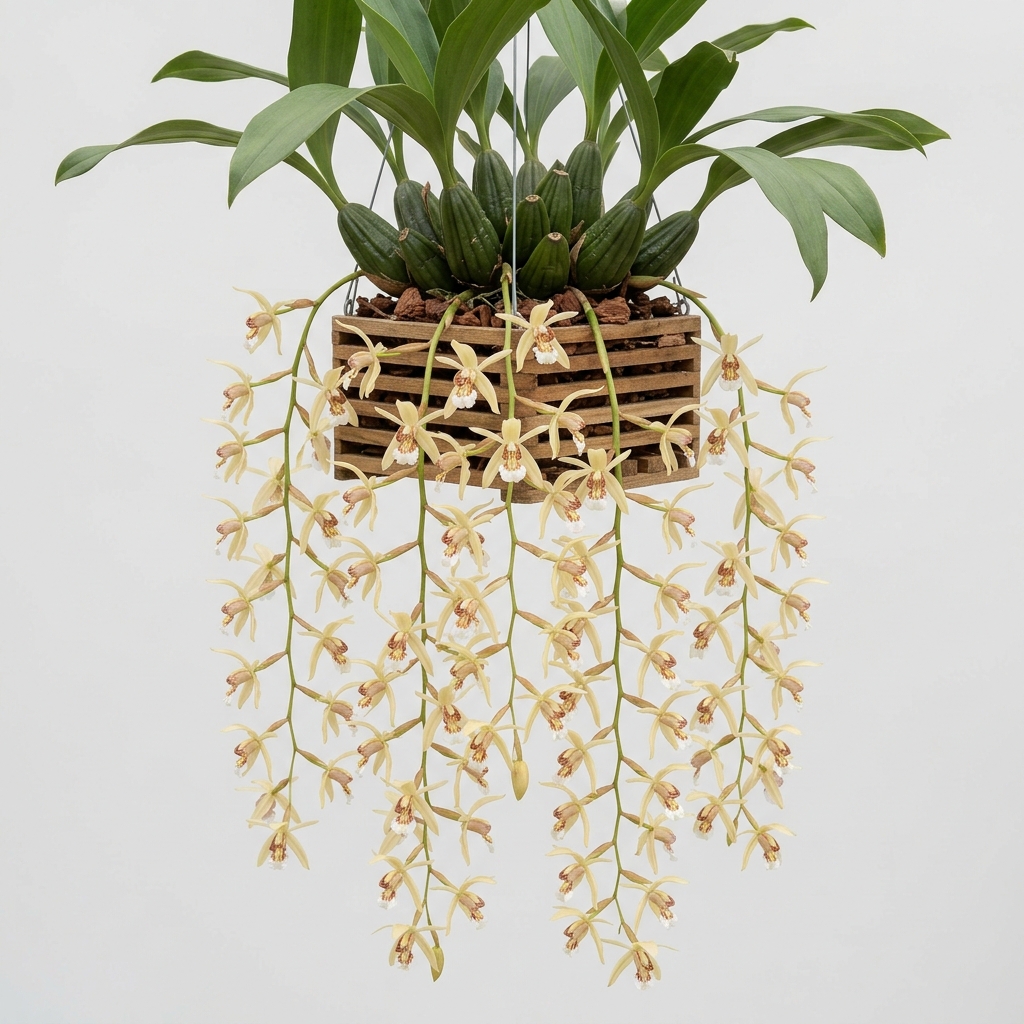
Coelogyne Rochussenii is a highly prized epiphytic orchid species native to the tropical rainforests of Southeast Asia, celebrated for its spectacular pendulous blooming habit. Often referred to colloquially as the necklace orchid, this species produces dramatic, cascading flower spikes that can reach over three feet in length. Orchid enthusiasts value this plant for its vigorous growth and the sheer volume of blossoms it can produce simultaneously when mature.
In cultivation, this orchid forms large, impressive specimens characterized by robust, ribbed pseudobulbs and broad, leathery leaves. Because its inflorescences hang straight down from the base of the pseudobulbs, it requires specialized housing, such as hanging baskets or mounts, to fully display its floral display. While it demands consistent warmth and high humidity, its rewarding flowering display makes it a centerpiece in any intermediate to warm greenhouse collection.
💡 Did You Know?
Coelogyne Rochussenii is capable of producing spectacular specimen displays where dozens of pendulous spikes hang simultaneously, resembling a floral chandelier. In mature, well-grown plants, these cascading chains of flowers can hold over forty individual blossoms each, creating a breathtaking curtain of pale yellow and white that fills the surrounding air with a rich, sweet .
🌿 Botanical Overview
Coelogyne Rochussenii is characterized by its sympodial growth habit, producing clustered, elongated pseudobulbs that are deeply furrowed or ribbed. Each pseudobulb typically bears two large, obovate leaves that remain attractive throughout the year. The plant spreads via a stout, creeping rhizome, which allows it to quickly fill out a growing container or basket.
In its natural habitat, this epiphyte grows on the trunks and lower branches of trees in lowland rainforests, often near rivers or in moist valleys. This environment provides continuous air movement, high humidity, and filtered light, which are key factors to replicate in a home or greenhouse setting.
🌸 Flower Characteristics
The defining feature of Coelogyne Rochussenii is its pendulous, multi-flowered inflorescence. A single spike can carry anywhere from thirty to over forty individual blossoms, arranged in a dense, elegant chain. The flowers are relatively small to medium in size, typically measuring around one and a half to two inches across.
The sepals and petals are narrow, star-like, and range in color from pale cream to lemon-yellow or light green. The lip, or labellum, is three-lobed and features striking contrast, often displaying white margins with a yellow center and fine brown or orange veins. The overall effect of dozens of these delicate flowers hanging in unison is highly dramatic.
Fragrance & Bloom Profile
This species is renowned for its strong, sweet fragrance, which is most intense during the morning hours. Growers frequently describe the scent as a blend of citrus, honey, and mild spice. The perfume can easily fill an entire growing room or greenhouse when the plant is in full bloom.
The individual flowers are somewhat delicate and typically last between one and two weeks. Because the flowers open nearly simultaneously along the entire length of the cascading spike, the blooming event is highly synchronized, creating a brief but spectacular show.
Parentage & Hybrid Lineage
As a naturally occurring species rather than a complex artificial hybrid, Coelogyne Rochussenii represents a pure line within the genus Coelogyne. While it is occasionally used in hybridizing programs to introduce its pendulous spike habit and fragrance to offspring, most specimens in cultivation are grown as the true species.
Growers should note that some variation in flower size, color intensity, and spike length can occur depending on the specific geographical clone or cultivar selection. When purchasing, sourcing from reputable nurseries ensures the plant is a true-to-type representation of this magnificent species.
🌱 Growing Conditions
To thrive, Coelogyne Rochussenii requires intermediate to warm temperatures, ideally ranging from 70°F to 85°F during the day, with a slight drop at night to stimulate growth. It does not tolerate cold drafts or prolonged exposure to temperatures below 55°F.
💡 Care Tip
Always hang Coelogyne Rochussenii high enough in your growing area to accommodate its long, cascading flower spikes, which can easily reach three feet in length. Providing gentle, continuous air movement around the hanging basket is vital to keep the foliage dry and prevent fungal issues in high- environments.
Light levels should be bright but filtered, similar to the conditions preferred by many Cattleya orchids. Direct midday sun will quickly scorch the broad leaves, while excessive shade will inhibit flowering. High humidity, ideally between 60% and 80%, combined with constant, gentle air movement, is essential to prevent fungal issues and support healthy foliage.
Watering, Feeding & Potting Media
During the active growing season in spring and summer, Coelogyne Rochussenii requires abundant water and should never be allowed to dry out completely. The potting medium should remain consistently moist but free-draining. In winter, watering should be reduced slightly, allowing the medium to approach dryness between waterings, though the pseudobulbs should never be allowed to shrivel severely.
Because of its pendulous flowering habit, this orchid must be grown in a slatted wooden or plastic basket, or mounted on a large slab of cork bark or tree fern. Standard pots are unsuitable as they block the downward growth of the flower spikes. A loose, airy medium consisting of medium-grade fir bark mixed with sphagnum moss and perlite works exceptionally well to retain moisture while ensuring excellent drainage. Feed weekly with a diluted, balanced orchid fertilizer during active growth.
Blooming Season & Care Notes
Coelogyne Rochussenii typically blooms in the late autumn or winter, though seasonal shifts can occur depending on local growing conditions. The flower spikes emerge from the base of the mature pseudobulbs, initially resembling small, pointed buds before rapidly elongating downward.
During spike development, it is critical not to disturb the plant or change its orientation, as sudden environmental shifts can cause bud blast. Avoid spraying water directly onto the developing buds or open flowers, as this can cause spotting or premature decay. Repotting or dividing should only be done immediately after flowering has finished and new vegetative growth begins to emerge.
⚠️ Common Issues
⚠️ Common Mistake
A frequent mistake is planting Coelogyne Rochussenii in a traditional plastic or clay pot. Because the flower spikes grow downward from the base of the pseudobulbs, they will become trapped and rot inside a standard pot. Always use open-slatted baskets or mounts to allow the spikes to cascade freely.
- Root Rot: Caused by compacted, poorly draining media or overwatering during the cooler winter rest period.
- Bud Blast: Sudden dropping of buds often triggered by low humidity, drafty conditions, or dry root zones during spike elongation.
- Leaf Spotting: Fungal or bacterial spots can develop if water sits on the foliage overnight without adequate air circulation.
- Spider Mites and Mealybugs: Common pests that hide in the crevices of the ribbed pseudobulbs and the undersides of the broad leaves; treat promptly with insecticidal soap or horticultural oil.
- Shriveled Pseudobulbs: A sign of severe dehydration, either due to underwatering or a loss of the root system from rot.
❓ Frequently Asked Questions
Why is my Coelogyne Rochussenii not blooming?
The most common cause of poor blooming is insufficient light. While this orchid dislikes direct sunlight, it requires bright, filtered light to build the energy necessary to produce its massive flower spikes. Additionally, ensure the plant experiences a slight night-to-day temperature drop and is not over-fertilized with high-nitrogen formulas late in the growing season.
Can I grow Coelogyne Rochussenii in a standard plastic pot?
Growing this species in a standard solid pot is highly discouraged. Because the flower spikes emerge from the base of the pseudobulbs and grow directly downward, a standard pot will trap and damage the developing spikes. Slatted baskets, wire baskets lined with coconut fiber, or mounts are essential to allow the pendulous inflorescences to cascade naturally.
How often should I water this orchid during the winter?
During the winter, Coelogyne Rochussenii undergoes a semi-dormant period. You should reduce watering frequency, allowing the potting medium to dry out slightly more than in summer. However, do not allow the medium to dry out completely for extended periods, and monitor the pseudobulbs; if they begin to shrivel significantly, increase watering slightly.
What is the best way to increase humidity for this species indoors?
Because this orchid requires high humidity (60% to 80%), growing it in a standard home environment can be challenging. You can increase humidity by placing the hanging basket over a large humidity tray filled with water and pebbles, grouping it with other moisture-loving plants, or using a dedicated cool-mist humidifier nearby. Ensure adequate fan-driven air movement to prevent stagnant air.
⭐ Final Growing Notes
Coelogyne Rochussenii is a magnificent species that rewards the patient grower with one of the most dramatic floral displays in the orchid world. While its large size and pendulous blooming habit require specific accommodations, such as hanging baskets and high humidity, its robust growth and sweet, citrusy fragrance make it an incredibly fulfilling species to cultivate. By mimicking its native tropical forest environment with consistent warmth, moisture, and bright filtered light, you can enjoy its spectacular golden chains of flowers year after year.
⚕️ Health, Safety & Edibility
Understanding how a plant interacts with people, pets, and the surrounding environment is part of responsible cultivation. This section uses conservative, general guidance and does not replace professional medical or veterinary advice.
Human Safety: No published evidence currently identifies species-specific toxicity concerns for Coelogyne Rochussenii during normal handling. As with most ornamental plants, it should not be intentionally consumed.
Pet Safety: Published information does not indicate that this orchid commonly poses a toxicity concern for cats or dogs. However, chewing leaves, flowers, roots, or potting media may still cause mild digestive upset.
Edibility: This orchid is cultivated for ornamental display rather than food. Ornamental plants may carry fertilizers, pesticides, or other horticultural treatments that make them unsuitable for consumption.
Skin Contact: Routine handling is not generally associated with skin irritation. Gardeners with sensitive skin may prefer wearing gloves when repotting, pruning, or handling potting media.
🌱 Propagation Tip
Propagate this species by division only when the plant has outgrown its basket and has at least six to eight healthy pseudobulbs. Carefully divide the rhizome using a sterile tool, ensuring each new division has at least three active pseudobulbs and a strong lead growth to support rapid recovery.
⭐ Expert Advice
To maximize the blooming potential of Coelogyne Rochussenii, maintain high and abundant throughout the summer active growth phase. A well-hydrated plant with plump, robust pseudobulbs will have the energy reserves required to produce multiple, heavily-flowered pendulous spikes during its winter blooming cycle.

Leave A Comment