
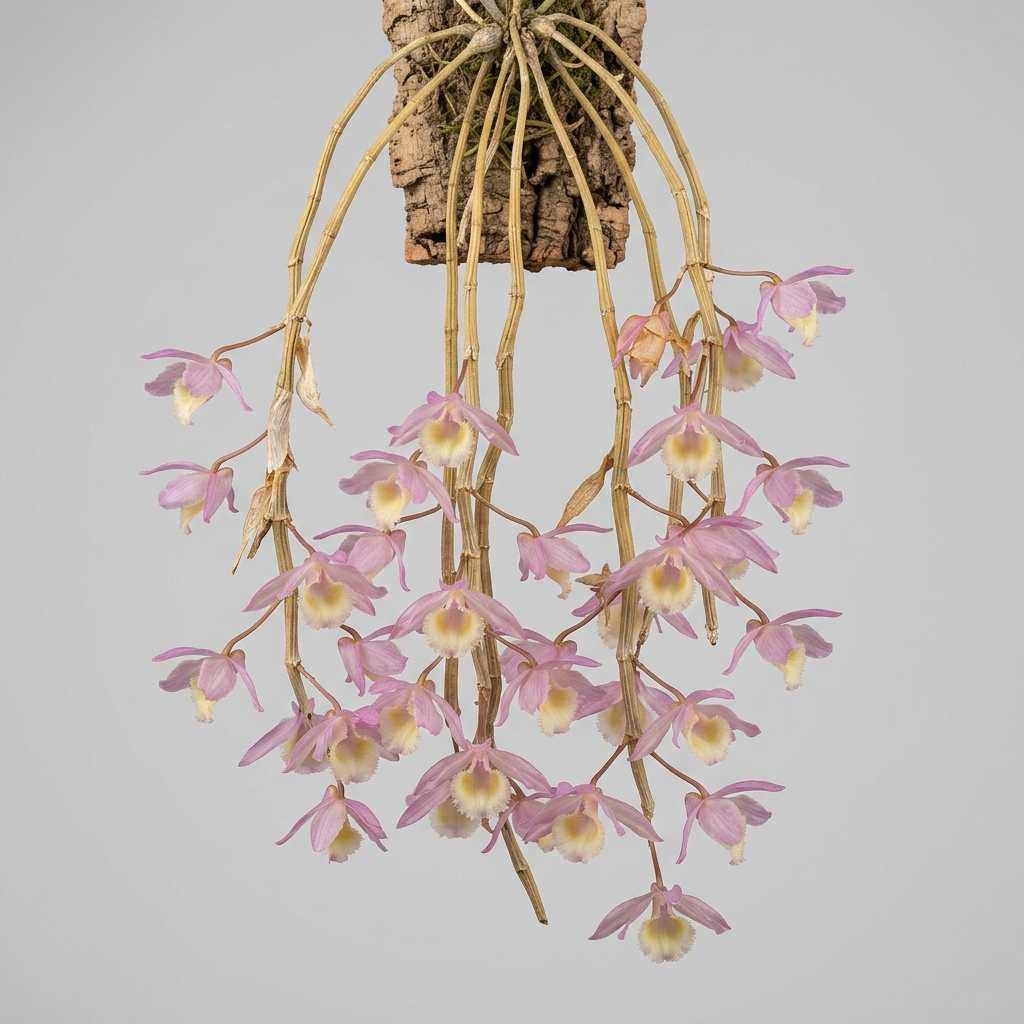
Dendrobium Aphyllum, commonly referred to as the hooded dendrobium or leafless dendrobium, is a captivating epiphytic orchid species native to the seasonal forests of South and Southeast Asia. Highly prized by orchid enthusiasts for its dramatic, pendulous growth habit, this species produces long, cascading canes that can reach several feet in length. During its annual blooming cycle, these seemingly lifeless, deciduous canes transform into spectacular curtains of delicate, pastel-colored blossoms.
Cultivating this species offers a rewarding challenge for intermediate growers who can accommodate its distinct seasonal requirements. Unlike many evergreen orchids, Dendrobium Aphyllum relies on a strict winter dry period to trigger its spring flowering. When properly managed, the contrast between the bare, straw-like canes and the soft, fringed flowers creates one of the most breathtaking displays in the entire Dendrobium genus.
💡 Did You Know?
The species name 'aphyllum' literally translates to 'leafless' in Greek. This refers to the orchid's distinctive habit of shedding all of its foliage prior to blooming, leaving the long, bare canes to be completely covered in delicate pink and cream flowers during the spring.
🌿 Botanical Overview
Dendrobium Aphyllum is characterized by its tufted, pendulous pseudobulbs, which are slender and cane-like. These canes grow rapidly during the warm, wet summer months, clothed in thin, lanceolate leaves. As autumn approaches, the plant naturally prepares for dormancy, shedding all of its leaves to conserve moisture during the dry winter season. This deciduous behavior is a survival mechanism adapted to its native monsoonal habitat.
The root system of this species is relatively fine and opportunistic, clinging tightly to tree branches in the wild. Because of its hanging growth habit, the plant is structurally adapted to receive excellent drainage and rapid drying. Attempting to grow this orchid upright in a standard pot often restricts its natural form and can lead to root rot.
🌸 Flower Characteristics
The flowers of Dendrobium Aphyllum emerge individually or in small clusters of two to three from the nodes of the leafless canes. Each blossom typically measures between one and two inches in diameter. The sepals and petals are translucent, displaying soft shades of pale pink, lavender, or mauve.
The defining feature of the flower is its prominent, trumpet-shaped lip, or labellum. The lip is typically cream-colored or pale yellow, featuring a finely fringed or pubescent margin and delicate purple veining deep within the throat. This hooded structure protects the reproductive column and guides pollinators.
Fragrance & Bloom Profile
The fragrance of Dendrobium Aphyllum is generally described as sweet and delicate, often carrying subtle notes reminiscent of raspberries or fresh violets. However, fragrance intensity can be highly dependent on environmental factors such as temperature, humidity, and light levels. The scent is typically most pronounced during the morning hours when humidity is high and temperatures begin to rise.
Individual flowers are relatively short-lived, lasting approximately two to three weeks. However, because a mature specimen can produce dozens of flowers simultaneously along the entire length of multiple canes, the overall blooming display remains highly impactful.
Parentage & Hybrid Lineage
Dendrobium Aphyllum is a naturally occurring species rather than a man-made hybrid or cultivar. In botanical literature, it has been known by several synonyms, most notably Dendrobium pierardii and Dendrobium cucullatum. While some regional variations in cane length and flower color intensity exist, these are considered natural geographical forms rather than distinct cultivars.
Because of its floriferous nature and pendulous habit, this species has been used as a parent in hybridizing programs within the Dendrobium genus. It passes on its free-flowering characteristics and soft pastel coloration to its offspring, though many hybrids lose the strict deciduous requirement of the parent species.
🌱 Growing Conditions
To grow Dendrobium Aphyllum successfully, one must mimic the seasonal shifts of its native environment. During the active growing season from spring to early autumn, the orchid thrives in warm temperatures ranging from 75 to 90 degrees Fahrenheit. It requires bright, filtered light, similar to the dappled canopy of a tropical forest, but should be protected from intense, direct midday sun which can scorch the foliage.
💡 Care Tip
Always hang your mounted Dendrobium Aphyllum in a location with excellent air circulation. Because the roots are exposed when mounted, rapid drying after is crucial to mimic its natural canopy habitat and prevent fungal issues.
In the winter, temperatures should be allowed to drop significantly, ideally down to 50 to 60 degrees Fahrenheit at night. This cooling period, combined with high light intensity and reduced moisture, is essential for initiating flower buds rather than vegetative growth. Good air movement is critical year-round to prevent stagnant air pockets around the roots and foliage.
Watering, Feeding & Potting Media
Watering practices must be strictly divided into two distinct phases. During the active summer growth period, the orchid should be watered copiously, keeping the roots consistently moist but not waterlogged. Weekly applications of a balanced, diluted orchid fertilizer will support the rapid development of new canes.
As the leaves begin to yellow and drop in late autumn, watering must be drastically reduced. Throughout the winter rest, the plant should receive only enough water to prevent the canes from shriveling excessively—typically a light misting every one to two weeks. Fertilizer must be completely withheld during this dormant phase.
Because of its pendulous growth, mounting this orchid on cork bark, tree fern plaques, or placing it in open wooden baskets is highly recommended. If potted, a very loose, fast-draining medium such as coarse fir bark mixed with charcoal should be used.
Blooming Season & Care Notes
The blooming season occurs in early to mid-spring, shortly after the winter rest period ends. Small buds will begin to swell at the nodes along the bare canes. Once these buds are visible, growers can gradually resume light watering, but full watering and fertilizing should not commence until the flowers have faded and new green shoots appear at the base of the plant.
Repotting or remounting should only be performed immediately after flowering, just as the new vegetative growth begins to produce fresh roots. This timing ensures the plant establishes itself quickly in its new medium before the summer heat arrives.
⚠️ Common Issues
⚠️ Common Mistake
The most common mistake is the orchid during its winter rest. Providing moisture when the plant is dormant can rot the roots and cause the flower buds to convert into vegetative keikis, ruining the spring floral display.
- Lack of Blooms: Usually caused by failing to provide a sufficiently dry or cool winter rest, resulting in the plant producing vegetative keikis instead of flower buds.
- Root Rot:
Occurs when the plant is grown in dense potting media or watered excessively during the winter dormancy. - Spider Mites and Mealybugs: Can infest the tender new growth during the warm summer months; regular inspection and high humidity help deter these pests.
- Cane Shriveling: While slight shriveling is normal during winter dormancy, severe shriveling indicates extreme dehydration, requiring a light misting.
❓ Frequently Asked Questions
Why is my Dendrobium Aphyllum losing all its leaves?
This is a completely natural, deciduous process that occurs every autumn. The shedding of leaves signals the start of the winter dormant period, which is necessary for the orchid to conserve energy and prepare for spring blooming.
How do I trigger blooms on my Dendrobium Aphyllum?
To trigger blooming, you must provide a strict winter rest starting in late autumn. Reduce watering to a bare minimum, completely stop fertilizing, and expose the plant to cooler night temperatures and bright light for several weeks.
Can I grow Dendrobium Aphyllum in a standard plastic pot?
While possible, it is not recommended. The long, pendulous canes naturally cascade downward. Growing the plant mounted on cork bark or in a hanging basket allows the canes to hang freely and ensures the rapid drainage the roots require.
What are the small plants growing on the sides of the canes?
These are keikis, which are vegetative offsets or clones of the parent plant. They often develop if the orchid receives too much water or fertilizer during its winter rest instead of flower buds. Once they develop roots, they can be gently removed and potted individually.
⭐ Final Growing Notes
Dendrobium Aphyllum remains a classic favorite among orchid collectors due to its dramatic seasonal transformation and elegant, cascading floral displays. While its strict winter rest requirement demands discipline from the grower, the reward of a fully blooming specimen makes it an exceptionally satisfying species to master. By respecting its natural cycle of wet summers and dry, cool winters, you can enjoy its delicate, fragrant blossoms year after year.
⚕️ Health, Safety & Edibility
Understanding how a plant interacts with people, pets, and the surrounding environment is part of responsible cultivation. This section uses conservative, general guidance and does not replace professional medical or veterinary advice.
Human Safety: No published evidence currently identifies species-specific toxicity concerns for Dendrobium Aphyllum during normal handling. As with most ornamental plants, it should not be intentionally consumed.
Pet Safety: Published information does not indicate that this orchid commonly poses a toxicity concern for cats or dogs. However, chewing leaves, flowers, roots, or potting media may still cause mild digestive upset.
Edibility: This orchid is cultivated for ornamental display rather than food. Ornamental plants may carry fertilizers, pesticides, or other horticultural treatments that make them unsuitable for consumption.
Skin Contact: Routine handling is not generally associated with skin irritation. Gardeners with sensitive skin may prefer wearing gloves when repotting, pruning, or handling potting media.
🌱 Propagation Tip
If your orchid produces keikis along the canes, wait until their roots are at least two to three inches long before gently detaching them. You can then mount them or pot them in a fine bark mix to establish new individual plants.
⭐ Expert Advice
To maximize the flower count, ensure the orchid receives very bright, filtered during its winter rest. High levels, combined with cool temperatures and dry conditions, are the primary triggers for a spectacular, heavy bloom.

Leave A Comment