

Dendrobium Atroviolaceum is a highly prized orchid species belonging to the Latouria section of the diverse Dendrobium genus. Native to the rainforests of New Guinea, this orchid is celebrated by collectors for its striking, long-lasting flowers and robust growth habit. Its distinctive spotted blooms and compact, club-shaped pseudobulbs make it an exceptional addition to indoor orchid collections and greenhouse displays alike.
Growers value this orchid not only for its exotic aesthetic but also for its relatively forgiving nature compared to other tropical species. The blossoms are remarkably durable, often remaining in pristine condition for several months. By understanding its natural montane forest habitat, enthusiasts can easily replicate the warm, humid conditions necessary to help this remarkable plant thrive and bloom reliably year after year.
💡 Did You Know?
Dendrobium Atroviolaceum belongs to the Latouria section of orchids, which are famous for their virtually evergreen growth habit and incredibly long-lasting flowers. While some orchids bloom for only a few weeks, a healthy specimen of this species can hold its waxy, spotted blossoms in pristine condition for up to four months.
🌿 Botanical Overview
Dendrobium Atroviolaceum is characterized by its clavate, or club-shaped, pseudobulbs that taper toward the base and carry two to three thick, leathery, dark green leaves at the apex. These pseudobulbs act as water and nutrient storage organs, allowing the plant to withstand brief periods of dryness in its native canopy environment. The root system is typically fine and fibrous, adapted to gripping mossy tree branches.
In its native habitat of New Guinea, this epiphytic orchid grows at low to moderate elevations, where it experiences consistent warmth, high humidity, and frequent rainfall. Because it belongs to the Latouria section, it does not require a severe dry winter rest to initiate blooms, unlike deciduous Dendrobium species. This evergreen habit makes it visually appealing throughout the entire year.
🌸 Flower Characteristics
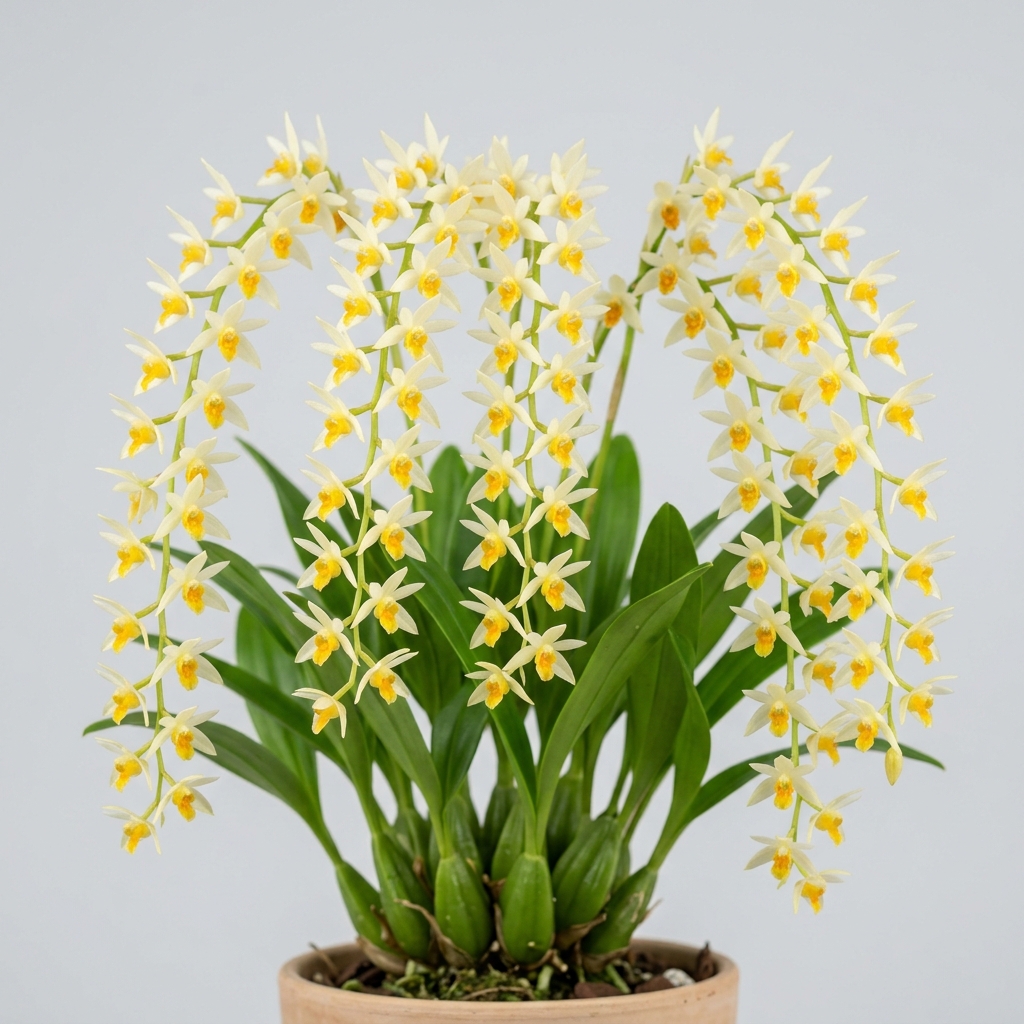
The flowers of Dendrobium Atroviolaceum are famously nodding or downward-facing, presented on upright or arching inflorescences that emerge from the nodes near the top of mature pseudobulbs. Each spike can carry several medium-sized flowers, typically measuring two to three inches across. The sepals and petals are a creamy white to pale greenish-yellow, heavily covered in small, dark purple or near-black spots.
The most dramatic feature of the blossom is the three-lobed lip, or labellum. The interior of the lip features rich, deep violet or magenta striping and coloration, which contrasts sharply with the lighter, spotted petals. The heavy, waxy substance of the flowers contributes to their extraordinary longevity, allowing them to resist wilting for up to three or four months under ideal conditions.
Fragrance & Bloom Profile
The fragrance of Dendrobium Atroviolaceum is often described as a soft, sweet, or slightly spicy scent, sometimes reminiscent of coconut or mild floral honey. However, fragrance intensity can be highly variable and is often dependent on temperature, humidity, and light levels. Some growers report a distinct perfume during the warmest hours of the day, while others find certain clones to be virtually unscented.
The blooming cycle typically begins in late winter and extends well into the spring. Because the flowers open sequentially or all at once and possess thick, durable tissues, a single specimen can remain in bloom for a significant portion of the year. Old pseudobulbs can also produce new flower spikes in later years, so growers should avoid cutting green, healthy canes.
Parentage & Hybrid Lineage
As a naturally occurring species rather than a man-made hybrid, Dendrobium Atroviolaceum possesses a pure genetic lineage originating from the wild populations of Papua New Guinea. Within the horticultural trade, however, select line-bred cultivars have been developed to improve flower size, color intensity, and spotting density.
This species has also served as an important parent in orchid hybridization. It is frequently crossed with other Latouria section species, such as Dendrobium macrophyllum or Dendrobium spectabile, to create robust, free-flowering primary hybrids. These offspring often inherit the long-lasting flower substance and spotted patterns of Dendrobium Atroviolaceum while exhibiting enhanced vigor.
🌱 Growing Conditions
To cultivate Dendrobium Atroviolaceum successfully, provide bright, filtered light similar to that required by Cattleyas. Direct midday sunlight should be avoided to prevent leaf scorch, but insufficient light will result in weak, elongated pseudobulbs and a lack of flowers. A east- or shaded south-facing window is often ideal for indoor growers.
💡 Care Tip
To prevent fungal issues, always pair high with active air movement. A small, oscillating fan placed near your growing area will keep air circulating around the leathery leaves, mimicking the natural breezes of its native New Guinea canopy.
Temperature ranges should mimic a tropical, intermediate-to-warm climate. Daytime temperatures are best maintained between 75°F and 85°F (24°C to 29°C), with a slight drop at night to around 60°F to 65°F (15°C to 18°C). High humidity of 60% to 80% is critical, accompanied by constant, gentle air movement to prevent fungal pathogens from settling on the foliage.
Watering, Feeding & Potting Media
During the active growing season in spring and summer, Dendrobium Atroviolaceum requires frequent watering. The potting medium should remain consistently damp but never waterlogged. As growth slows in the late autumn and winter, reduce watering frequency, allowing the medium to dry out slightly more between waterings, but do not allow the pseudobulbs to shrivel excessively.
An open, fast-draining potting mix is essential to maintain root health. A combination of medium-grade fir bark, tree fern fiber, charcoal, and perlite works exceptionally well. Feed the plant weekly with a diluted, balanced orchid fertilizer during active growth, and flush the pot with pure water once a month to prevent harmful mineral salt buildup.
Blooming Season & Care Notes
The primary blooming season occurs from winter through late spring. To encourage robust flower spikes, ensure the plant receives adequate light and a distinct day-to-night temperature differential during the autumn months. Avoid moving the orchid or changing its orientation once buds begin to form, as sudden environmental shifts can lead to bud drop.
After the flowers fade, cut only the dry, brown flower stems, leaving the green pseudobulbs intact. Repotting should be performed only when necessary, typically every two to three years as the potting medium begins to decompose or the plant outgrows its container. The best time to repot is immediately after flowering, just as new root tips begin to emerge from the base of the newest pseudobulbs.
⚠️ Common Issues
⚠️ Common Mistake
A frequent error is treating this species like a deciduous Dendrobium and withholding water completely in the winter. Dendrobium Atroviolaceum is evergreen and requires consistent, though slightly reduced, moisture year-round to prevent its storage pseudobulbs from shriveling.
- Root Rot:
Caused by overwatering or a compacted, decomposing potting medium that suffocates the root system. - Bud Blast:
The premature dropping or drying of flower buds, often triggered by sudden drafts, low humidity, or extreme temperature fluctuations. - Spider Mites and Mealybugs: Common pests that hide in the crevices of leaves and pseudobulbs; treat promptly with insecticidal soap or horticultural oil.
- Leaf Spotting: Fungal or bacterial spots can develop on the foliage if humidity is high but air circulation is inadequate.
- Shriveled Pseudobulbs: A sign of dehydration, which can be caused by either underwatering or a loss of roots due to rot.
❓ Frequently Asked Questions
How long do the flowers of Dendrobium Atroviolaceum last?
The flowers of this species are exceptionally long-lasting, frequently remaining fresh and vibrant for three to four months. Their thick, waxy substance helps them resist wilting, making them some of the most durable blooms in the orchid world.
Does Dendrobium Atroviolaceum require a winter rest period?
Unlike deciduous Dendrobium species, Dendrobium Atroviolaceum does not require a dry, cold winter rest. It should be kept evergreen year-round, though watering and fertilizer should be slightly reduced during the darker winter months when growth naturally slows.
Can I grow Dendrobium Atroviolaceum under LED grow lights?
Yes, this orchid adapts very well to indoor cultivation under high-quality LED grow lights. Position the plant so it receives moderate to high light intensity, ensuring the lights run for approximately 12 to 14 hours a day to simulate tropical day lengths.
Why are the pseudobulbs on my orchid shriveling?
Shriveled pseudobulbs indicate water stress. This can occur if the plant is underwatered, or conversely, if overwatering has rotted the root system, leaving the orchid unable to absorb moisture. Inspect the roots to determine the correct course of action.
⭐ Final Growing Notes
Dendrobium Atroviolaceum remains a premier choice for orchid enthusiasts seeking a rewarding, exotic species with unmatched bloom longevity. By providing bright, filtered light, consistent warmth, and high humidity paired with excellent drainage, growers can enjoy the striking spotted flowers of this New Guinea native for months on end. Its compact growth habit and reliable blooming nature make it a true classic in the world of tropical orchid culture.
⚕️ Health, Safety & Edibility
Understanding how a plant interacts with people, pets, and the surrounding environment is part of responsible cultivation. This section uses conservative, general guidance and does not replace professional medical or veterinary advice.
Human Safety: No published evidence currently identifies species-specific toxicity concerns for Dendrobium Atroviolaceum during normal handling. As with most ornamental plants, it should not be intentionally consumed.
Pet Safety: Published information does not indicate that this orchid commonly poses a toxicity concern for cats or dogs. However, chewing leaves, flowers, roots, or potting media may still cause mild digestive upset.
Edibility: This orchid is cultivated for ornamental display rather than food. Ornamental plants may carry fertilizers, pesticides, or other horticultural treatments that make them unsuitable for consumption.
Skin Contact: Routine handling is not generally associated with skin irritation. Gardeners with sensitive skin may prefer wearing gloves when repotting, pruning, or handling potting media.
🌱 Propagation Tip
Propagation is most successful through division during repotting. Ensure each division has at least three to four mature, healthy pseudobulbs with active root growth. Avoid dividing the plant too frequently, as larger specimens produce far more impressive floral displays.
⭐ Expert Advice
When repotting, choose the smallest pot that will comfortably accommodate the root system for the next two years. This species prefers to have its roots slightly confined, and excess can retain too much moisture, leading to root decline.

Leave A Comment