
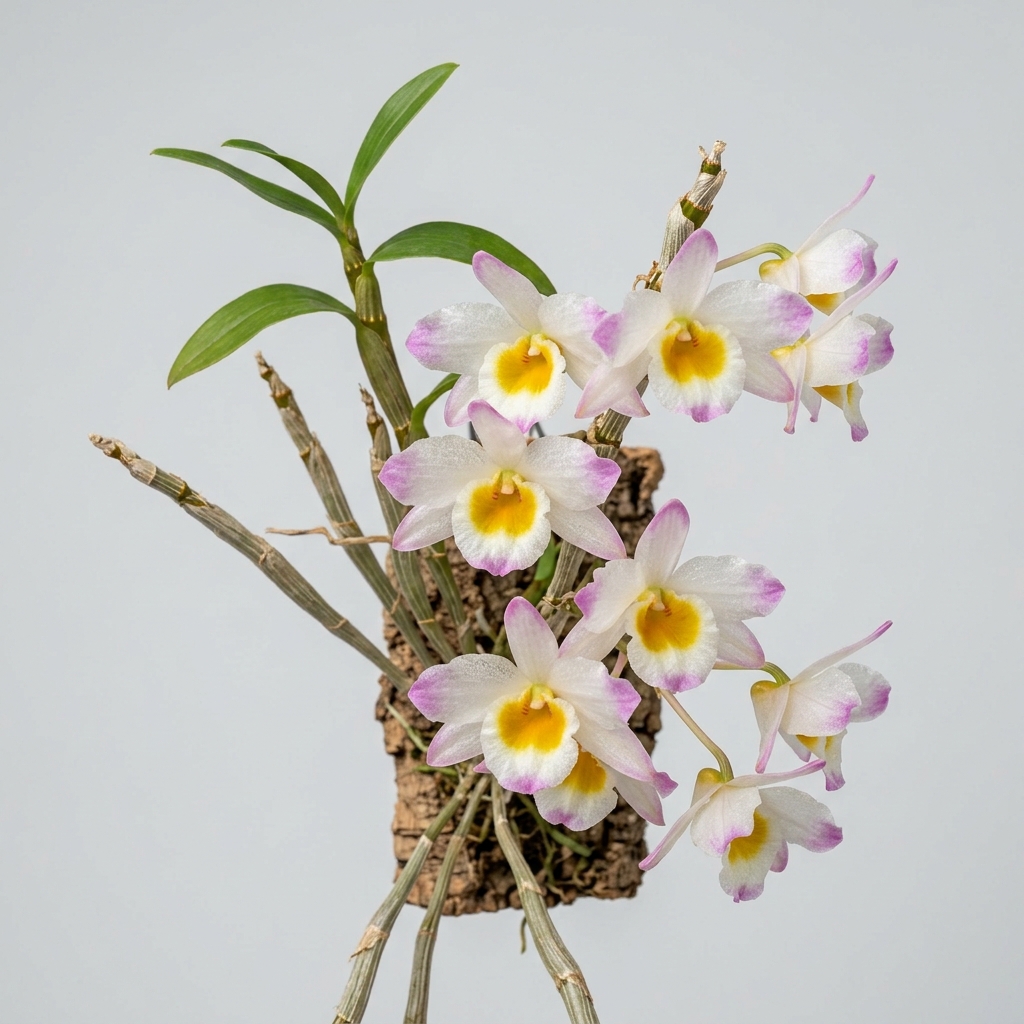
Dendrobium Crystallinum is a highly sought-after epiphytic orchid species within the vast Dendrobium genus, celebrated for its striking, translucent blooms and elegant growth habit. Native to the montane forests of Southeast Asia, this orchid produces pendulous, cane-like pseudobulbs that drape gracefully, making it an exceptional choice for hanging baskets or mounted displays.
Collectors and orchid enthusiasts highly value this species for its distinct crystalline floral texture and its rewarding, seasonal blooming cycle. While it requires a disciplined approach to seasonal watering—specifically a dry winter rest—its spectacular spring display of white, pink-tipped flowers with vibrant golden throats makes it a centerpiece of any intermediate-to-warm greenhouse collection.
💡 Did You Know?
The specific epithet crystallinum refers to the unique, glistening texture of the flower petals. Under close inspection, the cells of the blooms reflect in a way that resembles tiny, sparkling ice crystals, giving the flowers an ethereal, luminous quality that is rare among wild orchid species.
🌿 Botanical Overview
Dendrobium Crystallinum is characterized by its slender, pendulous pseudobulbs, often referred to as canes, which can grow up to two feet in length. These canes are semi-deciduous, meaning they typically shed their leaves during the dry winter dormancy period before initiating flower buds. The foliage is lanceolate, bright green, and arranged alternately along the developing canes during the active growing season.
In its natural habitat, this epiphyte grows on the mossy branches of trees in open forests, where it experiences distinct wet and dry seasons. This environmental rhythm dictates its growth cycle in cultivation. Understanding the transition between the active summer growth phase and the dry winter rest is fundamental to maintaining the long-term health and vigor of this species.
🌸 Flower Characteristics
The blossoms of Dendrobium Crystallinum are renowned for their delicate, almost crystalline texture, which catches the light beautifully. Individual flowers typically measure between two to three inches in diameter and emerge from the nodes of the mature, often leafless canes. The sepals and petals are pristine white, culminating in soft magenta or purple tips that provide a striking contrast.
The labellum, or lip, is a defining feature of the bloom. It is broad, rounded, and showcases a brilliant yellow-to-orange center surrounded by a white border, often finished with a matching purple tip. The flowers are presented in small clusters of two to three per node, creating a cascading blanket of color along the length of the pendulous canes when the plant is in full bloom.
Fragrance & Bloom Profile
While some growers report a delicate, sweet, or slightly musky fragrance during the warmest hours of the day, the scent profile of Dendrobium Crystallinum can vary. Fragrance intensity is highly dependent on environmental factors such as temperature, humidity, and light levels. It is not uncommon for some specimens to exhibit a very faint scent or to be perceived as virtually unscented by some hobbyists.
The blooms are moderately long-lasting, typically remaining in peak condition for three to five weeks under optimal, cool conditions. To maximize the lifespan of the flowers, growers should avoid getting water directly on the petals and maintain stable, moderate temperatures during the blooming cycle.
Parentage & Hybrid Lineage
As a naturally occurring species rather than a man-made hybrid, Dendrobium Crystallinum does not have a complex hybrid pedigree. It is a distinct species within the section Dendrobium of the genus. However, its desirable traits—such as its crystalline flower texture and vibrant lip coloration—have made it a valuable parent in orchid breeding programs.
In horticultural circles, any specific registered cultivars or select line-bred forms of this species are selected for larger flower size, more intense coloration, or a more compact growth habit. When purchasing this orchid, growers should look for reputable nursery documentation to confirm whether they are acquiring a standard species specimen or a select line-bred cultivar.
🌱 Growing Conditions
To cultivate Dendrobium Crystallinum successfully, growers must replicate its native monsoonal climate. During the active growing season from spring to autumn, the plant thrives in bright, filtered light. Strong, indirect sunlight is ideal; direct midday sun should be avoided to prevent leaf scorch, though some morning or late afternoon sun is beneficial.
💡 Care Tip
Ensure your growing area has active air circulation, especially when maintaining the high this orchid loves. Running a small, low-powered fan nearby prevents stagnant air pockets, which significantly reduces the risk of fungal leaf spot and root rot.
Temperature requirements are warm to intermediate during the summer, with daytime temperatures ranging from 75 to 85 degrees Fahrenheit and a slight drop at night. In the winter, the plant requires cooler conditions, with nights dropping to 50 to 55 degrees Fahrenheit. High humidity of 60% to 80% is essential year-round, coupled with excellent air movement to prevent fungal pathogens.
Watering, Feeding & Potting Media
Watering must be adjusted dynamically according to the season. During the active summer growth phase, water copiously to keep the potting medium consistently moist but not waterlogged. Feed weekly with a balanced, diluted orchid fertilizer to support the rapid development of new canes.
Because of its pendulous growth habit, Dendrobium Crystallinum is exceptionally well-suited for mounting on cork bark or tree fern plaques, or for planting in hanging wooden baskets. If potted, a highly porous, free-draining medium such as coarse fir bark mixed with charcoal and perlite is necessary. This ensures that the roots dry rapidly after watering, mimicking their natural epiphytic environment.
Blooming Season & Care Notes
The primary blooming season occurs in late spring and early summer, emerging from the nodes of the previous year’s matured canes. The initiation of these flower buds is strictly dependent on a dry, cool winter rest period. Beginning in late autumn, watering should be drastically reduced, and fertilizing must stop entirely.
During this winter rest, provide only enough water or light misting to prevent the pseudobulbs from shriveling excessively. The leaves will naturally yellow and drop, which is normal behavior. Once green flower buds begin to emerge from the nodes in early spring, gradually resume regular watering and feeding to support the developing blooms.
⚠️ Common Issues
⚠️ Common Mistake
The most frequent error is continuing to water and fertilize normally throughout the winter. Without a distinct dry, cool rest period, the orchid will fail to produce flower buds and may instead produce weak vegetative growth or suffer from root rot.
- Root rot:
Caused by overwatering during the winter rest or using a decomposed, water-retentive medium. - Bud blast:
Sudden dropping of flower buds, often triggered by abrupt changes in temperature, low humidity, or drafts. - Shriveled canes: Excessive dehydration during the winter rest; minor shriveling is normal, but severe wrinkling requires light misting.
- Spider mites and scale: Pests that thrive in dry winter conditions; inspect the undersides of leaves and cane crevices regularly.
- Fungal leaf spot: Occurs when high humidity is combined with stagnant, stagnant air.
❓ Frequently Asked Questions
Why is my Dendrobium Crystallinum losing its leaves in winter?
Leaf loss in the winter is a completely natural, deciduous phase for this species. As temperatures cool and watering is reduced, the plant sheds its foliage to prepare for its winter rest and later spring blooming cycle.
How do I initiate blooms on this orchid?
To trigger blooming, you must provide a strict cool, dry winter rest starting in late autumn. Stop fertilizing and reduce watering to a bare minimum, allowing the plant to experience cooler night temperatures until buds appear in spring.
Can I grow Dendrobium Crystallinum under LED grow lights?
Yes, this orchid can be grown under high-output LED grow lights. Ensure the lights provide a broad spectrum and are positioned to deliver bright, indirect light levels, while still allowing for the necessary seasonal temperature drops.
What should I do if the pseudobulbs start shriveling during the winter rest?
Slight shriveling of the canes is normal during dormancy. However, if they become severely wrinkled or thin, provide a light morning misting or a very sparse watering to hydrate the root zone slightly without breaking the dormancy.
⭐ Final Growing Notes
Dendrobium Crystallinum is a rewarding species that brings a touch of natural elegance to any orchid collection. While its seasonal requirements demand more attentiveness than standard hybrid orchids, the spectacular display of crystalline, pink-tipped blossoms is well worth the effort. By respecting its natural cycle of summer abundance and winter rest, growers can enjoy its stunning annual showcase for many years.
⚕️ Health, Safety & Edibility
Understanding how a plant interacts with people, pets, and the surrounding environment is part of responsible cultivation. This section uses conservative, general guidance and does not replace professional medical or veterinary advice.
Human Safety: No published evidence currently identifies species-specific toxicity concerns for Dendrobium Crystallinum during normal handling. As with most ornamental plants, it should not be intentionally consumed.
Pet Safety: Published information does not indicate that this orchid commonly poses a toxicity concern for cats or dogs. However, chewing leaves, flowers, roots, or potting media may still cause mild digestive upset.
Edibility: This orchid is cultivated for ornamental display rather than food. Ornamental plants may carry fertilizers, pesticides, or other horticultural treatments that make them unsuitable for consumption.
Skin Contact: Routine handling is not generally associated with skin irritation. Gardeners with sensitive skin may prefer wearing gloves when repotting, pruning, or handling potting media.
🌱 Propagation Tip
This species occasionally produces keikis—baby orchid plants—along the nodes of mature canes. Allow these offsets to develop a robust root system of at least two to three inches in length before carefully detaching and potting them in a fine bark mix.
⭐ Expert Advice
If mounting this orchid on cork bark, wrap a small amount of high-quality sphagnum moss around the roots initially to help retain moisture. As the plant establishes, its roots will anchor directly to the bark, allowing you to transition to a more natural wet-and-dry cycle.

Leave A Comment