
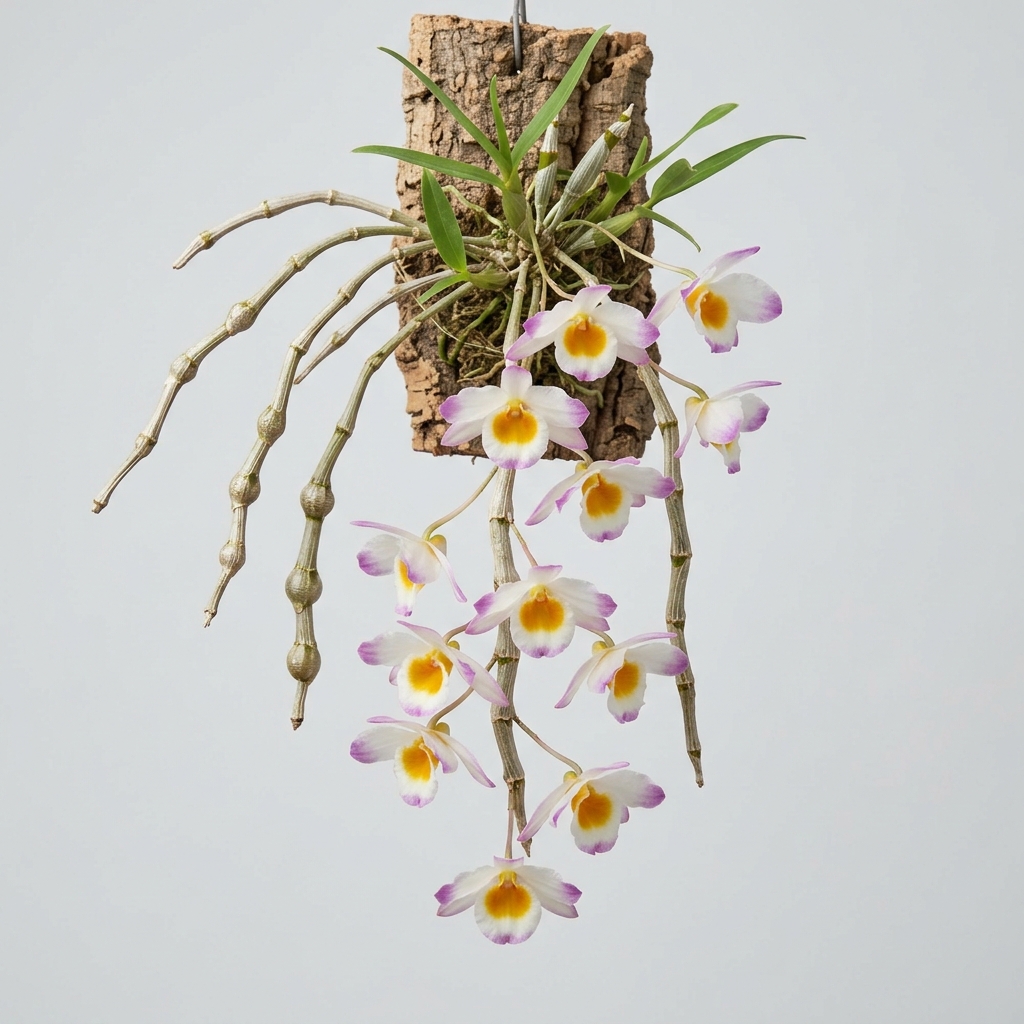
Dendrobium Gratiosissimum is a highly prized epiphytic orchid species native to the montane forests of Southeast Asia, including parts of China, Myanmar, Thailand, Laos, and Vietnam. Known for its distinctive pendulous growth habit, this orchid features slender, jointed canes with noticeably swollen nodes that drape gracefully downward. It is an useful selection for mounted cultivation or hanging baskets, where its natural cascading form can be fully appreciated by collectors and enthusiasts alike.
Growers particularly value this species for its spectacular spring display, during which delicate, multi-colored blossoms emerge in clusters from the nodes of its deciduous canes. The striking contrast of crystalline white petals tipped with rose-purple and a vibrant yellow-throated lip makes it a standout addition to any orchid collection. While it requires a specific seasonal rhythm to thrive and bloom successfully, the reward is a breathtaking cascade of elegant, long-lasting flowers.
💡 Did You Know?
The species name gratiosissimum translates from Latin to mean very pleasing or most agreeable, a direct nod to the delightful presentation of its multi-colored blossoms. In its native Southeast Asian habitats, this orchid grows high in the forest canopy, where it experiences distinct wet and dry seasons that dictate its growth and flowering cycles.
🌿 Botanical Overview
Dendrobium Gratiosissimum is a sympodial epiphytic orchid characterized by its unique vegetative structure. The pseudobulbs, commonly referred to as canes, are slender, pendulous, and can reach lengths of 30 to 60 centimeters. These canes feature prominent, swollen nodes that give the plant a jointed, knobby appearance, which remains visually interesting even when the plant is not in bloom.
This species is deciduous, meaning it naturally sheds its leaves as part of its annual growth cycle. The leaves are lanceolate, thin, and paper-like, typically emerging during the spring and summer growing seasons. As autumn approaches, the leaves begin to yellow and drop, leaving the canes bare. This leaf-loss is a normal physiological response that prepares the orchid for its winter dormancy and later flowering phase.
🌸 Flower Characteristics
The blossoms of Dendrobium Gratiosissimum are highly elegant, typically measuring between 5 and 6 centimeters in diameter. They emerge in small clusters of two to three from the nodes of the mature, leafless canes. The sepals and petals are crystalline white, often suffused or tipped with a delicate rose-purple or magenta hue, creating a soft, watercolor-like effect.
The most striking feature of the flower is its rounded lip, or labellum. The lip features a broad, bright yellow to golden-orange throat that is encircled by a white band, with the apex tipped in the same rose-purple color found on the petals. This complex color patterning serves to attract natural pollinators in the wild and makes the flowers exceptionally photogenic in cultivation.
Fragrance & Bloom Profile
Many growers report that Dendrobium Gratiosissimum produces a mild, sweet fragrance that is reminiscent of honey or delicate wildflowers. The scent is typically most noticeable during the morning hours when temperatures begin to rise. However, fragrance intensity can be highly subjective and is often dependent on environmental factors such as ambient humidity and light levels.
Because fragrance can vary significantly from one specimen to another, it is not consistently documented as a guaranteed trait for all cultivated plants. The blooms are relatively long-lasting, often remaining fresh for three to four weeks if the plant is kept in cool, dry conditions during the flowering period.
Parentage & Hybrid Lineage
Dendrobium Gratiosissimum is a naturally occurring species rather than a man-made hybrid. It belongs to the genus Dendrobium, section Dendrobium, which contains many other popular deciduous species. Because it is a species, its genetic makeup is stable and represents the wild form found in its native montane habitats.
While it is primarily grown as a species in private collections, it has occasionally been used in hybridizing programs. Hybridizers select this species to introduce its pendulous growth habit, knobby cane structure, and beautifully patterned lip to new grexes. However, registered hybrids utilizing this species are relatively uncommon compared to other members of the genus.
🌱 Growing Conditions
To cultivate Dendrobium Gratiosissimum successfully, growers must replicate its native seasonal climate. During the active growing season in spring and summer, the plant prefers warm to intermediate temperatures, ranging from 20 degrees Celsius to 30 degrees Celsius. In the winter, it requires a distinct cool period, with night temperatures dropping to between 10 degrees Celsius and 15 degrees Celsius.
💡 Care Tip
To mimic its natural habitat, suspend mounted specimens in a location with excellent air circulation and bright, filtered . During the hot summer months, daily misting may be necessary to maintain high around the exposed root system.
Bright, filtered indirect light is essential for robust growth and abundant flowering. A location that receives strong morning sun with protection from intense afternoon rays is ideal. Excellent air movement is critical at all times, particularly when humidity levels are kept high, to prevent stagnant air from encouraging fungal or bacterial infections.
Watering, Feeding & Potting Media
Watering practices must change dramatically between seasons. During the active spring and summer growth phase, the orchid should be watered copiously, keeping the root zone consistently moist but not waterlogged. Weekly applications of a balanced, diluted orchid fertilizer will support the rapid development of new canes.
In late autumn, watering must be systematically reduced, and fertilizing should be stopped entirely. During the winter rest, provide only occasional misting or light watering to prevent the canes from shriveling excessively. Because of its pendulous habit, mounting the orchid on cork bark or tree fern slabs is highly recommended. If potted, use a highly draining medium such as coarse fir bark or charcoal in a hanging basket.
Blooming Season & Care Notes
The blooming season for Dendrobium Gratiosissimum typically occurs in late winter or early spring. The primary trigger for flower bud initiation is the combination of cool winter temperatures, high light, and a strict dry rest. Buds will begin to swell at the nodes of the leafless canes as the rest period nears its end.
Once the flower buds are visible, watering can be slightly increased, but fertilizer should be withheld until the blooming cycle is complete. After the flowers fade, new vegetative shoots will begin to emerge from the base of the old canes, signaling the start of the new growing season and the resumption of regular watering and feeding.
⚠️ Common Issues
⚠️ Common Mistake
The most common mistake is continuing to water and fertilize heavily during the winter months. Failing to provide a distinct dry, cool rest period will often result in vegetative growth or root rot instead of the desired spring blooms.
- Bud Blast:
Sudden changes in temperature, drafty conditions, or low humidity can cause developing flower buds to yellow and drop before opening. - Root Rot:
Overwatering during the winter rest period is the most common cause of root loss, as the inactive root system cannot tolerate wet conditions. - Shriveling Canes: While minor shriveling is normal during the winter dry rest, severe shriveling indicates extreme dehydration and requires a light watering.
- Pests:
Spider mites and scale insects can occasionally target the thin leaves of new growth; treat promptly with insecticidal soap or neem oil.
❓ Frequently Asked Questions
Why is my Dendrobium Gratiosissimum losing all of its leaves?
This is a completely natural part of the orchid’s annual cycle. Dendrobium Gratiosissimum is a deciduous species that sheds its leaves in autumn and winter to prepare for dormancy and later spring blooming.
How do I trigger blooms on this orchid species?
To trigger blooming, you must provide a cool, dry rest period starting in late autumn. Reduce watering significantly, stop fertilizing, and expose the plant to cooler night temperatures and bright, indirect light.
Can I grow Dendrobium Gratiosissimum in a standard plastic pot?
While possible, it is not ideal due to the plant’s pendulous growth habit. Growing it mounted on cork bark or in a hanging wooden basket allows the long, knobby canes to drape naturally and ensures excellent drainage.
How often should I fertilize during the active growing season?
During the spring and summer, apply a balanced orchid fertilizer diluted to quarter or half strength weekly. This weak-weekly method supports the rapid development of strong, healthy canes for the next season.
⭐ Final Growing Notes
Dendrobium Gratiosissimum is an exquisite species that rewards the disciplined grower with an unparalleled spring floral display. By respecting its natural need for a dry, cool winter rest and providing bright, filtered light, you can enjoy its cascading, multi-colored blossoms year after year. It remains a classic representation of the beauty and complexity of deciduous epiphytic orchids.
⚕️ Health, Safety & Edibility
Understanding how a plant interacts with people, pets, and the surrounding environment is part of responsible cultivation. This section uses conservative, general guidance and does not replace professional medical or veterinary advice.
Human Safety: No published evidence currently identifies species-specific toxicity concerns for Dendrobium Gratiosissimum during normal handling. As with most ornamental plants, it should not be intentionally consumed.
Pet Safety: Published information does not indicate that this orchid commonly poses a toxicity concern for cats or dogs. However, chewing leaves, flowers, roots, or potting media may still cause mild digestive upset.
Edibility: This orchid is cultivated for ornamental display rather than food. Ornamental plants may carry fertilizers, pesticides, or other horticultural treatments that make them unsuitable for consumption.
Skin Contact: Routine handling is not generally associated with skin irritation. Gardeners with sensitive skin may prefer wearing gloves when repotting, pruning, or handling potting media.
🌱 Propagation Tip
This species occasionally produces adventitious offsets, known as keikis, along the nodes of older canes. Wait until the keiki has developed several roots at least two inches long before carefully detaching and mounting it independently.
⭐ Expert Advice
When mounting this orchid, use a small pad of sphagnum moss under the roots to retain just enough moisture during the establishment phase. Position the plant so the canes can drape naturally downward without pressing against the mounting surface.

Leave A Comment