
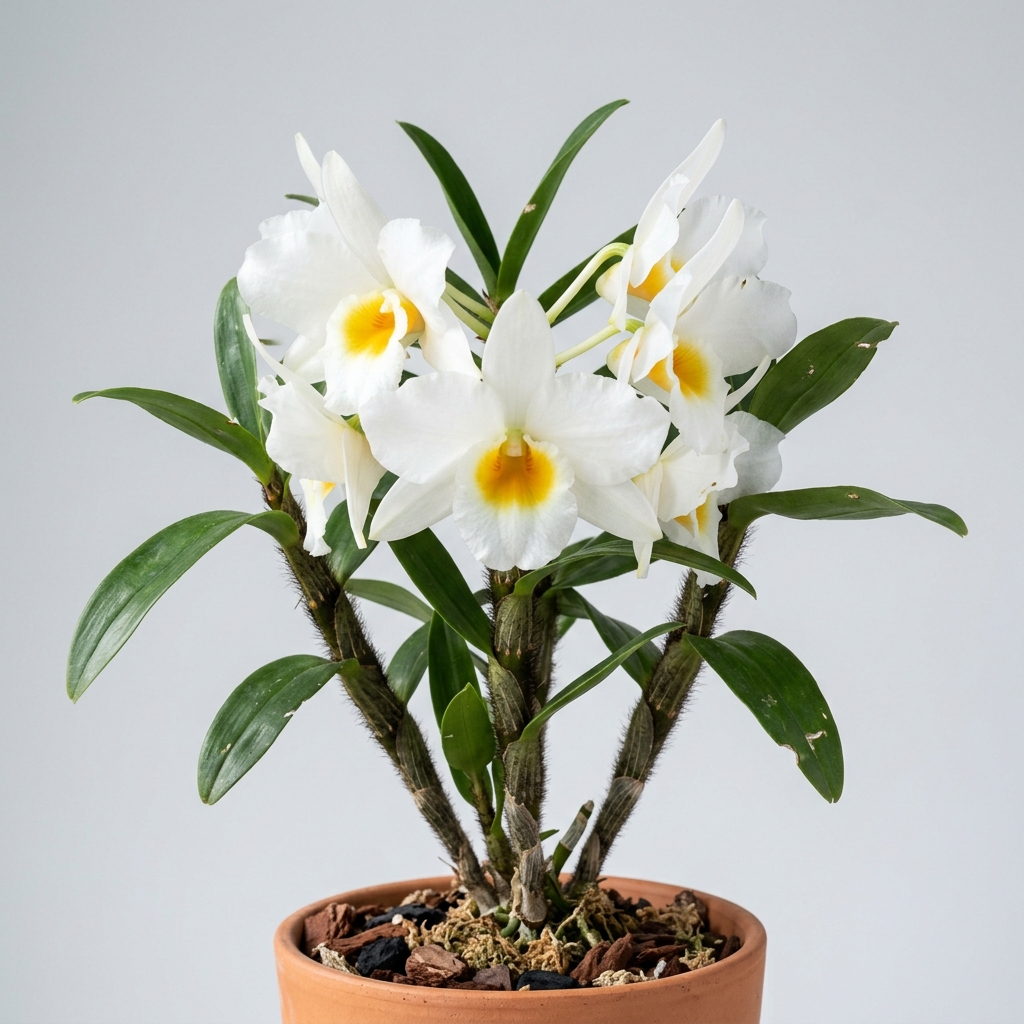
Dendrobium Infundibulum is a highly prized epiphytic orchid species native to the mountainous regions of Southeast Asia. Renowned for its striking, large white blossoms featuring a vibrant yellow to orange throat, this orchid is a standout member of the Dendrobium genus, specifically belonging to the Formosae section. Growers value it for its elegant, long-lasting blooms and its relatively robust growth habit when provided with the correct environmental conditions.
In cultivation, this species presents a classic orchid silhouette with upright, cane-like pseudobulbs that are covered in fine, dark hairs—a defining characteristic of its botanical section. The contrast between the pristine white petals and the dark-haired canes adds a unique textural element to any collection. While it requires specific attention to temperature and moisture, successful cultivation rewards the grower with a spectacular seasonal display of pristine, crystalline flowers.
💡 Did You Know?
The species name infundibulum is Latin for funnel, directly referencing the distinctive funnel-like shape of the orchid's labellum. This structural adaptation helps guide specific pollinators directly to the pollen column in its native montane forest habitats.
🌿 Botanical Overview
Dendrobium Infundibulum is native to high-altitude forests across Myanmar, Thailand, Laos, Vietnam, and southwestern China, typically growing at elevations between 1,000 and 2,300 meters. This montane origin dictates its preference for cooler temperatures and high atmospheric humidity. The plant features clustered, erect, cane-like pseudobulbs that can reach up to 60 centimeters in height, clothed in lanceolate leaves that persist for several seasons.
A key botanical identifier of this species, and other members of the Formosae section, is the presence of fine, black, hirsute hairs covering the leaf sheaths and young canes. These hairs are not a sign of disease but rather a natural adaptation that helps trap moisture and protect the plant in its native misty environment. Understanding these natural conditions is essential for replicating its habitat in a domestic greenhouse or indoor growing space.
🌸 Flower Characteristics
The blossoms of Dendrobium Infundibulum are notably large for the genus, often measuring between 7 to 10 centimeters in diameter. The sepals and petals are a brilliant, crystalline white, exhibiting a delicate, almost translucent texture that catches the light beautifully. The prominent lip, or labellum, features a funnel-shaped structure with a striking yellow, ochre, or orange-yellow blotch in the throat.
Flowers are produced in short racemes from the upper nodes of both leafy and leafless mature canes. Each inflorescence typically carries two to five flowers, which are held closely to the cane. The blooms are remarkably long-lived, often remaining in pristine condition for six to eight weeks if kept in cool, dry conditions.
Fragrance & Bloom Profile
While some growers report a subtle, clean, or slightly citrus-like scent during the warmest hours of the day, the fragrance of Dendrobium Infundibulum is generally considered mild and is not its primary horticultural draw. The sensory appeal of this orchid lies predominantly in its visual elegance. The crystalline white petals provide a dramatic contrast against the dark green foliage and black-haired canes, making it a highly decorative specimen even when only a few flowers are open.
Parentage & Hybrid Lineage
As a naturally occurring species rather than a man-made hybrid, Dendrobium Infundibulum carries a pure genetic lineage. It has, however, been used as a parent in hybridization programs within the Formosae section to introduce large flower size, pure white coloration, and cool-tolerance to its progeny. Because exact hybrid registrations and cultivar selections can vary, growers looking for specific award-winning clones should consult registered orchid registries, as parentage and clonal stability can be highly variable in commercial trade.
🌱 Growing Conditions
Replicating the montane environment of Dendrobium Infundibulum requires bright, filtered light, similar to that preferred by Cattleya orchids, but with cooler temperatures. It thrives in intermediate to cool conditions, ideally with daytime temperatures ranging from 20°C to 26°C (68°F to 78°F) and a distinct drop at night to around 10°C to 15°C (50°F to 59°F). High humidity of 60% to 80% is critical, accompanied by constant, gentle air movement to prevent fungal pathogens from settling on the damp foliage.
💡 Care Tip
Ensure your growing area has excellent air movement. Because this orchid thrives in high and cool temperatures, stagnant air can quickly lead to leaf spotting and fungal infections on the delicate new growths.
Watering, Feeding & Potting Media
During the active spring and summer growing season, Dendrobium Infundibulum requires frequent watering to keep the potting medium evenly moist but never waterlogged. A well-draining medium is essential; a mix of medium-grade fir bark, perlite, and charcoal works well, though some growers prefer to add a small amount of sphagnum moss to retain moisture. Apply a balanced, diluted orchid fertilizer weekly at quarter-strength during active growth, and flush the pot with pure water monthly to prevent salt buildup.
Blooming Season & Care Notes
The primary blooming period occurs from late winter through spring, triggered by a cooler, drier rest period during the winter months. To initiate flower buds, reduce watering in late autumn and withhold fertilizer, allowing the medium to dry out significantly between light waterings, while maintaining high humidity and bright light. Once buds appear at the nodes, resume regular watering and intermediate temperatures to support the developing flowers. Repotting should only be done when new root growth is visible at the base of the new leads, typically in late spring after flowering.
⚠️ Common Issues
⚠️ Common Mistake
A frequent error is continuing to water and fertilize heavily during the winter. Without a distinct dry, cool rest period, the plant will often produce new vegetative growth instead of flower buds, or worse, suffer from root rot in cold, wet media.
- Root Rot:
Caused by overwatering or compacted, poorly draining potting media. - Bud Blast:
Sudden drops in humidity or temperature fluctuations can cause developing buds to yellow and drop. - Dehydration:
Shriveled pseudobulbs indicate insufficient watering or a loss of the root system due to rot. - Pests:
Spider mites and mealybugs can occasionally hide in the leaf axils or under the black hairs of the canes. - Leaf Spotting: Fungal or bacterial spots can develop if air circulation is inadequate in high-humidity environments.
❓ Frequently Asked Questions
Why are the canes of my Dendrobium Infundibulum covered in black hairs?
The fine black hairs on the pseudobulbs and leaf sheaths are a natural botanical characteristic of the Formosae section of Dendrobium. They are completely normal and help the plant manage moisture in its native misty habitat, rather than indicating a pest or disease issue.
How do I trigger my Dendrobium Infundibulum to bloom?
This orchid requires a distinct cool, dry rest period in late autumn and winter. Reduce watering significantly, stop fertilizing, and ensure night temperatures drop to around 10°C to 13°C (50°F to 55°F) while maintaining bright light to stimulate bud development.
Can I grow Dendrobium Infundibulum mounted on wood or cork?
Yes, mounting is an excellent option if you can maintain high humidity (above 70%) and water the plant daily during the summer. Mounted plants dry out quickly, mimicking their natural epiphytic growth habit on tree trunks.
What should I do if the pseudobulbs begin to shrivel?
Shriveled canes usually indicate dehydration. Check the roots first; if they are mushy and brown, the plant has lost its roots to rot and cannot absorb water. If the roots are healthy, increase the frequency of watering.
⭐ Final Growing Notes
Dendrobium Infundibulum is a rewarding species for intermediate orchid enthusiasts who can accommodate its preference for cool nights and high humidity. By respecting its seasonal cycle of wet summer growth and a dry winter rest, growers can enjoy spectacular displays of crystalline white blooms year after year.
⚕️ Health, Safety & Edibility
Understanding how a plant interacts with people, pets, and the surrounding environment is part of responsible cultivation. This section uses conservative, general guidance and does not replace professional medical or veterinary advice.
Human Safety: No published evidence currently identifies species-specific toxicity concerns for Dendrobium Infundibulum during normal handling. As with most ornamental plants, it should not be intentionally consumed.
Pet Safety: Published information does not indicate that this orchid commonly poses a toxicity concern for cats or dogs. However, chewing leaves, flowers, roots, or potting media may still cause mild digestive upset.
Edibility: This orchid is cultivated for ornamental display rather than food. Ornamental plants may carry fertilizers, pesticides, or other horticultural treatments that make them unsuitable for consumption.
Skin Contact: Routine handling is not generally associated with skin irritation. Gardeners with sensitive skin may prefer wearing gloves when repotting, pruning, or handling potting media.
🌱 Propagation Tip
While division of large clumps with at least three to four healthy canes is the most reliable propagation method, this species may occasionally produce adventitious offsets, known as keikis, along the upper nodes of older canes which can be potted up once they develop several roots.
⭐ Expert Advice
When repotting, choose the smallest pot that will accommodate two years of new growth. This species resents having its roots disturbed and prefers a tight, well-aerated root zone, which also helps the potting medium dry out at an appropriate rate.

Leave A Comment