
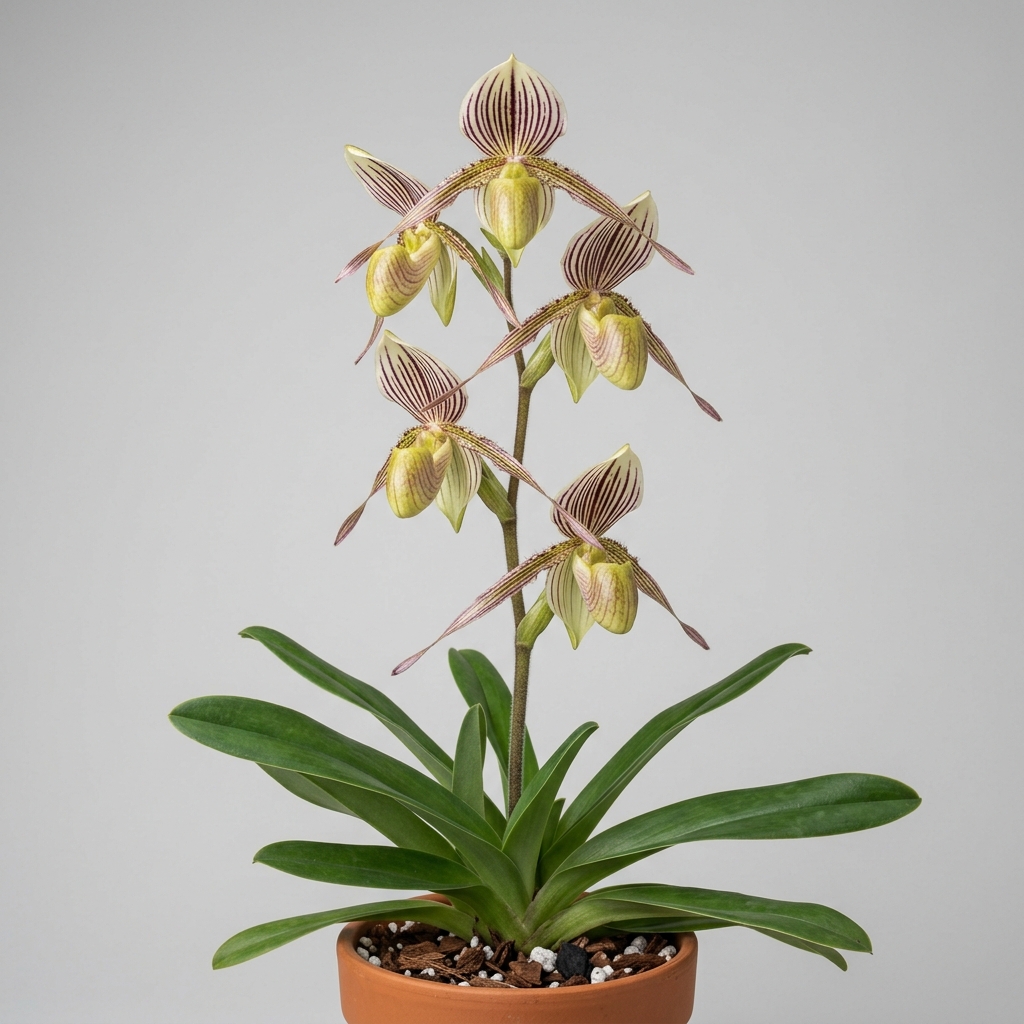
Paphiopedilum Randsii is a highly sought-after, multi-floral slipper orchid native to the island of Mindanao in the Philippines. Revered by collectors for its distinctive, architectural blooms and striking foliage, this species stands out within the genus Paphiopedilum due to its unique floral morphology and elegant presentation. It typically grows as an understory terrestrial or lithophytic plant, thriving in warm, humid forest environments where it receives dappled light.
For orchid enthusiasts, cultivating Paphiopedilum Randsii represents both a rewarding challenge and a masterclass in slipper orchid care. Its slow-growing nature and specific environmental requirements make it less common in casual collections, yet its dramatic, striped flowers and stately growth habit ensure it remains a crown jewel for dedicated growers. Understanding its natural habitat is key to successfully maintaining this exquisite orchid in a home or greenhouse setting.
💡 Did You Know?
Paphiopedilum Randsii is named after the American orchid enthusiast and collector, Robert Rands. Unlike many other slipper orchids that feature heavily mottled leaves, this species is distinguished by its solid, leathery green foliage, making it an elegant and clean addition to any orchid collection even when it is not in active bloom.
🌿 Botanical Overview
Paphiopedilum Randsii is characterized by its fan-shaped growth habit, featuring strap-like, leathery leaves that are solid green, lacking the heavy mottling seen in some other slipper orchid species. The foliage is robust and serves as an attractive backdrop even when the plant is not in bloom. In its native habitat, it anchors itself in leaf litter or mossy rock crevices, absorbing moisture and nutrients from decomposing organic matter.
This species is classified as a multi-floral Paphiopedilum, meaning a single inflorescence can produce several flowers simultaneously. Because it is a slow-growing orchid, establishing a mature specimen requires patience, but the resulting display of multiple, synchronized blooms on a tall, upright spike is well worth the wait.
🌸 Flower Characteristics
The flowers of Paphiopedilum Randsii are a marvel of natural symmetry and intricate patterning. Each bloom features a prominent, pointed dorsal sepal that is creamy white, adorned with bold, vertical stripes of dark purple or rich brown. The lateral petals are relatively narrow, extending outwards and slightly downwards, displaying similar dark striping against a yellowish-green base.
The pouch, or labellum, is slipper-shaped and typically shows a greenish-yellow hue, sometimes flushed with light brown. These flowers are presented on a sturdy, erect inflorescence that rises well above the foliage, allowing each individual bloom to be clearly visible. The overall effect is highly architectural and distinct from the more rounded flowers of single-flowered Paphiopedilum species.
Fragrance & Bloom Profile
Unlike some orchid genera celebrated for their intense perfumes, Paphiopedilum Randsii is not known for having a strong or distinct scent. In common grower references, any fragrance is described as negligible or not consistently documented. The primary appeal of this orchid lies entirely in its visual complexity and the longevity of its blooms.
The individual flowers are remarkably long-lasting, often remaining in pristine condition for several weeks. Because the flowers open progressively or nearly simultaneously along the spike, a mature plant in spike provides an extended period of interest, making the lack of fragrance a minor detail for most collectors.
Parentage & Hybrid Lineage
Paphiopedilum Randsii is a distinct, naturally occurring species rather than a man-made hybrid. First described in the late 20th century, its wild origin is restricted to specific regions in the Philippines. Because of its unique floral structure and multi-floral habit, it has been used occasionally by hybridizers looking to introduce its striped patterns and upright spike presentation into new grexes.
However, because it is relatively rare and slow to mature, hybrid lineage involving Paphiopedilum Randsii is limited compared to more common species like Paphiopedilum rothschildianum. When purchasing this orchid, growers should ensure they are acquiring legally propagated nursery stock, as wild collection is strictly prohibited.
🌱 Growing Conditions
To successfully cultivate Paphiopedilum Randsii, growers must replicate its warm, humid tropical origin. It thrives in warm to intermediate temperatures, ideally ranging from 75 to 85 degrees Fahrenheit during the day, with a slight drop of 10 degrees at night to encourage healthy growth and eventual blooming. It should never be exposed to freezing temperatures or prolonged cold drafts.
💡 Care Tip
Maintain a constant, gentle breeze around your Paphiopedilum Randsii using a small fan. Good air circulation is vital for preventing fungal leaf spot and crown rot, especially when maintaining the high levels this species requires to thrive.
Light levels should be bright but filtered. Direct sunlight will quickly scorch the solid green leaves, while too much shade will inhibit flowering. A position near an east-facing window or under shaded LED grow lights is often ideal. Gentle, continuous air movement is essential to prevent stagnant humidity from settling on the leaves, which can invite fungal pathogens.
Watering, Feeding & Potting Media
Unlike epiphytic orchids that prefer to dry out completely between waterings, Paphiopedilum Randsii prefers a constantly moist but well-aerated root zone. The potting medium should never be allowed to dry out entirely, nor should it remain soggy or waterlogged. Watering frequency will depend on your household humidity and temperature, but typically requires attention every few days.
A high-quality, free-draining potting mix is crucial. A blend of fine-grade fir bark, perlite, charcoal, and a small amount of chopped sphagnum moss works exceptionally well to retain moisture while ensuring excellent oxygen flow to the roots. Feed the plant with a highly diluted, balanced orchid fertilizer every second or third watering during the active growing season, flushing the pot with pure water periodically to prevent salt buildup.
Blooming Season & Care Notes
Paphiopedilum Randsii typically initiates its blooming cycle in the spring or early summer, though this can vary slightly depending on local growing conditions. The development of the flower spike is a slow process that requires consistent environmental stability. Avoid moving the plant or changing its orientation once the spike begins to emerge, as sudden changes can cause the buds to blast.
After the blooming cycle is complete, the old flower spike can be cut back near the base of the growth. Repotting is best done every one to two years, immediately after flowering has finished and new root growth is detected. This ensures the potting medium remains fresh and does not degrade, which would otherwise suffocate the sensitive root system.
⚠️ Common Issues
⚠️ Common Mistake
A frequent error is allowing the potting medium to dry out completely between waterings. Unlike Cattleyas or Phalaenopsis, Paphiopedilums lack pseudobulbs to store water and will quickly suffer root damage and leaf desiccation if left dry for extended periods.
- Root Rot:
Caused by overwatering or a compacted potting medium that retains too much water and lacks oxygen. - Bud Blast:
The sudden drying and dropping of flower buds, often triggered by low humidity, sudden temperature fluctuations, or drafty conditions. - Leaf Spotting: Fungal or bacterial spots can develop on the foliage if water is allowed to sit on the leaves overnight without adequate air circulation.
- Mealybugs and Scale: Common pests that hide in the tight crevices of the leaf fans; treat promptly with insecticidal soap or neem oil.
❓ Frequently Asked Questions
How often should I water my Paphiopedilum Randsii?
Water your Paphiopedilum Randsii just as the potting medium begins to approach dryness. It should remain consistently moist but never waterlogged. Depending on your environment, this usually translates to watering once or twice a week, using lukewarm, low-mineral water.
Does Paphiopedilum Randsii require high humidity?
Yes, this species thrives in high humidity levels between 60% and 80%. If your indoor air is dry, consider using a humidity tray, grouping plants together, or running a dedicated humidifier, while ensuring there is adequate air movement to prevent rot.
Can I grow Paphiopedilum Randsii under artificial LED lights?
Absolutely. Paphiopedilum Randsii adapts well to indoor cultivation under LED grow lights. Position the plant so it receives bright, indirect light, ensuring the lights are not close enough to emit heat that could scorch the solid green foliage.
Why are the flower buds on my orchid falling off before opening?
This is known as bud blast. It is typically caused by environmental stress, such as a sudden drop in humidity, exposure to cold drafts, underwatering, or moving the plant to a new location while the flower spike is actively developing.
⭐ Final Growing Notes
While Paphiopedilum Randsii demands a bit more attention and environmental consistency than common hybrid orchids, the reward of its architectural, multi-floral display is unmatched. By maintaining high humidity, consistent moisture, and bright, filtered light, you can enjoy the striking, striped blooms of this Philippine treasure for years to come.
⚕️ Health, Safety & Edibility
Understanding how a plant interacts with people, pets, and the surrounding environment is part of responsible cultivation. This section uses conservative, general guidance and does not replace professional medical or veterinary advice.
Human Safety: No published evidence currently identifies species-specific toxicity concerns for Paphiopedilum Randsii during normal handling. As with most ornamental plants, it should not be intentionally consumed.
Pet Safety: Published information does not indicate that this orchid commonly poses a toxicity concern for cats or dogs. However, chewing leaves, flowers, roots, or potting media may still cause mild digestive upset.
Edibility: This orchid is cultivated for ornamental display rather than food. Ornamental plants may carry fertilizers, pesticides, or other horticultural treatments that make them unsuitable for consumption.
Skin Contact: Routine handling is not generally associated with skin irritation. Gardeners with sensitive skin may prefer wearing gloves when repotting, pruning, or handling potting media.
🌱 Propagation Tip
Slipper orchids like Paphiopedilum Randsii are propagated by division rather than stem cuttings. Only attempt to divide the plant during repotting when it has grown into a large clump with multiple mature fans, ensuring each new division has at least three healthy growths and an active root system.
⭐ Expert Advice
When repotting, use a plastic pot rather than clay to help retain consistent moisture. Add a small amount of horticultural charcoal to your bark mix; this helps keep the medium sweet, absorbs impurities, and prevents the mix from souring prematurely.

Leave A Comment